09-08-2026
Saudi Arabia, Turkey and Pakistan have signed a joint defence agreement in Mecca that pledges mutual support if any one of the three is attacked, effectively treating an attack on one as an attack on all. The pact was announced after a meeting between Saudi Crown Prince Mohammed bin Salman, Turkish President Recep Tayyip Erdogan and Pakistani Prime Minister Shehbaz Sharif. The article frames the agreement as part of a broader regional security realignment, driven by growing instability after US and Israeli strikes on Iran, Iranian retaliation, Houthi attacks in the Red Sea, and wider uncertainty about Gulf defence arrangements. Tehran responded sharply, with an Iranian parliament member dismissing the pact as insufficient to protect Saudi Arabia.
The deal is presented as beneficial to each state for different reasons. Saudi Arabia gains an additional layer of deterrence amid regional volatility and the erosion of its reliance on US security guarantees. Pakistan gains political and strategic backing as tensions with India and its diplomatic profile in the region rise. Turkey stands to benefit through expanded defence-industrial cooperation, including joint production and technology partnerships. However, the article emphasizes that the agreement is intentionally vague about obligations in practice, leaving open difficult questions about whether the parties would truly come to one another’s aid in specific conflicts such as Yemen or India-Pakistan hostilities. Its main practical value, the article concludes, may be deterrence: signaling that aggression against any of the three would come at a higher cost.
Entities: Saudi Arabia, Turkey, Pakistan, Mecca, Mohammed bin Salman • Tone: analytical • Sentiment: neutral • Intent: inform
09-08-2026
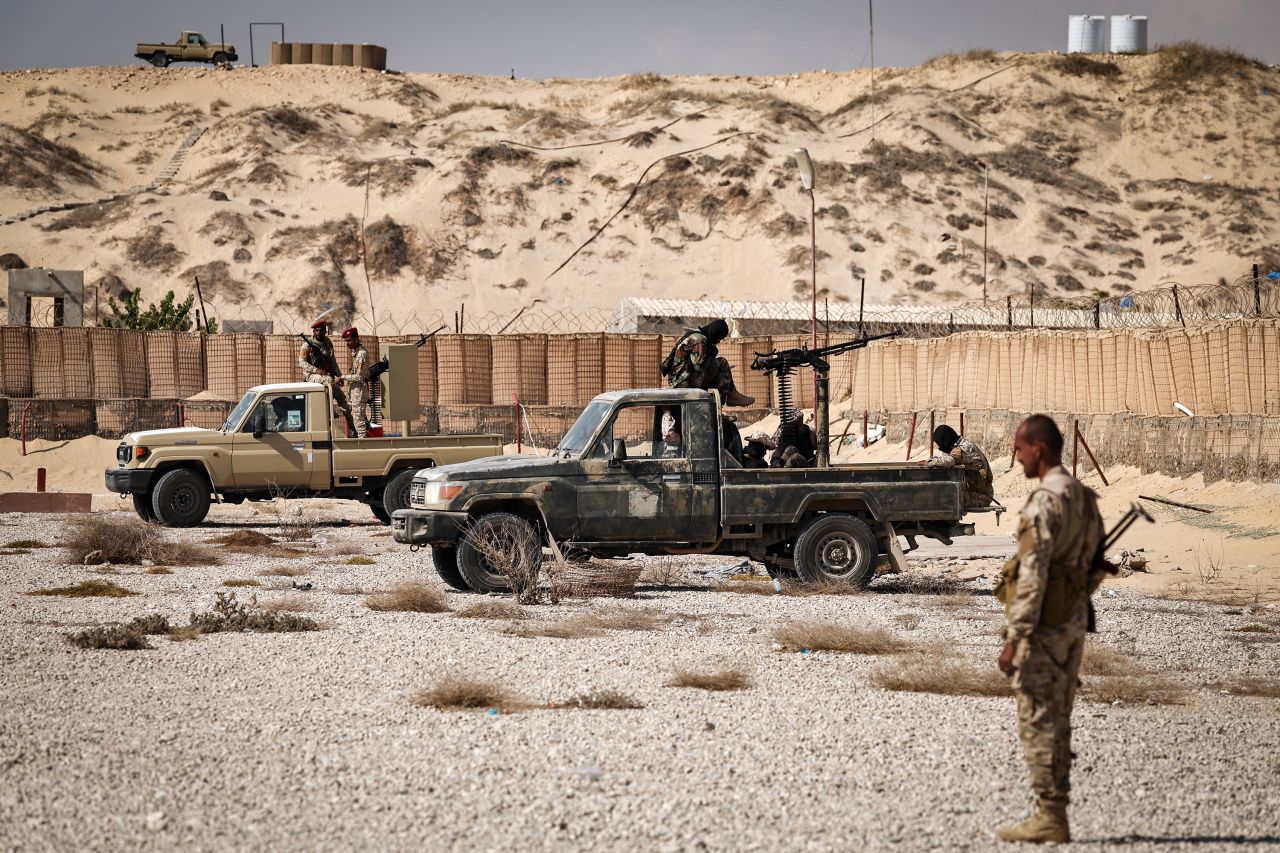
This CNN live updates article covers escalating tensions around Iran’s threat to keep the Strait of Hormuz closed unless the United States makes major concessions, alongside related developments in the broader regional conflict. Iran’s national security chief, Mohammad Bagher Zolghadr, publicly listed demands that include lifting the U.S. naval blockade, withdrawing military forces, ending the war permanently, compensating Iran for damage, and releasing frozen Iranian assets. Iranian and Omani officials also said talks on managing the strategically vital waterway were nearing a deal, though Oman warned that attacks on shipping could undermine progress. The article further reports that, according to CNN sources, Chairman of the Joint Chiefs of Staff Gen. Dan Caine has privately told senior U.S. officials that Washington needs an off-ramp from the war because military escalation could backfire and airpower alone is unlikely to achieve President Donald Trump’s goals. In Yemen, troops from the internationally recognized government launched an operation against Iran-backed Houthi militants, underscoring the wider regional spillover. The article also notes Iranian state media’s release of an undated video of Supreme Leader Mojtaba Khamenei, which may intensify speculation about his whereabouts and health. Overall, the piece portrays a fast-moving and fragile geopolitical situation, with diplomacy, military pressure, and uncertainty all unfolding at once.
Entities: Strait of Hormuz, Tehran, Iran, United States, Mohammad Bagher Zolghadr • Tone: urgent • Sentiment: negative • Intent: inform
09-08-2026
The article reports on retired Army Gen. Jack Keane’s criticism of Pakistan and Qatar as mediators in U.S.-Iran negotiations, arguing that both countries are effectively “compromised” and favor Iran over the United States. Speaking on Fox News’ America’s Newsroom, Keane said their influence may have helped mislead Washington about Iran’s real intentions and warned that the United States and Israel could bear the risks if diplomacy is shaped by unreliable intermediaries. His comments came amid ongoing talks tied to a U.S.-Iran memorandum of understanding and possible follow-on discussions focused on the Strait of Hormuz.
The article contrasts Keane’s view with President Donald Trump’s public praise for Pakistan and Qatar. Trump has said he respects Pakistan and credited both nations with helping advance negotiations, while White House spokesperson Anna Kelly defended the administration’s regional partners and said Iran would be to blame if it refuses a good deal. The piece also notes formal diplomatic roles for Pakistan and Qatar under the Islamabad Memorandum of Understanding, which established working groups on nuclear issues, sanctions, monitoring, dispute resolution, and maritime incidents in the Strait of Hormuz.
A reaction from Pakistani commentator Raza Rumi pushes back on Keane’s claim, arguing that having channels with Tehran does not make Pakistan an unreliable mediator and that successful mediation often requires communication with all sides. The article presents a broader tension between skepticism of regional intermediaries and the Trump administration’s reliance on them in efforts to de-escalate tensions with Iran.
Entities: Jack Keane, Pakistan, Qatar, Saudi Arabia, Iran • Tone: analytical • Sentiment: neutral • Intent: inform
09-08-2026
Oman says talks with Iran over securing a shipping route through the Strait of Hormuz have been positive and are moving toward a possible agreement, but Iranian officials stressed that any deal would not mean an immediate reopening of the waterway. Tehran said the strait’s full reopening depends on additional conditions, including compensation from the United States and changes in Washington’s behavior. The article describes how the Strait of Hormuz has been effectively blocked since U.S. and Israeli attacks in February, disrupting a route through which roughly one-fifth of the world’s oil and natural gas normally passes.
The negotiations reportedly focus on a new route through the strait that Iran and Oman would jointly manage, with hopes it could restore shipping traffic. However, Iranian Foreign Minister Abbas Araghchi and other officials emphasized that reopening remains contingent on political and security demands, such as ending threats against Iran, lifting a naval blockade, and releasing frozen assets. At the same time, U.S. officials struck a cautiously optimistic but skeptical note: President Donald Trump suggested a deal could be near, while Vice-President JD Vance said work was still needed and that diplomatic, economic, and military tools were being used to reach the best outcome for the U.S.
The article also highlights continuing maritime insecurity in the region. The UAE accused Iran of targeting an ADNOC-linked tanker with a missile, and UK Maritime Trade Operations reported another vessel struck by an unknown projectile off Oman. These incidents reinforce the instability surrounding the strait and underscore why any agreement would be complex, fragile, and dependent on broader regional de-escalation.
Entities: Strait of Hormuz, Oman, Iran, United States, Israel • Tone: analytical • Sentiment: neutral • Intent: inform
09-08-2026
Saudi Arabia, Turkey and Pakistan signed a trilateral defense agreement in Mecca, formalizing closer security cooperation among three major Muslim-majority states amid rising regional tensions and concerns related to the Iran war. The pact states that an armed attack on any one of the three countries will be treated as an attack on all, and that the agreement is meant to strengthen collective deterrence and expand defense collaboration. Officials from Turkey and Saudi Arabia emphasized that the deal is defensive, not directed at any specific country, and not intended to create a military bloc, sectarian alliance, or nuclear arrangement. The agreement may support joint military exercises, training, technology transfers, and intelligence sharing, according to Turkish media reports. The signing involved Saudi Crown Prince Mohammed bin Salman, Turkish President Recep Tayyip Erdogan, and Pakistani Prime Minister Shehbaz Sharif. Analysts cited the deal as a natural evolution of long-standing strategic ties among the three countries, driven by a shifting regional security environment and the changing nature of warfare. The article also notes that Pakistan and Saudi Arabia had already signed a separate mutual defense pact in September.
Entities: Saudi Arabia, Turkey, Pakistan, Mecca, Mohammed bin Salman • Tone: analytical • Sentiment: neutral • Intent: inform