09-08-2026
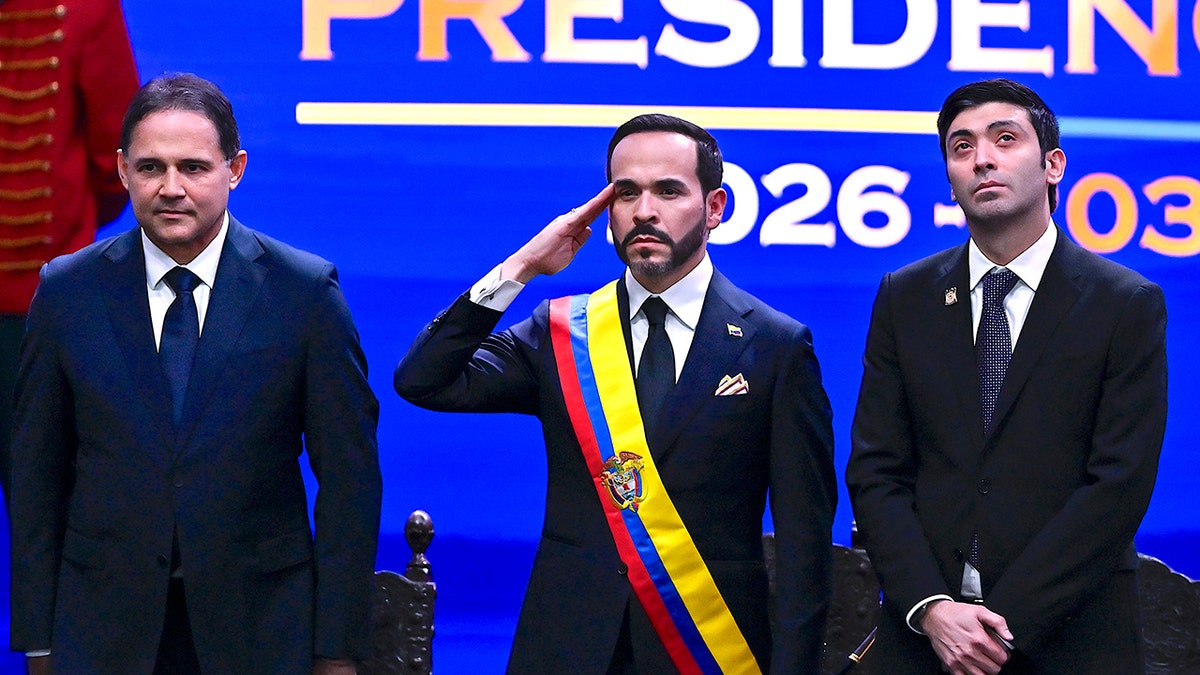
The article reports that the United States has pledged $1 billion in support to Colombia immediately after the inauguration of its new right-wing populist president, Abelardo de la Espriella. The Biden-style security package, announced by the Trump administration, is presented as part of a broader alignment between the two governments on issues such as organized crime, drug trafficking, and illegal immigration. De la Espriella, a lawyer and businessman who brands himself as an outsider and “El Tigre,” used his first speech to promise a hardline crackdown on cartels and armed insurgents, abandoning the previous left-wing administration’s “total peace” strategy.
The article places this political shift in a wider regional context: several Latin American countries are moving to the right amid economic distress and gang violence, while Donald Trump is shown actively favoring ideologically aligned leaders. It contrasts de la Espriella’s approach with that of former president Gustavo Petro, who favored negotiation and peace-building, and notes that critics saw Petro’s policies as ineffective. The piece also explains that de la Espriella plans to join Trump-backed regional security initiatives and deepen ties with the United States and Israel.
In addition to describing Colombia’s political turn, the article profiles de la Espriella as a media-savvy millionaire, former defense lawyer for drug-trafficking paramilitaries, and self-styled outsider who deliberately chose Cali for his inauguration to distance himself from Bogotá’s political establishment. The article closes by noting the broader regional implications for leaders such as Brazil’s Lula da Silva and the strong presence of U.S. political figures at the inauguration.
Entities: Abelardo de la Espriella, Donald Trump, Colombia, United States, Gustavo Petro • Tone: analytical • Sentiment: neutral • Intent: inform
09-08-2026
The article reports that the United States has pledged $1 billion in security assistance to Colombia following the inauguration of Abelardo de la Espriella, a right-wing populist and Trump-backed political newcomer. De la Espriella, a millionaire lawyer known for theatrical style and hardline rhetoric, won office after campaigning on public anger over violence and security concerns. In his inaugural speech, he vowed to "relentlessly defeat narco-terrorism" and declared that dialogue with armed groups was exhausted, signaling a major break from the more conciliatory approach of former President Gustavo Petro.
The piece frames the new administration as a sharp political and diplomatic pivot for Colombia and for U.S.-Colombia relations. Under Petro, Colombia pursued a different anti-drug strategy and attempted peace negotiations with guerrilla groups, but those efforts did not produce the desired results and left many voters frustrated by continuing violence. De la Espriella is presented as a close ally of President Trump, eager to deepen military cooperation, potentially host U.S. troops, and take aggressive action against cocaine labs and insurgent groups. The article emphasizes that Colombia remains a vital U.S. partner in counternarcotics and trade, and that the new leadership is restoring a more aligned relationship with Washington after years of tension.
Entities: United States, Colombia, Abelardo de la Espriella, President Trump, Gustavo Petro • Tone: analytical • Sentiment: neutral • Intent: inform
09-08-2026
Colombia has entered a major political shift with the inauguration of conservative President Abelardo de la Espriella, nicknamed “El Tigre,” who has pledged to undo much of former President Gustavo Petro’s left-wing agenda. In his inaugural remarks, de la Espriella promised to restore order, authority, freedom, and stronger security while rebuilding ties with the United States and taking a tougher stance toward Venezuela, Cuba, and Nicaragua. The event drew a notable international audience, including conservative leaders from Latin America, U.S. officials, and other prominent figures, underscoring the regional significance of the transition.
The article emphasizes that de la Espriella’s ambitions will collide with severe practical constraints. Colombia’s fiscal position is described as fragile, with a large deficit, a significant financing gap, and limited room to fund new programs or security initiatives. Economic growth is projected to remain modest, while inflation continues to constrain spending. Security is portrayed as the second major challenge: violence, homicide, criminal organizations, and guerrilla groups have expanded across parts of the country, leaving the new administration with high expectations but limited resources.
The piece frames de la Espriella’s presidency as a test of whether a rightward political turn in Colombia can produce concrete changes in governance, public safety, and foreign policy. It also situates his rise within a broader continental shift toward conservative politics in Latin America, while highlighting uncertainty about whether campaign promises can be translated into policy outcomes given Colombia’s economic and security realities.
Entities: Colombia, Abelardo de la Espriella, El Tigre, Gustavo Petro, United States • Tone: analytical • Sentiment: neutral • Intent: inform