09-08-2026
Two drones were detected flying over a German military base in Mechernich late Thursday night, prompting a security response and a police investigation. The incident came only two days after German authorities found a drone carrying explosives at Leipzig/Halle Airport, one of the country’s major cargo hubs. The military said the drones were seen by security surveillance around 10 p.m., were confirmed, and led to the deployment of military police. Local police have opened an investigation, but few additional details have been released.
The article places the Mechernich incident in a broader European security context. It notes that drone sightings over civilian and cargo airports have become more frequent, and that last year similar unexplained drone flights across EU airspace caused alarm and forced flight cancellations affecting thousands of travelers. It also highlights the strategic importance of Leipzig/Halle Airport, which supports NATO’s Strategic Airlift International Solution (SALIS) and helps move equipment to NATO battle groups along the alliance’s eastern flank.
The article further links the incidents to wider concerns among U.S. and European officials about Russian activity. According to officials cited by CBS News, American intelligence believes Russian President Vladimir Putin may be increasingly willing to authorize provocative actions that could reach NATO territory. Western governments have accused Russia and its proxies of sabotage, cyber operations, and drone incursions since the invasion of Ukraine. Russia’s embassy in Germany rejected those accusations, calling the Leipzig incident part of an anti-Russian campaign.
Entities: Bundeswehr base in Mechernich, German Armed Forces, German Joint Force Command, Euskirchen police department, Bleiberg Barracks • Tone: analytical • Sentiment: negative • Intent: inform
09-08-2026
Ukraine has denied intentionally targeting Bulgaria after a drone entered Bulgarian airspace on Saturday and exploded near an international gas pipeline shortly after crossing from Romania. Bulgarian defense officials said there were signs the drone may have been the type used by Ukrainian forces, but they also described the incident as likely accidental. A Ukrainian foreign ministry spokesperson said Kyiv was investigating and was in close contact with Bulgarian officials to clarify what happened. Bulgarian Prime Minister Rumen Radev said the drone exploded just inside Bulgarian territory, near key compressor stations on the Trans-Balkan gas pipeline, but caused no casualties or damage. The article places the incident in a broader regional context of repeated drone incursions into NATO airspace since Russia’s full-scale invasion of Ukraine, citing similar cases in Latvia, Estonia, Lithuania, Moldova, and Romania. Officials have often blamed such incidents on Russian electronic warfare, underscoring the continuing spillover of the war into neighboring countries and sensitive energy infrastructure.
Entities: Ukraine, Bulgaria, Romania, NATO, European Union • Tone: analytical • Sentiment: neutral • Intent: inform
09-08-2026
U.S. intelligence agencies assess that Russian President Vladimir Putin may now be more willing to approve provocative actions that could spill onto NATO territory, including hybrid operations, cyberattacks, and other deniable tactics. According to officials briefed on the matter, the aim would not necessarily be to provoke outright war, but to probe NATO’s cohesion and gauge how the Trump administration might respond if an ally were attacked. The assessment comes amid a series of incidents that have heightened Western concern, including an explosive-laden drone found at an airport in Leipzig, Germany, which U.S. officials believe was of Russian origin, as well as Russian drone incursions into Romania, a missile crossing into Poland, and an increase in suspected sabotage and cyber activity across Europe.
The article places this shift in the context of Russia’s heavy losses in Ukraine and stalled diplomatic efforts to end the war. It also notes the broader strategic uncertainty surrounding NATO’s Article 5 commitment, especially given President Trump’s repeated questioning of alliance obligations and his criticism of European allies’ defense spending. The piece emphasizes that Russia may be testing the alliance during a moment of strain, while NATO leaders continue to warn that Moscow is escalating hybrid warfare against Europe.
Entities: Russian President Vladimir Putin, NATO, United States intelligence agencies, CBS News, Leipzig, Germany • Tone: analytical • Sentiment: negative • Intent: inform
09-08-2026
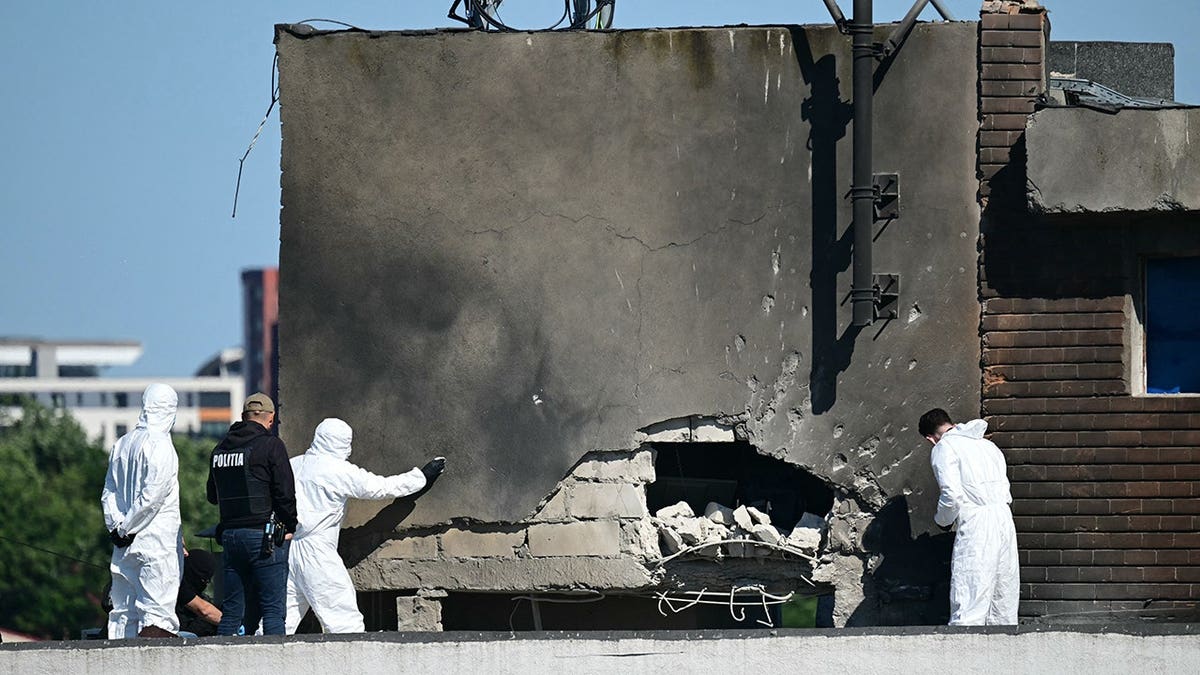
Fox News reports, citing a new U.S. intelligence assessment and a Wall Street Journal account, that Vladimir Putin may be preparing a limited attack on a NATO member state within the next few years, potentially as soon as this fall and as late as 2029. The alleged goal would not be a full-scale war, but a measured strike intended to probe NATO’s credibility, test Article 5, and potentially fracture unity between the United States and European allies. The article says intelligence analysts see signs that Russia is already testing the alliance through incidents such as a drone strike on a Romanian apartment building and Russian cruise missiles landing in Poland. The assessment suggests that any future attack could take the form of a cyberattack or small-scale land incursion, with the Baltics or Poland seen as likely targets. A land attack is described as less likely because it would almost certainly trigger NATO’s collective defense clause, while the response to a cyberattack is less certain. The article also notes tensions over U.S. munitions stockpiles and support for Ukraine, though Pentagon spokesman Sean Parnell rejects claims that America is short on weapons. NATO spokesman Col. Martin O’Donnell says the alliance is prepared to deter and defend against any scenario. Overall, the piece frames Russia as increasingly aggressive and NATO as alert but facing difficult choices over how to respond to limited, hybrid aggression below the threshold of war.
Entities: Vladimir Putin, Russia, NATO, Article 5, Ukraine • Tone: urgent • Sentiment: negative • Intent: inform