10-08-2026
Two drones were spotted over a military base in western Germany just days after an explosive-laden device was found at Leipzig/Halle airport, intensifying concerns about possible hybrid threats against German and broader European security infrastructure. The German armed forces confirmed the sighting on Thursday evening at a base in Mechernich, near Bonn, which reportedly stores components for US-made Patriot air-defense systems. Military police responded first before local police took over the matter.
The incident comes amid a series of drone sightings near airports and military sites across Europe, especially in countries backing Ukraine against Russia. While suspicion has often fallen on Moscow, Russia has repeatedly denied involvement. German Interior Minister Alexander Dobrindt said Germany is now a regular target of destabilizing attacks and described the situation as a form of daily hybrid warfare.
The article also places the Mechernich incident in the context of the ongoing investigation into how a drone carrying explosives reached a runway at Leipzig/Halle airport, a site used by NATO, German forces, and Ukraine’s Antonov Airlines. German media reports say the Mechernich base includes storage for equipment and spare parts used to maintain Patriot missile batteries. These systems remain vital to Ukraine’s defense against Russian ballistic missiles, but President Volodymyr Zelensky has warned that interceptor supplies are running low. The piece further notes that European officials have discussed a continent-wide ‘drone wall’ in response to similar incursions, reflecting growing anxiety over aerial threats and hybrid warfare across Europe.
Entities: Drones, German armed forces (Bundeswehr), Mechernich, Bonn, Leipzig/Halle airport • Tone: analytical • Sentiment: negative • Intent: inform
10-08-2026
Ukraine has denied deliberately targeting Bulgaria after a drone entered Bulgarian airspace from Romania, exploded near an international gas pipeline, and caused no casualties or damage. Bulgaria’s defense ministry said there were signs the drone was of the type used by Ukraine’s armed forces and suggested the strike was likely accidental, while Ukrainian officials said they were investigating and were in close contact with Bulgarian authorities. Bulgarian Prime Minister Rumen Radev said the drone exploded shortly after 5 a.m. about 109 yards inside Bulgarian territory, near key gas infrastructure including the Trans-Balkan pipeline and compressor stations on both the Bulgarian and Romanian sides of the border. The incident prompted Bulgaria to say it would increase surveillance and redeploy anti-drone capabilities to the border with Romania. The article also places the event in a broader regional context, noting that drone incursions into NATO airspace have become more common since Russia’s full-scale invasion of Ukraine, with similar incidents reported in Latvia, Estonia, Lithuania, Moldova, and Romania. Officials in some of those cases have blamed Russian electronic warfare for accidental drone strays.
Entities: Ukraine, Bulgaria, Romania, NATO, European Union • Tone: analytical • Sentiment: neutral • Intent: inform
10-08-2026
U.S. intelligence agencies believe Russian President Vladimir Putin may be increasingly willing to authorize provocative actions that could spill onto NATO territory, including hybrid operations, cyberattacks, and other deniable measures. According to U.S. officials briefed on the assessment, the goal would not necessarily be to start a direct war, but to probe NATO’s cohesion and test whether the Trump administration would respond forcefully if an ally were attacked. The warning comes amid a series of incidents that have raised concerns in Europe, including an explosive-laden drone found in Leipzig, Germany, which U.S. officials assess was of Russian origin, as well as Russian drone incursions into Romania and a missile that crossed into Poland. European leaders such as NATO Secretary General Mark Rutte have long argued that Russia is escalating hybrid tactics and could eventually threaten NATO more directly.
The article also places the assessment in the broader context of Russia’s war in Ukraine, where Moscow is suffering heavy battlefield losses and diplomatic efforts to end the conflict have stalled. U.S. officials say Russia is losing tens of thousands of troops per month, while newly mobilized recruits are reportedly surviving only minutes in combat because of Ukraine’s drone warfare. The story notes the significance of NATO’s Article 5 mutual-defense commitment and contrasts it with President Trump’s past skepticism about allied obligations and his administration’s pressure on European countries to take on more defense responsibility. The report is based on U.S. intelligence assessments first reported by The Wall Street Journal, and comments from the CIA, NATO, and the Russian Embassy were either unavailable or pending at publication.
Entities: Russian President Vladimir Putin, NATO, United States intelligence agencies, CBS News, Germany • Tone: analytical • Sentiment: negative • Intent: inform
10-08-2026
According to a Wall Street Journal report cited by Fox News, new U.S. intelligence suggests Russian President Vladimir Putin could launch a limited attack against a NATO member as early as this fall and sometime through 2029. The alleged purpose would be to test NATO’s Article 5 mutual-defense commitment and expose fractures within the alliance, especially between the United States and European allies. Intelligence officials reportedly believe the most likely forms of attack would be below the threshold of a full-scale invasion, such as cyberattacks, drone incidents, missile spillover, or a small land incursion, with the Baltics or Poland seen as the most likely targets.
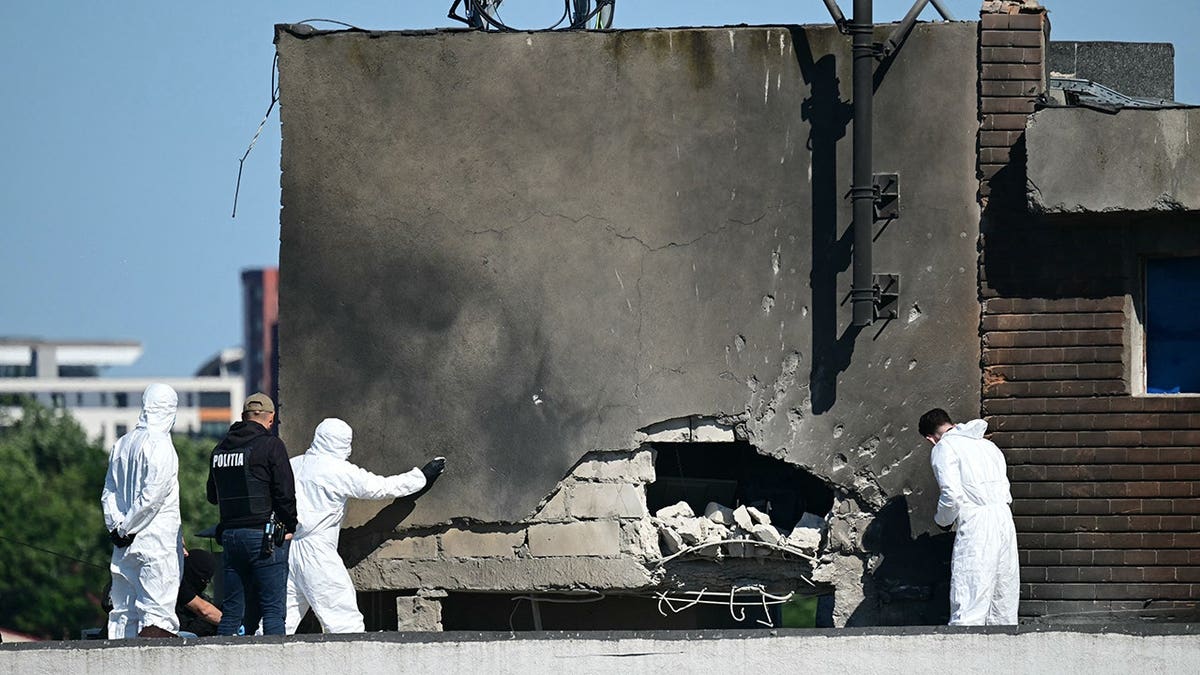
The article links this assessment to recent incidents that NATO members say show Russia probing alliance defenses, including a drone striking an apartment building in Romania and cruise missiles landing in Poland. It also notes broader concerns about Russian tactics, including hybrid warfare and potential attacks on NATO’s eastern flank. A former CIA station chief quoted in the article says Putin is challenging NATO’s credibility and trying to separate the U.S. from its allies.
Fox News also notes a dispute over the state of U.S. munitions stockpiles, with some claims that support for Ukraine and the war in Iran have depleted them. The Pentagon, through spokesman Sean Parnell, rejects that claim and says the U.S. retains the capability to strike when and where the president chooses. NATO, for its part, says it is preparing for multiple scenarios and remains ready to deter and defend.
Entities: Vladimir Putin, Russia, NATO, Article 5, Ukraine • Tone: urgent • Sentiment: negative • Intent: inform