08-08-2026
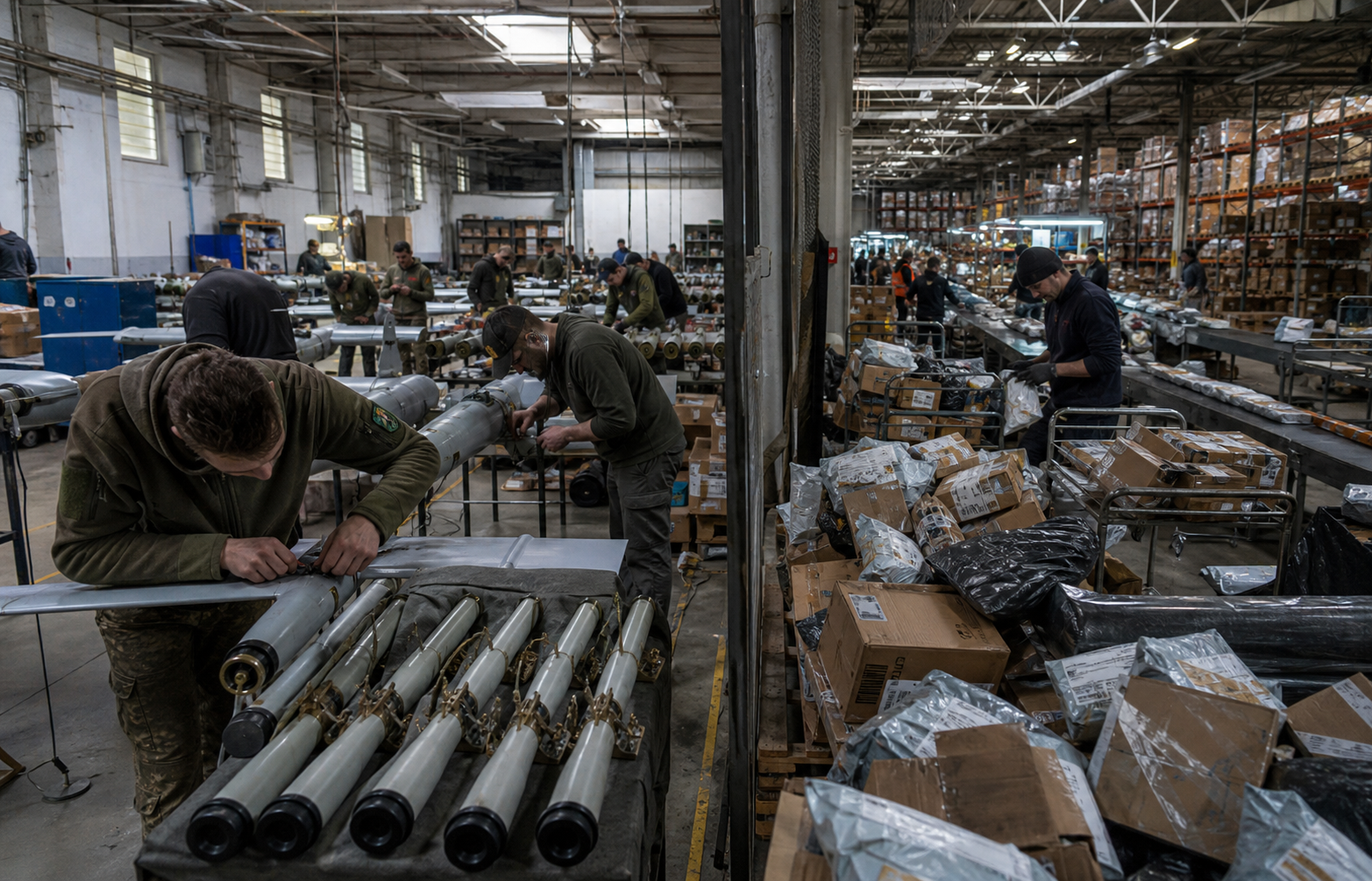
The article profiles Fire Point, a fast-growing Ukrainian defense-tech company whose drones and missiles have become central to Kyiv’s deep-strike campaign against Russia. CEO Iryna Terekh argues that Ukraine has learned military leverage is necessary to make diplomacy possible, and she says Fire Point now facilitates more than 60% of Ukraine’s long-range strikes. Founded after Russia’s full-scale invasion in 2022, the company has expanded from three founders to more than 7,000 employees and aims to produce over 100,000 drones by year-end. Its flagship systems include the FP-1 deep-strike drone and FP-5 Flamingo cruise missile, both intended to support attacks on Russian energy and military infrastructure.
The piece places Fire Point within the broader escalation of the war: Ukraine is intensifying drone strikes on Russian targets, including logistics and consumer supply chains like Wildberries warehouses, while Russia is increasing missile attacks on Ukrainian cities amid shortages of Ukrainian ballistic missile interceptors. President Volodymyr Zelenskyy has highlighted Fire Point’s role, and Ukraine is pressing allies—especially the U.S. and Europe—for faster delivery or domestic production of air-defense interceptors. Terekh says Fire Point is trying to develop a lower-cost interceptor, though such programs usually take decades rather than years.
A major theme is the friction between wartime urgency and European bureaucracy. Terekh criticizes EU red tape as a strategic obstacle that slows production, especially for Flamingo missiles awaiting funding. The article also notes uncertainty around U.S. support, with Donald Trump casting doubt on plans for Ukraine to manufacture Patriots domestically or in Europe. Overall, the story frames Fire Point as a symbol of Ukraine’s improvised defense-industrial surge and the increasingly industrialized, long-range nature of the conflict.
Entities: Fire Point, Iryna Terekh, Volodymyr Zelenskyy, Vladimir Putin, Russia • Tone: analytical • Sentiment: neutral • Intent: inform
08-08-2026
Tatyana Kim, the billionaire co-founder of Wildberries and Russia’s richest woman, is facing an escalating crisis as Ukrainian drone and missile strikes increasingly target her company’s warehouses across Russia. Wildberries, often called Russia’s Amazon, has become a strategic target in Kyiv’s effort to make the war more tangible for ordinary Russians and increase pressure on Vladimir Putin. The attacks have destroyed or damaged dozens of warehouses, killed workers, disrupted logistics, and caused major losses in merchandise and warehouse capacity. The article explains that the strikes come on top of existing strain in Russia’s economy and retail sector, reducing consumer spending and prompting some sellers to move to rival platform Ozon. Kim says Wildberries is responding by decentralizing distribution, rebuilding logistics, offering limited insurance and payouts to sellers, and seeking broader support from the Russian government. The story also places Kim’s current struggle in the context of her earlier battles, including a politically fraught merger, a public feud with her ex-husband Vladislav Bakalchuk, and a violent shootout near the company’s Moscow office. While Wildberries remains operational and has significant infrastructure, the company’s future now depends on how long the attacks continue, how quickly it can adapt, and whether the Russian state provides meaningful relief.
Entities: Tatyana Kim, Wildberries, Ukraine, Kyiv, Volodymyr Zelensky • Tone: analytical • Sentiment: negative • Intent: inform
08-08-2026
The article explains why Ukraine has shifted part of its drone campaign toward Wildberries, Russia’s largest e-commerce marketplace, and what damage the strikes have caused. Wildberries is a household name in Russia, with tens of millions of monthly users, a vast pickup-point network, and deep penetration into both cities and remote areas. Although the platform does not sell overtly military equipment, Ukrainian officials argue it supports Russia’s war effort indirectly because soldiers and their families buy nonlethal essentials there, including boots, socks, and tactical gear.
The story also details Wildberries’s importance to Russia’s consumer economy and to thousands of small businesses that depend on it for storage, fulfillment, and delivery. Ukrainian drone strikes on the company’s warehouses have killed employees, injured dozens, and disrupted operations at multiple sites, with an estimated 100,000 businesses losing stock. The article notes that the campaign is meant to puncture the image of normal life in Russia. It also explains the company’s ownership turmoil: founder Tatyana Kim built Wildberries with her former husband, later won full ownership in divorce proceedings, and then agreed to a controversial merger that transferred a major stake to Russ Outdoor, a company critics link to Kremlin-connected interests. The article closes by describing Wildberries’s efforts to compensate affected sellers and the Russian government’s consideration of financial aid.
Entities: Wildberries, Ukraine, Russia, Ukrainian drones, Tatyana Kim • Tone: analytical • Sentiment: neutral • Intent: inform