07-09-2026
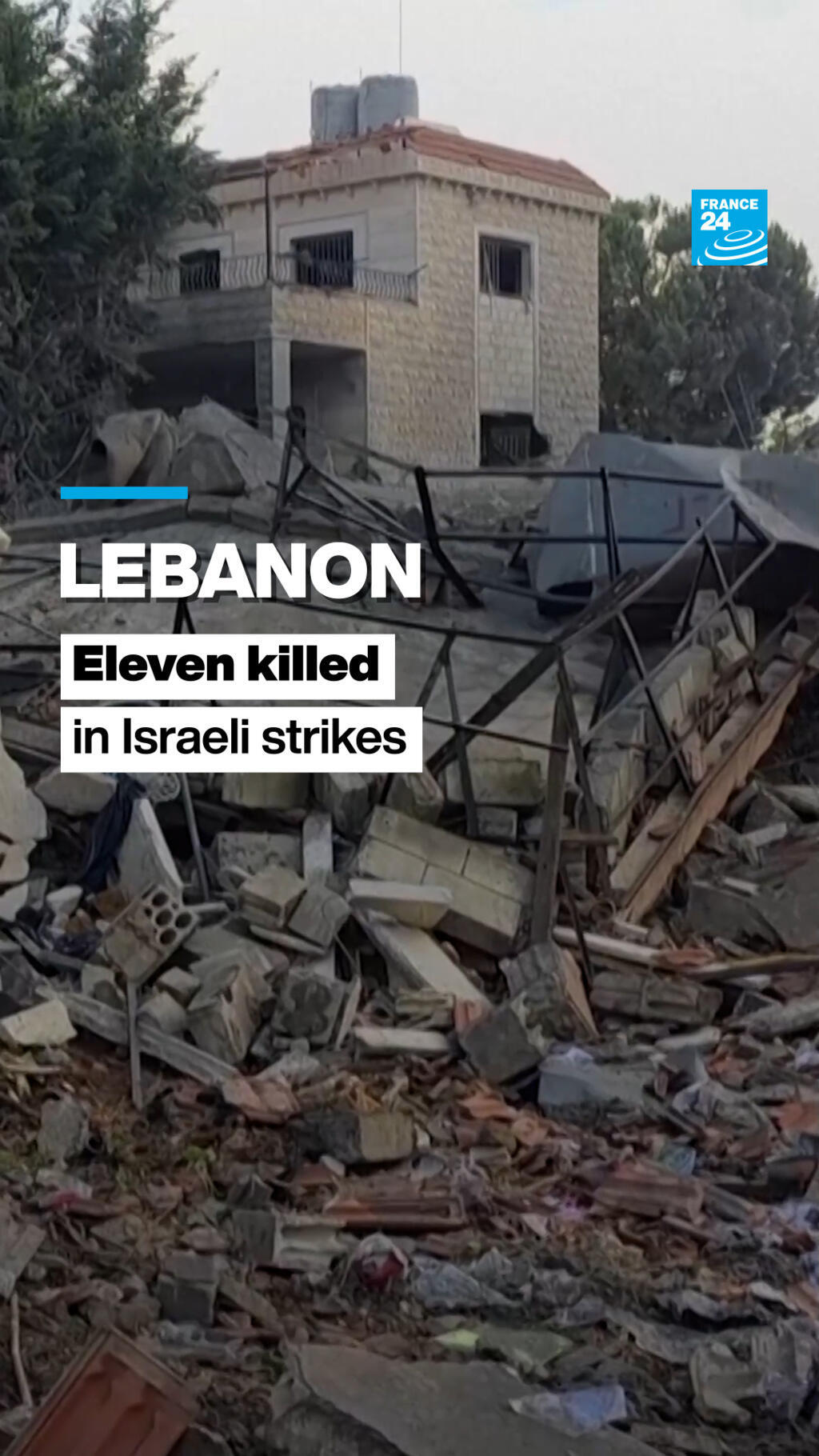
Israeli air strikes on Kfar Roummane, a village in southern Lebanon’s Nabatieh district, killed at least 12 people, according to Lebanon’s health ministry. Eleven people, including two children and four women, died when an overnight strike destroyed a three-storey residential building. A second strike hit a vehicle carrying paramedics, killing one paramedic and injuring two others. The ministry said eight people were injured in the building strike, including three children and another paramedic.
The Israeli military said it had targeted Hezbollah infrastructure and several people transferring weapons. It said the strikes were carried out in response to two explosive drones launched by Hezbollah fighters at Israeli troops near the Ali al-Taher ridge, inside an area occupied by Israeli forces and described by Israel as a security zone. The military said claims that uninvolved civilians had been harmed were under review.
The attacks formed part of an intensified Israeli campaign across southern Lebanon. The health ministry said at least 27 people had been killed in Israeli strikes over three days, including 11 people in separate attacks on Sunday. Residents have reportedly been fleeing areas near the occupied strip of territory. A resident of Kfar Roummane described repeatedly moving her family to safety and planning to leave for Sidon, saying her children were increasingly afraid.
Lebanese President Joseph Aoun called the escalation dangerous and said it threatened a US-brokered ceasefire intended to end the conflict between Israel and Hezbollah. The agreement calls for Hezbollah to disarm, Israeli forces to withdraw gradually from southern Lebanon, and the Lebanese army to deploy in the area. Hezbollah rejects the framework and says linking withdrawal to disarmament crosses its red lines.
The conflict began drawing Lebanon in on 2 March after Hezbollah launched rockets at Israel following the killing of Iran’s supreme leader. Lebanon’s health ministry says 4,362 people have been killed, while Israeli authorities report 40 soldiers and four civilians killed.
Entities: Israel Defense Forces (IDF), Hezbollah, Lebanon, Kfar Roummane, Nabatieh district • Tone: analytical • Sentiment: negative • Intent: inform
07-09-2026
Israeli airstrikes on the southern Lebanese town of Kfar Rumman killed at least 11 people early Monday, according to Lebanon’s state-run National News Agency. The victims reportedly included two children and two medics. The agency said an Israeli warplane struck a residential building shortly after midnight, killing nine people, including the children. A separate drone strike on a civilian vehicle killed two medics. Lebanon’s Health Ministry gave a different preliminary account, saying one strike killed eight people, including a child and two women, and wounded 11 others, including four children and two women. The differing casualty figures were not reconciled in the report.
The attacks occurred as Israel has intensified its bombardment of southern Lebanon despite a June ceasefire intended to end fighting between Israel and Hezbollah. At least seven people were reportedly killed in Israeli strikes the previous day. The Kfar Rumman strikes were carried out without an online evacuation warning from the Israeli military. Israel’s military did not immediately respond to questions about whether it knew civilians and medics were present or why no warning had been issued. It later issued a separate warning for another town, saying it intended to target Hezbollah facilities.
The article places the latest casualties within a broader escalation. It reports that Israeli strikes in Lebanon have killed more than 4,300 people since Hezbollah launched rockets at Israel on March 2, two days after U.S. and Israeli strikes on Iran began. Those events triggered an Israeli air and ground offensive. Although the ceasefire sharply reduced violence, Israeli troops remain in parts of southern Lebanon, which Israel has declared a security zone, and have continued demolishing villages and conducting strikes both inside and north of the zone, often without evacuation warnings.
Entities: Kfar Rumman, Lebanon, Southern Lebanon, Israel, Hezbollah, Lebanon’s National News Agency • Tone: urgent • Sentiment: negative • Intent: inform
07-09-2026
Israel carried out a wave of airstrikes across southern Lebanon on September 7, killing 13 people, including women and children, according to Lebanon’s health ministry. The strikes marked a sharp escalation after several weeks of relative calm under a ceasefire framework established in June. The deadliest attack hit a building in Kfar Rumman, killing 11 people, including two children and four women. A separate strike in the town killed an 18-year-old rescuer and wounded another. Further attacks killed one person in Rihan and wounded nine people, including two children and three women, in Nabatieh.
Israel said the strikes targeted Hezbollah infrastructure and members who were allegedly transferring weapons. The Israeli military said it was responding to two explosive drones launched toward its troops and accused Hezbollah of repeatedly violating the ceasefire by rebuilding its military capabilities and conducting drone attacks. Israel also said it killed a Hezbollah member near Beaufort fortress after he opened fire on Israeli troops; two Israeli soldiers were reportedly lightly wounded. Hezbollah has not commented on the latest strikes or claimed an attack since June 20.
The attacks came amid continued Israeli military operations inside a self-declared security zone approximately 10 kilometers inside Lebanon along the border. Israel has intensified strikes in the Nabatieh area after claiming it seized the strategic Ali al-Taher ridge from Hezbollah. Residents who had returned after being displaced described living in fear, while rescue teams searched the rubble of destroyed homes containing schoolbooks and household remains.
Lebanon says more than 4,300 people have been killed by Israeli airstrikes and ground operations since March. Lebanese President Joseph Aoun called on Washington and the international community to help halt the attacks.
Entities: Israel, Lebanon, Hezbollah, Kfar Rumman, Nabatieh • Tone: analytical • Sentiment: negative • Intent: inform
07-09-2026
France 24 reports that Israeli strikes on a town in southern Lebanon early Monday killed at least 11 people, according to Lebanon’s state news agency. The victims reportedly included two children and two medics. The article does not identify the town or provide further details about the circumstances of the strikes, including the specific targets, the extent of property damage, or whether there were additional casualties.
The report places the strikes within a broader escalation along the Israel-Lebanon border. Israel has intensified its bombardment of southern Lebanon in recent days, despite a ceasefire agreed in June that was intended to stop fighting between the Israeli military and Hezbollah, the Lebanese armed group. The continued attacks indicate that the ceasefire has not fully halted hostilities or prevented renewed violence in the region.
The article is a brief video news report, credited to Reuters and France 24, with video by Faniry Andriamihaja and Juliette Montilly. It provides a concise account of the reported fatalities and the recent increase in Israeli military activity, but does not include statements from Israel, Hezbollah, Lebanese officials beyond the state news agency’s casualty report, or independent confirmation of the death toll. The report’s focus is on the immediate human cost of the strikes and the apparent deterioration of the June truce. It offers no broader assessment of the ceasefire’s terms, the reasons for the renewed bombardment, or possible international reactions.
Entities: Israel, Lebanon, Southern Lebanon, Israeli military, Hezbollah • Tone: urgent • Sentiment: negative • Intent: inform
07-09-2026
The France 24 live update, issued and modified on September 7, 2026, reports that the Israeli army ordered residents of a specified area in Deir Zahrani, in southern Lebanon, to evacuate ahead of planned strikes. The stated target was the Iran-backed Hezbollah, although the available text does not provide further details about the intended targets, the size of the area covered by the order, or the number of residents affected. The evacuation warning indicates an imminent or anticipated Israeli military operation and underscores the continuing risk to civilians in southern Lebanon.
The article says that Hezbollah’s Al-Manar television channel subsequently reported Israeli airstrikes on Deir Zahrani. However, the excerpt does not independently confirm the strikes or provide information about casualties, structural damage, or the response from Lebanese authorities, Israel, Hezbollah, Iran, or other governments. A photograph caption describes a destroyed vehicle and buildings in Nabatieh al-Fawqa, also in southern Lebanon, on June 23, 2026, but the text does not explicitly connect that image to the reported events in Deir Zahrani.
France 24 presents the item as part of a continuing liveblog and directs readers to follow it for additional updates. The report credits France 24 together with Agence France-Presse, The Associated Press, and Reuters. The supplied webpage also displays a “Page not found” notice stating that the requested content is unavailable, so the excerpt may not contain the full liveblog or subsequent developments. Based strictly on the available material, the central development is an Israeli evacuation order followed by a Hezbollah-affiliated report of airstrikes in southern Lebanon amid ongoing hostilities involving Israel and Hezbollah.
Entities: Israel, Israeli army, Lebanon, Deir Zahrani, southern Lebanon • Tone: urgent • Sentiment: negative • Intent: inform
07-09-2026
A France 24 video report says that Israeli airstrikes overnight killed 11 people in a village in southern Lebanon, according to Lebanese state media. The victims reportedly included two infants, highlighting the impact of the attacks on civilians. The strikes occurred one day after separate Israeli raids in the area reportedly killed seven people, bringing the reported death toll from the two incidents to 18.
The report is presented from Beirut by France 24 correspondent Renée Davis, who provides the latest information on the attacks. The supplied article does not identify the village, provide details about the intended targets, or include statements from the Israeli government or military. It also does not describe the circumstances of the earlier raids beyond their reported death toll.
The report places the attacks within the broader context of continuing violence between Israel and Lebanon. Its concise, breaking-news format focuses primarily on the number of casualties and the deaths of two children. The casualty figures are attributed specifically to Lebanese state media, and no independent confirmation or additional reporting is included in the available text.
The article’s main purpose is to inform viewers about the reported overnight strikes and their civilian consequences. The headline and opening sentence emphasize the deaths of children, while the reference to the previous day’s raids suggests an ongoing pattern of deadly attacks in southern Lebanon. The overall presentation is factual but urgent, reflecting the seriousness of the reported loss of life and the continuing instability in the region.
Entities: Israeli airstrikes, Southern Lebanon, Lebanese state media, Israel, Lebanon • Tone: urgent • Sentiment: negative • Intent: inform
07-09-2026
Lebanese President Joseph Aoun accused Israel of undermining a US-brokered agreement intended to end hostilities between Israel and Lebanon after at least 27 people were killed in Israeli attacks across southern Lebanon over three days. Meeting French Justice Minister Gerald Darmanin, Aoun condemned the reported killing of civilians, including children and women, and the destruction of homes and property, saying the actions threatened efforts to halt the regional escalation.
Rescue teams continued searching rubble after overnight strikes killed at least 12 people, including a child and two women, according to Lebanon’s health ministry. Eleven people were killed on Sunday and four on Friday. Israel also destroyed the Ghandour Hospital in Nabatieh Al Fawqa, a facility that had been closed since 2024. The Israeli military said the building was being used as a Hezbollah command centre, though the claim could not be independently verified.
The escalation followed Israel’s seizure of the strategically important Ali Al Taher ridge, which overlooks Nabatieh and is viewed by Israel as a key Hezbollah defensive position. Israeli Defence Minister Israel Katz said the operation completed the sealing of a security zone in southern Lebanon and followed intelligence about Hezbollah command-and-control tunnels.
The attacks have continued despite a framework agreement signed by Israel and Lebanon on June 26. The deal calls for a gradual Israeli withdrawal from designated areas in exchange for Hezbollah’s disarmament and the Lebanese army taking control. Implementation talks have progressed slowly, while Israeli forces have continued advancing. Israeli media reported that troops may withdraw from the ridge after demolishing underground routes in the area.
Entities: Joseph Aoun, Israel, Lebanon, Southern Lebanon, US-brokered framework agreement • Tone: urgent • Sentiment: negative • Intent: inform
07-09-2026
The Al Jazeera video report, published on 7 September 2026, shows the moment an Israeli strike landed near an Al-Manar journalist and his camera operator. The footage captures the immediate danger faced by the two media workers as the strike hit close to their position while they were reporting. According to the report, both individuals were injured in the incident, although their injuries were not described in detail. The article states that they were in good health following the strike. The report does not identify the journalist or camera operator by name, nor does it provide further information about the precise location of the incident, the circumstances surrounding the strike, or whether other people were affected. Its focus is the video evidence of the strike occurring next to the journalists and the resulting injuries. The brief item presents the event as an example of the risks faced by reporters and media crews operating in areas affected by Israeli military action. The accompanying social-media references and sharing prompts are website features rather than substantive details about the incident. Overall, the report informs viewers about a strike that narrowly occurred near two Lebanese media workers and highlights that they survived and were reported to be in good health.
Entities: Israeli strike, Lebanese reporter, Al-Manar, Al-Manar journalist, Camera operator • Tone: urgent • Sentiment: negative • Intent: inform