07-09-2026
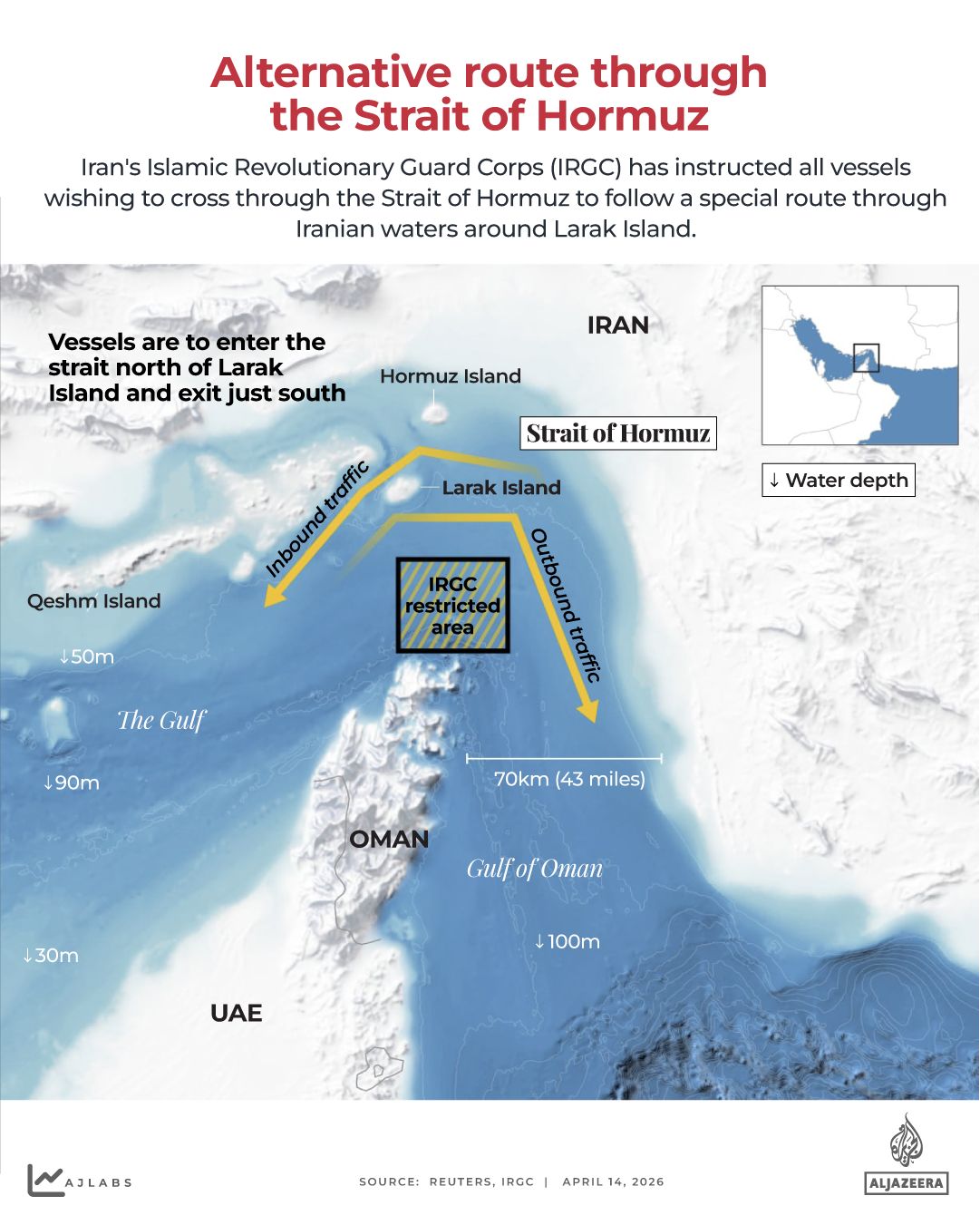
Iran says it is close to finalizing an agreement with Oman to establish a temporary and safe maritime route through the Strait of Hormuz. Iranian Foreign Ministry spokesperson Esmail Baghaei said the agreement could be registered with the International Maritime Organization in the coming days. The proposed arrangement follows ongoing disagreements over control of the strategic waterway and a separate, United Nations-backed route in its southern section near Oman.
The Strait of Hormuz is a vital passage for global oil and natural-gas shipments. According to the article, Iran has sought to close the strait following a war that began in late February, when the United States and Israel attacked Iran. Tehran’s objective has reportedly been to impose economic pressure on Washington. The United States has responded by enforcing a naval blockade of Iranian ports and escorting tankers through the strait, despite Iranian attempts to fire on them.
Baghaei also criticized a draft resolution being prepared by the United States and its European allies, describing it as evidence of “bad faith” and an effort to escalate tensions. The proposed resolution could be considered by the Board of Governors of the International Atomic Energy Agency and would seek to refer Iran to the United Nations Security Council for alleged failures to meet its nuclear nonproliferation obligations.
Under the Nuclear Non-Proliferation Treaty, Iran is required to declare its nuclear materials and activities and permit IAEA inspections to ensure they are not diverted from peaceful purposes. The issue has been under consideration since June 2025, when the IAEA board found Iran formally noncompliant for the first time in two decades. A Security Council referral could lead to legally binding measures, including sanctions or asset freezes, increasing the diplomatic and economic pressure on Tehran.
Entities: Iran, Oman, Esmail Baghaei, Strait of Hormuz, International Maritime Organization • Tone: analytical • Sentiment: negative • Intent: inform
07-09-2026
The article examines Iran’s plan to establish a restricted zone around the Strait of Hormuz amid escalating attacks between Tehran and Washington. Iran’s Supreme National Security Council Secretary Mohsen Rezaei says the zone would begin at the line of the US naval blockade, extend toward the strait, and reach into the Persian Gulf. Ships entering the area could be placed on an Iranian sanctions list. Tehran says it is also coordinating with Oman on new maritime maps and an international corridor through Iranian and Omani waters, but it has not disclosed precise boundaries or enforcement procedures.
The proposed zone follows the collapse of a 60-day memorandum of understanding signed in June. Under that agreement, the United States was to end its naval blockade within 30 days, while Iran promised to clear mines and allow ships to transit the strait without charge for 60 days. The resumption of attacks has sharply reduced commercial traffic and created competing navigation routes. Iran insists ships use a corridor near its coast, while Oman and the International Maritime Organization have promoted a southern route through Omani waters.
Traffic continues through Hormuz but is far below prewar levels. US officials claim more than nine million barrels of oil per day are still moving through the waterway, while maritime tracking data indicates that only a small number of vessels are crossing daily compared with more than 130 before the conflict. Iran has attacked or threatened ships, and at least 19 seafarers have reportedly been killed since March.
The article concludes that Iran has demonstrated an ability to make passage dangerous, but it remains uncertain whether Tehran can militarily enforce a much broader restricted zone, particularly against vessels protected by the US Navy. The competing claims, blockade, and attacks have made the strait a major source of regional and global energy insecurity.
Entities: Strait of Hormuz, Iran, United States, Persian Gulf, Oman • Tone: analytical • Sentiment: negative • Intent: analyze
07-09-2026
Al Jazeera reports that Iran intends to establish a restricted maritime zone around the Strait of Hormuz and in parts of the Gulf. Mohsen Rezaei, identified as Iran’s security chief, said Tehran would announce the zone, although the report does not provide a specific timeline, geographic coordinates, or details about how the restriction would be enforced. Ships that enter the designated area would reportedly be placed on a sanctions list, indicating that Iran may treat unauthorized entry as a serious violation subject to punitive measures. The Strait of Hormuz is a strategically important waterway for international shipping and energy exports, so any announced restriction could have implications for maritime traffic, regional security, and tensions involving Iran. The brief news item provides no further information about whether the measure is connected to the broader US-Israel war on Iran referenced in the headline, nor does it identify the countries or vessels that could be affected. It also does not state whether the proposed zone would represent a temporary security measure, a warning to foreign ships, or an attempt to limit access to Iranian-controlled waters. The report was published on September 7, 2026, and is presented as a concise news update rather than an in-depth analysis. Its central message is that Iran is preparing to announce new restrictions near one of the world’s most sensitive maritime passages, with possible sanctions for ships entering the area.
Entities: Iran, Mohsen Rezaei, Tehran, Strait of Hormuz, Persian Gulf • Tone: neutral • Sentiment: negative • Intent: inform
07-09-2026
The supplied material does not contain the substantive body of the Al Jazeera liveblog. It includes the headline, which indicates that Tehran is expected to announce a new shipping route through or around the Strait of Hormuz in the coming days, within the context of an ongoing US-Israel war against Iran. The headline also identifies the item as live coverage of the Iran conflict and suggests that maritime transport and the strategic Hormuz waterway are central issues.
However, no individual updates, statements from officials, military developments, shipping information, reactions, or background reporting are included in the provided content. The remaining text consists primarily of website and promotional elements, including “Advertisement,” a “20 Updates” marker, and a prompt encouraging readers to enable instant alerts. Consequently, it is not possible to provide a comprehensive account of the reported route, explain why Tehran plans to introduce it, identify the parties involved, or assess its possible effects on regional security, energy markets, or international shipping.
Based on the headline alone, the apparent news focus is Iran’s management of maritime traffic during a period of heightened conflict. The Strait of Hormuz is a strategically important route for global energy shipments, so any proposed alternative or newly designated shipping route could have implications for commercial vessels and regional tensions. These implications, however, are not described in the supplied article text. The analysis below therefore distinguishes between information explicitly present in the headline and information that is unavailable because the liveblog updates were not provided.
Entities: Iran, Tehran, United States, Israel, Strait of Hormuz • Tone: neutral • Sentiment: neutral • Intent: inform
07-09-2026
Israeli strikes in southern Lebanon killed at least 11 people on Monday, including two children and two medics, according to Lebanon’s state news agency. The attacks targeted a residential building and came amid a sharp escalation between Israel and Iran-backed Hezbollah, which has made Lebanon the most significant secondary front in the broader Iran-U.S. conflict.
The strikes followed Israeli attacks across southern Lebanon on Sunday that killed at least seven people and wounded six others. Israel said those attacks were retaliation for Hezbollah drones directed at Israeli forces. Before Monday’s strike, the Israeli military issued an evacuation warning to residents of Deir al-Zahrani and nearby buildings, saying the area was close to a Hezbollah facility and that an explosive drone had violated a U.S.-brokered ceasefire.
Lebanese President Joseph Aoun described the latest violence as a dangerous escalation and called on the United States and the international community to intervene. The ceasefire, reached in June, has failed to stop recurring Israeli airstrikes and Hezbollah drone attacks. Lebanon says the conflict has killed more than 4,300 people and wounded over 12,000 since Hezbollah formally joined the war on March 2. August was reportedly the deadliest month since the truce began.
The article also places the Lebanon fighting within the wider standoff between Iran and the United States. Diplomatic efforts have stalled, military tensions have intensified, and shipping through the Strait of Hormuz remains far below prewar levels. Iranian official Mohsen Rezaei said Tehran plans to establish a restricted maritime zone and a shipping corridor managed with Oman, while warning that vessels entering the zone could face sanctions.
Separately, Iranian Foreign Ministry spokesperson Esmaeil Baghaei warned South Korea against military involvement in the Gulf or support for U.S. operations, saying such participation would have serious consequences. U.S. Energy Secretary Chris Wright said a negotiated nuclear agreement with Iran may no longer be achievable.
Entities: Israel, Hezbollah, Lebanon, Joseph Aoun, Iran • Tone: urgent • Sentiment: negative • Intent: inform
07-09-2026
The International Atomic Energy Agency says Iran is failing to meet its safeguards obligations under the Nuclear Non-Proliferation Treaty. IAEA Director General Rafael Grossi told the agency’s Board of Governors that Tehran had provided no information about declared nuclear materials and facilities, while inspectors lacked access to verify Iran’s activities on site. Grossi called for constructive engagement to restore full oversight and criticized efforts surrounding the possible revival of UN Security Council scrutiny of Iran’s nuclear program.
Iran rejected the IAEA’s assessment. Foreign Ministry spokesman Esmail Baghaei described the reports as tools of Western political pressure and warned that Tehran would take countermeasures if a new resolution sent Iran’s nuclear file back to the Security Council. He blamed restrictions on inspectors on US and Israeli strikes against Iranian enrichment infrastructure.
The article also describes escalating tensions around the Strait of Hormuz. Baghaei said negotiations with Oman on a temporary safe-transit corridor were nearing completion and could soon be registered with the International Maritime Organization. However, an IRGC Navy official said vessels using a US-designated southern corridor would not be safe from attack near Khasab, Oman. Iran also announced an exclusion zone outside the strait and threatened to place unauthorized ships, owners, and charterers on a sanctions list.
Iranian Parliament Speaker Mohammad Bagher Ghalibaf warned that US oil and gas assets in regional waters could face retaliatory strikes. Tehran separately warned South Korea that participation in Gulf maritime operations would be treated as support for US aggression. Seoul said it was consulting internationally and working to restore stability and freedom of navigation. The article presents the nuclear dispute and maritime confrontation as interconnected elements of a rapidly worsening regional crisis.
Entities: International Atomic Energy Agency (IAEA), Rafael Grossi, Iranian nuclear program, Nuclear Non-Proliferation Treaty safeguards obligations, Esmail Baghaei • Tone: urgent • Sentiment: negative • Intent: inform
07-09-2026
Iran announced that it plans to establish a new “restricted zone” near the Strait of Hormuz within days, according to Mohsen Rezaei, secretary of Iran’s Supreme National Security Council. The proposed exclusion zone would extend from the area where a US blockade of Iran begins into other parts of the Gulf. Rezaei warned that any ship entering the zone with the intention of transiting the strait would be identified and placed on an Iranian sanctions list.
Iran also plans to publish maps for a new shipping corridor through the Strait of Hormuz. Rezaei said the corridor would pass through Iranian and Omani waters and would be managed by Iran, with an agreement expected to be signed in the coming days. He stated that Iran would only guarantee the strait’s reopening if the United States ended what Tehran describes as sabotage, threats, and attacks against Iran.
The announcement comes amid escalating military and economic tensions in the region. The article says Iran is facing a potentially severe economic crisis, with fuel reserves reportedly reduced to roughly two months after months of US bombing campaigns and new sanctions. It also reports that US forces attacked three Iranian oil tankers, including one near Kharg Island, a major Iranian oil-export hub. The strikes reportedly followed attacks by Iran’s Islamic Revolutionary Guard Corps on US warships in the region.
The Strait of Hormuz is described as a critical global energy chokepoint through which approximately one-fifth of the world’s oil passed during peacetime. Iran’s proposed restrictions and shipping corridor could therefore affect international maritime traffic, energy markets, and the broader confrontation between Tehran and Washington. The article frames the move as an effort by a weakened Iranian government to increase control over the strategically important waterway.
Entities: Iran, Mohsen Rezaei, Supreme National Security Council, Strait of Hormuz, United States • Tone: urgent • Sentiment: negative • Intent: inform
07-09-2026
The supplied extract is a live-news page from The National covering the latest developments in the Iran war as of September 7, 2026. Its main headline reports that Tehran is moving to tighten control over the Strait of Hormuz by creating a new restricted zone, signaling a possible escalation in Iran’s efforts to regulate or obstruct one of the world’s most important energy and shipping routes. The page also reports that Iran plans to raise its highest petrol price tier from Tuesday and that US forces have redirected 92 commercial vessels amid what is described as an Iranian blockade.
Other listed updates focus on military and diplomatic developments. Iranian parliamentary speaker Ghalibaf warned that any US attack would trigger a “faster, heavier” response, while Iranian Foreign Minister Araghchi held calls with the Saudi and Turkish foreign ministers. The page also reports at least four deaths and 20 injuries in Israeli strikes in southern Lebanon, adding a wider regional dimension to the conflict.
The extract includes several video headlines concerning US strikes on Iranian oil tankers allegedly linked to the Islamic Revolutionary Guard Corps, possible US action against Iran’s Pickaxe Mountain, questions over an alleged strike on an Iranian wedding party, and statements by US officials about the Strait of Hormuz and Iran’s economic pressure. It also mentions a US aircraft carrier arriving in Thailand after 286 days at sea, Israel’s expansion beyond the “yellow line” in southern Lebanon, and the Houthis’ network in the Horn of Africa.
Because the supplied material is primarily a page capture containing headlines, menus, sharing controls and video links, it does not include the full text of the live updates. The summary therefore reflects only the substantive headlines and claims visible in the provided content, rather than filling in details that are not present.
Entities: Iran, Tehran, Strait of Hormuz, United States, Ghalibaf • Tone: urgent • Sentiment: negative • Intent: inform