06-09-2026
According to figures from Lebanon’s Ministry of Public Health, Israeli attacks on Lebanon between October 2023 and September 2026 killed 8,920 people and injured 30,595 others. More than half of those deaths—4,358—were recorded since March 2, when Israel intensified its military campaign. The ministry also reported 179 attacks on ambulance crews during that period, resulting in the deaths of 135 healthcare workers.
The escalation has caused widespread displacement. The United Nations refugee agency, UNHCR, said that 360,000 people remained displaced by Israeli attacks in August, including at least 22,000 people living in collective shelters. Medical facilities have also been affected, including Jabal Amel Hospital, where an Israeli air strike in June reportedly killed at least four people and injured 127.
The latest casualties were reported amid continuing Israeli air strikes and artillery attacks in southern Lebanon, despite two US-brokered agreements described as “peace” frameworks and signed in June. Israel has maintained a military presence in southern Lebanon since March, saying it was establishing a “buffer” zone. A June 26 agreement was conditional on Hezbollah disarming, but Hezbollah leader Naim Qassem rejected it as “null and void” and demanded that Israel first end the occupation. The article notes that the agreement did not explicitly require Israel to withdraw its forces.
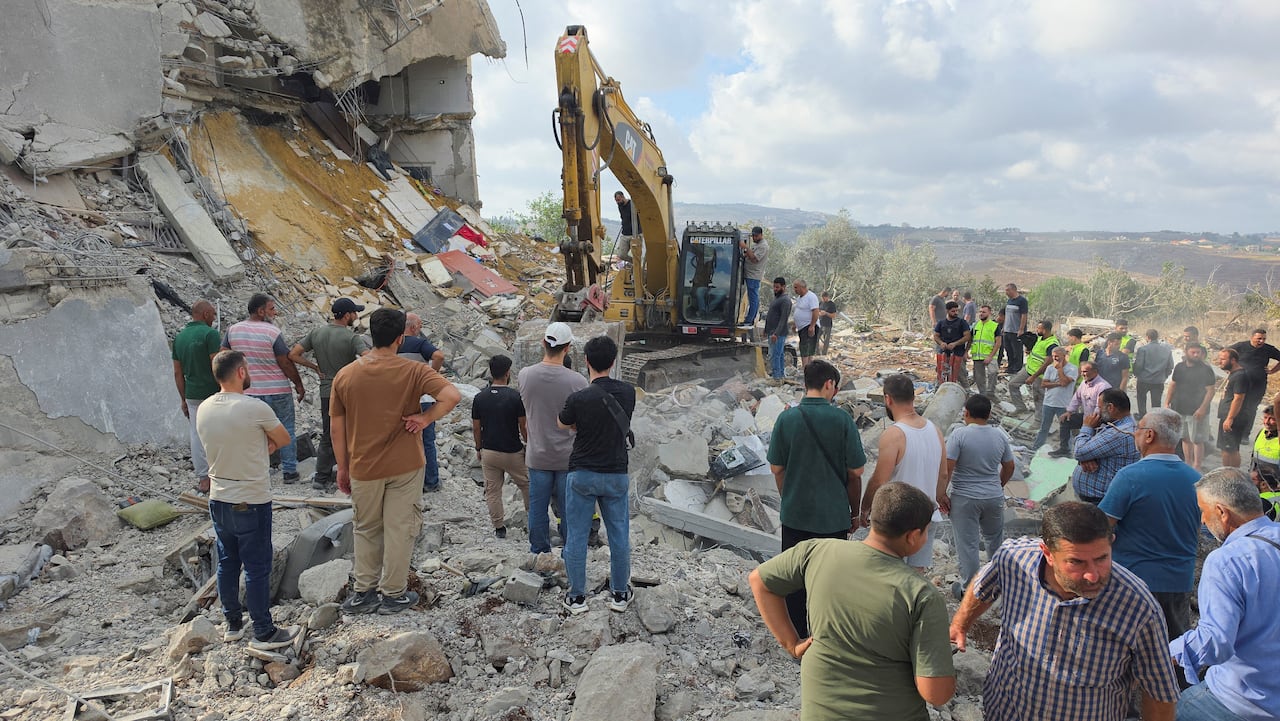
On Friday, an Israeli strike on Kfar Reman killed three people and injured 23. Israel’s military said the operation targeted Hezbollah fighters in tunnels beneath the Ali al-Taher bridge. Lebanon’s state-run National News Agency reported Israeli raids and artillery shelling in seven towns in the Tyre and Nabatieh districts, though no casualties were reported. Early Sunday, Israeli warplanes also bombed Zawtar al-Sharqiyah. The figures and continuing attacks indicate that violence and humanitarian consequences remain severe across Lebanon.
Entities: Israel, Lebanon, Lebanese Ministry of Public Health, United Nations High Commissioner for Refugees (UNHCR), Hezbollah • Tone: urgent • Sentiment: negative • Intent: inform
06-09-2026
Israeli airstrikes killed four people and injured 20 others in southern Lebanon on Sunday, according to Lebanon’s Health Ministry, in the latest escalation between Israel and Hezbollah despite a U.S.-brokered ceasefire reached in June. The victims included two men killed in a town near the edge of an Israeli-occupied security zone and two women killed in Arab Salim, a town located north of the zone. Two girls were among six people wounded in the strike on Arab Salim.
Israel said the attacks were retaliation for two Hezbollah drone launches targeting Israeli soldiers in areas occupied by Israeli troops. The Israeli military said it struck Hezbollah weapons-storage facilities and a command centre in a building formerly used as a hospital. It said an evacuation warning was issued before the attack and that precision weapons and aerial surveillance were used to reduce civilian casualties.
Lebanese President Joseph Aoun condemned the strikes as “a dangerous escalation.” His office said the attacks destroyed a hospital and damaged a Finance Ministry building, arguing that Israel had targeted civilian and health facilities. Aoun called on the United States and the international community to intervene, stop the alleged violations and hold those responsible accountable.
The Sunday warning was only the second Israeli online evacuation order issued since the ceasefire. Earlier, Israel had warned residents of Mansouri, near Tyre, before strikes in August. On Friday, Israeli attacks killed four people and injured 23 others without evacuation warnings, according to Lebanon’s Health Ministry; Israel said those strikes also targeted Hezbollah weapons facilities.
Hezbollah accused Israel of escalating pressure on the Lebanese government, which has been holding U.S.-supported direct talks with Israel. Hezbollah, an Iran-backed group, has rejected those negotiations. More than 4,300 people have reportedly been killed by Israeli strikes in Lebanon since March 2, when Hezbollah launched attacks on Israel in support of Iran.
Entities: Israeli military, Hezbollah, Lebanon Health Ministry, Lebanese President Joseph Aoun, Israel-Lebanon conflict • Tone: analytical • Sentiment: negative • Intent: inform
06-09-2026
At least four people were killed and approximately 20 others, including children, were wounded in Israeli strikes on Lebanon on Sunday, according to Lebanon’s Health Ministry. The attacks took place despite a ceasefire between Israel and Lebanon and prompted Lebanese President Joseph Aoun’s office to describe them as a “dangerous escalation.” His office accused Israel of targeting civilian facilities and health centers and called on the United States and the international community to intervene and hold those responsible accountable.
The Israel Defense Forces (IDF) said the strikes were carried out in response to what it called a “blatant violation” by Hezbollah. According to the IDF, Hezbollah militants launched two drones at Israeli soldiers operating in southern Lebanon’s security zone. The military said no Israeli soldiers were wounded.
The strikes followed an early-morning evacuation alert issued for the village of Arab Salim, where the Israeli military said it had identified a Hezbollah facility. Lebanon’s state-run National News Agency reported that the building identified in the alert was subsequently struck. It also said another house was destroyed, killing two women.
Two additional people were killed in strikes near Nabatieh al-Fawqa, close to the edge of Israel’s security zone in southern Lebanon. Lebanon’s Health Ministry said a disused hospital was totally destroyed and described the incident as a serious violation of international humanitarian law. Israel said one of its targets was a Hezbollah command center inside a building formerly used as a hospital, as well as a weapons depot. The IDF said the strikes were intended to respond to an attempted Hezbollah attack the previous day in the Ali Taher Ridge area and to eliminate threats posed by the group.
Entities: Israeli strikes on Lebanon, Israel-Lebanon ceasefire, Lebanon, Israel Defense Forces (IDF), Hezbollah • Tone: analytical • Sentiment: negative • Intent: inform
06-09-2026
Lebanese President Joseph Aoun has appealed to Washington and the international community to intervene after Israeli strikes killed at least seven people in Lebanon on Sunday. The attacks occurred despite an existing truce and a framework agreement intended to halt the fighting, underscoring the fragility of the arrangements.
Israel said its strikes targeted Hezbollah operatives and facilities after the Iran-backed group allegedly launched a drone attack against Israeli troops near a strategically important ridge in southern Lebanon. Israel reported no casualties from the drone attack but described it as a “blatant violation” of the truce. Hezbollah, which has not claimed responsibility for attacks in recent weeks, has not publicly responded to Israel’s account or to Israel’s assertion that it controls the site.
The escalation follows Israel’s announcement that it had captured the Ali al-Taher ridge in the Nabatieh area. Israel considers the ridge part of a self-declared security zone in southern Lebanon, a position that reflects the continuing dispute over territorial control and security arrangements in the region.
Aoun strongly condemned the latest Israeli strikes, saying they represented a dangerous escalation because they had reached Lebanese government institutions and health facilities. The attacks damaged government premises and destroyed a hospital that was already out of service. His appeal places responsibility on the United States and the broader international community to help restrain Israel and prevent further deterioration.
The article presents the violence as a serious challenge to the truce and the broader effort to end hostilities between Israel and Hezbollah. It also highlights the widening impact of the conflict on Lebanese state infrastructure and civilian-related facilities, even as both sides dispute the circumstances that triggered the latest exchange.
Entities: Joseph Aoun, Lebanon, Washington and the United States, Israel, Hezbollah • Tone: urgent • Sentiment: negative • Intent: inform
06-09-2026
Israeli strikes killed four people, including two women, in southern Lebanon on September 6, according to Lebanon’s health ministry. The strikes followed what Israel said were Hezbollah drone attacks against areas occupied by Israeli troops. The attacks occurred despite a U.S.-brokered ceasefire agreed with Hezbollah in June, while Israeli forces continue to operate inside a self-declared security zone in southern Lebanon.
Two men were killed in a town near the edge of the zone, and two women were killed in Arab Salim, a town north of the occupied area. Israel had issued an evacuation warning at 6 a.m. local time for areas near a building in Arab Salim that it said Hezbollah was using. The subsequent strike injured six people, including two girls.
Lebanese President Joseph Aoun’s office condemned the attacks as a “dangerous escalation,” saying they destroyed a hospital and damaged a Finance Ministry building. It accused Israel of targeting civilian administrative and health facilities and called on the United States and the international community to intervene.
The Israeli military said the targets were Hezbollah weapons storage facilities and a command centre located in a building previously used as a hospital. It said precision munitions and aerial surveillance were used to reduce risks to civilians. The evacuation warning was only the second issued since the June ceasefire; the first came on August 5 near Tyre.
The latest violence follows Israeli strikes on Friday that killed four people and injured 23 others without prior evacuation warnings. Hezbollah said Israel was escalating to pressure the Lebanese government, which is holding U.S.-backed direct talks with Israel—negotiations Hezbollah rejects. More than 4,300 people have been killed by Israeli strikes in Lebanon since March 2, when Hezbollah launched attacks on Israel in support of Iran.
Entities: Israeli military, Hezbollah, Lebanese health ministry, Lebanon, southern Lebanon • Tone: analytical • Sentiment: negative • Intent: inform
06-09-2026
At least four people were killed and 20 injured in Israeli strikes on southern Lebanon on Sunday, according to Lebanon’s Health Ministry, which described the toll as preliminary. The attacks followed the launch of two explosive drones by Hezbollah at Israeli troops positioned in what Israel calls its security zone. Israel’s military said one drone was intercepted and that there were no Israeli casualties. It later warned residents near a building in Arab Salim to leave, saying the site was being used by Hezbollah and would be attacked. Hezbollah did not immediately comment.
The Health Ministry reported two deaths and two injuries in Nabatieh Al Fawqa; eight injuries, including those of a woman and a child, in the Al Rahibat neighbourhood of Nabatieh; two deaths and six injuries, including two children, in Arab Salim; and four injuries in Kfar Reman. Emergency teams were still assessing the damage, meaning the casualty figures could rise.
The latest strikes followed an Israeli bombing campaign on Friday night that killed five people and injured 24 across five locations in southern Lebanon and the western Bekaa Valley. The campaign was the first Israeli strike activity in the western Bekaa Valley since June and came after Israel said it had cleared Hezbollah fighters from the strategic Ali Al Taher ridge. The ridge has been a flashpoint despite a ceasefire announced in June. Israel said Hezbollah had built tunnels beneath it, while Hezbollah denied reports that Iranian personnel were present and downplayed the ridge’s importance.
Israel said Friday’s attacks targeted weapons storage sites intended for Hezbollah. Lebanon’s health authorities say more than 4,300 people have been killed in Israeli strikes since March 2, underscoring the continuing escalation along the border.
Entities: Israel, Lebanon, Hezbollah, Israeli military, Lebanon’s Health Ministry • Tone: neutral • Sentiment: negative • Intent: inform