06-09-2026
The article reports an escalating dispute between Russia and Germany over an alleged drone incident at Leipzig Airport in Germany. Russian Foreign Minister Sergei Lavrov rejected Berlin’s conclusion that Moscow was responsible, describing the accusations as “the start of a real war” and claiming that German Chancellor Friedrich Merz was effectively declaring war on Russia. Lavrov linked the allegations to Merz’s stated ambition of making Germany Europe’s leading military power.
The German government said on September 1 that it had reached a “clear and legally sound” conclusion that Russia was behind the alleged attack. Berlin responded by ordering several security and diplomatic measures, including the closure of a Russian consulate and cultural centre. Russia has denied conducting operations in Western Europe and accused Germany of planting evidence to frame Moscow.
Merz said the incident represented a “profound rupture” in relations and warned Russia against continuing what Germany describes as hybrid warfare. Germany’s Interior Minister Alexander Dobrindt said Russian hybrid attacks had become part of everyday reality and announced plans for an anti-sabotage security system known as a “cyberdome.” The measures include expanded police counter-drone capabilities, rapidly deployable units to protect transport hubs and government districts, and new powers for critical-infrastructure companies to disable threatening drones.
The proposed cyberdome would use digital sensors to detect and intercept hacking attempts. Germany also plans to expand AI-supported technologies, facial recognition and video surveillance to identify suspected saboteurs. US Ambassador to NATO Matthew Whitaker said NATO members should not tolerate deliberate hybrid-war actions, distinguishing the Leipzig incident from Russian drones that accidentally stray from Ukraine. He said critical infrastructure, including energy facilities, should be monitored and that the United States supports national responses to such threats.
Entities: Russia, Germany, Sergei Lavrov, Friedrich Merz, Alexander Dobrindt • Tone: analytical • Sentiment: negative • Intent: inform
06-09-2026
Germany is reportedly preparing a nationwide protective system against drone attacks and other forms of sabotage following an attempted drone assault on Leipzig-Halle Airport. Interior Minister Alexander Dobrindt said Russia’s alleged hybrid attacks had become a daily reality and argued that Germany could defend itself. The proposed measures would expand the Federal Police’s mobile drone-defense capabilities, including rapidly deployable vehicles and helicopters to protect airspace over major cities such as Frankfurt, Munich and Berlin. According to Bild am Sonntag, the system could intercept drones, disable explosive devices and counter drone bombs.
Planned legal changes would also enable operators of critical infrastructure—including water, electricity and defense companies—to detect and respond to suspected drone sabotage. Germany is additionally considering a national cyber-defense shield to identify and block hacking attempts against government institutions, infrastructure and businesses. Authorities reportedly want to increase the use of artificial intelligence, biometric facial recognition and video surveillance at transport hubs to identify potential attackers before an incident occurs.
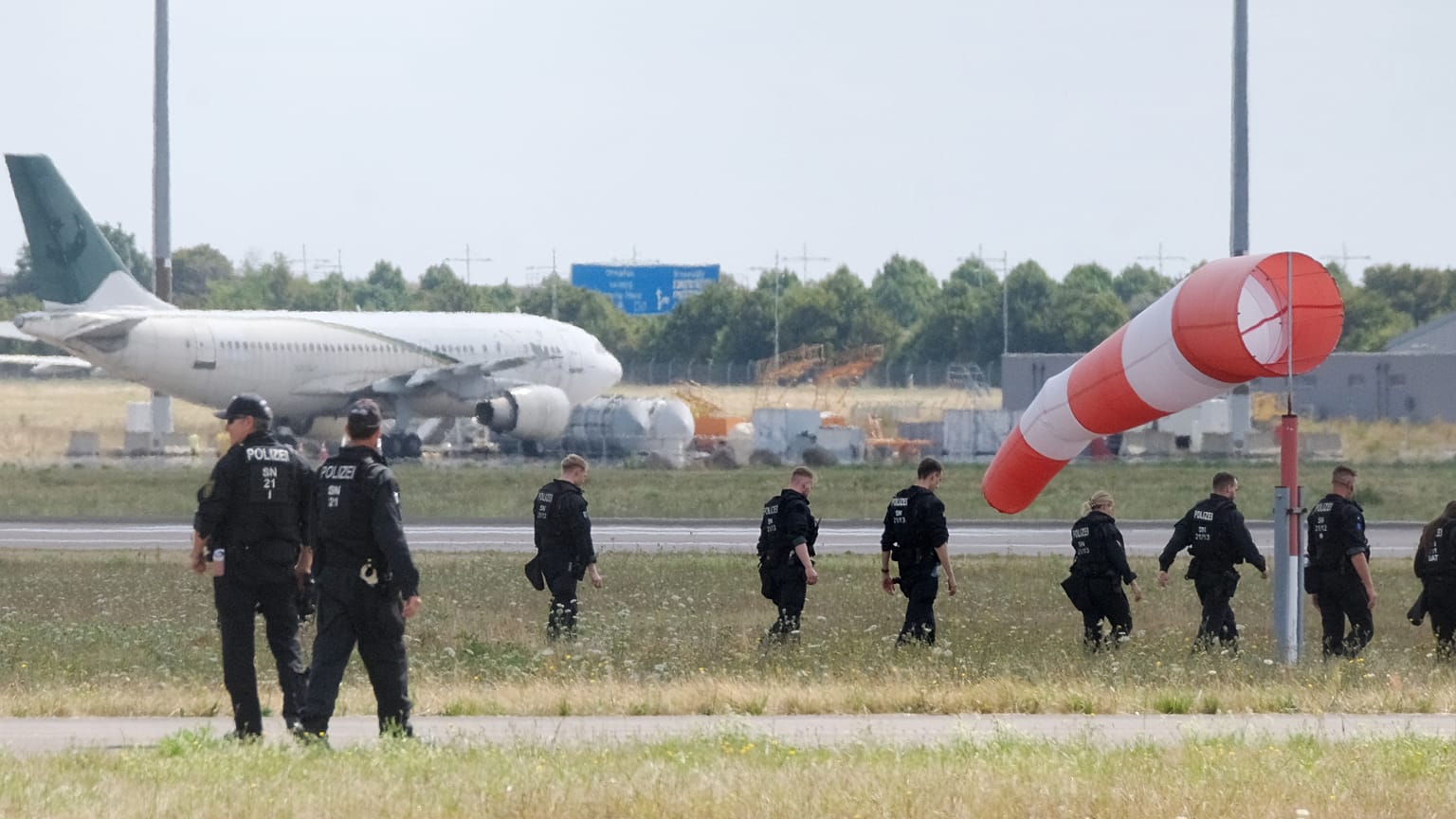
Several small drones targeted Leipzig-Halle Airport on August 4. One reportedly struck a parked aircraft, while another may have hit an arriving cargo plane. German intelligence agencies attributed the incident to Russia, which has denied involvement. The airport is a major cargo hub used to transport weapons and supplies toward Ukraine and has previously been targeted, including by a suspected Russian incendiary package in July 2024.
The allegations have intensified tensions between Berlin and Moscow. Russian Foreign Minister Sergey Lavrov rejected the accusations and said German military expansion could amount to a declaration of war against Russia. German authorities recorded more than 1,000 suspicious drone flights over the country in 2025, mainly near military sites, airports, ports and defense companies. Most were treated as surveillance or harassment rather than direct attacks.
Entities: Germany, Leipzig-Halle Airport, Alexander Dobrindt, Friedrich Merz, Sergey Lavrov • Tone: analytical • Sentiment: negative • Intent: inform
06-09-2026
Germany is reportedly preparing a national “protective shield” against sabotage and other hybrid attacks, following an attempted drone attack at Leipzig/Halle Airport in August. According to Bild, the proposed measures would include a “Cyberdome”—a network of digital sensors designed to detect and intercept hacking attempts—as well as expanded police drone-defence capabilities. Rapid-response units would be stationed in major cities including Berlin, Munich and Hamburg to protect the airspace around transport hubs.
The plan would also increase the use of artificial intelligence, including facial-recognition technology, to identify potential attackers. Private companies could be granted authority to detect drones and actively defend against them. Interior Minister Alexander Dobrindt said Russian hybrid attacks had become a “daily reality” and were likely to intensify, although he argued that Germany had means to protect itself.
The proposals follow the discovery on 4 August of an explosives-carrying drone at Leipzig/Halle Airport, a major cargo centre. The incident forced runway closures and flight diversions. Germany later formally blamed Moscow, describing the event as a Russian hybrid attack. Foreign Minister Johann Wadephul announced measures including the closure of Russia’s general consulate in Bonn by 18 September, the closure of a Russian cultural centre in Berlin, tighter border controls for Russian nationals and increased pressure on Russia’s shadow fleet.
Russia rejected the accusations. Its ambassador, Sergey Nechayev, called them unsubstantiated and absurd and warned that Germany’s measures represented an unprecedented escalation that would have consequences. European Commission President Ursula von der Leyen expressed solidarity with Germany, saying the attack involved military-grade material and Russian operatives. She added that the incident had strengthened rather than weakened her determination to support Ukraine.
Entities: Germany, Berlin, Alexander Dobrindt, Johann Wadephul, Ursula von der Leyen • Tone: analytical • Sentiment: negative • Intent: inform
06-09-2026
Germany is preparing a broad anti-sabotage programme in response to growing concerns about drone attacks, cyber intrusions and other forms of alleged Russian “hybrid” activity. The plans follow a failed drone attack at Leipzig/Halle Airport in August, which has prompted the government to strengthen protection for critical infrastructure and government facilities.
Interior Minister Alexander Dobrindt told Bild am Sonntag that Russian hybrid attacks had become part of everyday reality. He said such attacks were likely to increase but insisted that Germany had the ability to defend itself and protect its population. A ministry spokesperson said the package would include expanded police capabilities to counter drones, with rapidly deployable units stationed in cities. These teams would be tasked with protecting airspace above major transport hubs and government districts.
The reported measures would also establish a national “cyberdome”, supported by a network of digital sensors designed to detect and intercept attempted hacking attacks. The initiative reflects German concerns that hostile activity could target both physical infrastructure, such as airports, and digital systems that support public services and government operations.
Russia has rejected allegations that it conducts sabotage operations in Western Europe and has denied involvement in the German airport incident. Russian Foreign Minister Sergey Lavrov described the accusations as “the start of a real war”, according to the state news agency TASS, adding a diplomatic and geopolitical dimension to Germany’s proposed security response.
The article presents the measures as defensive preparations rather than detailing a confirmed attribution of the airport incident. It highlights Germany’s effort to build a coordinated response combining counter-drone technology, mobile police units and cyber-defence infrastructure.
Entities: Germany, Alexander Dobrindt, Sergey Lavrov, German Interior Ministry, Reuters • Tone: analytical • Sentiment: negative • Intent: inform
06-09-2026
Germany is preparing a broad package of measures to protect the country from drone attacks, cyber intrusions and other forms of alleged Russian sabotage, according to Bild am Sonntag and information attributed to the German interior ministry. The plans follow a failed drone attack at a German airport last month. The report comes after an incident at Leipzig/Halle Airport in which explosives experts examined a drone near a runway, while a DHL cargo aircraft reportedly struck an unidentified object during its climb and was forced to make an unscheduled landing in Hanover.
Interior Minister Alexander Dobrindt said Russia’s “hybrid attacks” had become part of everyday reality. He warned that such attacks would increase but maintained that Germany could defend itself. Russia has rejected allegations that it is conducting operations in Western Europe and denied involvement in the airport incident. Moscow also said it would respond to what its foreign ministry spokesperson described as anti-Russian action.
Under the reported plan, police mobile counter-drone capabilities would be expanded. Rapidly deployable units would be stationed in cities to protect airspace above critical transport hubs and government districts. Operators of critical infrastructure—including power utilities and defence manufacturers—could also receive legal authority to actively disable hostile drones, rather than merely detect them.
The government reportedly intends to establish a national protective “cyberdome”, consisting of digital sensors designed to identify and intercept hacking attempts. It also plans to increase the use of artificial intelligence, biometric facial recognition and video surveillance, including at railway stations, to identify suspected attackers preparing acts of sabotage. The German interior ministry had not immediately responded to Reuters’ request for comment.
Entities: Germany, Berlin, Alexander Dobrindt, German Interior Ministry, Russia • Tone: analytical • Sentiment: neutral • Intent: inform
06-09-2026
Russian Foreign Minister Sergei Lavrov described Western accusations that Moscow was involved in a drone incident at Germany’s Leipzig/Halle Airport as “by and large, the start of a real war,” according to Russia’s state news agency TASS. Lavrov also accused German Chancellor Friedrich Merz of effectively declaring war on Russia by pursuing plans to make Germany Europe’s leading military power.
The comments followed a German government announcement on September 1 that it had concluded Russia was responsible for an attempted drone attack at Leipzig/Halle Airport the previous month. Berlin responded by ordering several measures, including the closure of a Russian consulate and a Russian cultural centre in Berlin.
Russia rejected the German findings, calling the accusations baseless and alleging that Berlin had planted evidence to frame Moscow for the attack. The dispute follows a security incident at the airport in which police examined a drone found near a runway after explosives experts were deployed. Separately, a DHL cargo aircraft reportedly struck an unknown object while climbing from the airport overnight and made an unscheduled landing in Hanover.
The article reports the competing claims without independently establishing responsibility for the incident. Lavrov’s remarks mark a sharp escalation in the rhetoric between Russia and Germany, framing the accusations and Berlin’s response as part of a broader deterioration in relations and a potential movement toward direct conflict. The report also places the incident within Germany’s wider debate over strengthening its military role in Europe.
Entities: Sergei Lavrov, Friedrich Merz, Russia, Germany, Moscow • Tone: neutral • Sentiment: negative • Intent: inform