06-06-2026
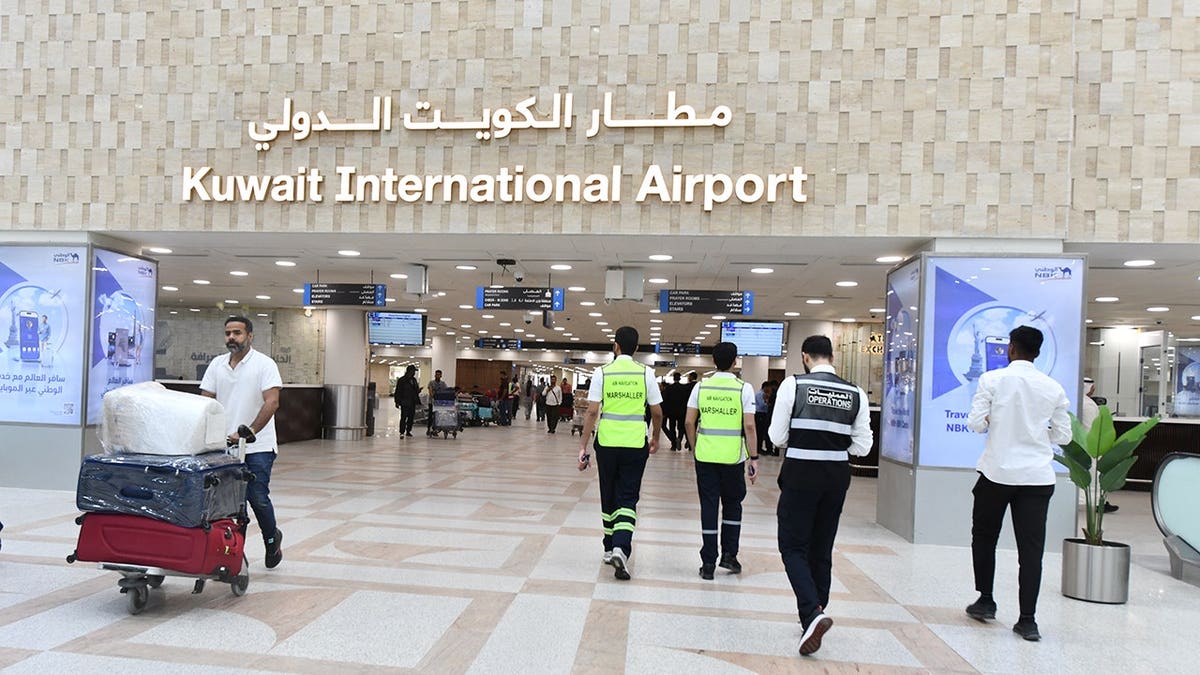
Kuwait said Iranian drone and missile attacks struck Kuwait International Airport, damaging a passenger terminal and injuring several people, while one person was reported killed in the broader wave of attacks. In statements posted through its foreign ministry and defense ministry, Kuwait condemned what it called “brutal and ongoing Iranian attacks” and said civilian and vital infrastructure, including diplomatic missions, had been hit. The ministry said the armed forces were monitoring the situation and remained fully ready to respond and protect national security and stability.
The article places the Kuwait strike within a wider escalation across the Middle East connected to the ongoing U.S. conflict with Iran. It reports that U.S. Central Command said American forces intercepted Iranian ballistic missiles and drones, including missiles aimed at Kuwait and Bahrain, and carried out self-defense strikes on Iranian targets on Qeshm Island. CENTCOM said no U.S. personnel were harmed and that American forces remained vigilant during the ceasefire. The piece also notes that additional Iranian drones targeting U.S. forces in Kuwait failed to hit their intended targets. Overall, the article frames the incident as part of a broader regional conflict involving Iran, the United States, Kuwait, Bahrain, and other neighboring states.
Entities: Kuwait, Kuwait International Airport, Iran, U.S. Central Command (CENTCOM), Bahrain • Tone: urgent • Sentiment: negative • Intent: inform
06-06-2026
France 24’s live Middle East update reports a sharp escalation in regional tensions after US military officials said Iran launched seven ballistic missiles toward Kuwait and Bahrain. According to US Central Command, American forces intercepted six of the missiles, while a seventh did not reach its target. CENTCOM also said it had earlier shot down four Iranian one-way attack drones heading toward the Strait of Hormuz and later struck Iranian coastal surveillance radar sites in Goruk and on Qeshm Island. Iran’s Revolutionary Guards, however, claimed responsibility for hitting “enemy bases” in the Gulf, framing the attacks as retaliation. The liveblog places these events within a broader regional crisis that includes sanctions on Iran, diplomatic tensions involving Lebanon, and warnings from the World Food Program about the humanitarian knock-on effects of the war. WFP said millions could be pushed into acute hunger if conflict-driven disruptions to energy and food markets continue, noting that high oil and food prices are worsening food insecurity in poorer countries. The live coverage also includes a US approval of a nearly $2 billion sale of anti-drone weapons to Kuwait, underscoring Washington’s effort to bolster Gulf defenses amid the worsening conflict. Overall, the article presents a fast-developing military and diplomatic crisis with direct implications for Gulf security, regional politics, and global food supplies.
Entities: Iran, Kuwait, Bahrain, United States, US Central Command (CENTCOM) • Tone: urgent • Sentiment: negative • Intent: inform
06-06-2026
The article reports a sharp escalation in U.S.-Iran hostilities after the U.S. military said it intercepted Iranian ballistic missiles and drones aimed at Gulf allies and the Strait of Hormuz. In response, U.S. forces struck Iranian coastal radar sites, widening an already fragile exchange of fire that threatens a tenuous ceasefire. According to U.S. Central Command, Iran fired seven ballistic missiles toward Kuwait and Bahrain, six of which were intercepted, while four Iranian drones headed toward the Strait of Hormuz were shot down earlier in the day. Kuwait and Bahrain activated defenses and emergency alerts, and Iran’s Revolutionary Guard said it had targeted U.S. military sites in Kuwait and Bahrain.
The article places these attacks within a broader regional crisis involving the Trump administration’s efforts to pressure Iran into a deal to end the conflict and reopen the Strait of Hormuz, a critical shipping lane for oil and gas. The conflict has already pushed up energy prices and created political risks for Trump ahead of midterm elections. Trump publicly downplayed the crisis, saying talks were going well and suggesting that Iran would be forced into concessions. At the same time, U.S. and Iranian negotiators had tentatively agreed to extend the ceasefire by 60 days and begin nuclear talks, though no final agreement had been reached.
The story also notes parallel instability in Lebanon, where Israeli strikes continued despite a new U.S.-brokered ceasefire agreement between Israel and Lebanon that Hezbollah has rejected. Fighting in southern Lebanon further complicates efforts to stabilize the broader region and reopen the Strait of Hormuz. The U.S. also intensified economic pressure on Iran through sanctions and the boarding of a sanctioned oil tanker linked to Iran, signaling that military, diplomatic, and financial measures are all being used simultaneously.
Entities: U.S. military, U.S. Central Command, Iran, President Donald Trump, Strait of Hormuz • Tone: analytical • Sentiment: negative • Intent: inform
06-06-2026
American and Iranian forces exchanged fresh attacks around the Strait of Hormuz and the Persian Gulf, intensifying an already fragile cease-fire and underscoring how easily the conflict could reignite. U.S. Central Command said American forces intercepted four Iranian one-way attack drones launched toward the strait, then later downed seven Iranian ballistic missiles aimed at Kuwait and Bahrain, with six intercepted and one falling short. In response, U.S. forces struck Iranian coastal surveillance radar sites on the Iranian coast and Qeshm Island to prevent further attacks. Iran’s Islamic Revolutionary Guards Corps said it had retaliated for U.S. strikes by targeting American bases in Kuwait and the U.S. Navy’s Fifth Fleet facilities in Bahrain, though Central Command said the attacks caused no damage or injuries.
The article places the incidents in the broader context of a month of sporadic but dangerous exchanges despite a cease-fire announced in early April. U.S. officials said American forces have helped coordinate the movement of more than 100 commercial vessels through the Strait of Hormuz, even as shipping remains risky. The fighting has already had deadly consequences in the Gulf: a civilian was killed and others injured at Kuwait’s international airport in a previous Iranian barrage, marking the first known fatality in a Gulf country since the cease-fire began. Overall, the piece shows a region still on edge, with both sides claiming self-defense and warning of stronger retaliation if attacks continue.
Entities: Iran, U.S. Central Command, Strait of Hormuz, Persian Gulf, Kuwait • Tone: urgent • Sentiment: negative • Intent: inform
06-06-2026
The article is a live update on the prolonged standoff between the United States and Iran as the conflict approaches its 100-day mark. It reports that both sides remain far apart on any potential truce, with Iran insisting that a ceasefire in Lebanon must come first before any deal with the US can be reached. Tehran also asserts that it and Oman share sovereignty over the Strait of Hormuz, underscoring ongoing tensions around a strategically vital waterway. A military adviser to Iran’s supreme leader says the responsibility for progress now lies with US President Donald Trump, while also demanding the release of US$24 billion in frozen Iranian assets as part of any agreement.
The article highlights Trump’s public comments that Iran is nearing its breaking point and that the US is “having great success” in dealing with it, while he downplays concerns about rising oil prices. It also notes Trump’s campaign remarks in Wisconsin, where he said he would end the war quickly and predicted lower fertilizer prices. In parallel, the piece reports diplomatic and technical preparations: Trump’s envoy Steve Witkoff and Jared Kushner visited a national laboratory in Tennessee to consult experts involved in nuclear negotiations. In the region, Lebanese President Joseph Aoun criticized Iran and Hezbollah, accusing Tehran of using Lebanon as leverage in its talks with Washington. The article ends with a smaller but notable update that Iran’s World Cup football team has been granted visas to enter the US, despite earlier uncertainty.
Entities: Iran, United States, Donald Trump, Hezbollah, Lebanon • Tone: analytical • Sentiment: neutral • Intent: inform