07-06-2026
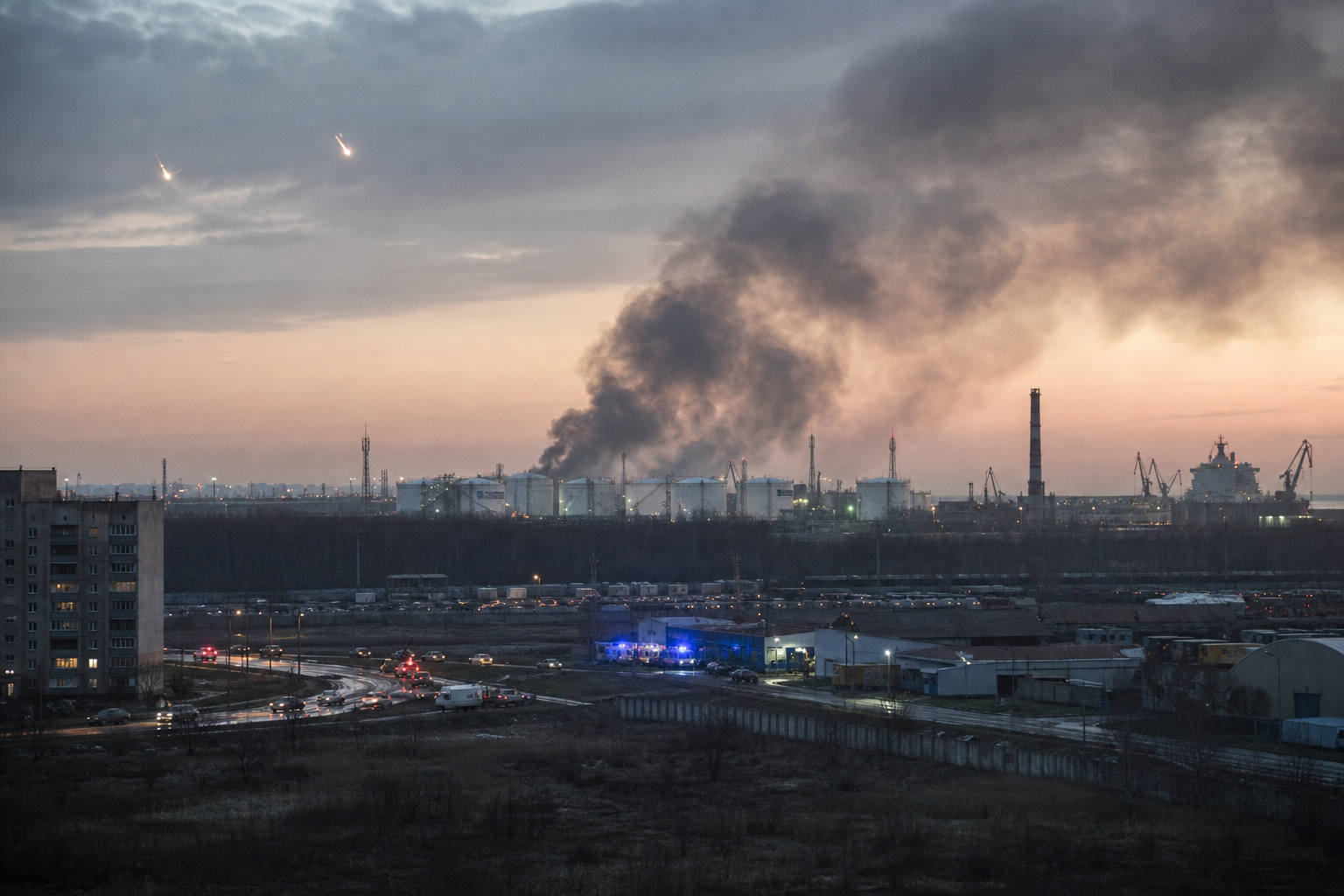
Russia says Ukraine carried out an “unprecedented attack” on and around St Petersburg with drones, while Ukrainian President Volodymyr Zelensky said the strikes hit Russian arsenals, a naval base in Kronstadt, and an oil depot. The attack came as St Petersburg hosted the final day of a major economic forum where Vladimir Putin again rejected Zelensky’s call for direct peace talks. Russian officials said more than 140 drones were shot down over the Leningrad region and 339 across multiple Russian regions since early Saturday, while St Petersburg’s governor told residents to stay indoors for the first time since Russia’s full-scale invasion began in 2022. Ukraine framed the strikes as a “just response” to Russian attacks and part of its long-range campaign against Russian military and energy infrastructure.
The article places the drone assault in the wider context of a war that has intensified despite international mediation efforts, including involvement by Donald Trump. Zelensky has called for a ceasefire and face-to-face negotiations, but Putin insists any truce would let Ukraine regroup and says Russia will end the war only when its objectives are met. Those objectives include Ukraine ceding occupied territories and abandoning its Nato ambitions, demands Kyiv rejects. The article also reports Ukrainian claims that Russia attacked civilian search-and-rescue vessels in the Black Sea, and notes that in occupied Luhansk, Moscow-backed authorities suspended transport services because of ongoing Ukrainian drone strikes targeting logistics. Overall, the piece emphasizes escalating cross-border drone warfare, deadlocked diplomacy, and the continuing strain on civilians and infrastructure on both sides.
Entities: St Petersburg, Leningrad region, Kronstadt, Krasnodar region, Volodymyr Zelensky • Tone: analytical • Sentiment: negative • Intent: inform
07-06-2026
Russian President Vladimir Putin used the St. Petersburg International Economic Forum to dismiss the idea of a direct meeting with Ukrainian President Volodymyr Zelenskyy, saying there is “no point” in talks unless they produce a concrete agreement. The exchange came after Zelenskyy sent Putin a public letter criticizing his long rule and suggesting that age was affecting him. Putin called the letter “boorish” and mocked Zelenskyy’s leadership and past Oval Office appearance, while also thanking U.S. President Donald Trump for “educating” Zelenskyy. Putin said Russia wants a comprehensive settlement rather than a temporary ceasefire, and he tied any possible deal to understandings he claimed were reached with Trump in Anchorage, Alaska. Zelenskyy, meanwhile, said it would be wrong to wait passively for the Trump administration to refocus on Ukraine while it is occupied with the Iran conflict. Trump said he would welcome a Putin-Zelenskyy meeting and reiterated that he believes a deal can still be reached.
Beyond Ukraine, Putin used the forum to argue that the global economy is shifting away from Western dominance toward a more multipolar system led by developing countries. He blamed Western sanctions, frozen Russian assets, and high debt levels for eroding trust in Western currencies and institutions. He also sought to project confidence in Russia’s economy, saying the government deliberately slowed growth to control inflation and stressing that Russia’s debt and deficit are relatively low. The forum, which attracts foreign delegations despite Western isolation of Russia since the invasion of Ukraine, served as a platform for Putin to promote investment, resilience, and Russia’s role in a changing global order. The article also notes continued Ukrainian drone attacks inside Russia, including one that hit an oil terminal and naval base in St. Petersburg, prompting Putin to vow stronger defenses.
Entities: Vladimir Putin, Volodymyr Zelenskyy, Donald Trump, Russia, Ukraine • Tone: analytical • Sentiment: neutral • Intent: inform
07-06-2026
The article examines how Ukraine’s increasingly frequent long-range drone strikes are bringing the war closer to everyday Russians, particularly in major cities such as Moscow and St. Petersburg. Through the experience of a Moscow-region resident whose apartment was damaged in a drone attack, the story illustrates how civilians who previously felt insulated from the conflict are now being forced to confront its consequences directly. The strikes have caused explosions, fires, damage to housing, and deaths in the Moscow region, while also disrupting life in St. Petersburg during the city’s flagship economic forum.
Beyond the physical danger, the article describes a broader atmosphere of unease in Russia. Ukrainians’ attacks on oil refineries are contributing to fuel shortages, while the Kremlin’s tightening control over the internet, messaging apps, and surveillance is deepening public anxiety. A social anthropologist quoted in the piece argues that for years the authorities maintained an informal bargain with urban residents: that the war would remain distant and not affect their daily lives. That bargain, the article suggests, is now under strain as the conflict becomes more visible and disruptive.
The article also highlights signs of resentment and fatigue among ordinary Russians. Some express anger at property damage, slow repairs, state intrusion, and the loss of privacy, while others focus on the broader human cost of the war. Although many Russians continue to distance themselves from the conflict, the article argues that Ukrainian strikes are increasingly collapsing the psychological boundary between the front line and Russian civilian life, feeding discontent and concern about where the war is headed.
Entities: Ukraine, Russia, Moscow, St. Petersburg, Zelenograd • Tone: analytical • Sentiment: negative • Intent: inform
07-06-2026
In an open letter to Russian President Vladimir Putin, Ukrainian President Volodymyr Zelenskyy called for direct negotiations to help end the war between Ukraine and Russia. Zelenskyy argued that, with the United States currently focused on tensions involving Iran, Ukraine should not wait for global attention to shift back to Europe. Instead, he proposed a face-to-face meeting between himself and Putin, saying that countries such as Switzerland, Türkiye, and Arab states could host talks. He also said Europe and the United States should be involved in any broader peace framework because Ukraine needs security guarantees and the outcome would affect the region’s future security architecture.
Zelenskyy said Ukraine is prepared to agree to a full ceasefire for the duration of negotiations, describing such a pause as standard practice and the best way to begin meaningful dialogue. He further proposed an all-for-all prisoner exchange and stressed the need to return civilians and children taken during the war. The letter ended with a warning that if Putin does not choose to end the war, Ukraine will continue fighting for its survival. Zelenskyy cautioned that Russia itself may eventually face internal change if it grows tired of the war, framing the message as both an offer for peace and a firm statement of resolve.
Entities: Volodymyr Zelenskyy, Vladimir Putin, Ukraine, Russia, United States • Tone: urgent • Sentiment: neutral • Intent: inform