05-06-2026
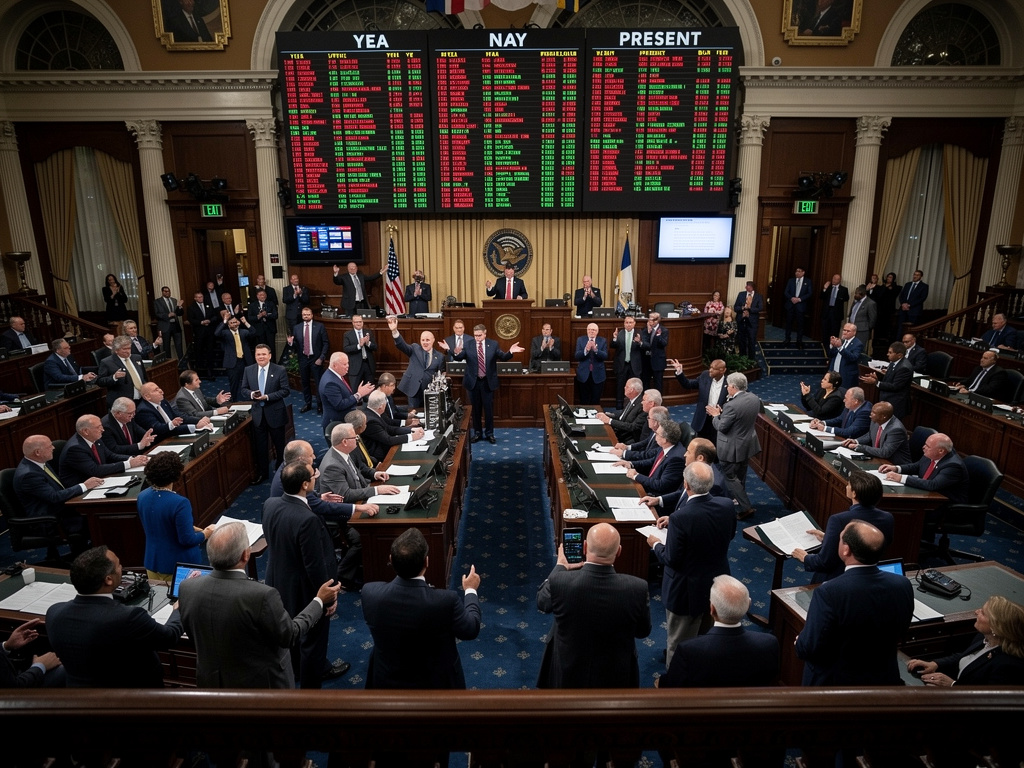
The House of Representatives approved a procedural and then substantive effort to provide new U.S. assistance to Ukraine, with support from a small but significant number of Republicans joining Democrats to force the measure to the floor and pass it. The push was led by Democratic Rep. Gregory Meeks of New York through a discharge petition, a rarely used tactic that allowed members to bypass House leadership and bring the bill to a vote after it had nearly reached the required threshold for months. The petition became viable when Rep. Kevin Kiley, a California independent who caucuses with Republicans, provided the decisive 218th signature, and two Republicans — Don Bacon and Brian Fitzpatrick — had already signed on. In the final House vote, the legislation passed 226-195, with more than a dozen Republicans in support and Democratic Rep. Ilhan Omar voting against it despite having signed the petition.
The bill would authorize up to $8 billion in military loans for Ukraine, along with aid for post-war reconstruction, new sanctions on Russia, and language reaffirming NATO’s importance. The timing comes amid intensified Russian attacks and renewed appeals from Ukrainian President Volodymyr Zelenskyy for more American support, including Patriot missile interceptors. Meeks framed the measure as a way to help Ukraine negotiate from strength, while Bacon expressed hope that the vote would pressure the Senate to act. Still, the fate of the legislation remains uncertain in the Senate, where related bipartisan sanctions legislation has stalled for more than a year awaiting White House approval.
Entities: House of Representatives, Ukraine, Russia, Gregory Meeks, Kevin Kiley • Tone: analytical • Sentiment: neutral • Intent: inform
05-06-2026
The House rejected a war powers resolution introduced by Rep. Rashida Tlaib that would have required the president to withdraw U.S. armed forces from Lebanon within seven days. The measure failed overwhelmingly, 92-324, after Democratic leaders opposed the original version and said they preferred an updated resolution with narrower language that they believed was a better legislative vehicle to prevent U.S. troops from being drawn into hostilities in Lebanon. The vote came amid heightened tensions tied to fighting between Israel and Hezbollah in southern Lebanon and a newly announced U.S.-brokered ceasefire.
The article highlights a sharp partisan and rhetorical clash on the House floor. Tlaib argued that the U.S. was an active participant in Israel’s assault on Lebanon and accused the Trump administration of enabling war crimes, while Republican lawmakers, including Rep. Brian Mast and Rep. Max Miller, rejected the premise of U.S. involvement and accused Tlaib of supporting terrorists. The debate briefly halted after Miller’s comments, which were later stricken from the Congressional Record.
The failed Lebanon resolution followed the House’s passage of a separate war powers measure limiting President Trump’s ability to take further military action against Iran without congressional approval. Democratic leaders framed their position as support for Lebanon’s people and armed forces, while opposing any broader U.S. military entanglement in Lebanon or the Middle East. Overall, the story centers on congressional efforts to constrain presidential war powers, the intensifying Israel-Hezbollah conflict, and the political conflict surrounding U.S. involvement in the region.
Entities: Rashida Tlaib, Donald Trump, Lebanon, House of Representatives, Hakeem Jeffries • Tone: analytical • Sentiment: neutral • Intent: inform
05-06-2026
The House of Representatives passed a major Ukraine aid and Russia sanctions bill in a significant rebuke to President Donald Trump and House Republican leadership, with 18 Republicans and one Republican-leaning independent joining Democrats in support. The legislation provides billions in military assistance to Ukraine and imposes sweeping sanctions on Russia, including targeting oil, gas, banking, mining, and other sectors. It also authorizes $8 billion in arms sales and extends a Biden-era lend-lease program. The vote, 226 to 195, highlighted deepening divisions within the GOP over continued U.S. support for Ukraine, as Speaker Mike Johnson had urged members to oppose the measure and allow Trump room to negotiate with Russia. The bill reached the floor through a discharge petition after lawmakers circumvented leadership, underscoring the procedural rebellion required to force the vote. While the House approval marks the first major pro-Ukraine action of Trump’s second term, the bill’s future in the Senate remains uncertain because it would need 60 votes to advance. The article also notes that Trump has made no concrete progress on his promise to quickly end the war and has recently loosened restrictions on Russian oil, further aggravating some Republicans. If the Senate passes the measure, it would represent Congress’s first major move on the Ukraine-Russia war since spring 2024.
Entities: Donald Trump, Mike Johnson, Brian Fitzpatrick, Greg Meeks, Kevin Kiley • Tone: analytical • Sentiment: neutral • Intent: inform
05-06-2026
The House narrowly advanced a major Ukraine aid and sanctions package on Thursday in a direct rebuke to Republican leaders and, implicitly, President Trump. The bill passed 226 to 195 after 18 Republicans joined Democrats, marking the first significant House approval of new financial support for Ukraine in more than two years. The legislation would provide $8 billion in loans and $1.8 billion in military and security assistance, while also imposing sanctions on Russian-affiliated businesses, officials, and third parties that help evade restrictions. Backers framed the measure as a bipartisan signal that Congress still stands with Ukraine amid Russia’s war.
The vote highlighted growing Republican divisions over foreign policy and Trump’s influence. House Republican leaders had blocked the bill in committee and from reaching the floor, but Democrats used a discharge petition to force action. The effort was led by Representative Gregory W. Meeks and gained enough support only after a small number of Republicans, including Don Bacon, Brian Fitzpatrick, and Kevin Kiley, signed on. Supporters argued the package was designed to appeal to Trump’s preference for loans over grants, while critics warned it could undermine the president’s ability to negotiate an end to the war and risk prolonging conflict.
The measure now moves to the Senate, where Trump’s opposition has previously stopped similar attempts. Even if it passes there, it is likely to face a presidential veto. The article also places the vote in the context of another recent GOP break with Trump, when several Republicans joined Democrats to advance a war powers resolution relating to Iran. Overall, the piece portrays a Congress divided over Ukraine aid, sanctions on Russia, and the extent of the president’s authority in foreign policy.
Entities: House of Representatives, Ukraine aid bill, Russia, Vladimir Putin, Donald Trump • Tone: analytical • Sentiment: neutral • Intent: inform
05-06-2026
The US House of Representatives approved legislation on June 4 that would provide additional aid to Ukraine and impose new sanctions on Russia, marking another sign of resistance by some Republicans to President Donald Trump’s foreign-policy preferences. The bill passed 226 to 195, with 18 Republicans and one independent joining Democrats after a discharge petition forced the vote. The measure had sat idle for months before reaching the floor, reflecting growing division inside Trump’s party over support for Kyiv.
The Ukraine Support Act authorizes more than US$1 billion in assistance for Ukraine, including support for rebuilding after the war, and up to US$8 billion in direct loans. It also calls for tougher sanctions and export controls on Russia, targeting financial institutions, oil, mining, and Russian officials. Ukraine’s ambassador to the US welcomed the vote as a meaningful demonstration of continued bipartisan backing.
Still, the legislation faces an uncertain future. It must still pass the Senate, where Republican leaders have so far declined to bring Russia sanctions to a vote, saying they are awaiting Trump’s guidance. Even if the Senate approves it, Trump would likely veto the bill. The article places this development in the broader context of a slowdown in US aid to Kyiv, stalled peace talks, and a shift in attitudes among some of Trump’s Republican allies, many of whom have become less supportive of Ukraine since his return to the White House in January 2025. It also notes that the European Union has recently increased its own support for Ukraine through accession talks and a large loan package.
Entities: US House of Representatives, Ukraine Support Act, Donald Trump, Russia, Ukraine • Tone: analytical • Sentiment: neutral • Intent: inform