04-06-2026
The article examines a reported phone call between Donald Trump and Israeli Prime Minister Benjamin Netanyahu that has complicated US diplomacy with Iran. According to Trump, he told Netanyahu he was “a little bit perturbed” by Israel’s continued military action in Lebanon, which has prompted Tehran to threaten suspending talks with the United States. The dispute matters because Trump is trying to preserve a ceasefire with Iran, open negotiations over Tehran’s nuclear program, and protect the reopening of the Strait of Hormuz, a crucial global shipping lane. While Netanyahu downplayed the tension and framed the disagreement as a routine tactical dispute between allies, experts suggest the call reflects deeper friction between US and Israeli priorities, especially in Lebanon where Israel wants to keep targeting Hezbollah even as the US seeks to maintain diplomacy with Iran.
The article places the episode in a broader historical context of Netanyahu’s often fraught relationships with US presidents, including Clinton, Obama, and Biden, noting that he has repeatedly clashed with Washington while still maintaining political survival and a close relationship with Trump. It also highlights changing domestic US politics: public support for Israel has softened, and some conservatives have criticized perceived Israeli pressure on Trump to go to war with Iran. Analysts say Trump may have political reasons to create distance from Netanyahu to respond to domestic criticism, though the long-term impact on the US-Israel relationship remains uncertain.
Entities: Donald Trump, Benjamin Netanyahu, Israel, United States, Iran • Tone: analytical • Sentiment: neutral • Intent: analyze
04-06-2026
Israel and Lebanon have agreed to move forward with a renewed, fragile ceasefire framework if Hezbollah stops attacks, according to the US State Department, after a week of renewed cross-border violence. The deal, reached through US-brokered talks in Washington, is contingent on Hezbollah ending attacks and withdrawing operatives from areas in southern Lebanon that Israel controls, especially the zone between the Litani River and the border. The US says it will help establish “pilot” security zones in Lebanon where the Lebanese Armed Forces would have exclusive control, excluding non-state actors. The announcement comes after Israeli strikes killed at least nine people in southern Lebanon and Hezbollah fired rockets into northern Israel, highlighting how precarious the truce remains.
The article explains that this is not yet a comprehensive peace deal, but a partial and conditional arrangement meant to reduce violence while more talks continue. A follow-up meeting is scheduled for 22 June to pursue a broader agreement. However, Hezbollah has not formally endorsed the new terms, and one of its political officials said the group does not recognize the Washington talks or their outcomes. The story also details the humanitarian toll in Lebanon, including thousands killed, widespread displacement, and repeated Israeli strikes on ambulances, paramedics, and military positions. On the Israeli side, the military says it has intercepted drones and projectiles crossing the border, while Israeli leaders warn they could resume strikes on Beirut’s southern suburbs if Hezbollah attacks continue. The article places the latest ceasefire effort in the context of months of escalation involving Israel, Hezbollah, Lebanon, the US, and Iran, with President Donald Trump and Secretary of State Marco Rubio playing key diplomatic roles.
Entities: Israel, Lebanon, Hezbollah, US State Department, Marco Rubio • Tone: analytical • Sentiment: neutral • Intent: inform
04-06-2026
The article reports a sharp escalation in tensions between Iran and the United States, centered on drone and missile strikes across the Gulf region. According to local officials in Kuwait, Iranian drone strikes on Kuwait International Airport killed one person and injured more than 60 others, with the deceased later identified as an Indian citizen. Kuwait condemned the attack as criminal aggression, expelled two Iranian diplomats, and summoned Iran’s charge d’affaires. Iran’s Islamic Revolutionary Guard Corps denied responsibility for the airport strike, instead blaming a US interceptor malfunction, while US Central Command rejected that account and said Iran had carried out a deliberate attack.
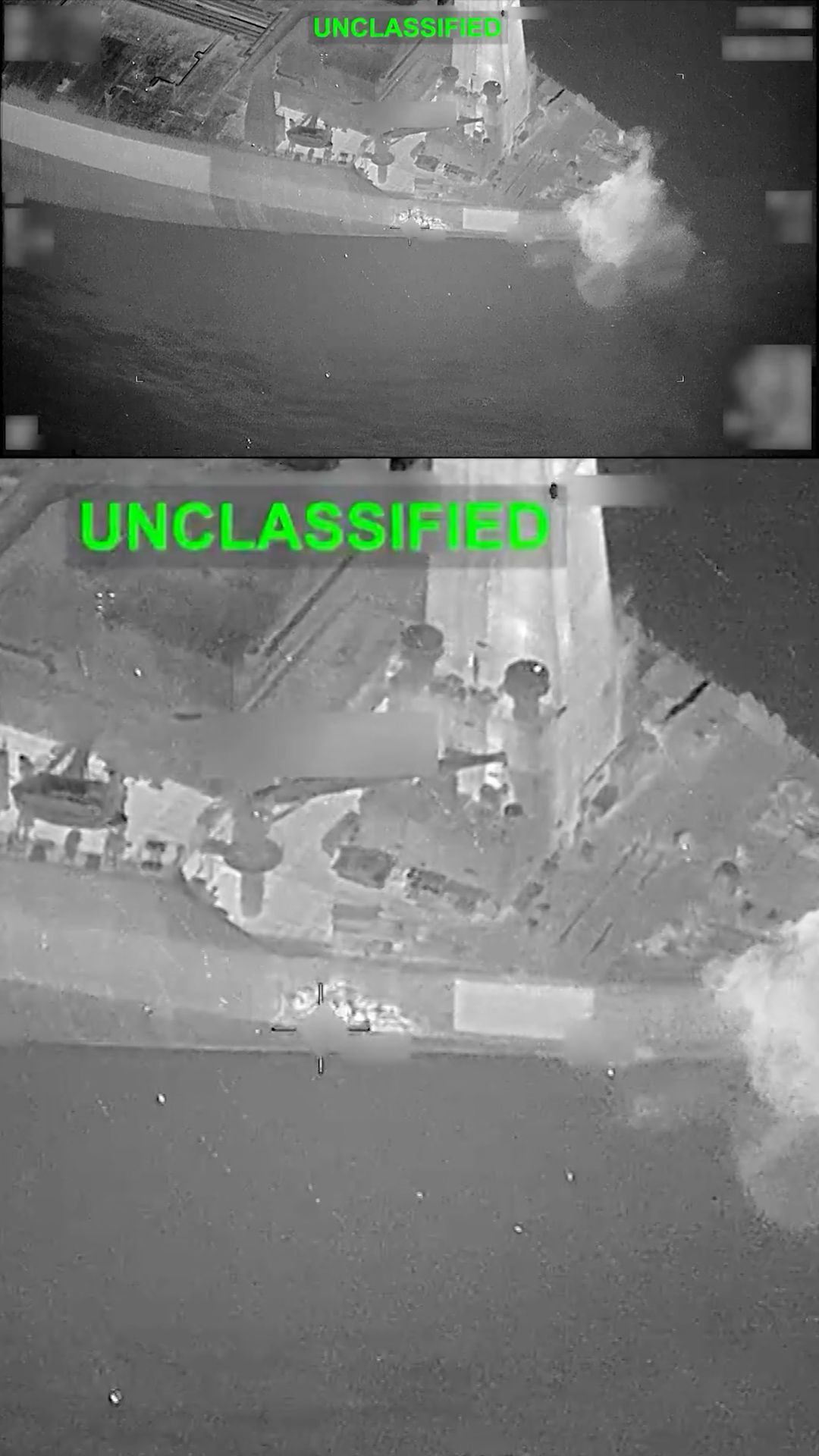
The article places the airport strike within a wider cycle of retaliation involving Iran, the US, and regional targets in Kuwait, Bahrain, the Strait of Hormuz, and the Gulf of Oman. Centcom said it had launched strikes on Iranian targets, intercepted missiles and drones, and disabled an oil tanker as part of a naval blockade. Iran claimed its actions were retaliation for US strikes on an oil tanker and Qeshm Island, and said it had targeted US bases and a naval ship, claims the US denied. The violence has intensified pressure on fragile ceasefire negotiations, which are described as stalled. The article also notes diplomatic fallout, including India’s condemnation after its national was killed and injured nationals were reported, and ongoing political maneuvering in Washington, where President Donald Trump and Secretary of State Marco Rubio discussed ceasefire and nuclear negotiations while insisting Iran must not obtain a nuclear weapon.
Entities: Iran, Kuwait International Airport, Kuwait, US Central Command (Centcom), Islamic Revolutionary Guard Corps (IRGC) • Tone: urgent • Sentiment: negative • Intent: inform
04-06-2026
The article reports that the US House of Representatives narrowly passed a measure aimed at preventing President Donald Trump from taking further military action against Iran, marking a bipartisan rebuke to the administration. The resolution passed 215-208, with four Republicans joining Democrats in support, and represents the fourth House attempt to rein in Trump’s war powers since the conflict began in February. The measure still faces a difficult path in the Republican-controlled Senate, where similar efforts have stalled despite prior advancement of a comparable resolution.
The vote underscores growing divisions within Trump’s Republican Party, particularly over executive war powers and the ongoing Iran conflict. Supporters of the measure argued that Congress, not the president alone, has the authority to declare war and criticized the war as costly and ineffective. Democratic leaders framed the vote as a significant bipartisan rejection of what they called an illegal war. Republican supporters said they voted based on conscience and constitutional principle, despite possible political backlash from Trump.
The article also summarizes the broader military and diplomatic context: US and Israeli strikes on Iran, Iran’s retaliation against Israel and US allies, the closure of the Strait of Hormuz, and the fragile ceasefire and ongoing attacks that have complicated efforts to negotiate an end to the conflict. Trump, meanwhile, insisted that negotiations were progressing well and suggested a deal could be reached soon, even as US strikes continued and tensions remained high.
Entities: US House of Representatives, Donald Trump, Iran, Republican Party, Democratic Party • Tone: analytical • Sentiment: neutral • Intent: inform
04-06-2026
The article reports that Israel and Lebanon have agreed to renew a ceasefire, but only if Hezbollah stops its attacks and withdraws from parts of southern Lebanon. The deal was brokered by the United States and emerged after two days of talks in Washington between Israeli and Lebanese officials. The agreement is presented as a step toward a broader, more comprehensive settlement and includes the idea of “pilot zones” where the Lebanese military could take control instead of non-state actors.
The ceasefire comes amid months of intensified fighting between Israel and Hezbollah, with Hezbollah firing rockets into northern Israel and Israeli forces operating in southern Lebanon. Although a ceasefire was reached in mid-April, hostilities continued. The violence has caused major casualties and displacement, with more than 3,000 reported dead in Lebanon and more than 1 million people displaced, according to the Lebanese government.
The conflict is also linked to wider regional diplomacy involving the United States and Iran. Negotiations between Washington and Tehran have been complicated by the Lebanon fighting, and Iran has insisted that any broader deal must include an end to the conflict there. President Trump has pushed Israel and Lebanon toward an agreement and publicly described tense conversations with Prime Minister Benjamin Netanyahu over Israel’s military actions. The article highlights the diplomatic pressure, the fragility of the ceasefire, and the connection between the Lebanon conflict and larger U.S.-Iran tensions.
Entities: Israel, Lebanon, Hezbollah, United States, Iran • Tone: analytical • Sentiment: neutral • Intent: inform
04-06-2026
U.S. and Iranian forces exchanged new strikes amid a tenuous ceasefire, underscoring how fragile the pause in hostilities remains even as Washington and Tehran pursue broader negotiations. According to U.S. Central Command (CENTCOM), American forces shot down three Iranian drones aimed at civilian mariners and intercepted or blunted additional Iranian missile attacks on U.S. allies in the Persian Gulf, including missiles launched toward Bahrain and Kuwait. In response, CENTCOM carried out “self-defense strikes” against a ground control station on Iran’s Qeshm Island. Iran’s Islamic Revolutionary Guard Corps (IRGC) said its actions were retaliation for an earlier U.S. strike that disabled an oil tanker heading toward Iran, and it claimed to have targeted the U.S. Navy’s Fifth Fleet headquarters in Bahrain and an American vessel; CENTCOM rejected that claim as false.
The article places these clashes in the context of a ceasefire that began on April 7 after a three-month war, but which has not fully stopped confrontations. Iran has restricted passage through the Strait of Hormuz, while the U.S. has imposed a blockade on Iranian ports and taken action against vessels it says are evading it, contributing to severe disruption in regional shipping and oil transit. At the diplomatic level, U.S. and Iranian negotiators have been holding indirect talks about extending the ceasefire, easing maritime restrictions, and opening discussions on Iran’s nuclear program, though no agreement has yet been reached. President Trump said the two sides remain in communication, contradicting reports that talks had stopped, and he described ongoing conversations as continuous.
Entities: U.S. Central Command (CENTCOM), Iran, United States, President Trump, Strait of Hormuz • Tone: analytical • Sentiment: neutral • Intent: inform
04-06-2026
The article describes how renewed worries over the war between Iran, Israel, and the United States interrupted a recent stock-market rally. CNBC’s Daily Open explains that oil prices rose and U.S. stock futures fell after Israeli Prime Minister Benjamin Netanyahu told CNBC that Israel and the U.S. were prepared to resume military action against Iran if needed. Although there were some signs of de-escalation, including a ceasefire agreement between Israel and Lebanon and a U.S. House vote to limit further American military involvement, investors remained uneasy about the possibility of wider conflict in the Middle East. The piece also notes that Trump said Iran had agreed not to possess nuclear weapons, while Iranian officials disputed his framing. Beyond geopolitics, the newsletter highlights several market-moving corporate earnings reports: Broadcom shares plunged after weak software sales and an unchanged AI chip forecast, and CrowdStrike fell despite narrowly beating expectations. It also briefly covers SpaceX’s reported IPO pricing at a $1.77 trillion valuation, and ends with a note that long-term bitcoin holders have begun selling as the cryptocurrency weakens, potentially worsening the crypto downturn. Overall, the article connects geopolitical uncertainty with declines across equities, energy markets, and digital assets, while also reflecting on the fragility of recent tech-led gains.
Entities: Benjamin Netanyahu, Donald Trump, Israel, Iran, Lebanon • Tone: analytical • Sentiment: negative • Intent: inform
04-06-2026
European stocks were poised to open lower on Thursday as geopolitical tensions between the United States and Iran intensified, offsetting some of the optimism that might have come from a ceasefire agreement between Israel and Lebanon. Futures data pointed to declines across major regional benchmarks, with the FTSE 100, CAC 40, and DAX all expected to open in the red. The article links the weaker market outlook to overnight pressure on Asian equities after renewed conflict-related developments in the Middle East, including Iran’s strike on Kuwait International Airport and U.S. Central Command’s claim that it had intercepted Iranian missiles and drones while conducting self-defense strikes in the Persian Gulf.
The article also highlights comments from Israeli Prime Minister Benjamin Netanyahu, who told CNBC that Israel and the United States are prepared to strike Iran again if necessary, warning that Tehran is “playing with fire.” Although oil prices edged lower after the ceasefire announcement between Israel and Lebanon, the truce remains conditional: according to a joint statement released by the U.S. State Department, it depends on a full cessation of fire by Hezbollah and the withdrawal of its operatives from the South Litani Sector. Despite an earlier ceasefire agreement last month, hostilities had continued, leaving markets focused on the risk of escalation rather than de-escalation. Brent and WTI crude both fell slightly, reflecting the mixed impact of the ceasefire on energy markets while broader uncertainty persisted.
Entities: European stocks, FTSE 100, CAC 40, DAX, Iran • Tone: analytical • Sentiment: negative • Intent: inform
04-06-2026
CNN political analyst Stephen Collinson argues that President Donald Trump’s public claims about Iran diplomacy appear far more optimistic and definitive than the underlying reality. Trump has repeatedly said a deal with Iran is close and that the situation will “all work out well,” but CNN’s reporting suggests the negotiations are still tentative, limited to early wording on a memorandum of understanding rather than a comprehensive agreement. The article says the administration’s messaging is complicated by an unresolved conflict, continued regional tensions, and a fragile ceasefire arrangement that has not fully settled hostilities. It also highlights the political pressure on Trump and his team, particularly Secretary of State Marco Rubio, who faced skeptical questioning from lawmakers about how the administration can claim victory while still negotiating over Iran’s nuclear program. Rubio described the administration’s view of military success and outlined the conditions Tehran would need to meet before any sanctions relief or asset unfreezing. But the article emphasizes that Iran has leverage of its own, especially through the Strait of Hormuz, and may be using that leverage to force concessions involving sanctions and Israel’s actions in Lebanon. Overall, the piece portrays the administration as trying to sell a quick diplomatic win where the actual process appears slow, complicated, and potentially far from resolution. It compares the current situation with the lengthy 2015 nuclear deal negotiations and suggests Trump may be underestimating how much time and technical bargaining a real settlement would require.
Entities: Donald Trump, Marco Rubio, Mojtaba Khamenei, Benjamin Netanyahu, Sara Jacobs • Tone: analytical • Sentiment: neutral • Intent: analyze
04-06-2026
Kuwait’s Health Ministry said 63 people were injured after Iranian strikes hit the country on Wednesday, damaging Kuwait’s international airport and marking one of the highest injury counts among Gulf states affected by Iran since the fighting began. The article frames the strike as part of a broader escalation in a fragile US-Iran ceasefire environment, with CNN noting that overnight attacks and retaliation are testing diplomacy and raising doubts about whether negotiations are still active. A linked CNN report also references a U.S. action involving an oil tanker heading for Iran, suggesting that the conflict has broadened beyond direct missile strikes to include maritime and strategic pressures. The main focus of this item is the immediate impact on Kuwait, especially the injuries and airport damage, while situating the event within the larger regional conflict involving Iran, the United States, and Gulf states. The article’s presentation is highly concise and video-driven, emphasizing the severity of the strike and the instability of the ceasefire rather than offering extensive narrative detail or background. It underscores the human toll, the vulnerability of civilian infrastructure, and the uncertainty surrounding diplomacy in the region.
Entities: Kuwait, Kuwait Health Ministry, Kuwait International Airport, Iran, US-Iran ceasefire • Tone: urgent • Sentiment: negative • Intent: inform
04-06-2026
CNN’s live updates report on a volatile moment in the Middle East as US-mediated diplomacy, regional ceasefire arrangements, and congressional pushback against President Donald Trump’s handling of the Iran conflict all unfold at once. The article says Israel and Lebanon agreed to implement a ceasefire after nearly nine hours of talks in Washington, but the deal is conditional: Hezbollah must stop firing and remove operatives from southern Lebanon. The joint statement also says the parties will reconvene the political and security tracks in the week of June 22, while the US will keep facilitating communication and support efforts to strengthen the Lebanese Armed Forces. The agreement comes amid continued violations of the ceasefire and renewed Israeli strikes in southern Lebanon that have killed civilians.
At the same time, negotiations between the US and Iran remain uncertain. President Trump said talks have gone “very well” and suggested progress could come soon, possibly by the weekend, but Iranian Foreign Minister Abbas Araghchi said there has been no “significant progress” in recent days. Araghchi also linked any broader end to the war with developments in Lebanon and warned Iran’s armed forces were ready to respond if Beirut comes under attack. The article notes that Israel has been targeting Iran-backed Hezbollah in Lebanon, and that Iranian officials have sent messages to Washington urging it to prevent further Israeli escalation.
Domestically, the House of Representatives passed a resolution to limit Trump’s war powers in Iran, in what CNN describes as a significant rebuke to the president. The vote, 215 to 208, included support from a handful of Republicans and reflects growing bipartisan concern over the conflict. The live update also highlights strain in US-Israel relations, noting Trump recently called Prime Minister Benjamin Netanyahu a “great partner” despite reports of tension between them.
Entities: Israel, Lebanon, United States, Iran, Donald Trump • Tone: analytical • Sentiment: neutral • Intent: inform
04-06-2026
Kuwait said that Kuwait International Airport was targeted in Iranian drone and missile attacks, condemning what it called repeated strikes on civilian and vital infrastructure. According to Kuwait’s foreign ministry and defense ministry, a passenger terminal at the airport suffered damage and several people were injured, with one reported death and damage also said to have affected diplomatic missions. Kuwait described the assault as part of a broader pattern of Iranian aggression using ballistic missiles and drones.
The article places the incident within a wider regional conflict involving the United States and Iran. Fox News cites a U.S. Central Command statement saying U.S. forces intercepted Iranian missiles and drones, including attacks aimed at Kuwait and Bahrain, and carried out self-defense strikes on an Iranian ground control station on Qeshm Island. CENTCOM said no U.S. personnel were harmed and that U.S. and partner air defenses stopped Iranian weapons before they could hit their intended targets.
The piece also references comments from President Trump about ongoing talks with Iran and notes that U.S. forces remained on alert amid the conflict. Overall, the article frames the airport damage in Kuwait as one episode in an escalating confrontation between Iran, the United States, and regional allies, emphasizing civilian risk, air defense operations, and continuing military readiness.
Entities: Kuwait International Airport, Kuwait, Iran, U.S. Central Command (CENTCOM), U.S. military • Tone: urgent • Sentiment: negative • Intent: inform
04-06-2026
Iran’s foreign minister said negotiations aimed at ending the wider Middle East war had made no real progress, even as U.S. President Donald Trump projected optimism that a deal could be reached within days. The article describes a fragile ceasefire being strained by renewed strikes and competing regional conflicts, especially between Israel and Hezbollah in Lebanon and between the United States and Iran. Kuwaiti officials reported that an Iranian drone strike hit Kuwait International Airport, killing one person and injuring 63, prompting Kuwait to suspend air traffic temporarily. Iran denied responsibility and blamed American Patriot defenses for the strike’s impact, while also accusing U.S. forces of provoking escalation through attacks on Iranian targets.
The diplomatic track remains open but highly uncertain. Iranian Foreign Minister Abbas Araghchi said communications with Washington continued, but insisted that there had been “no tangible progress” and warned that any Israeli strike on Beirut would trigger a full-scale resumption of war. In Washington, Secretary of State Marco Rubio said discussions centered on Iran’s enriched uranium stockpile and possible constraints on Tehran’s nuclear activities. The U.S. position, according to the article, is that Iran must surrender near-weapons-grade uranium and limit its nuclear program before a peace agreement can hold.
Meanwhile, the Lebanon front remains volatile. Israeli and Lebanese officials have been holding direct talks in Washington, but Hezbollah has rejected any partial ceasefire. Israeli Prime Minister Benjamin Netanyahu warned that Iran was “playing with fire,” and the article notes that Israeli forces are conducting a deep ground offensive in Lebanon. With strikes continuing in Lebanon and the Gulf, the piece portrays a region where ceasefires are fragile, diplomacy is ongoing, and the risk of broader war remains high.
Entities: Iran, United States, Donald Trump, Abbas Araghchi, Marco Rubio • Tone: urgent • Sentiment: negative • Intent: inform
04-06-2026
Israel and Lebanon agreed in Washington to renew a ceasefire framework in the ongoing cross-border conflict, but only on the condition that Hezbollah completely halts its fire and withdraws its operatives from southern Lebanon. The joint statement also called for the creation of “pilot zones” where the Lebanese armed forces would take exclusive control, excluding non-state actors. Despite the announcement, violence continued almost immediately: air raid sirens sounded in northern Israel, the Israeli military said it intercepted hostile aircraft and projectiles, and Hezbollah claimed attacks on Israeli troops in response to alleged Israeli ceasefire violations. The talks, led by the United States, were the fourth round of direct discussions between Lebanese and Israeli diplomats since fighting resumed on March 2 after Hezbollah intensified attacks in support of Iran.
The article describes continued Israeli strikes across southern Lebanon on Wednesday, including attacks that killed civilians, Syrians, Palestinians, paramedics, and a Lebanese soldier. Lebanon’s health ministry said an ambulance was struck, killing two paramedics linked to Hezbollah-affiliated or allied organizations, and at least 130 emergency and health workers have died since the conflict began. Lebanon’s army accused Israel of deliberately targeting personnel and military vehicles. The piece also notes political tensions around the broader regional war: US President Donald Trump wants to separate the Lebanon talks from the war with Iran, while Iranian officials insist the conflicts are connected and warn that any attack on Beirut could trigger a wider war. Both sides are set to meet again the week of June 22 in hopes of reaching a broader agreement, but the article makes clear that the ceasefire remains fragile and contested on the ground.
Entities: Israel, Lebanon, Hezbollah, Iran, Washington, DC • Tone: analytical • Sentiment: negative • Intent: inform
04-06-2026
Israel and Lebanon have agreed, after US-mediated talks in Washington, to renew a fragile ceasefire and set up “pilot” security zones in southern Lebanon. Under the deal, Hezbollah fighters are to be removed from areas south of the Litani River, and the ceasefire is described as contingent on a full halt to Hezbollah fire and the evacuation of all Hezbollah operatives from those zones. Despite the announcement, Israeli Defence Minister Israel Katz said Israel would continue ground operations in southern Lebanon for now, keep troops in its security zone, and prevent displaced Lebanese residents from returning home. He also said Israel would retain freedom of action, with US backing, to strike in Beirut if Israeli communities or territory are attacked. The agreement has already drawn criticism inside Israel from far-right minister Itamar Ben-Gvir, who called it a serious mistake.
The liveblog also reports continued violence and regional instability even as ceasefire efforts advance. Lebanese state media said Israeli strikes hit the south of Lebanon after the announcement, including attacks on roads and on an ambulance team, killing at least one paramedic. In Gaza, Israeli strikes killed at least eight people, according to civil defence officials. Separately, developments in the wider Iran conflict are highlighted: the US House voted to curb President Donald Trump’s war powers on Iran, while Trump reportedly told aides he would not resume all-out war unless US troops are killed. Oil prices fell on news of the Lebanon-Israel ceasefire and hopes of broader de-escalation. Overall, the article presents a fast-moving live update on interconnected conflicts across Lebanon, Gaza and Iran, showing that diplomatic progress remains fragile and partial amid ongoing military action.
Entities: Israel, Lebanon, Hezbollah, United States, U.S. State Department • Tone: analytical • Sentiment: neutral • Intent: inform
04-06-2026
Israel and Lebanon announced that they are renewing their cease-fire and working toward a more comprehensive agreement, in a joint statement also backed by the United States. The deal is intended to stabilize the border and advance direct talks, but its success depends heavily on Hezbollah, the Iran-backed Lebanese militant group that is not part of the negotiations and is not controlled by the Lebanese government. The statement says the cease-fire requires a complete halt to Hezbollah fire and the withdrawal of Hezbollah operatives from southern Lebanon’s South Litani Sector, where Israeli troops have been present since the conflict resumed.
The renewed diplomatic effort comes amid a broader regional crisis tied to the U.S.-Israeli war in Iran and its spillover effects in Lebanon. Hezbollah entered the fighting in support of Tehran, prompting Israeli strikes on Hezbollah positions in Beirut and elsewhere, as well as Israeli incursions into southern Lebanon. The article explains that the conflict has complicated ongoing peace talks involving the United States and Iran, with Tehran insisting that Lebanon be included in any wider settlement. Hezbollah leader Naim Qassem has signaled support for an Iran-U.S. agreement that includes a truce in Lebanon, but he rejected direct Israel-Lebanon talks.
Although an earlier U.S.-brokered cease-fire was reached in April, continued tit-for-tat attacks have strained it. Israeli Prime Minister Benjamin Netanyahu has taken a hard line publicly, while facing domestic pressure not to back down. The joint statement says the two countries reject hostage-taking of Lebanon’s future by any state or nonstate actor, and it outlines pilot zones under Lebanese military control, as well as cooperation to strengthen the Lebanese Armed Forces with U.S. support. More than 3,200 Lebanese and at least 30 Israelis have been killed in the renewed fighting. Israeli and Lebanese representatives are scheduled to meet again on June 22.
Entities: Israel, Lebanon, Hezbollah, United States, Iran • Tone: analytical • Sentiment: neutral • Intent: inform
04-06-2026
Israel and Lebanon have agreed to implement a ceasefire, according to the Trump administration, a development that could help advance broader negotiations aimed at ending the wider US-Israeli war with Iran. The deal, announced after talks in Washington and a joint US State Department statement, requires a full halt to fire by Hezbollah and the removal of its operatives from the South Litani Sector, while Lebanese Armed Forces would take exclusive control in designated pilot zones. The agreement comes despite an earlier ceasefire in May that failed to stop continued hostilities.
The article places the Israel-Lebanon move within a rapidly escalating regional conflict involving Iran, Kuwait, the Strait of Hormuz, and US military strikes. Iranian attacks on Kuwait damaged airport facilities and prompted flight suspensions, while the US said it carried out defensive strikes in southern Iran and near the Strait after attempted Iranian attacks. Both sides have accused each other of misrepresenting events, and CENTCOM denied reports that its bases in Bahrain or elsewhere had been hit.
The piece also notes that the broader US-Iran negotiations remain unresolved, though there are signs of tentative progress. Iran has tied any deal to an end to the Lebanon fighting, access to oil revenue, sanctions relief, port access, and influence over the strait. US President Donald Trump said his priority is preventing Iran from obtaining nuclear weapons and suggested a breakthrough could come soon. Meanwhile, Israeli strikes in Lebanon continue to kill civilians and sustain pressure on Hezbollah, underscoring how fragile the regional ceasefire environment remains.
Entities: Israel, Lebanon, Iran, Hezbollah, United States • Tone: analytical • Sentiment: neutral • Intent: inform