04-06-2026
The article reports that the United States has announced new import tariffs of 10% to 12.5% on dozens of trading partners, citing concerns that these countries are not doing enough to prevent goods made with forced labour from entering their supply chains. The move affects 60 trading partners that account for nearly all U.S. imports, including the UK, EU, Canada, India, Japan, China, and others. The tariffs have been announced but are not yet in force, as the Trump administration must still complete the required process. The decision follows an investigation launched in March by U.S. Trade Representative Jamieson Greer, which concluded that most of the countries investigated had failed to properly prohibit or enforce bans on forced-labour imports.
The response from affected governments and rights groups was mixed. The UK said it is already taking steps to tackle forced labour, while the EU called the tariffs unjustified. China denied the allegations outright, and Canada said the move was unsurprising and would not affect most of its exports. An India-based trade analyst argued that the tariffs are partly a pressure tactic amid ongoing trade negotiations and urged India to challenge the legal basis of the measure. Human rights organizations acknowledged that forced labour is a serious issue, including in China and in global supply chains, but questioned whether tariffs are an effective solution. They argued that stronger enforcement, corporate accountability, and mandatory human rights due diligence would be more effective. The article also places the move in the context of Trump’s broader trade policy after earlier tariffs were struck down by the Supreme Court.
Entities: Donald Trump, Jamieson Greer, Mitchell Labiak, Peter Frankental, Mark Carney • Tone: analytical • Sentiment: neutral • Intent: inform
04-06-2026
The article argues that recent high-level visits by US President Donald Trump and Russian President Vladimir Putin to Beijing do not signal an immediate breakthrough in trilateral diplomacy, but they do underscore China’s growing diplomatic centrality. Analysts say Beijing is increasingly able to manage its ties with Washington and Moscow on separate tracks: maintaining a strategic partnership with Russia while pursuing a more transactional, stability-oriented relationship with the United States. This dynamic makes the US-China-Russia relationship more asymmetrical and harder to predict. The article suggests that China’s role as a convening power is being amplified by broader geopolitical pressures, including the war in Ukraine, conflict in the Middle East, energy market volatility, and the shifting global nuclear landscape. However, experts caution that the appearance of China as a global pivot does not necessarily mean its influence has truly increased in a durable or decisive way. The piece centers on how Beijing may be becoming the focal point of great-power diplomacy, while also highlighting the limits and uncertainties of that status.
Entities: Donald Trump, Vladimir Putin, Beijing, China, United States • Tone: analytical • Sentiment: neutral • Intent: analyze
04-06-2026
Chinese military and policy experts are warning that Beijing may need to respond forcefully to the growing security cooperation between Japan and the Philippines, which they view as part of a broader US-led containment strategy in the Indo-Pacific. The article says a Beijing think tank, the Beijing Lande Information Technology think tank, described Tokyo and Manila’s relationship as a “quasi-military alliance” that could complicate China’s naval access in the western Pacific and create pressure in any future conflict over Taiwan. The trigger for the discussion is a recent announcement by Manila and Tokyo that they would begin negotiations on the maritime boundary of their exclusive economic zones and continental shelves around Taiwan, which Beijing denounced as “completely illegal and invalid.”
According to the Chinese experts quoted or summarized in the article, Beijing could consider a range of countermeasures. These include military operations, strengthening electronic warfare capabilities, and imposing trade sanctions. The report also frames Japan as shifting into a more central planning role in the US Indo-Pacific strategy, arguing that Tokyo is strengthening its security architecture role by deepening alignment with the Philippines. The article further notes that Japan and the Philippines have agreed to begin talks on an intelligence-sharing agreement and to advance the transfer of Abukuma-class destroyers to the Philippines, developments that Chinese analysts see as part of a dangerous regional realignment. Overall, the piece focuses on escalating regional defense cooperation and the possible Chinese response, with Taiwan at the center of the strategic dispute.
Entities: China, Japan, the Philippines, Tokyo, Manila • Tone: analytical • Sentiment: negative • Intent: inform
04-06-2026
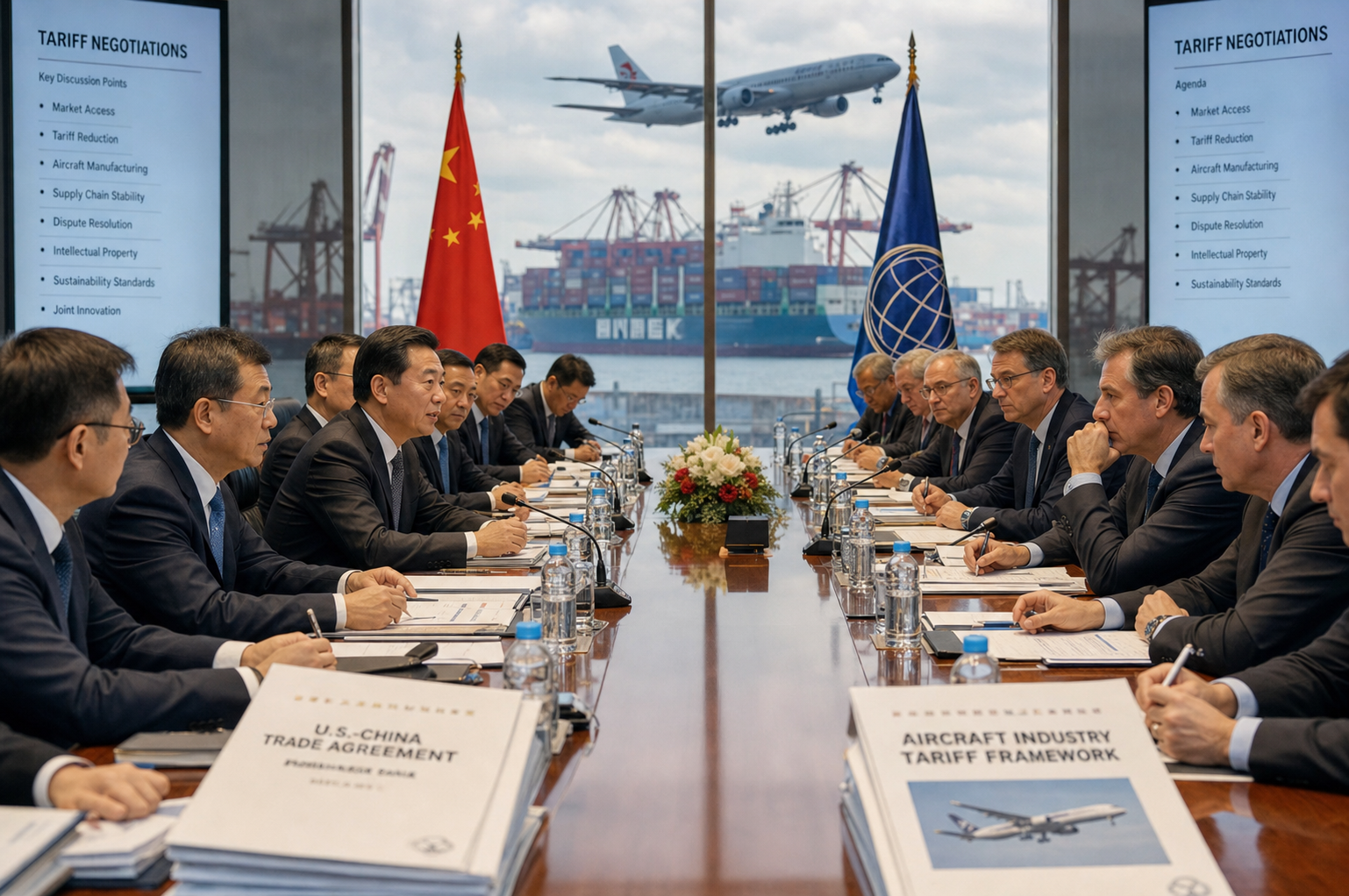
US Treasury Secretary Scott Bessent said China is showing interest in buying more Boeing aircraft ahead of an anticipated visit by Chinese President Xi Jinping to Washington in September. In testimony before the Senate Finance Committee, Bessent said China had already agreed to purchase 200 Boeing planes during Donald Trump’s recent visit to Beijing, which the White House described as an initial purchase, and suggested the administration would seek a larger commitment when Xi visits the United States. The article places the Boeing issue within the broader context of US-China trade relations, which Bessent described as stable but still fraught with U.S. concerns about dependence on China in critical minerals, chips, and medicines. The piece also notes commentary from Sourabh Gupta of the Institute for China-America Studies, who argued that Boeing purchases are tied to China’s need for reliable supplies of engines and parts for its C919 passenger jet, and that additional purchases could potentially rise to 500-550 aircraft if trust in those supply assurances improves. Finally, the article reports that the US Trade Representative’s office has opened a public comment process for the newly created US-China Board of Trade, a mechanism intended to help manage bilateral trade between the two largest economies.
Entities: Scott Bessent, Boeing, China, Xi Jinping, United States • Tone: analytical • Sentiment: neutral • Intent: inform