04-06-2026
The House of Representatives passed a war powers resolution aimed at forcing President Trump to end U.S. military hostilities with Iran unless Congress explicitly authorizes them, marking the first time the chamber has successfully defied the White House on this issue. The vote passed 215-208 with support from four Republicans and unanimous Democratic backing, including Rep. Jared Golden, who had opposed earlier versions. The measure reflects growing Republican unease over the war’s legality, its political impact, and the lack of congressional authorization under the War Powers Resolution of 1973.
The article explains that House GOP leaders initially tried to delay the vote because enough Republicans were expected to support it to allow passage. In the Senate, a similar resolution recently advanced after several Republicans joined Democrats, though that chamber still has additional procedural steps before final passage. Democrats argue Congress must exercise its constitutional war powers, while Republican defenders of the administration say the resolution weakens Trump’s hand in negotiations with Iran.
The story also highlights the political stakes for Republicans, some of whom fear the war’s unpopularity and economic consequences could hurt the party in the upcoming midterm elections. GOP Rep. Ashley Hinson privately described the conflict as a potential “political liability,” while Trump has said he is “in no hurry” to make a deal. Supporters of the resolution insist the law is clear and Congress must either authorize the war or compel the president to end it. The article frames the vote as part of a broader struggle over constitutional authority, foreign policy, and the political consequences of the Iran conflict.
Entities: Donald Trump, House of Representatives, Senate, Iran, Gregory Meeks • Tone: analytical • Sentiment: neutral • Intent: inform
04-06-2026
Iowa Republican Senate candidate Rep. Ashley Hinson privately said that the ongoing U.S. conflict with Iran could become a political problem for Republicans if it continues for more than a few more weeks, according to audio from a campaign event in Fort Dodge, Iowa. In the recording, Hinson said she hoped the conflict could be resolved soon and warned that a prolonged war would be a “political liability” because Iowa has already lost service members. She referenced attending four military funerals since December and framed her concern around the toll on Iowa families and the broader political impact of a long war. Hinson said she was deferring to President Trump and his foreign policy team on negotiations aimed at extending the ceasefire and opening talks over Iran’s nuclear program, while emphasizing that Iran must not be allowed to obtain a nuclear weapon. She also said she had not heard of any plans for a military draft and stated that she hoped one would not be needed. Despite her concerns, she said the families of fallen Iowa soldiers told her the U.S. should “finish the job.” The article places Hinson’s comments in the context of her upcoming Senate race against Democrat Josh Turek for the seat being vacated by Sen. Joni Ernst, in a contest that could help determine control of the Senate in 2026.
Entities: Ashley Hinson, Josh Turek, Joni Ernst, Donald Trump, Iran • Tone: analytical • Sentiment: neutral • Intent: inform
04-06-2026
CNN’s Aaron Blake argues that President Donald Trump is becoming increasingly constrained by Congress, the courts, and even members of his own party, with the House vote on Iran war powers serving as the clearest recent example. Four Republicans joined Democrats to pass a resolution that would limit Trump’s ability to continue military action in Iran without congressional approval, marking a major legislative rebuke and a sign of growing GOP frustration with a war that is hurting Trump politically. The article says the House result may be especially important because Senate support appears possible, which could force Trump either to seek congressional authorization or withdraw troops, though the White House could try to ignore the measure on constitutional grounds. The piece places this episode in a broader pattern: Trump has recently faced setbacks on the Kennedy Center, on a proposed “anti-weaponization” fund, on the selection of Bill Pulte as acting director of national intelligence, and in several Republican primaries. Together, these developments suggest Trump’s leverage is weakening at a time when his poll numbers are at historic lows and Republicans worry about the political damage of the Iran war and other controversial priorities. The article concludes that Trump appears boxed in by a combination of domestic political pressure, judicial checks, and an increasingly skeptical Congress, leaving him with fewer viable paths to advance his agenda.
Entities: Donald Trump, Mike Johnson, CNN, Manu Raju, House of Representatives • Tone: analytical • Sentiment: negative • Intent: analyze
04-06-2026
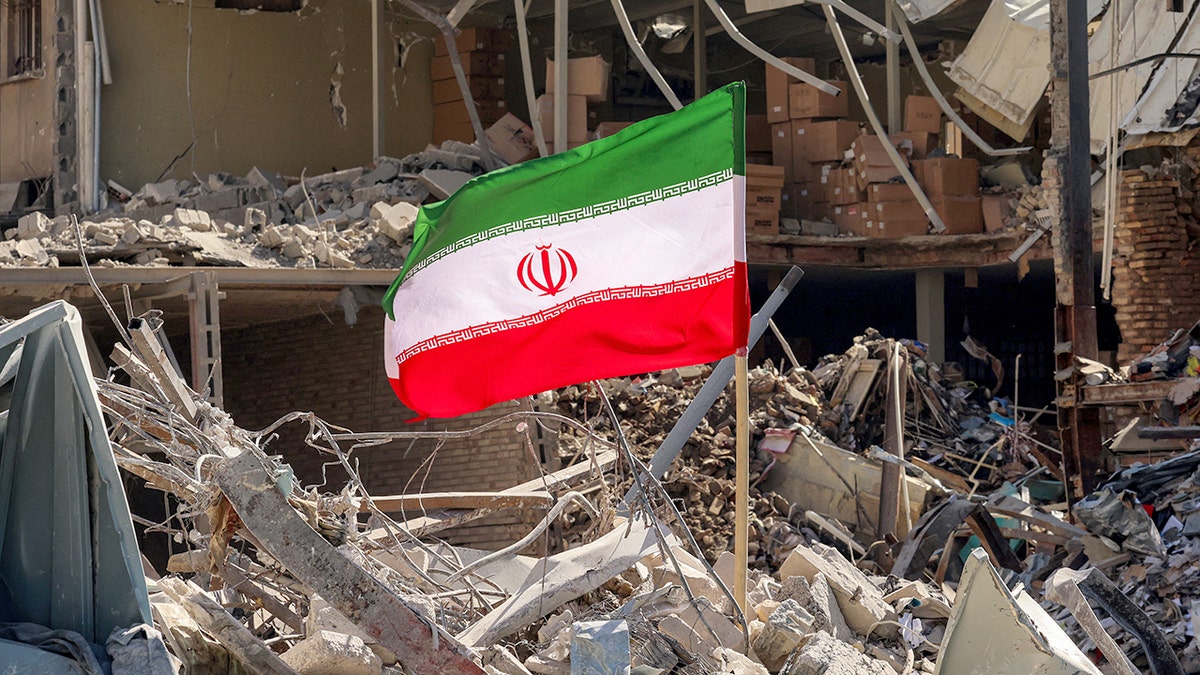
The article reports on reactions from Iranians to President Donald Trump’s claim that a deal with Iran’s clerical regime is imminent, one that would reopen the Strait of Hormuz and address Tehran’s nuclear program. According to Iran expert Lisa Daftari and multiple Iranians contacted by Fox News Digital, many inside Iran are torn between cautious hope and deep skepticism. Some see the moment as a rare chance for Trump to use U.S. pressure to force meaningful change in the regime, while others fear any agreement could simply preserve the Islamic Republic while leaving ordinary people to bear the economic and political consequences.
The piece emphasizes the disconnect between the regime and the population. Daftari says the government is financially strained and politically fragile, but warns that a shallow agreement could close a narrow window for real leverage. Iranians quoted from Tehran and Tabriz describe economic collapse, repression, uncertainty, and a sense that international negotiations often ignore ordinary families. Several say U.S. military and economic pressure has had the greatest impact on civilians rather than leaders.
The article also notes that Fox News Digital withheld full names from some sources because the regime criminalizes use of Starlink to bypass censorship, highlighting the dangers faced by people speaking freely inside Iran. Overall, the story frames the possible Trump-Iran deal as a high-stakes moment that could either weaken the regime or inadvertently help it survive intact.
Entities: Donald Trump, Iran, Islamic Republic of Iran, Strait of Hormuz, Tehran • Tone: analytical • Sentiment: negative • Intent: inform
04-06-2026
The House of Representatives approved a war powers resolution aimed at forcing President Donald Trump to end military action against Iran, marking a major bipartisan rebuke of the administration. The measure passed 215-208, with four Republicans joining all Democrats in support. It had previously been delayed by House Speaker Mike Johnson when it appeared Republicans might not be able to defeat it. The resolution was sponsored by Rep. Gregory Meeks, who argued that Trump’s Iran campaign is illegal, costly, and ineffective, and that it has made a diplomatic solution harder to achieve. The vote is notable because it is the first time the House has succeeded in passing such a measure after several prior attempts.
The article explains the constitutional and legal dispute at the heart of the issue: Congress has the authority to declare war, but the president has commander-in-chief powers to engage in military action. It also notes that under the War Powers Act, the president has a limited window to seek congressional approval for military action, though the Trump administration argues the law is unconstitutional and that a cease-fire means the conflict has ended. The resolution now moves to the Senate, which had already advanced its own version after some GOP senators broke with the president.
Secretary of State Marco Rubio warned that congressional approval of the resolution could weaken U.S. leverage in negotiations with Iran, especially over reopening the Strait of Hormuz and ending Iran’s nuclear ambitions. Overall, the article frames the vote as a significant political and legal confrontation over war powers, Iran policy, and Congress’s ability to restrain presidential military action.
Entities: Donald Trump, Gregory Meeks, Mike Johnson, Marco Rubio, Thomas Massie • Tone: analytical • Sentiment: neutral • Intent: inform
04-06-2026
Four House Republicans broke with President Trump and voted to limit his ability to continue military action in Iran without congressional authorization, marking a notable rebuke of the administration’s handling of the war. The article explains that the defectors came from different parts of the GOP: two are libertarian-leaning conservatives who oppose foreign intervention in general, while two are more centrist, politically vulnerable lawmakers from competitive districts. Although the measure they backed is unlikely to become law and would probably face legal challenges even if enacted, its passage in the House represents growing unease within Trump’s party about a war that has lasted far longer than the president initially promised. The piece profiles each Republican defector and the reasoning behind their votes.
Warren Davidson of Ohio is presented as a longtime advocate of congressional authority over war powers who has repeatedly broken with party leadership on military intervention and executive power, though he had temporarily aligned with Republicans on earlier votes before returning to his original position. Tom Barrett of Michigan, a first-term Republican and former Army helicopter pilot, has tried to frame a more limited, time-bound approach to military action and cited Congress’s role in defining the mission and limits of force. Brian Fitzpatrick of Pennsylvania, a centrist from a competitive suburban district, argued that the legal time for unilateral presidential action had expired and that lawmakers must follow the War Powers Act. Thomas Massie of Kentucky is described as the most consistent and outspoken Republican critic of Trump on war powers and foreign intervention, though he recently lost his seat in a primary challenge backed by Trump. Overall, the article depicts a party growing more divided over the Iran war and the constitutional question of who controls military action.
Entities: Donald Trump, Warren Davidson, Tom Barrett, Brian Fitzpatrick, Thomas Massie • Tone: analytical • Sentiment: neutral • Intent: inform
04-06-2026
The article describes a growing backlash from some Republicans against President Trump’s effort to centralize power and use loyalty tests within the party. After Trump celebrated a major legislative victory last year, he expected Republicans to continue following his lead, but several GOP lawmakers are now resisting him on multiple fronts. The most visible clash came when four House Republicans joined Democrats to require congressional approval for U.S. military involvement in Iran, directly challenging Trump’s insistence that he does not need such authorization. At the same time, Republican senators are moving to block a proposed $1.8 billion fund for Trump supporters who claim political persecution, with leaders like John Cornyn and Bill Cassidy pushing legislation to ensure the effort is permanently killed.
The article also highlights broader friction over Trump’s appointment of Bill Pulte to act as director of national intelligence, which some Republicans say could derail other priorities, including a warrantless surveillance law. Senator Thom Tillis criticizes the administration’s choices as “amateur hour” and suggests Trump’s advisers are acting as if there is no upcoming election. Although White House spokespeople defend Trump’s selections and frame resistance as irresponsible and partisan, the article suggests that many Republicans are increasingly trying to distance themselves from the president for political survival.
The piece places these disputes in the context of the approaching midterm elections and recent primary defeats of Trump-backed candidates, arguing that Trump’s dominance in Republican primaries may be weakening in the broader electorate. Strategists and former GOP leaders warn that tariffs, rising oil prices, and the war in Iran are hurting Republicans politically. The overall portrait is of a party beginning to test the limits of Trump’s influence, even as his hold over loyal voters remains significant.
Entities: Donald Trump, Republican Party, House Republicans, Senate Republicans, Iran • Tone: analytical • Sentiment: negative • Intent: analyze