04-06-2026
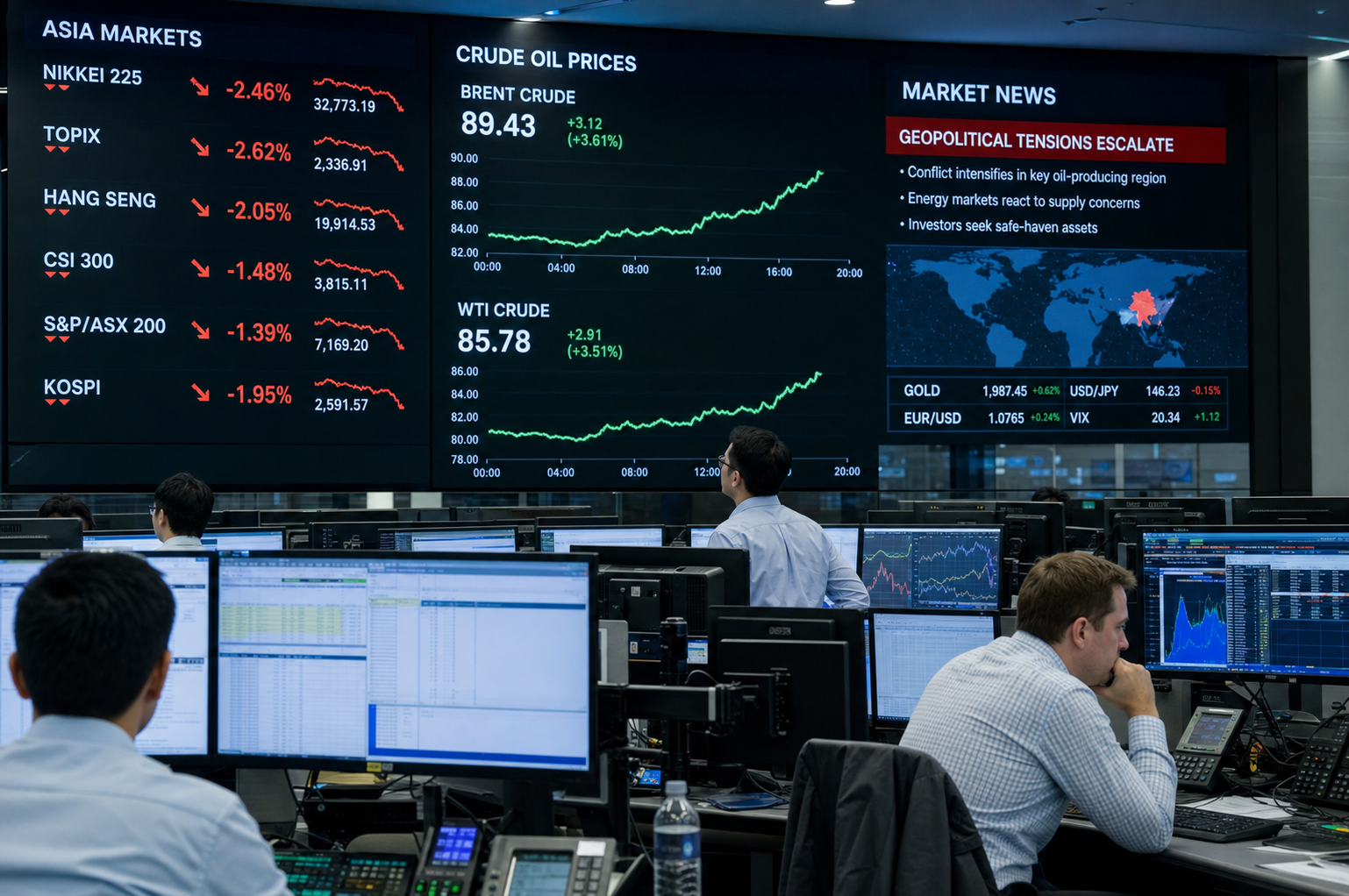
Asia-Pacific markets moved lower on Thursday as investors reacted to renewed geopolitical tensions between Iran and the U.S., along with concerns that sustained conflict could keep oil prices and inflation elevated. The article says that markets were tracking losses on Wall Street overnight after oil prices rose sharply in response to the escalating situation in the Middle East. West Texas Intermediate and Brent crude both climbed nearly 2% on Wednesday, although futures were slightly lower on Thursday.
The report highlights statements from Israeli Prime Minister Benjamin Netanyahu, who told CNBC in an exclusive interview that Israel and the U.S. were prepared to strike Iran again if needed. That comment, combined with reports of attacks involving Iran and U.S. forces in the region, helped reinforce market worries about supply disruption, higher energy costs, and broader inflationary pressure.
Most major regional benchmarks finished in the red. South Korea’s Kospi fell, though the Kosdaq rose sharply after trading resumed following a holiday. Japan’s Nikkei 225 declined after hitting a record high in the previous session, while Australia’s ASX 200, mainland China’s CSI 300, Hong Kong’s Hang Seng, and India’s major indices also retreated. SoftBank was a notable laggard in Japan after news that it sold a stake in Indian eyewear company Lenskart Solutions. U.S. futures also pointed lower, while the previous day’s U.S. session ended with broad losses across the Dow, S&P 500, and Nasdaq. Overall, the article presents a market snapshot driven primarily by geopolitical risk, oil price volatility, and negative sentiment across global equities.
Entities: Asia-Pacific markets, Iran, U.S., Israel, Benjamin Netanyahu • Tone: analytical • Sentiment: negative • Intent: inform
04-06-2026
U.S. stock futures were lower early Thursday after the S&P 500 ended its nine-day winning streak, as investors reacted to rising geopolitical tension between the United States and Iran, higher oil prices, and rising Treasury yields. Broadcom and CrowdStrike pressured after-hours trading, with Broadcom falling sharply after missing revenue expectations and CrowdStrike dropping on weak guidance. The prior session had already been weak, with the S&P 500, Nasdaq Composite, and Dow all closing lower as energy prices and conflict-related fears weighed on sentiment. Market strategists said the pullback may be a normal pause after a strong run, with Truist Wealth’s Keith Lerner describing it as a likely “rest” after an extended advance. The article also notes upcoming catalysts, including earnings from Ciena and Brown-Forman and fresh labor-market data. Overseas, Asia-Pacific markets traded lower in sympathy, reflecting the global impact of the Middle East tensions and related inflation concerns. The piece also highlights SpaceX’s IPO pricing as a major market event, with Wedbush’s Dan Ives calling it a “watershed moment” for public markets and a possible precursor for future AI-related listings.
Entities: S&P 500, Nasdaq Composite, Dow Jones Industrial Average, Broadcom, CrowdStrike • Tone: analytical • Sentiment: negative • Intent: inform
04-06-2026
The article argues that Iran has emerged from the latest conflict with a durable new form of leverage over the global economy: the ability to threaten or disrupt the Strait of Hormuz, through which roughly one-fifth of the world’s oil and liquefied natural gas previously flowed. Analysts quoted in the piece say Iran has demonstrated it can effectively blockade the waterway using comparatively limited military force, and that this leverage is unlikely to disappear even if a deal is eventually reached with the White House. The result, they warn, is a long-term increase in geopolitical risk and a persistent energy price premium.
The article explains that Iran has moved to formalize its influence by creating the Persian Gulf Strait Authority to oversee transit rules, including vetting and possible fees, while the United States has sanctioned the body and threatened secondary sanctions against companies that pay Iran. Some traders and shipping firms are reportedly making arrangements to resume flows, because global stockpiles are being depleted and prolonged disruption could push Brent crude toward $200 a barrel, potentially triggering a broader economic crisis.
It also explores how Gulf states are diversifying away from the strait through pipelines and alternate export routes, including Saudi Arabia’s and the UAE’s infrastructure, but notes that such work is expensive, slow, and not immune to Iranian attack. More broadly, the conflict is accelerating global energy-security efforts, encouraging diversification, investment in other producing regions, and a longer-term shift toward electrification and renewables.
Entities: Iran, Strait of Hormuz, United States, Donald Trump, White House • Tone: analytical • Sentiment: negative • Intent: analyze