05-11-2026
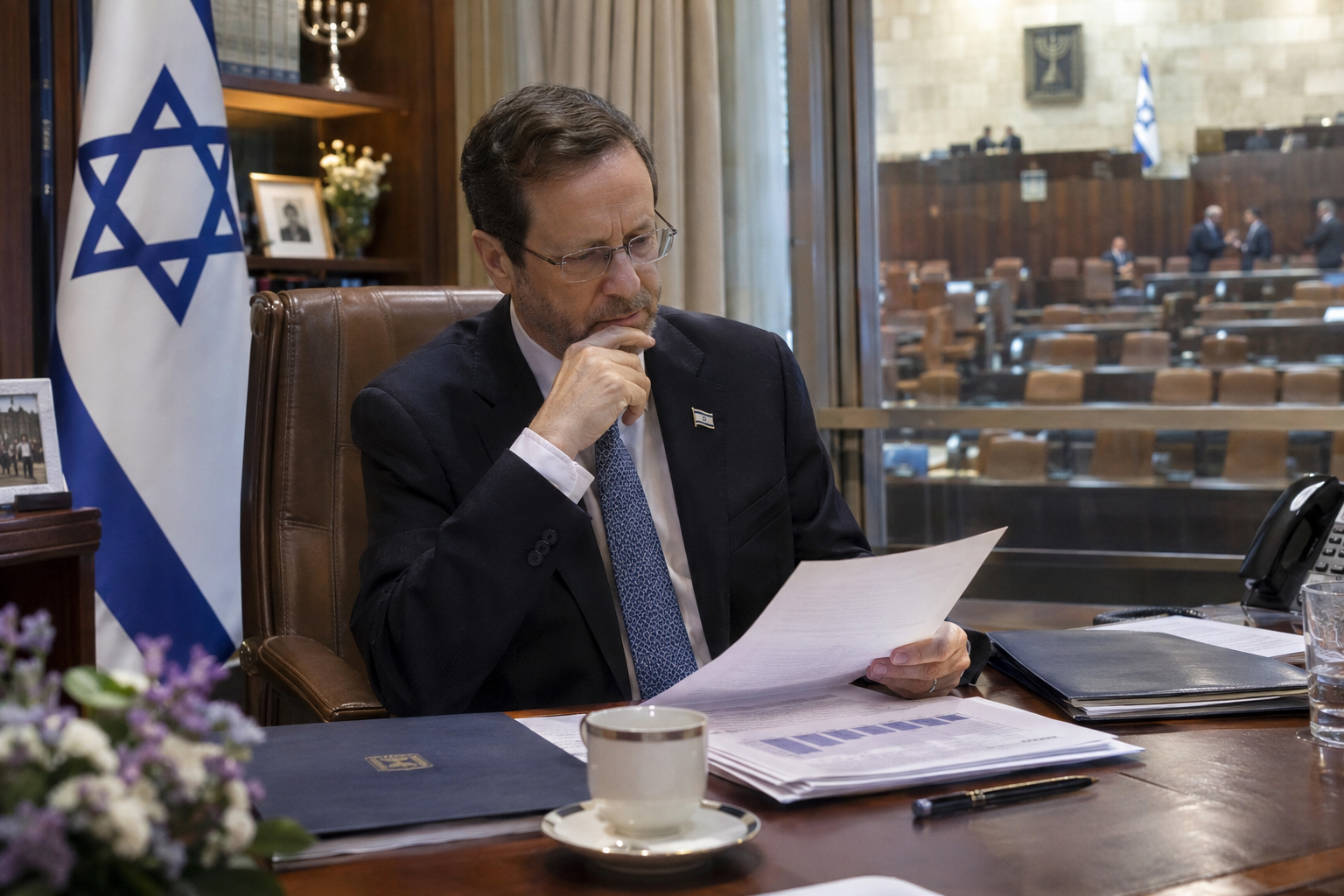
Political consultations led by Israeli President Isaac Herzog are nearing their conclusion as parties negotiate to form a government following divisive parliamentary elections. Neither Prime Minister Benjamin Netanyahu’s party nor the party of his main challenger, former military chief Gadi Eisenkot, won an outright majority, leaving both camps dependent on smaller parties to assemble a coalition.
Several right-wing and religious parties recommended Netanyahu, including Otzma Yehudit, Religious Zionism, Shas and Zehut. United Torah Judaism, despite usually supporting Netanyahu, did not recommend a candidate. Eisenkot received an endorsement from Yisrael Beiteinu, led by former Defence Minister Avigdor Lieberman, and may also rely on opposition lists. The article says the Arab-led Raam and Joint List could have an important role in coalition formation, following historic gains by Arab-led parties.
Herzog’s acceptance of the certified election results was described as a setback for Netanyahu’s efforts to discredit the vote. Herzog said that the election was over and it was time to face reality. Netanyahu and his supporters had repeatedly alleged, without substantiation, that Arab-led parties stole the election, possibly with foreign assistance. Israel’s elections commission said its investigation of fraud claims found no evidence of irregularities that compromised the election’s integrity or affected its results. The article focuses on coalition arithmetic, party endorsements and the dispute over the validity of the election results.
Entities: Israel, Isaac Herzog, Benjamin Netanyahu, Gadi Eisenkot, Itamar Ben Gvir • Tone: analytical • Sentiment: neutral • Intent: inform
05-11-2026
Israeli President Isaac Herzog has accepted the certified results of the October 27 parliamentary election and begun consultations with party leaders to determine who should be asked to form the next government. The process marks a setback for Prime Minister Benjamin Netanyahu, whose coalition lost its majority and whose supporters have alleged—without substantiation—that the election was stolen. The elections commission said its investigation found no evidence of irregularities that compromised the vote or affected its outcome.
Neither Netanyahu’s bloc nor that of opposition leader Gadi Eisenkot won the 61 seats needed for a majority in the 120-member Knesset. Netanyahu’s coalition secured 53 seats, while Eisenkot’s bloc won 48. Arab-led parties made historic gains, taking a combined 19 seats. A potential alliance between Eisenkot and the Arab-led parties could give him a path to power, although the parties’ positions are not yet fully settled.
Ra’am has said it will recommend Eisenkot, bringing his expected support to 56 lawmakers. The Joint List has not announced its position; reports suggest it could coordinate with Eisenkot, and its 11 seats could take him above the majority threshold. Netanyahu’s support is also uncertain: Degel HaTorah, part of United Torah Judaism, said it would recommend neither candidate, amid a dispute over legislation exempting Haredi men from military service.
After consultations conclude, Herzog will select the candidate he believes is best placed to assemble a coalition. The nominee will have 28 days, with a possible 14-day extension. If neither Netanyahu nor Eisenkot succeeds, another election could take place early next year. Herzog urged both camps to compromise and warned against racist rhetoric directed at Palestinian-Israeli voters, who make up about one-fifth of Israel’s population.
Entities: Isaac Herzog, Benjamin Netanyahu, Gadi Eisenkot, Israel, Knesset • Tone: analytical • Sentiment: neutral • Intent: inform
05-11-2026
The Joint List, an alliance of Arab-led parties, says it will recommend opposition leader Gadi Eisenkot to Israel’s president, Isaac Herzog, as the candidate to form the next government following last week’s election. The alliance’s 11 lawmakers, together with the eight lawmakers of the Arab-led Ra’am party, could help Eisenkot secure recommendations from 67 members of the 120-seat Knesset—more than the 61 needed for a majority. Arab-led parties won a record 19 seats in the election, giving them potential influence in coalition negotiations.
Prime Minister Benjamin Netanyahu’s bloc holds 53 seats, but its support may be weakened because Degel HaTorah, a faction within United Torah Judaism, says it will recommend neither candidate. The faction broke with Netanyahu over his coalition’s failure to pass legislation exempting Haredi men from military service.
Netanyahu and Likud have repeatedly alleged, without evidence, that Arab parties committed election fraud with foreign backing. They have pointed to several cases, including the arrests of three activists suspected of bribing voters; the activists are alleged to have links to Ra’am, which denies involvement. Likud has also called cooperation between Zionist parties and the Arab bloc dangerous and suggested it would be treasonous.
Israel’s Central Elections Committee certified the results after finding no evidence of fraud, and Herzog accepted them and began consultations with party leaders. Herzog has supported investigating suspected interference while condemning racist language and expressing respect for Palestinian citizens of Israel, who make up about 20 percent of the population. After consultations conclude, he will select the candidate he believes is best placed to form a coalition. That nominee will have 28 days, with a possible 14-day extension; if neither Eisenkot nor Netanyahu succeeds, another election is expected early next year.
Entities: Joint List, Gadi Eisenkot, Isaac Herzog, Benjamin Netanyahu, Ra’am • Tone: analytical • Sentiment: neutral • Intent: inform
05-11-2026
Israel’s largest Arab political grouping, the Joint List, said on Thursday that it would recommend opposition leader Gadi Eisenkot to form the next government. The group said it would formally convey its decision to President Isaac Herzog that evening. The announcement could strengthen Eisenkot’s effort to assemble a government following the legislative election held the previous week, though the article does not report that he has secured enough support to do so.
Arab-majority lists won a record 19 of the 120 seats in parliament. Their representation could make them potential kingmakers in negotiations over the next government. The report presents the Joint List’s recommendation as a significant development in those negotiations, but offers no further details about the positions of other parties or the likelihood of Eisenkot forming a government.
The article also includes a photograph caption identifying Eisenkot as leader of the Yashar party and describing him addressing supporters at an election-night rally in Tel Aviv on October 28, 2026. The report is attributed to France 24 with AFP. Its central focus is the Joint List’s stated decision and the potential parliamentary influence of Arab-majority lists after an election in which they achieved an unprecedented seat total.
Entities: Gadi Eisenkot, Joint List, Isaac Herzog, Yashar party, Israel • Tone: neutral • Sentiment: neutral • Intent: inform
05-11-2026
The supplied article excerpt describes the political challenge facing Israeli President Isaac Herzog after an inconclusive election. Although his role is largely ceremonial, Herzog must decide which political leader will receive the first opportunity to form a government—a choice likely to upset one side of an already divided country. The article’s accompanying summary says Herzog is expected to seek a broad coalition and avoid another election. Benjamin Netanyahu’s Likud won 27 seats, but the bloc aligned with him has only 53; the opposing bloc associated with Gadi Eisenkot has 48. Support from Arab parties could therefore affect who receives the first mandate.
The excerpt also says Herzog may potentially use a pardon for Netanyahu as leverage, while noting that this possibility is controversial. It points to doubts about Herzog’s ability to broker agreement, including those arising from failed talks over judicial overhaul and other divisive decisions. Before the election, Herzog had urged political leaders to compromise, saying the vote had produced no clear winner.
The article frames the decision as a consequential test of Herzog’s efforts to avoid controversy and heal divisions during five years as president. However, the supplied material contains only the article’s opening paragraph and a short editorial summary, not the full report. It does not provide further detail on the election results, the competing blocs, the pardon issue, or Herzog’s consultations. The summary therefore reflects only the information present in the provided excerpt.
Entities: Isaac Herzog, Benjamin Netanyahu, Gadi Eisenkot, Israel, Jerusalem • Tone: analytical • Sentiment: neutral • Intent: analyze
05-11-2026
Benjamin Netanyahu’s effort to remain prime minister weakened after the ultra-Orthodox United Torah Judaism (UTJ) party declined to recommend him—or any candidate—to form Israel’s next government. At the same time, Arab-led Ra’am announced that its eight lawmakers would recommend Netanyahu’s main rival, Gadi Eisenkot, improving Eisenkot’s position in consultations with President Isaac Herzog. The consultations follow an inconclusive October 27 election, and Herzog must choose which lawmaker to invite to attempt to form a government. Under Israeli law, the nominee should be the person Herzog believes has the best chance of assembling a coalition, not necessarily the leader of the largest party.
Netanyahu’s Likud won 27 of the Knesset’s 120 seats, but his nationalist-religious bloc has only 53, short of a majority. Eisenkot’s four-party bloc won 48 seats, while the two Arab-led parties together hold 19. The Joint List has not yet said whether it will recommend Eisenkot or abstain. UTJ’s seven seats could matter, but its break with Netanyahu reflects the failure to pass legislation guaranteeing military-service exemptions for ultra-Orthodox men studying in seminaries. The party’s support for a future government may depend on securing those protections. UTJ had reportedly considered backing an Eisenkot-led minority government without formally joining it.
Eisenkot nevertheless faces obstacles: some of his partners oppose relying on Arab-led parties or cooperating with ultra-Orthodox factions, and his bloc rejects a government with Netanyahu. Herzog has urged parties to bridge their differences and avoid another election, citing Israel’s security and diplomatic challenges.
The article also reports allegations of voter fraud raised by Netanyahu and his allies, who claim Arab-led parties may have benefited from vote tampering. Israel’s Central Election Committee said the election’s integrity had not been compromised, and a call was made for elected officials to protect public trust. Herzog has until November 11 to nominate a candidate. That person will have up to 42 days to form a coalition; if unsuccessful, Israel could hold another election. Netanyahu remains caretaker prime minister until a new government is formed.
Entities: Benjamin Netanyahu, Gadi Eisenkot, Isaac Herzog, United Torah Judaism (UTJ), Likud • Tone: analytical • Sentiment: negative • Intent: inform