05-11-2026
Energy executives see substantial long-term opportunities as demand grows, but say investment decisions are complicated by geopolitical tensions, uncertain oil prices, supply-chain pressures and higher interest rates. At the ADIPEC energy conference in Abu Dhabi, Baker Hughes CEO Lorenzo Simonelli described the coming years as a “demand decade,” citing artificial intelligence, population growth and developing economies as drivers of energy consumption. He expects capital investment and industry activity to increase, with activity projected to rise by a low-single-digit percentage in 2027.
Simonelli also argued that conflict in the Middle East has underscored the need for a more resilient energy system, including additional storage and pipelines and the removal of infrastructure bottlenecks. Schneider Electric CEO Olivier Blum said some Persian Gulf projects have slowed because of the conflict, while the medium-term opportunity to build infrastructure has grown.
RWE CEO Markus Krebber similarly pointed to electricity demand from AI and electrification, but emphasized that a challenging investment environment could slow the development of computing capacity and the power infrastructure it requires. BP CEO Meg O’Neill said long project timelines and a wide range of forecasts for global energy demand make investment choices difficult. She added that BP must plan for a lower oil-price environment.
The article also highlights the possibility of an oversupplied oil market. Richard Bronze of Energy Aspects said forecasts point to oversupply in 2027 and 2028 if Middle Eastern oil flows return to normal. Together, the executives’ comments present a long-term case for greater energy investment while stressing that returns, timing and the scale of demand remain uncertain.
Entities: Lorenzo Simonelli, Baker Hughes, Markus Krebber, RWE, Meg O’Neill • Tone: analytical • Sentiment: neutral • Intent: analyze
05-11-2026
Adipec concluded in Abu Dhabi after four days of discussions dominated by energy security, disruption to oil and gas supplies, and the growing use of artificial intelligence in the energy industry. The Strait of Hormuz has remained officially shut for nine months amid the Iran war, restricting a major route for global oil trade, pushing up prices and contributing to inflation. UAE Industry and Advanced Technology Minister and Adnoc chief executive Dr Sultan Al Jaber said the disruption had removed nearly one billion barrels from global oil inventories, driven diesel stocks to seasonal lows in some markets, and widened the liquefied natural gas supply gap to 600 billion cubic feet. He also said shipping and logistics costs had risen sharply, while far fewer ships were using the strait than before the conflict.
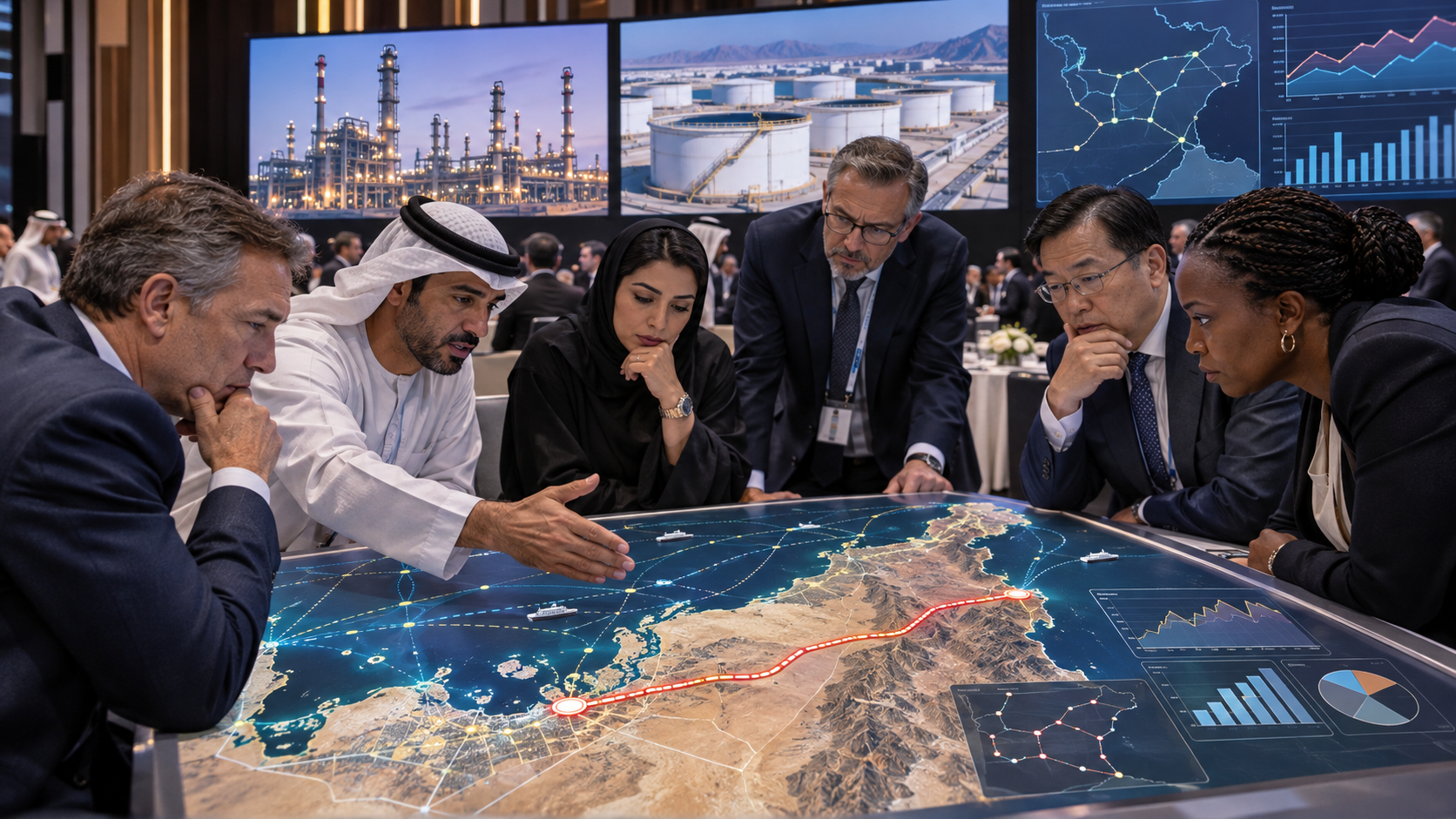
The UAE announced a pipeline connecting Abu Dhabi to Fujairah on the east coast, intended to bypass the Strait of Hormuz and maintain access to global markets. Al Jaber also stressed the need for new infrastructure and continued financing for energy trade. The article notes that the UAE, which left Opec earlier in the year, is investing heavily in energy infrastructure. India has been a major recipient of UAE oil exports during the conflict, accounting for 15 per cent of its total imports.
Artificial intelligence was another central theme at the event. Adnoc signed an agreement with OpenAI and Abu Dhabi-based G42 to become the first energy company to deploy OpenAI’s Frontier technology across its operations. The initiative is intended to connect operational, investment and commercial decision-making and improve efficiency and productivity. Thousands of companies, ministers, executives and investors attended the gathering, with major participation from Asia.
Entities: Adipec, Abu Dhabi, Dr Sultan Al Jaber, Adnoc, Strait of Hormuz • Tone: analytical • Sentiment: negative • Intent: inform
05-11-2026
OMV chief executive Emma Delaney says low global oil and fuel inventories mean supply disruptions will continue to affect refining markets, even if immediate concerns ease. Speaking to The National at the Adipec conference in Abu Dhabi, she noted that refining margins were exceptionally high in 2026, particularly in the third quarter, and that stocks in some markets had reached historic lows. The ongoing Iran war and constraints on flows through the Strait of Hormuz have contributed to higher energy prices and supply-chain disruption. Brent crude was around $103 a barrel at the time of the interview, while International Energy Agency figures showed global observed oil inventories fell by 509 million barrels between the end of February and the end of September. The agency expected the market to remain in deficit through year-end. OMV’s third-quarter clean operating result rose 68 per cent to €2.1 billion, its strongest result since 2022, while its European refining indicator margin more than tripled to $37.50 a barrel. The company’s three refineries operated at 92 per cent utilisation. Delaney said strong margins are useful only if the company can operate its assets effectively. OMV’s Abu Dhabi operations recovered quickly from regional disruption, and its stake in Adnoc Refining and Trading generated €158 million in quarterly earnings, compared with €52 million a year earlier. Chemicals performance was less consistent: the segment’s operating result fell to €63 million from €222 million, amid price swings and a change in the accounting treatment of Borealis. Delaney also highlighted Borouge International, a 50-50 venture with XRG, and the Neptun Deep gas project in Romania, which is expected to begin production next year and supply both Romanian and European markets. OMV has shifted toward an integrated energy, fuels and chemicals strategy, but Delaney said it was too early to discuss changes. She emphasised the cyclical nature of the business as the company considers how to respond to elevated refining profits.
Entities: Emma Delaney, OMV, Adipec, Abu Dhabi, Adnoc • Tone: analytical • Sentiment: neutral • Intent: inform