03-11-2026
Iranian armed forces chief of staff Major-General Ali Abdollahi has proposed five conditions as a roadmap to lasting regional security: an end to hostilities on all fronts, including Lebanon and Gaza; the lifting of sanctions; the return of frozen Iranian assets; war reparations; recognition of Iran’s sovereignty over the Strait of Hormuz; and guarantees against future aggression within a regional security framework. The proposal comes amid Qatari efforts to mediate between Tehran and Washington, following overnight US strikes on Qeshm Island and fears that the conflict could escalate after US midterm elections.
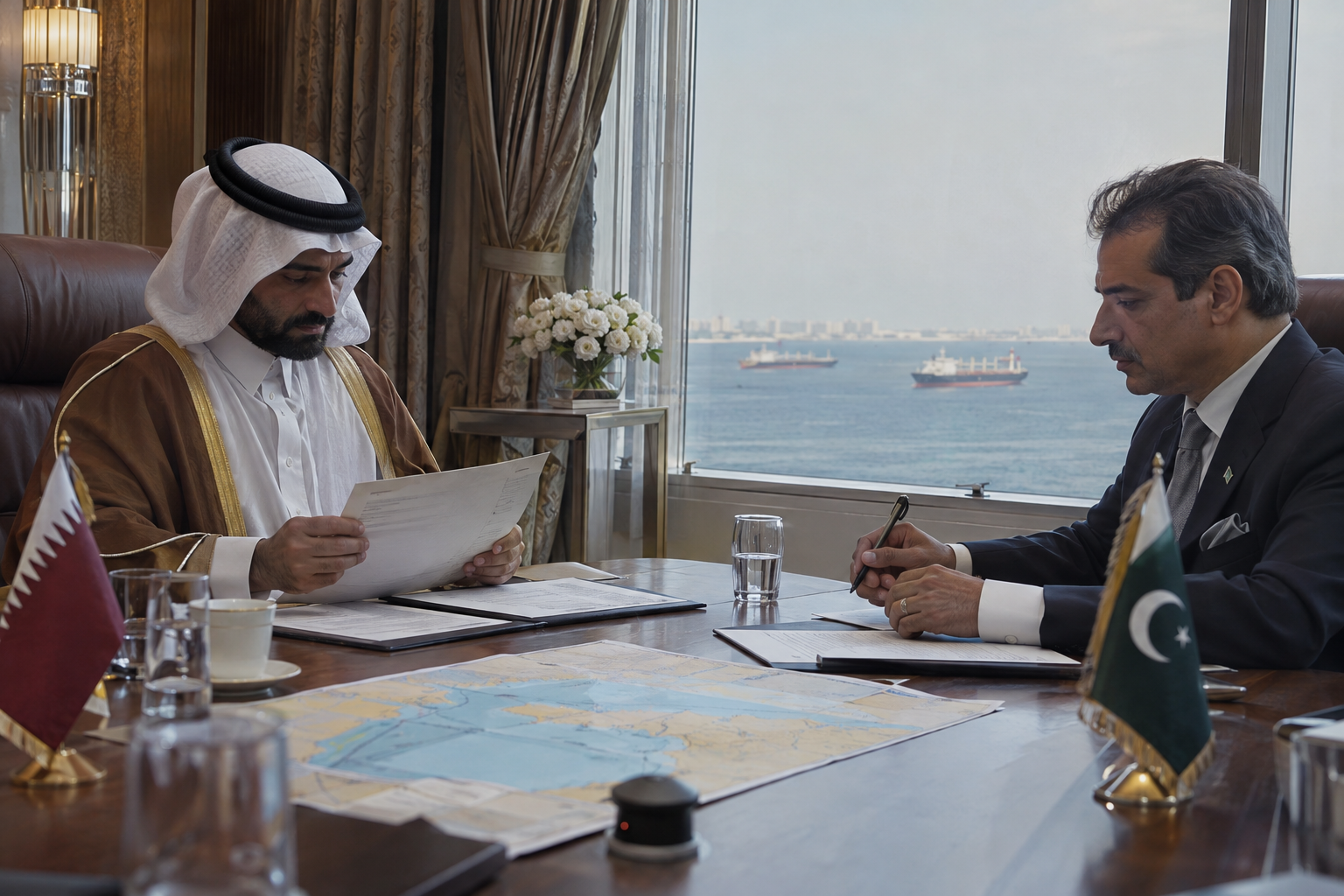
Qatar’s Foreign Ministry spokesman Majed al-Ansari said Qatari and Iranian officials met in Tehran for more than three hours and are reviewing a Qatari proposal. Mediators are exchanging proposals, and Qatar remains hopeful negotiations can continue, though al-Ansari cautioned that attacks on Iranian territory or shipping could affect talks. Qatar and Pakistan are continuing their mediation, while Doha has stressed that freedom of navigation in the Strait of Hormuz is nonnegotiable.
Al Jazeera correspondent Resul Serdar Atas said the mediation is aimed at creating a framework to restart negotiations rather than immediately securing a peace deal. He described deep mistrust, with Iran seeking concrete steps such as sanctions relief, an end to the naval blockade, the return of frozen assets and the ability to sell oil internationally. US officials characterized the Qeshm strikes as limited and defensive, while Iran’s IRGC reported downing US drones. Iranian Parliament Speaker Mohammad Bagher Ghalibaf said the US must act to prevent war. Analysts said diplomacy and military pressure are proceeding in parallel, with no fundamental breakthrough yet. US Vice President JD Vance expressed optimism about a negotiated settlement, while Iran’s Deputy Foreign Minister Kazem Gharibabadi said Tehran was not basing its policy on the US election outcome.
Entities: Ali Abdollahi, Majed al-Ansari, Resul Serdar Atas, Donald Trump, JD Vance • Tone: analytical • Sentiment: neutral • Intent: inform
03-11-2026
Qatar says it remains hopeful that the United States and Iran can reach an agreement through diplomacy. Majed al-Ansari, a spokesperson for Qatar’s foreign ministry, said regional neighbours and international partners are working together to help secure a deal between the two countries. He also affirmed that both the US and Iran remain committed to reaching a diplomatic outcome. The report presents Qatar’s position and describes ongoing cooperation among regional and international parties, but gives no details about the negotiations, the issues under discussion, or a possible timeline. It does not identify the other partners involved or report on specific steps taken toward an agreement. Its central message is therefore one of continued hope and stated commitment to diplomacy, rather than a claim that a deal has been reached or is imminent. The item was published on 3 November 2026.
Entities: Qatar, United States, Iran, Majed al-Ansari, Qatar’s foreign ministry • Tone: neutral • Sentiment: positive • Intent: inform
03-11-2026
Crude oil prices fell for a second consecutive session on Tuesday as markets weighed hopes for a diplomatic settlement between the United States and Iran against continuing military and shipping risks. West Texas Intermediate was down 42 cents at $96.04 per barrel after briefly dropping below $95, while Brent fell $1.23 to $103.54. The decline followed a sell-off of more than 7% on Monday, when Washington and Tehran signaled openness to talks. President Donald Trump said Iran wanted to make a deal, and Qatar’s foreign ministry said the Gulf state was mediating discussions, including a Qatari delegation’s visit to Tehran aimed at preventing further escalation and ending the conflict.
Despite the diplomatic signals, the article describes the Middle East situation as volatile. Oil prices had risen more than 10% in October amid concerns that fighting might intensify after the U.S. midterm elections and reports that Washington was preparing strike plans. U.S. officials told The Wall Street Journal that the United States attacked Iran’s Qeshm Island on Monday and had conducted limited strikes in recent weeks. The report said the campaign was kept low-profile to avoid suggesting a larger escalation. Meanwhile, commercial vessels continue to face attacks in the Persian Gulf, the Strait of Hormuz, and the Gulf of Oman; at least four attacks had been reported since the beginning of the month.
U.S. officials have nonetheless voiced optimism about negotiations. Vice President JD Vance said he and Trump felt good about the possibility of a negotiated settlement, while Secretary of State Marco Rubio said Trump preferred a diplomatic resolution and did not want to use military force. The article also links elevated oil prices to inflation and high U.S. gasoline prices, which are a political concern for Trump ahead of the midterms. Two Federal Reserve presidents recently said interest rates may need to rise to restrain inflation, a move that can slow growth and increase consumer costs even as it helps reduce inflation.
Entities: Crude oil prices, West Texas Intermediate (WTI), Brent crude, United States, Iran • Tone: analytical • Sentiment: negative • Intent: inform
03-11-2026
Qatar says there remains hope for an interim agreement between the United States and Iran, even as fresh US strikes and threats to shipping in the Strait of Hormuz complicate efforts to end the war. Qatari Foreign Ministry spokesperson Majed Al Ansari said negotiations were continuing and that mediators were exchanging proposals in real time following talks in Tehran. A Qatari delegation met Iranian officials for more than three hours on Monday, then returned to Doha. Washington and Tehran are reviewing proposals, Al Ansari said.
Qatar is seeking an interim agreement that could build trust and give both sides a way to demonstrate that they will honor commitments. Al Ansari described such an arrangement as a possible first step toward lasting peace, saying confidence is built through the negotiation process rather than through specific actions alone.
The conflict began with US and Israeli strikes on Iran in late February and has involved separate US and Iranian blockades of the Strait of Hormuz, a vital route for oil and gas exports. Al Ansari called freedom of navigation non-negotiable and condemned threats against ships belonging to Qatar and other countries. He warned that attacks on shipping and further military escalation could affect the entire region and undermine negotiations.
Despite overnight US strikes on Iran’s Qeshm Island, located in the Strait, Al Ansari said Qatar was judging the talks by official responses to its proposals, not public threats or statements. Qatar is also working closely with Pakistan and coordinating with Gulf neighbours to prevent further escalation. Iranian officials have said that Tehran’s conditions must be met before the Strait can reopen or nuclear negotiations can begin.
Entities: Qatar, United States, Iran, Majed Al Ansari, Doha • Tone: neutral • Sentiment: neutral • Intent: inform