03-11-2026
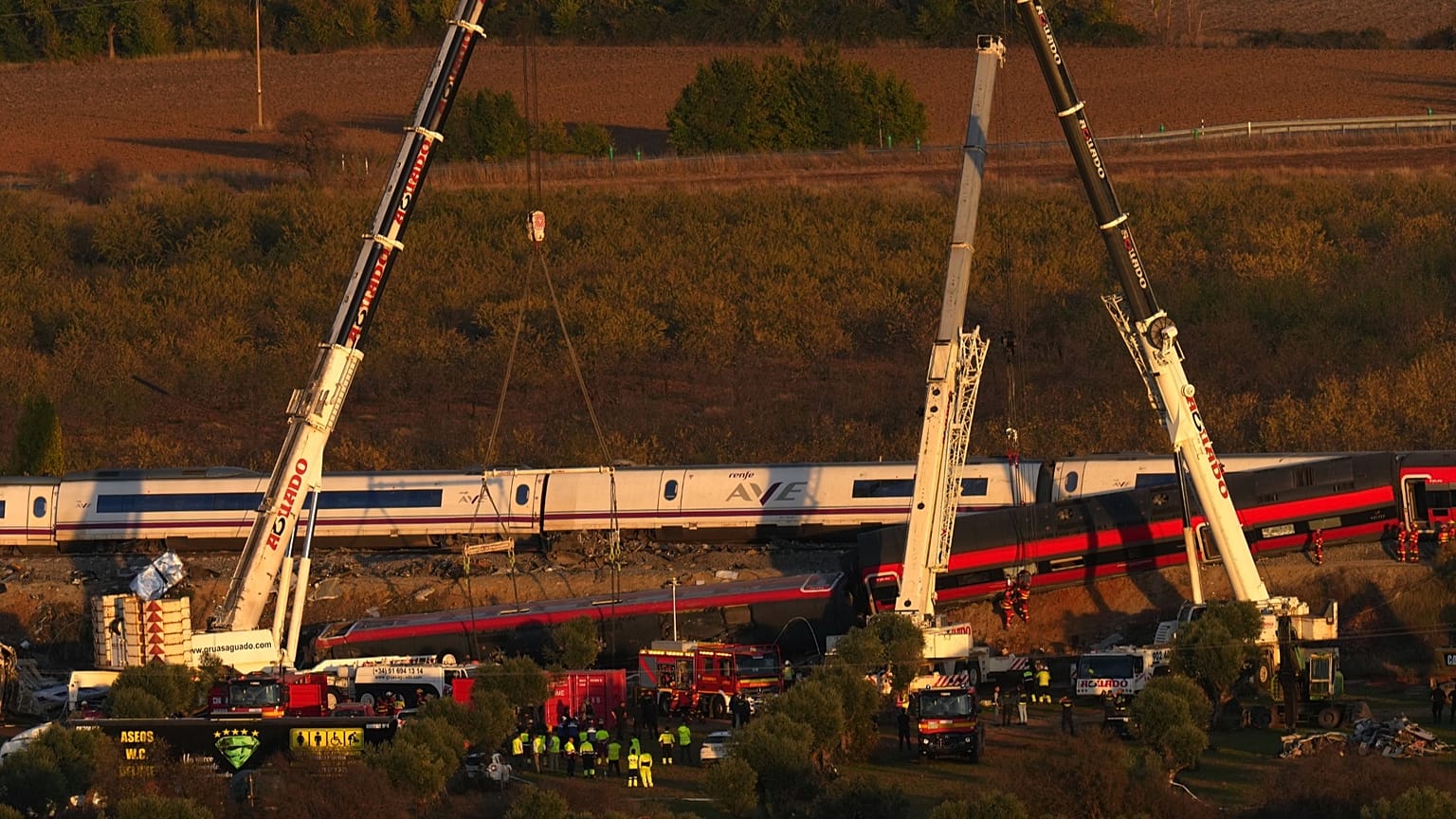
Spanish authorities have confirmed that two Australians were among the 69 people killed in last week’s collision between two high-speed trains near Urda, about 130 kilometres south of Madrid. The High Court of Justice of Castilla-La Mancha told the ABC that the Australians’ identities had been communicated to their families. Authorities said on Tuesday that all 69 victims had been identified after forensic teams worked continuously since the crash. The dead include 54 Spanish nationals and 15 foreign citizens, among them two Australians, four Americans, two Japanese nationals, and citizens of Argentina, Canada, the Czech Republic, France, Mexico, Portugal and Tunisia.
The crash occurred when a Renfe train struck the back of a stationary train operated by Iryo. There were 500 passengers on board the two trains. An automatic safety system had stopped trains on a 63-kilometre stretch of track, but a control centre authorised the Renfe service to continue while the other train remained stopped. Investigators are continuing to examine what caused the collision. The disaster was described as one of Europe’s deadliest rail accidents this century.
The incident is Spain’s second high-speed train collision this year. A crash in Andalusia in January killed 46 people, and the latest accident has renewed questions about rail safety. Prime Minister Pedro Sánchez called it unacceptable for Spain to experience two such accidents in one year, said the government would declare three days of national mourning, and called for increased safety measures to restore public confidence.
The collision has also become a political issue ahead of a November 29 general election. Protesters, including far-right groups, gathered outside the Ministry of Transportation in Madrid, with hundreds calling for accountability and the government’s resignation. Australia’s Department of Foreign Affairs and Trade said it was providing consular assistance to the families of the two Australians and offered condolences to those killed, injured and affected.
Entities: Bridget Rollason, Pedro Sánchez, Spain, Urda, Madrid • Tone: analytical • Sentiment: negative • Intent: inform
03-11-2026
Investigators say there is evidence that parts of a Learjet 60 may have broken off before it crashed into a highway in Palm Beach, Florida, killing all nine people aboard. The aircraft was travelling from Austin, Texas, to the Bahamas when it plunged onto Military Trail, a six-lane road, at about 12:50 local time on Sunday and exploded. A man in a car was injured; no other ground casualties were reported in the article.
The National Transportation Safety Board (NTSB) is examining the crash, with weather a major focus. Severe storms and heavy rain were reported at the time, and water partially filled the large crater left in the roadway, complicating recovery of the wreckage. Investigators are also determining whether the jet carried a cockpit voice recorder and whether it can be recovered. Air traffic control recordings capture the crew reporting turbulence, icing and precipitation, then calling for a climb. The recordings subsequently include reports of a rapid descent, an emergency and a warning that the aircraft was about to hit the ground.
Those killed included technology entrepreneur Adam Robinson, his wife Helen Sharp, their children Emma and Charlie, family friends Rachael Reed and Charmi Fehr, and nanny Anita Maria Cetina. Pilot Jeffrey Gregory and 20-year-old co-pilot Nathalia Filgueiras also died. Family members remembered Robinson and Sharp as devoted parents, and described Cetina as a cherished caregiver and Reed and Fehr as joyful, adventurous friends. Filgueiras had earned her pilot’s licence at 17 and spoke publicly about her enthusiasm for flying. Gregory’s former employer expressed deep sadness at his death. The article combines early details of the investigation with tributes and biographical information about the victims.
Entities: Learjet 60, Palm Beach, Florida, Military Trail, US National Transportation Safety Board (NTSB), Tim Monville • Tone: neutral • Sentiment: negative • Intent: inform
03-11-2026
The US National Transportation Safety Board (NTSB) is investigating whether parts of a Learjet 60 broke off before the aircraft crashed on a street in Florida, killing all nine people aboard. The jet was travelling from Austin, Texas, to the Bahamas on Sunday when it went down about nine miles from President Donald Trump’s Mar-a-Lago resort. Among the dead were tech entrepreneur Adam Robinson, his wife, Helen Sharp, their two children, and the 20-year-old copilot, Nathalia Filgueiras. A man on the ground was injured.
Investigators are examining whether ice and turbulence contributed to the crash. The crew reported encountering precipitation, ice and moderate turbulence after take-off and requested permission to climb. Less than 30 seconds later, the plane began descending and the crew issued a mayday call. In air traffic control audio, a crew member is heard reporting an “overspeed condition” and a descent of 20,000 feet per minute, then warning that the aircraft was going to crash. The last apparent cockpit remark was, “we’re out of time.”
Thunderstorms were reported in the area. Officials are also trying to establish whether a cockpit voice recorder was aboard and whether it can be recovered. The NTSB is working with the Federal Aviation Administration, Learjet representatives, meteorologists and air traffic control experts. Investigators say establishing the probable cause will take time, and recovering wreckage from a crater in the roadway will be difficult.
Debris was scattered across nearby sports fields, businesses and homes. Officials said the distribution could indicate that the aircraft broke apart before hitting the ground. Unverified social media footage appears to show the crash from a vehicle’s dashcam. The NTSB has not yet determined the cause.
Entities: National Transportation Safety Board (NTSB), Federal Aviation Administration (FAA), Learjet 60, Tom Chapman, Timothy Monville • Tone: analytical • Sentiment: negative • Intent: inform
03-11-2026
Spanish authorities say they have identified all 69 people killed in last week’s high-speed train collision, after confirming the identities of three additional victims: two Australians and one Japanese citizen. The victims comprised 54 Spanish nationals and 15 foreign nationals, including four Americans, two Australians, two Japanese citizens, and one person each from Argentina, Canada, France, Mexico, Portugal, Tunisia, and the Czech Republic. Families endured a prolonged and distressing wait while forensic teams worked to identify the dead, at times using individual body parts. A legal identification body consisting of police and forensic experts announced the latest identifications on Monday.
The crash occurred outside Urda, a village in central Spain, when a Renfe train struck the rear of a stationary train operated by Iryo. A failure in an automatic safety system stopped trains along a 63-kilometre stretch of track. A control centre then authorised the Renfe service to continue while the other train remained stationary. The collision was one of Europe’s deadliest rail accidents this century and Spain’s second high-speed train collision of the year. It has renewed scrutiny of rail safety following a January crash in Andalusia that killed 46 people.
On Tuesday, Transport Minister Óscar Puente pledged that the government would work to restore public confidence in high-speed rail and announced new safety measures. He also presented a €30 million aid package for the families of those killed and for the many injured in the crash in Castilla-La Mancha. The disaster occurred about a month before Spain’s 29 November general election, in which Socialist leader Pedro Sánchez is seeking another term after eight years as prime minister and amid unfavourable polling.
Entities: Renfe, Iryo, Urda, Madrid, Castilla-La Mancha • Tone: analytical • Sentiment: negative • Intent: inform