03-08-2026
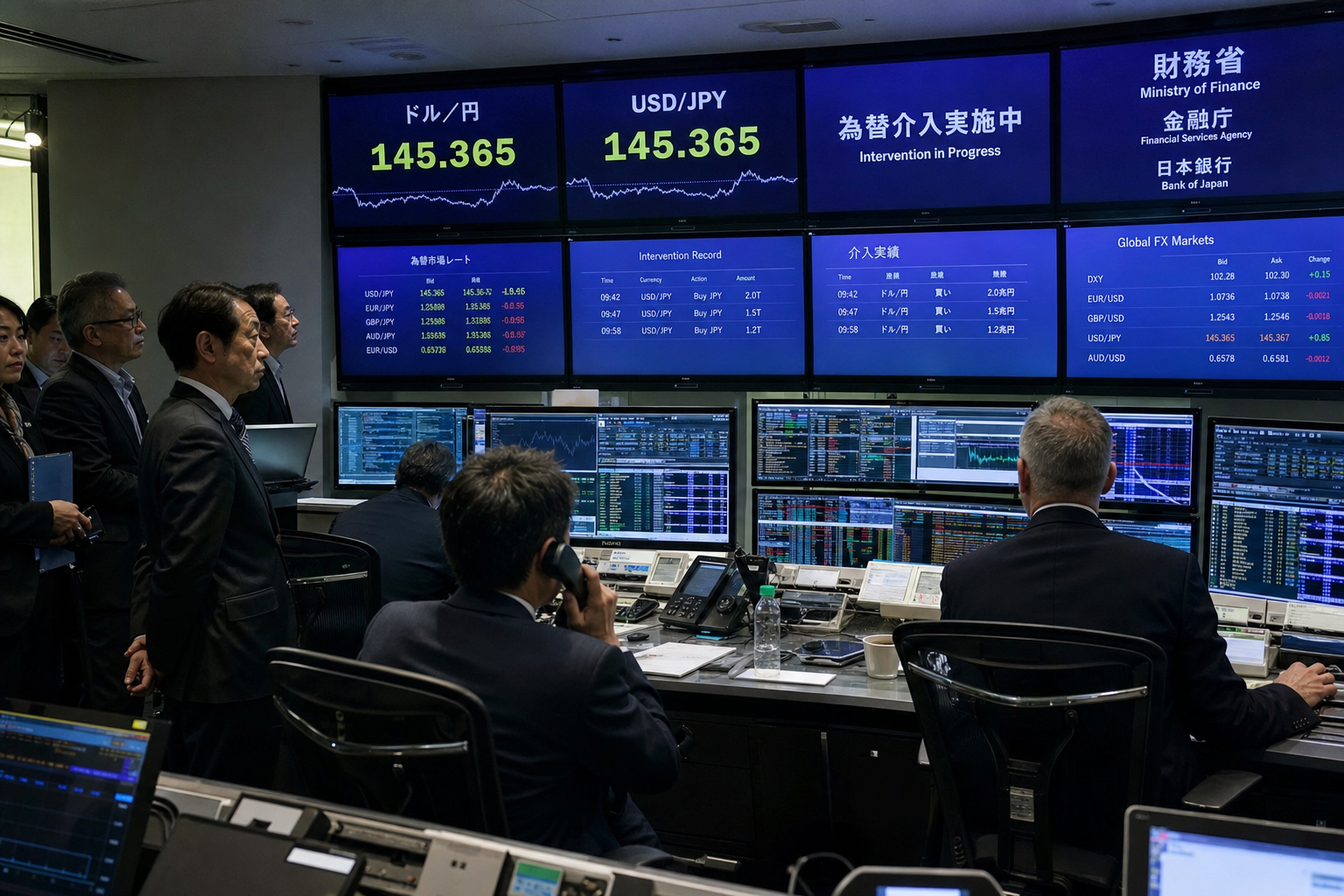
The article reports on a rare coordinated intervention by Japan and the United States to support the yen after it fell to a 40-year low. Japan and the U.S. confirmed that they acted together last week to stop the yen’s decline, marking the first joint intervention since 2011. Japanese and U.S. officials say they are prepared to intervene again if needed, underscoring concern that a disorderly sell-off in the yen and Japanese government bonds could ripple through global markets and even raise borrowing costs in the U.S.
The piece explains that the yen’s weakness is driven largely by the gap between Japan’s low interest rates and higher U.S. rates, which makes the currency less attractive to investors. Japan has also been weighed down by structural issues such as an aging population, low productivity, and dependence on imported energy priced in dollars. Bank of Japan data suggested Tokyo may have sold nearly $59 billion in U.S. dollars to buy yen, and a Reuters photo indicated the U.S. Treasury may have planned a smaller intervention of its own. Officials from both sides framed the action as a response to excessive volatility and disorderly market movements.
The article includes comments from economist Shigeto Nagai, who said U.S. participation served American national interests by creating benefits at relatively low cost, and it quotes Donald Trump and Treasury Secretary Scott Bessent expressing support for Japan’s efforts. Market reaction was immediate but limited, with the dollar moving modestly against the yen after the comments and statements.
Entities: Japan, United States, yen, U.S. dollar, Japanese government bonds • Tone: analytical • Sentiment: neutral • Intent: inform
03-08-2026
Washington’s decision to join Japan in a rare coordinated intervention to support the yen was driven by more than currency stabilization alone. Analysts say U.S. officials were concerned that Japan’s efforts to prop up the yen could spill into U.S. Treasury markets if Tokyo were forced to sell large amounts of Treasuries to raise dollars, given Japan’s position as the largest foreign holder of U.S. government debt. The intervention also reflected concerns about Japan’s financial system, including rising Japanese government bond yields and the risk that prolonged yen weakness could destabilize broader bond markets. The move was the first U.S.-Japan joint operation to buy yen since 1998 and came as the yen had fallen to its weakest level in nearly four decades before rebounding.
The article also frames the intervention as part of a broader strategic shift in U.S.-Japan relations under President Donald Trump and Prime Minister Sanae Takaichi, with some analysts saying it signaled stronger cooperation and sent a message to China. Supporters of the intervention argue that U.S. participation increases its deterrent effect and reassures markets that authorities are prepared to act again. However, critics warn that intervention alone cannot solve the yen’s structural weakness, which they say is tied to Japan’s bond-market policy and the Bank of Japan’s still-easy stance. Some analysts also questioned the mechanics of the U.S. move, noting reports that the U.S. sold euros rather than dollars, and argued that the action may ultimately prove temporary or counterproductive without deeper policy changes in Japan.
Entities: Japan, United States, yen, U.S. Treasury markets, Japanese government bonds (JGBs) • Tone: analytical • Sentiment: neutral • Intent: analyze
03-08-2026
Japan’s Finance Ministry said it carried out a rare coordinated yen-buying intervention with the U.S. Treasury on Friday to counter what both governments described as excessive volatility and disorderly moves in the currency. The move came after the yen weakened sharply, briefly hitting 163.73 per dollar before strengthening to 157.57 on Friday and then trading around 157.70 on Monday. Tokyo said it would not rule out further coordinated intervention and emphasized continued close communication with the U.S. Treasury. U.S. Treasury Secretary Scott Bessent confirmed the action and said the joint effort was meant to counter disorderly yen movements, while also expressing support for Japan’s broader steps to address the yen’s substantial undervaluation. President Donald Trump also said the U.S. had participated as a gesture of support for Japan and for global economic stability. The article notes that the intervention was unusual because reports suggested the U.S. may have sold euros rather than dollars to buy yen, which some analysts said could weaken confidence in the currency by raising questions about the effectiveness and motivation behind the intervention.
Entities: Japanese Finance Ministry, U.S. Treasury, Scott Bessent, Satsuki Katayama, Donald Trump • Tone: analytical • Sentiment: neutral • Intent: inform
03-08-2026
The article reports that the United States bought Japanese yen for the first time in more than a decade in a rare bilateral currency intervention aimed at supporting the yen after it fell to a 40-year low against the U.S. dollar. President Donald Trump said the move was a “signal of friendship” and suggested Japan requested help as its currency weakened. Treasury Secretary Scott Bessent confirmed the intervention and signaled the U.S. could take further joint action if needed. The piece explains that the yen’s decline has been driven by Japan’s long period of very low interest rates, which made the currency attractive to short sellers, as well as by Japanese investment patterns and rising import costs. The Iran war added pressure by increasing energy prices, worsening Japan’s trade balance and inflation. While the move may temporarily boost the yen, analysts quoted in the article are skeptical that intervention alone will reverse the broader downward trend, suggesting it may only buy time unless underlying economic conditions change.
Entities: United States, Japan, Japanese yen, Donald Trump, Scott Bessent • Tone: analytical • Sentiment: neutral • Intent: inform
03-08-2026
The article reports a sharp drop in the U.S. dollar against the Japanese yen after both the U.S. and Japan confirmed they had intervened in currency markets. The dollar had recently been trading above 163 yen, near a 40-year high, before falling below 160 yen after suspected action by regulators and then dropping further to about 156.34 yen after the official confirmation. The intervention was described as a coordinated effort by Japan’s finance ministry and the U.S. Treasury Department to counter excessive volatility and disorderly movements in the yen.
The piece explains that Japan has long been frustrated by the yen’s weakness because it raises import costs and contributes to inflation in a country that relies heavily on imported goods. Earlier efforts to strengthen the yen had not materially changed the exchange rate. The article also includes remarks from Donald Trump, who framed the intervention as a sign of a strong U.S.-Japan relationship and claimed it provided financial benefit to the United States and the global economy.
Expert commentary notes that public acknowledgment of currency intervention is unusual and that the last major comparable example occurred in 2011 after Japan’s earthquake and tsunami. Analysts say the move could help support the yen and make U.S.-made goods more competitive in Japan, suggesting an alignment of interests between Washington and Tokyo.
Entities: U.S. dollar, Japanese yen, Donald Trump, Japan's Finance Minister Satsuki Katayama, U.S. Treasury Department • Tone: analytical • Sentiment: neutral • Intent: inform
03-08-2026
The article reports that the United States and Japan conducted a rare joint intervention in foreign exchange markets to stabilize the yen after months of steep decline. President Trump confirmed U.S. Treasury participation, and Japan’s finance minister said the move aimed to curb excessive volatility and disorderly currency movements. The yen had weakened sharply against the dollar amid concerns over Japan’s rising fiscal spending, higher energy costs linked to the U.S. war with Iran, and a broader strengthening of the dollar against Asian currencies. Although the intervention briefly boosted the yen, analysts said currency operations alone are unlikely to reverse the trend unless underlying economic conditions change.
The piece explains the policy context on both sides. For Japan, a weak yen is a mixed blessing: it helps exporters but raises import and energy costs, worsening inflationary pressures. The Bank of Japan has begun gradually raising interest rates after years of ultra-low rates, but Prime Minister Sanae Takaichi favors fiscal stimulus, tax cuts, and higher defense spending, which become harder to finance as rates rise. Economists argue that higher Japanese rates could ease pressure on the yen by narrowing the gap with U.S. rates. For the United States, a weak yen complicates Trump’s tariff and manufacturing policy by giving Japanese producers a competitive edge, while also creating risks for U.S. Treasury markets if Japanese investors shift capital back home. The article places the intervention in historical context, noting similar U.S.-Japan currency actions in 2011 and 1998.
Entities: United States, Japan, yen, U.S. Treasury Department, President Trump • Tone: analytical • Sentiment: neutral • Intent: inform