03-08-2026
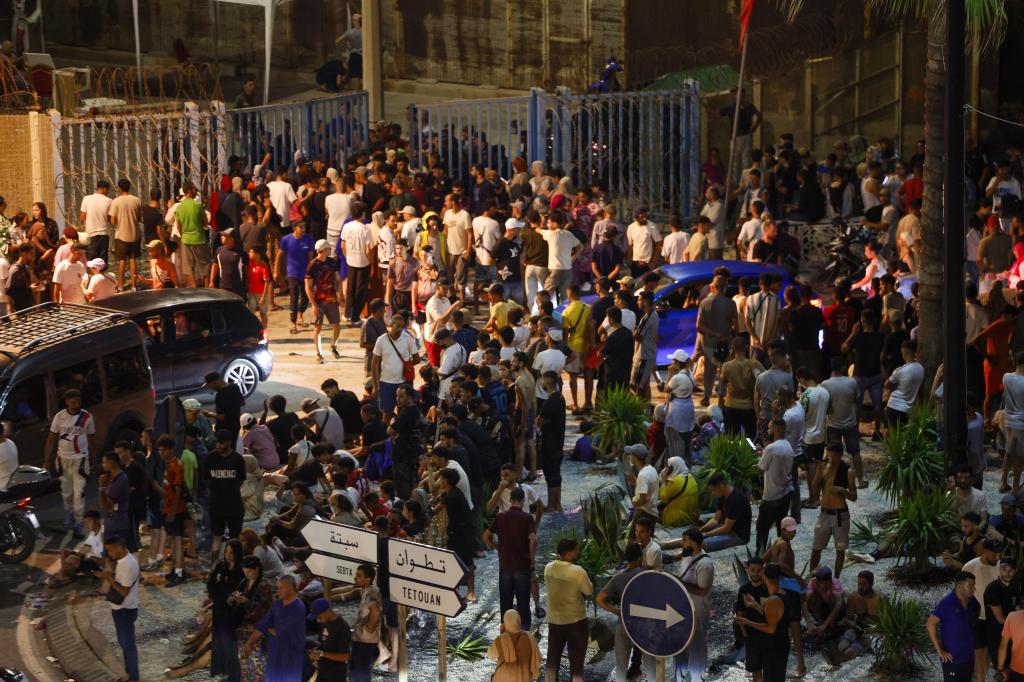
Most of the tens of thousands of migrants who surged into Spain’s North African enclave of Ceuta had been returned to Morocco by Sunday, but the city remained deeply shaken by the episode. The sudden influx, which Spanish authorities said involved about 50,000 to 60,000 people over two days, overwhelmed the tiny territory and triggered a humanitarian and political crisis. At least 72 people were reported dead, including some who drowned and others who died in a stampede near the border barrier, as Spanish civil guard ships continued to search the waters for bodies.
The aftermath exposed sharply divided views in Ceuta and across Spain. Some locals blamed authorities for allowing the border to appear open, while others worried that the crisis highlighted deeper tensions in the city’s multicultural balance. Ceuta, known for its coexistence of Christian, Muslim, Jewish, and Hindu communities, saw protests and counterprotests as far-right politicians and anti-immigrant activists descended on the enclave, demanding expulsions and condemning the Spanish government. Residents and local Muslim communities pushed back, calling the political visits opportunistic and inflammatory.
The surge also reignited Europe’s broader immigration debate, with Spain announcing plans to build a containment fence. Pope Leo XIV publicly expressed concern and urged peaceful, stable, and just solutions. The article portrays Ceuta as a city trying to regain normal life while confronting grief, political polarization, and unresolved questions about border control, responsibility, and migration policy.
Entities: Ceuta, Morocco, Spain, Spanish civil guard, European Union • Tone: analytical • Sentiment: negative • Intent: inform
03-08-2026
The article reports on a large-scale migration episode at the Spanish exclave of Ceuta, where a large group of migrants was escorted by police and military personnel toward the border. According to Spanish authorities, most of the estimated 50,000 people who had attempted to cross during the week had returned to Morocco by Friday evening. The piece is brief and highly visual, functioning primarily as a news video item rather than a full narrative article. It presents the situation as an unfolding border-control and migration-management event, emphasizing the scale of the attempted crossing, the presence of security forces, and the authorities’ claim that the immediate surge had largely subsided. The wider page also shows that this item appears within a CNN video news context alongside unrelated promoted clips, but the core article focuses solely on the Ceuta border incident.
Entities: Ceuta, Spain, Morocco, migrants, police • Tone: neutral • Sentiment: neutral • Intent: inform
03-08-2026
At least 72 migrants died after a massive, chaotic attempt to enter the Spanish enclave of Ceuta from Morocco, turning the incident into a major humanitarian and political crisis. Spanish authorities said an estimated 50,000 to 60,000 migrants, mostly young men, surged toward the small North African territory over several days, overwhelming border controls and leading to deaths by drowning and stampede near a breakwater barrier. The article describes how the crossing briefly swelled Ceuta’s population and left authorities searching the waters for more victims, while many migrants either returned to Morocco or remained in Ceuta trying to avoid police.
The tragedy immediately intensified Europe’s immigration debate. Right-wing and nationalist politicians used the episode to argue for stricter border enforcement, with Vox leader Santiago Abascal calling the influx an “invasion” and accusing Spain’s government of failing to protect its borders. A European Parliament member, Alvise Pérez, was confronted by angry counterprotesters during a rally in Ceuta, reflecting the volatility of the issue on the ground. At the same time, some residents expressed grief and concern over the deaths, while others argued that the authorities, not the migrants, bore responsibility.
The article also notes the broader policy response, including Spain deploying the military and the U.S. State Department raising its travel advisory for Ceuta to Level 3 because of the “massive and uncontrolled arrival” of migrants, warning of unpredictable and dangerous conditions. Overall, the story frames Ceuta as the latest flashpoint in Europe’s ongoing migration crisis, combining human tragedy, local tension, and escalating political conflict.
Entities: Ceuta, Morocco, Spain, Spanish enclave of Ceuta, migrants • Tone: urgent • Sentiment: negative • Intent: inform
03-08-2026
The article reports that the U.S. State Department raised its travel advisory for Ceuta, the Spanish enclave on the northern coast of Africa, to Level 3: Reconsider Travel after a surge of migrants from Morocco overwhelmed the border area. The advisory warns that the “massive and uncontrolled arrival” of migrants could create unpredictable and dangerous security conditions and notes that Spain has deployed the military, National Police, and Guardia Civil in response. The warning applies only to Ceuta, not the rest of Spain.
The story explains that Spanish officials scrambled to respond after tens of thousands of migrants entered Ceuta over a short period. Ceuta President Juan Jesús Vivas said about 60,000 migrants entered in 24 hours, while Spain’s Interior Ministry later estimated roughly 50,000 arrivals since Thursday; many have since returned to Morocco. Prime Minister Pedro Sánchez said Spain would increase security forces, deploy a physical sea barrier to aid repatriations, and work with Moroccan authorities to combat human trafficking networks.
The article also notes that officials linked the surge to a recent Spanish Supreme Court ruling, which Sánchez said trafficking groups misrepresented. Fox News then frames the crisis within broader political commentary, including remarks from former President Donald Trump, who described the situation as an “invasion” and used it to criticize immigration policy and warn of similar outcomes in the United States. The piece closes by placing Ceuta in its long-running context as a major flashpoint for illegal migration into Europe.
Entities: U.S. State Department, Ceuta, Spain, Morocco, Spanish military • Tone: urgent • Sentiment: negative • Intent: inform
03-08-2026
Morocco said on Sunday that 11 people died while trying to reach Spain’s North African exclave of Ceuta during a sudden migrant surge, sharply contradicting Spain’s much higher estimate of at least 72 deaths. Moroccan authorities blamed the episode on the spread of misleading information and the malicious use of social media, saying false claims and misread legal provisions helped spark the rush. The interior ministry said tens of thousands of people attempted to cross into Ceuta between Wednesday and Friday, and that another 1,135 tried to enter the nearby Spanish enclave of Melilla but were returned immediately. Spain and Morocco were working to verify the death toll and identify bodies recovered on Spanish territory.
The article places the migration spike in a broader diplomatic and legal context. It notes that the influx triggered tension within the European Union, with some member states criticizing Spain’s migration policy. Morocco also linked the surge to misunderstanding surrounding a July 8 Spanish Supreme Court ruling on how sea-arriving migrants should be treated. Meanwhile, human rights groups in Morocco said the true death toll may be much higher, with the Moroccan Association for Human Rights claiming nearly 130 victims and many more missing. Prosecutors have opened an official investigation into the events.
Entities: Morocco, Ceuta, Melilla, Spain, Moroccan interior ministry • Tone: analytical • Sentiment: negative • Intent: inform
03-08-2026
Moroccan authorities say the recent surge of roughly 60,000 migrants into the Spanish enclave of Ceuta was driven less by spontaneous movement than by social media misinformation and the activities of human trafficking networks. In its first public statement on the crisis, Morocco’s Interior Ministry argued that false interpretations of a Spanish Supreme Court ruling spread online and convinced some would-be migrants that they could avoid immediate deportation if they arrived by sea. Rabat said it had responded with a proactive border strategy and emphasized that it remains a responsible partner in combating illegal migration and trafficking.
Spain’s government offered a similar explanation, with Prime Minister Pedro Sánchez saying trafficking networks had exploited a misleading reading of the court decision and that the idea spread rapidly through those channels. The crisis has intensified political debate in Spain. Sánchez has faced criticism from opposition figures for earlier plans to regularize hundreds of thousands of undocumented migrants, and right-wing politicians accused him of encouraging irregular migration and failing to control the border. Vox leader Santiago Abascal called the Ceuta events an “invasion” and demanded harsh measures, including deportations, militarization of the border, and closure of the crossing.
The article also notes that Spanish officials have deployed military personnel to Ceuta and that most of the migrants who entered the enclave have since left. It further references international political reactions, including comments from Donald Trump and JD Vance linking the events to broader criticism of mass migration and border policy in Western countries.
Entities: Morocco, Ceuta, Spain, Moroccan Interior Ministry, Spanish Supreme Court • Tone: urgent • Sentiment: negative • Intent: inform
03-08-2026
The article describes a sudden migration surge from Morocco into the Spanish enclave of Ceuta that exposed widespread despair among Morocco’s young people. Although King Mohammed VI had recently portrayed Morocco as stable, prosperous, and forward-looking, tens of thousands of Moroccans—mostly young men, but also families and children—attempted to cross into Ceuta over a few chaotic days. Many were repelled, detained, or forced back, and dozens died, largely by drowning. The episode became a stark public sign that Morocco’s economic growth and major infrastructure projects have not translated into enough jobs or hope for many citizens.
The reporting centers on Fnideq, the border town near Ceuta, where returned migrants lingered in streets and roadside lots while police pushed them out of public spaces and buses carried them back to their regions. Their stories reveal a common frustration: lack of work, inability to afford education, and a belief that Europe offers the only viable future. The article contrasts these personal accounts with Morocco’s official image as a politically stable, investor-friendly country with strong ties to the United States, preparations for the 2030 World Cup, and major investments such as ports, trains, roads, and stadiums.
Economist Najib Akesbi argues that Morocco’s growth model favors showcase projects and big companies rather than durable employment, especially for the young. The World Bank data cited show that employment growth has lagged far behind working-age population growth, and youth unemployment remains far higher than the national average. The article also notes prior youth protests over living costs and unemployment, which were met with arrests and prosecutions. Overall, the piece frames the Ceuta crisis as both a migration event and a political warning: beneath Morocco’s image of stability lies a deep sense of frustration, inequality, and blocked futures among its youth.
Entities: King Mohammed VI, Morocco, Ceuta, Spain, Fnideq • Tone: analytical • Sentiment: negative • Intent: inform