01-11-2026
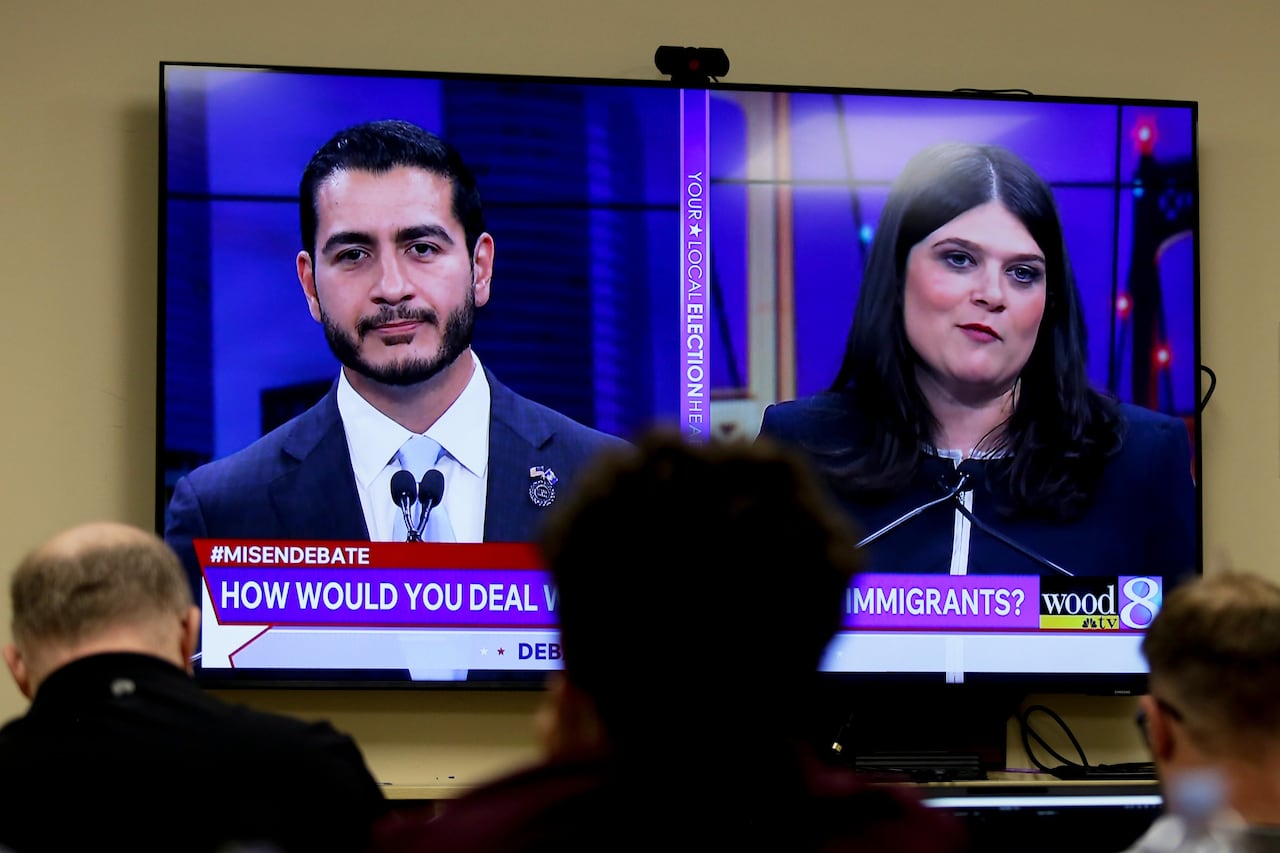
Michigan Democratic U.S. Senate candidate Abdul El-Sayed’s former primary opponent, Rep. Haley Stevens, endorsed Republican Mike Rogers two days before the midterm election, stunning Democratic officials and deepening an already bitter party dispute. Stevens said El-Sayed’s campaign had told her she was no longer welcome, and she agreed she should stay away. El-Sayed played down the endorsement, saying he was focused on voters’ concerns, including the cost of living.
The conflict reflects longstanding divisions between the candidates, including over Israel. Stevens strongly supports Israel, while El-Sayed has sharply criticized the U.S. ally. Their primary was unusually contentious, marked by personal accusations and tens of millions of dollars in outside spending. An advertisement from a group affiliated with the American Israel Public Affairs Committee particularly angered El-Sayed.
Democrats had hoped a joint appearance by Stevens and El-Sayed would demonstrate unity and help turnout in the Detroit area, where Black and Jewish voters are important to the party coalition. Instead, Stevens attended a Detroit-area church service with Rogers, while El-Sayed campaigned at another church with prominent Democrats, including Rep. Jim Clyburn. Michigan Democratic Party chair Curtis Hertel and Senate Minority Leader Chuck Schumer condemned Stevens’s endorsement. Rep. Debbie Dingell said she had withdrawn plans for the joint event because it had become too distracting.
El-Sayed is in a close race against Rogers for the seat of retiring Democratic Sen. Gary Peters. The outcome could affect control of the Senate and the balance of power in Congress during the final two years of Donald Trump’s second term. More than 1.8 million Michiganders had voted by Friday, with Detroit-area turnout considered potentially decisive.
Entities: Haley Stevens, Abdul El-Sayed, Mike Rogers, Michigan, Detroit • Tone: analytical • Sentiment: negative • Intent: inform
01-11-2026
In an interview on Face the Nation shortly before the 2026 midterm elections, Sen. Bernie Sanders discusses Democratic campaigns in Florida, Michigan, Maine and Minnesota, and the issues he believes are motivating voters. He argues that economic inequality is central, saying billionaires are thriving while many households struggle to afford food, fuel and rent. He supports candidates including Florida’s Angie Nixon and Michigan’s Abdul El-Sayed, and rejects the idea that Democratic divisions will prevent El-Sayed from winning.
Sanders condemns Republican attacks on El-Sayed, including claims linking him to terrorism and warnings about his access to classified information. He characterizes such rhetoric as racist and says voters will respond against it. The conversation then turns to accusations of antisemitism over criticism of Israel. Sanders says antisemitism is dangerous and must not be tolerated, while arguing that criticism of Israeli Prime Minister Benjamin Netanyahu’s right-wing government and opposition to U.S. aid to it are not inherently antisemitic. He also alleges that the Israeli government has committed genocide against Palestinians, a claim he attributes to himself and many experts.
Finally, Brennan asks about the Alaska Senate race, the possibility of a Justice Department challenge to certification, and Republican claims of election fraud involving Mary Peltola. The supplied transcript cuts off before Sanders answers that question.
Entities: Bernie Sanders, Margaret Brennan, Face the Nation, Angie Nixon, Abdul El-Sayed • Tone: analytical • Sentiment: negative • Intent: inform
01-11-2026
President Donald Trump is scheduled to hold rallies in Iowa and Kansas on Sunday, two days before midterm elections that will determine control of Congress. Republicans are defending Senate seats in both states, where races have become closer than expected. Although Trump won Iowa by a wide margin in 2024, polls show Democrats competitive in state races and his approval among rural Americans at 45% in October, a new low in Reuters/Ipsos polling. Kansas is also seeing an unexpectedly close Senate contest. Republicans currently hold a 53-47 Senate majority and a narrow House advantage; losing either chamber would enable Democrats to obstruct Trump's agenda and investigate his administration. More than 52 million people have already voted, a record for a midterm at this point in the process.
The article also describes legal disputes surrounding the election. The Justice Department is pursuing an investigation connected to Alaska’s Senate race and may ask the Supreme Court to intervene in a dispute over California mail ballots. A federal judge rejected the department’s request to stop California from counting ballots from more than 20,000 voters it alleges may be noncitizens; California says its safeguards are robust. In Alaska, prosecutors are investigating allegations that aides to Democratic challenger Mary Peltola helped recruit a candidate with a name similar to Republican Senator Dan Sullivan’s. Those involved deny coordination, while the Justice Department has sought to prevent certification of Alaska’s results if Sullivan narrowly loses. Anchorage voters expressed differing views about the investigation and election-related uncertainty.
In Michigan, Democratic Senate nominee Abdul El-Sayed and Representative Haley Stevens remain divided after a competitive primary. It was unclear whether Stevens would attend a joint event intended to demonstrate party unity. El-Sayed’s campaign reportedly asked her to stay away from his events, while Stevens has called on him to condemn an outside group’s advertisement. A political scientist said visible divisions could hurt the campaign shortly before Election Day, though polls indicate El-Sayed has largely united Democratic voters.
Entities: Donald Trump, Iowa, Kansas, United States midterm elections, US Senate and House of Representatives • Tone: analytical • Sentiment: neutral • Intent: inform
01-11-2026
The article reports a birthday-related political jab by Mike Rogers, the Republican candidate for the U.S. Senate in Michigan, aimed at his Democratic rival, Abdul El-Sayed. Rogers mocked El-Sayed by presenting or featuring a sarcastic “gift basket” containing fireworks, Dubai chocolates and a child-sized T-shirt. The article says the items were intended to take aim at El-Sayed’s remarks and personal style, though it does not provide further detail about which remarks or aspects of his style were being targeted. The gesture came ahead of the November 3 midterms, placing it in the context of the candidates’ election contest. The article’s headline characterizes the basket as “cynical,” while its brief description frames the gesture as mockery. Beyond those details, the report provides no quotes from either candidate, explanation of the items’ specific references, response from El-Sayed, or information about how the stunt was received. The available text therefore presents the episode as a sarcastic campaign gesture but offers little context for assessing its intended meaning or broader political impact.
Entities: Mike Rogers, Abdul El-Sayed, Michigan, Republican Party, Democratic Party • Tone: negative • Sentiment: negative • Intent: inform
01-11-2026
The supplied material does not include the article’s live updates or reporting. It contains a headline identifying the topic as the final efforts by Donald Trump and Democrats ahead of US midterm elections, along with the page label “13 Updates” and advertising text. The headline indicates that the article was intended to cover political activity before voters went to the polls on Tuesday, but it does not say what Trump or Democratic figures did, which candidates or races were involved, or what events and statements the live blog reported. Accordingly, no reliable account of the article’s developments, context, or conclusions can be produced from the provided content alone. The advertising and notification prompt are website clutter, not news reporting, and are excluded from the cleaned text. The entities listed below are limited to people, groups, places, and topics explicitly named or directly indicated by the headline; they should not be taken as evidence of details absent from the supplied text. The headline is framed as timely political coverage, but the missing body means its tone, emotional valence, and full purpose cannot be assessed confidently. The classifications below therefore describe the limited headline and page text only, rather than the unavailable article. To produce a comprehensive summary and preserve 70–90 percent of the actual article text, the live-blog updates or a fuller article extract would be needed.
Entities: United States, US midterm elections, Donald Trump, Democrats, Tuesday elections • Tone: neutral • Sentiment: neutral • Intent: inform
01-11-2026
Al Jazeera examines the closely watched 2026 Michigan US Senate race between Democratic nominee Abdul El-Sayed and Republican Mike Rogers. The contest has drawn attention beyond Michigan because it could affect control of the Senate and test whether progressive policies and criticism of Israel can win in a politically competitive state. El-Sayed, 42, is a public health advocate and former Detroit-area health department leader. If elected, he would be the first Muslim US senator. He supports progressive positions including Medicare for All and has criticized Israel’s actions in Gaza, arguing that US resources should instead address domestic needs. Rogers, 63, is a former congressman and state legislator who narrowly lost a 2024 Senate race. A Trump ally, he supports tax cuts, expanded domestic energy production, deregulation and Israel, while trying to distance his campaign from the president’s unpopularity.
The seat is currently held by retiring Democrat Gary Peters, and a Republican victory would make it harder for Democrats to take Senate control. The article also highlights attacks on El-Sayed’s Muslim faith and Arab heritage, and the role of pro-Israel spending. AIPAC and its political arm have spent heavily against El-Sayed and in support of efforts to elect Rogers. Former Democratic primary opponent Haley Stevens has also drawn attention after her fiancé endorsed Rogers and Stevens criticized El-Sayed’s Israel positions, prompting pushback from El-Sayed and Democratic allies who say the party should focus on winning the seat.
Voters interviewed by Al Jazeera describe the election as consequential, though for sharply different reasons: El-Sayed supporters cite prejudice and the stakes for their communities, while a Rogers supporter warns of threats to the country, border and children. Recent polls reportedly give El-Sayed a narrow lead of four to seven points, but the provided article ends before completing its discussion of polling in Michigan.
Entities: Abdul El-Sayed, Mike Rogers, Michigan, Al Jazeera, Donald Trump • Tone: analytical • Sentiment: neutral • Intent: inform
01-11-2026
The France 24 item is a short video report preview about the role of affordability in a Michigan race during the US midterms. Its central point is that many voters consider the cost of living their single biggest concern. Reporters Jessica Le Masurier and Sarah Andersen travelled to Michigan to meet voters and explore that concern. The description cites an unnamed NGO’s estimate that around 40% of Michigan’s population struggle to afford basic necessities, presenting financial pressure as a significant issue for residents.
The supplied page content does not include a transcript, detailed accounts from the voters, or information about candidates, party positions, or proposed policies. It therefore establishes affordability as the report’s focus but does not show how particular voters describe their circumstances or how the issue is shaping their choices in the race. Donald Trump and Marco Rubio appear only in the page’s keyword list; the provided text does not explain their connection to the Michigan report. The item is dated November 1, 2026, and credits Sarah Andersen and Jessica Le Masurier for the video. Overall, it is an informational preview framing cost-of-living pressures as central to the Michigan contest, rather than a full report from which more detailed political conclusions can be drawn.
Entities: Michigan, United States midterms, Cost of living, Affordability, Basic necessities • Tone: analytical • Sentiment: neutral • Intent: inform