01-10-2026
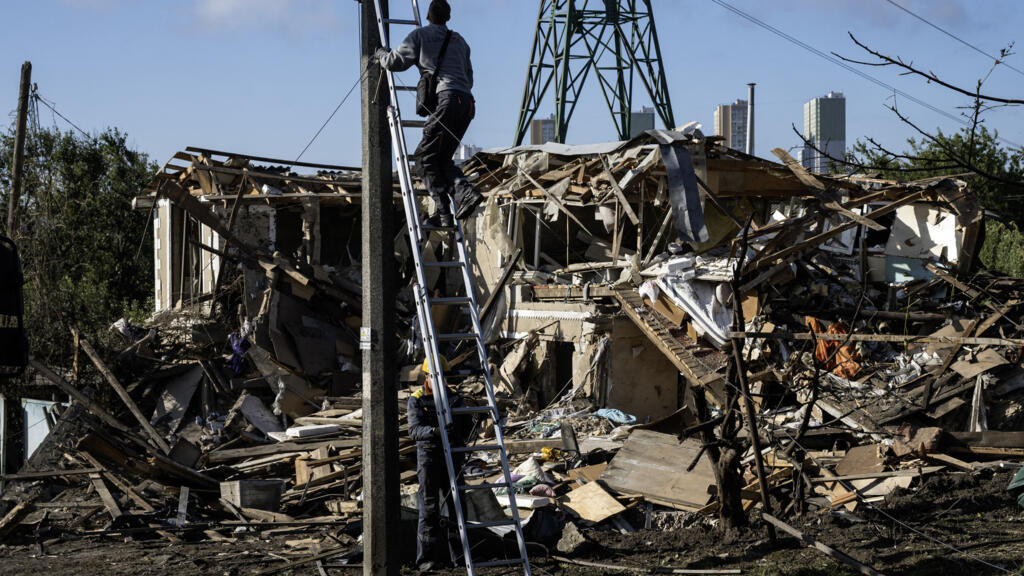
Russian strikes hit a nuclear research facility and a school in Kyiv, as well as sites in Odesa and on the capital’s Southern Bridge, during an intensifying campaign of drone and missile attacks across Ukraine. Ukraine’s nuclear safety regulator said a fire broke out on the grounds of the Kyiv research facility on Wednesday but was quickly extinguished. The site’s test reactor was undamaged and had been shut down since 2022. A Russian drone strike hit a school the following morning, starting a fire while children were sheltering inside. Kyiv Mayor Vitali Klitschko said there were no injuries at either Kyiv site.
In Odesa, one person was wounded in an attack on a business centre, and regional officials reported infrastructure damage. Russia said it had targeted a data centre in Odesa and a cargo vessel at nearby Chornomorsk. Two Russian drones also struck a support section of Kyiv’s Southern Bridge, prompting the suspension of metro and ground transport across it while specialists assessed structural damage. The bridge is a key route across the Dnipro River for the city’s estimated three million residents.
Ukraine’s air force recorded 3,177 Russian drone attacks through September 29, up from 2,850 in August. Ukrainian officials say the latest attacks include high-speed, jet-powered drones that are harder to intercept than older models based on Iranian Shahed drones. An adviser to President Volodymyr Zelenskyy warned that Russia may use such drones against high-voltage transmission lines and bridge structures. Kyiv says Russia’s attacks on energy infrastructure could be intended to cut electricity and heating as winter approaches. Russia says it strikes only military targets.
Entities: Kyiv, Odesa, Chornomorsk, Dnipro River, Vitali Klitschko • Tone: neutral • Sentiment: negative • Intent: inform
01-10-2026
A Russian drone struck a school in Kyiv on Thursday, October 1, while children and staff were sheltering inside. Kyiv Mayor Vitali Klitschko said there were no immediate reports of casualties from the strike. The attack was part of a broader bombardment of the capital: two other Russian drones hit a major bridge connecting eastern and western Kyiv, prompting authorities to suspend metro and ground transport services. Ukraine’s nuclear safety watchdog also reported that a drone had hit the grounds of a nuclear research facility the previous day, starting a fire. The fire was quickly extinguished, no one was injured, and the facility’s test reactor was undamaged and had been shut down since 2022.
Ukraine’s air force reported an increase in drone strikes, recording 3,177 attacks through September 29, compared with 2,850 in August. Separately, authorities in Russia’s Belgorod region said a man was killed when a drone exploded in Graivoron.
The attacks coincided with the United Kingdom’s announcement of 31 new sanctions on Russia. The measures target people accused of involvement in the arbitrary detention, torture and mistreatment of Ukrainian civilians, as well as individuals allegedly involved in the indoctrination and militarisation of Ukrainian children. The UK government said the sanctions were intended to restrict funding for the Kremlin’s war effort and those supporting it. It stated that it did not seek confrontation with Russia, while pledging continued support for Ukraine until what it called the “barbaric” war ends.
Entities: Vitali Klitschko, Kyiv, Ukraine, Russia, Belgorod region • Tone: neutral • Sentiment: negative • Intent: inform
01-10-2026
BBC Russia editor Steve Rosenberg argues that Vladimir Putin shows little indication of preparing to stop Russia’s full-scale invasion of Ukraine. A tightly controlled September legislative election has left the State Duma more supportive of Putin than ever, giving the Kremlin grounds to claim a strong public mandate. Rosenberg says Putin’s statements and Russian media reporting suggest Moscow remains confident it can win militarily, despite heavy battlefield losses and economic damage. Russian officials also appear encouraged by Ukraine’s reported shortage of air-defence missiles and the prospect of increased Russian attacks over the winter.
The article describes Russia’s efforts to weaken European support for Kyiv, including alleged cyber-attacks, sabotage and drone incursions. Foreign Minister Sergei Lavrov rejects the description of Russia’s actions as hybrid warfare, instead portraying the conflict as a war Europe is waging against Russia. Rosenberg notes that this account omits the fact that Russia launched the 2022 invasion and continues to fight in Ukraine.
Although a direct Russian military attack on a NATO country appears unlikely, the article suggests that threatening rhetoric may be intended to frighten European governments into reducing assistance to Ukraine. Strategist Sergei Karaganov warns that Russia might use nuclear weapons if Europe continues its support. He also admits Russia has lost many people and says Moscow is trying to eliminate Ukraine as a viable state—an aim Rosenberg sees as incompatible with a near-term end to the war.
The article also examines Lavrov’s accusations of Western “brute force,” including references to US actions in Venezuela and Iran. When challenged over Russia’s own conduct in Ukraine, Lavrov justifies the use of force with the Kremlin’s claims that Ukraine is a Nazi regime and a direct threat. Rosenberg presents this rhetoric as further evidence that Moscow is not ready to stop fighting.
Entities: Vladimir Putin, Sergei Rosenberg, Sergei Lavrov, Sergei Karaganov, Russia • Tone: analytical • Sentiment: negative • Intent: analyze
01-10-2026
Vladimir Putin has warned that Russia would use any weapons at its disposal, potentially including nuclear weapons, if Kaliningrad were directly attacked or cut off from the rest of Russia. He said Moscow was not threatening other countries, but would respond to aggression, and rejected Western suggestions that Russia might be preparing for war in 2029 or 2030. His remarks came amid Russian accusations that NATO is preparing to blockade Kaliningrad, a Russian exclave bordering Lithuania and Poland. NATO has described itself as a defensive alliance and says its activities pose no threat to Moscow.
The article situates the warning within rising tensions in the Baltic region and concerns about hybrid warfare. Poland and Lithuania have recently reported incidents involving a Russian helicopter and drones, while Germany says it is preparing for further hybrid attacks after an explosive-carrying drone was found at Leipzig airport. NATO Secretary General Mark Rutte dismissed the Kremlin’s claims as unhelpful. Lithuania has made evacuation plans in case of a Russian invasion, and NATO troops are stationed in the country. Western officials have also expressed concern about the Suwalki Gap, the narrow corridor between Kaliningrad and Belarus.
Speaking at the Valdai foreign policy forum, Putin blamed the West for the war in Ukraine and characterized Russia’s attacks on Ukrainian economic targets as retaliation for Ukrainian strikes on Russian refineries and ships. He acknowledged that Ukrainian attacks had achieved results and cost Russia about 1% of its GDP. Ukraine says it targets Russian oil infrastructure because it helps finance the invasion. Meanwhile, Russia continues to strike Ukrainian energy and civilian infrastructure.
Putin also warned that modern weapons could cause catastrophic destruction and argued that warfare’s increasing automation and use of artificial intelligence risk dehumanizing conflict. Overall, the article reports escalating threats and security concerns while presenting the competing claims of Russia, NATO, and regional governments.
Entities: Vladimir Putin, Kaliningrad, NATO, Lithuania, Poland • Tone: analytical • Sentiment: negative • Intent: inform
01-10-2026
Russian President Vladimir Putin warned that the international situation was dangerous and that a direct threat to Russia’s Kaliningrad exclave could prompt Moscow to consider using any weapons in its arsenal, including nuclear weapons. Kaliningrad lies between Poland and Lithuania and is a heavily militarized Russian territory. Speaking at the Valdai Forum in Moscow, Putin said Russia understood it would face NATO, which he described as an enemy twice its size, but claimed Russia had weapons that gave it a competitive advantage. His remarks followed a diplomatic note from Russia warning NATO that Moscow could resort to nuclear weapons if the alliance tried to cut off Kaliningrad. NATO Secretary General Mark Rutte said the alliance had responded that it is defensive and that nuclear threats were unhelpful.
Putin said Russia did not intend to attack a European country and wanted peaceful coexistence. He cautioned, however, that escalating cycles of retaliation could reach a point from which there was no return, and urged countries to consider the destructive power of the weapons held by major powers. The article places these warnings amid worsening relations following Russia’s 2022 invasion of Ukraine and European accusations that Moscow is conducting hybrid operations, including sabotage and arson. Russia denies those allegations and rejects claims that it is preparing to attack a NATO member.
Putin also said he was open to a trilateral meeting with Chinese President Xi Jinping and U.S. President Donald Trump if an appropriate agenda were established. He ruled out halting Russian strikes on Ukrainian targets in the Black Sea region and acknowledged that Ukrainian attacks on Russian oil refineries had cost Russia one per cent of GDP. He said Russia was responding in kind, while adding that Moscow did not plan to attack European arms factories supplying Ukraine in the immediate future.
Entities: Vladimir Putin, Kaliningrad, NATO, Ukraine, Valdai Forum • Tone: analytical • Sentiment: neutral • Intent: inform
01-10-2026
Russia launched a large, combined assault on Ukraine’s energy infrastructure, striking facilities in Kyiv and other major cities in what Ukrainian officials described as one of the biggest energy attacks in months. The attacks killed seven people, according to officials, and led state grid operator Ukrenergo to impose emergency power cuts in Kyiv and three other regions. The strikes came as Ukraine prepares for winter, with freezing nighttime temperatures forecast in the capital and officials warning that the country faces an acute shortage of air defenses and the prospect of a severe cold season.
Prime Minister Serhii Koretskyi said Russia had attacked energy infrastructure almost daily since summer, but that this was the first attack of such scale since the end of the previous heating season. Russia’s Defense Ministry confirmed a “massive strike,” saying it had targeted a communication center in Kyiv, energy facilities and port infrastructure in the Odesa region. Moscow had previously said it was preparing attacks on Ukraine’s energy system in response to Ukrainian strikes on Russian fuel and energy sites.
The article also recalls President Volodymyr Zelenskyy’s warning that Ukraine would make winter painful for Russia if the countries did not agree to an energy truce. U.S. President Donald Trump had claimed the two sides agreed to stop attacking energy facilities, but both later said no formal agreement had been finalized. Trump has also urged Zelenskyy to stop attacks on Russian oil refineries.
The report then describes tensions between Russia and NATO over the Russian exclave of Kaliningrad. Moscow accused NATO of raising the risk of confrontation and threatened to use its full military arsenal if the region were blocked. U.S. ambassador to NATO Matthew Whitaker said the alliance is defensive and ready to protect its territory, while suggesting Russia’s actions reflect setbacks on the battlefield in Ukraine.
Entities: Russia, Ukraine, Kyiv, Volodymyr Zelenskyy, Vladimir Putin • Tone: analytical • Sentiment: negative • Intent: inform
01-10-2026
Russia launched its heaviest combined assault on Ukraine’s energy infrastructure in months, striking power facilities around Kyiv and in other regions. Ukrainian officials said the attack killed seven people, including a child, and damaged critical infrastructure in five regions, with additional damage reported in five others. The strikes followed days of intensified drone attacks and prompted emergency power cuts in Kyiv and three surrounding regions—the first such cuts in the capital since spring. Outages halted some trams and trolley buses and reduced water pressure, while smoke from the attacks shrouded parts of the city. Ukraine’s air force said it intercepted 254 of 285 drones, including faster jet-propelled models, and reported a Russian ballistic missile attack as well.
Ukrainian officials warned that Russia is escalating attacks on civilian energy systems as winter approaches. Last winter’s strikes damaged power and heating systems during record-low temperatures, and forecasters expected freezing nights in Kyiv in the coming days. Prime Minister Sergii Koretskyi ordered authorities to check backup power at critical facilities and accelerate installations. Officials have also been strengthening protective facilities and diversifying energy generation, though human rights ombudsman Dmytro Lubinets said urban shelters remain critically inadequate.
President Volodymyr Zelensky said Ukrainian forces had retaken territory near Lyman, while Russia said it had struck power plants in the Kyiv region and facilities in Odesa and Ismail. Ukraine’s foreign minister characterized the assault as a deliberate effort to pressure civilians. The attack also had regional effects: Moldova reported three drones crossing its airspace, Romania and Poland scrambled military jets, and two Polish airports temporarily suspended flights. The article notes that Ukraine has also intensified strikes on Russian targets.
Entities: Russia, Ukraine, Kyiv, Ukrenergo, Sergii Koretskyi • Tone: urgent • Sentiment: negative • Intent: inform
01-10-2026
Russia has warned NATO that it could use its full military arsenal, including nuclear weapons, if alliance members try to isolate Kaliningrad, a Russian exclave between Poland and Lithuania. Moscow’s diplomatic document also raised the prospect of striking NATO “decision-making centers” at the beginning of a conflict. NATO rejected Russia’s claims that alliance activities threaten Russian territory and called on Moscow to end its nuclear rhetoric. The warning has renewed concern that Kaliningrad could become a flashpoint as tensions over Russia’s war in Ukraine continue.
Foreign policy expert Carrie Filipetti said Putin has repeatedly used nuclear threats to discourage Western support for Ukraine and suggested the latest warning comes amid growing pressure on Moscow. Researcher Azeem Ibrahim urged NATO to take the threat seriously, arguing that Russia is using Kaliningrad as a base for hybrid warfare, including interference with communications and other infrastructure. Such operations could disrupt civilian services and be difficult to attribute, creating challenges for NATO’s collective-defense framework. Ibrahim called for clearer consequences and suggested severe hybrid attacks could warrant consideration under Article 5.
Lithuania condemned Russia’s warning as an attempt to weaken NATO unity and deter support for Ukraine. It said it is strengthening its defenses, including air defense, and is prepared to defend NATO territory. Retired Air Force Lt. Gen. Richard Newton also cautioned against dismissing warnings, recalling that many observers doubted Putin would invade Ukraine shortly before Russia launched its 2022 invasion. The supplied article ends mid-quotation from Newton.
Entities: Kaliningrad, Russia, NATO, Poland, Lithuania • Tone: analytical • Sentiment: negative • Intent: inform
01-10-2026
A Russian drone struck a school in Kyiv on Thursday, damaging the building but causing no casualties. Mayor Vitalii Klitschko said students and staff were in shelters when the drone hit, and that its warhead did not explode. The strike took place amid repeated Russian aerial attacks that have left residents anxious and Kyiv under frequent air-raid alerts. One resident, Maryna Lystopad, described severe stress and fear for her family as she tries to anticipate where attacks might land.
Ukraine is struggling to defend its cities against an intensified campaign involving ballistic missiles and fast, jet-powered drones. President Volodymyr Zelensky said he had convened officials responsible for infrastructure protection and ordered a review of partner-country commitments to supply air-defense ammunition and F-16 aircraft. He said an updated delivery schedule was expected within 24 hours and stressed the need for additional missiles in October. Ukraine is also using long-range drones against Russian manufacturing facilities and drone-launch sites. Zelensky said Ukrainian forces had struck a drone storage and launch location in Russia’s Oryol region.
The article says Ukraine needs US-made Patriot missiles to counter ballistic attacks, but supplies are limited, while domestic production would take years. Britain announced sanctions against 31 Russian people, organizations, and ships over alleged links to disinformation, sanctions evasion, and mistreatment of Ukrainian civilians. In Kyiv, Russian drones also struck a bridge over the Dnipro River, suspending traffic for inspection, and damaged a data center whose services were moved to backup facilities in the European Union.
The report also describes an expanding threat to Ukraine’s energy system. A major attack on the power grid occurred Wednesday, and the Institute for the Study of War characterized it as the start of a campaign to undermine energy security before winter. A Ukrainian defense technology adviser said Russia had used a warhead-equipped jet-powered drone designed to sever high-voltage pylons for the first time.
Entities: Kyiv, Russia, Ukraine, Vitalii Klitschko, Maryna Lystopad • Tone: analytical • Sentiment: negative • Intent: inform
01-10-2026
Russian President Vladimir Putin reiterated that Moscow is not planning to attack European countries, while warning that Russia would respond to aggression with “all weapons” in its arsenal. Speaking at a foreign policy forum on Thursday, he accused Western countries and Europe of increasing tensions by discussing preparations for a possible war with Russia in the coming years, holding military drills in the Baltic Sea, and seizing Russian vessels. The comments came after Moscow warned Nato that it would not hesitate to use nuclear weapons to defend Kaliningrad if alliance members attempted to isolate the Baltic exclave from the rest of Russia. Russian embassies in several European countries also issued statements saying Moscow had information that Nato was preparing an air and naval blockade of Kaliningrad and the surrounding region. The article presents the statements as part of a continuing dispute over military activity and security in the Baltic region. It reports the Russian position and the warnings made by Putin and Russian officials, but provides no response from Nato or independent verification of the alleged blockade preparations. The report is attributed to the Associated Press and is dated October 2, 2026.
Entities: Vladimir Putin, Russia, Nato, Kaliningrad, Baltic Sea • Tone: neutral • Sentiment: neutral • Intent: inform
01-10-2026
The article describes how Russia’s deployment of fast, jet-powered drones is putting new pressure on Kyiv’s air defences. The drones can cross the night sky at hundreds of kilometres per hour, leaving Ukrainian air-defence crews with only moments to detect and intercept them. Many are reportedly getting through to the capital.
In response, defence manufacturers are working to develop a new generation of interceptors. Their efforts include building jet-propulsion systems of their own and using artificial intelligence to help guide interceptors in pursuit of the drones. The need is pressing because the attacks form part of a recently intensified Russian tactic targeting infrastructure that sustains Ukraine’s economy during the war.
Targets cited include energy systems, major industries, railways, post offices, shopping centres, telecommunications networks, petrol stations and grain exports. The article portrays these repeated strikes as turning Kyiv into a frontline city and threatening economic activity well beyond the immediate battlefield.
Ukraine also faces a separate challenge from Russia’s ballistic missile arsenal. The article says Ukraine is running low on interceptor missiles, adding to the difficulty of defending against the combined threat. Overall, the report focuses on the race to adapt air defences as faster drones and missile attacks strain Ukraine’s capacity to protect its capital and critical infrastructure.
Entities: Kyiv, Ukraine, Russia, Moscow, Associated Press • Tone: urgent • Sentiment: negative • Intent: inform
01-10-2026
In an exclusive interview with Euronews, Kyrylo Budanov, head of Ukraine’s Presidential Office, discussed Russian attacks, Ukrainian defence technology, cooperation with Europe, security arrangements and the country’s economic future. He said Russia’s intensifying aerial attacks are intended to kill and intimidate civilians and to wear down Ukraine, but rejected the idea that Russia is adapting faster than Ukraine. Kyiv, he said, is developing ways to limit the damage, including a new generation of interceptors for faster, jet-powered drones. The interceptors are already being used experimentally in combat, though engineering improvements and mass production remain necessary. Budanov said he expects Ukraine to scale up production before the coming winter.
He described opportunities for defence-industrial cooperation with European countries through joint ventures, shared ownership and, where advantageous, production facilities abroad. Ukraine would first meet its own needs, and some critical technologies should remain in the country. Budanov identified the speed of innovation and production as Ukraine’s strengths.
On Europe’s future security architecture, Budanov said its shape and Ukraine’s role remain undecided. He warned that a European security system without the United States would be “very dangerous,” while saying policymakers should consider different possibilities.
Budanov said Ukraine was discussing financing with the International Monetary Fund and European Commission, while noting that needs shift as the war develops. He distinguished the immediate priority of surviving the war from his longer-term preference for a liberal economy, predictable taxes and domestic stability. Defence exports, he added, should be governed by strict and transparent rules and remain limited while Ukraine’s own wartime needs take priority. Asked what success would look like in the future, he said Ukraine should reach a better position in world rankings than it holds now.
Entities: Kyrylo Budanov, Ukraine, Russia, United States, Europe • Tone: analytical • Sentiment: negative • Intent: inform