01-10-2026
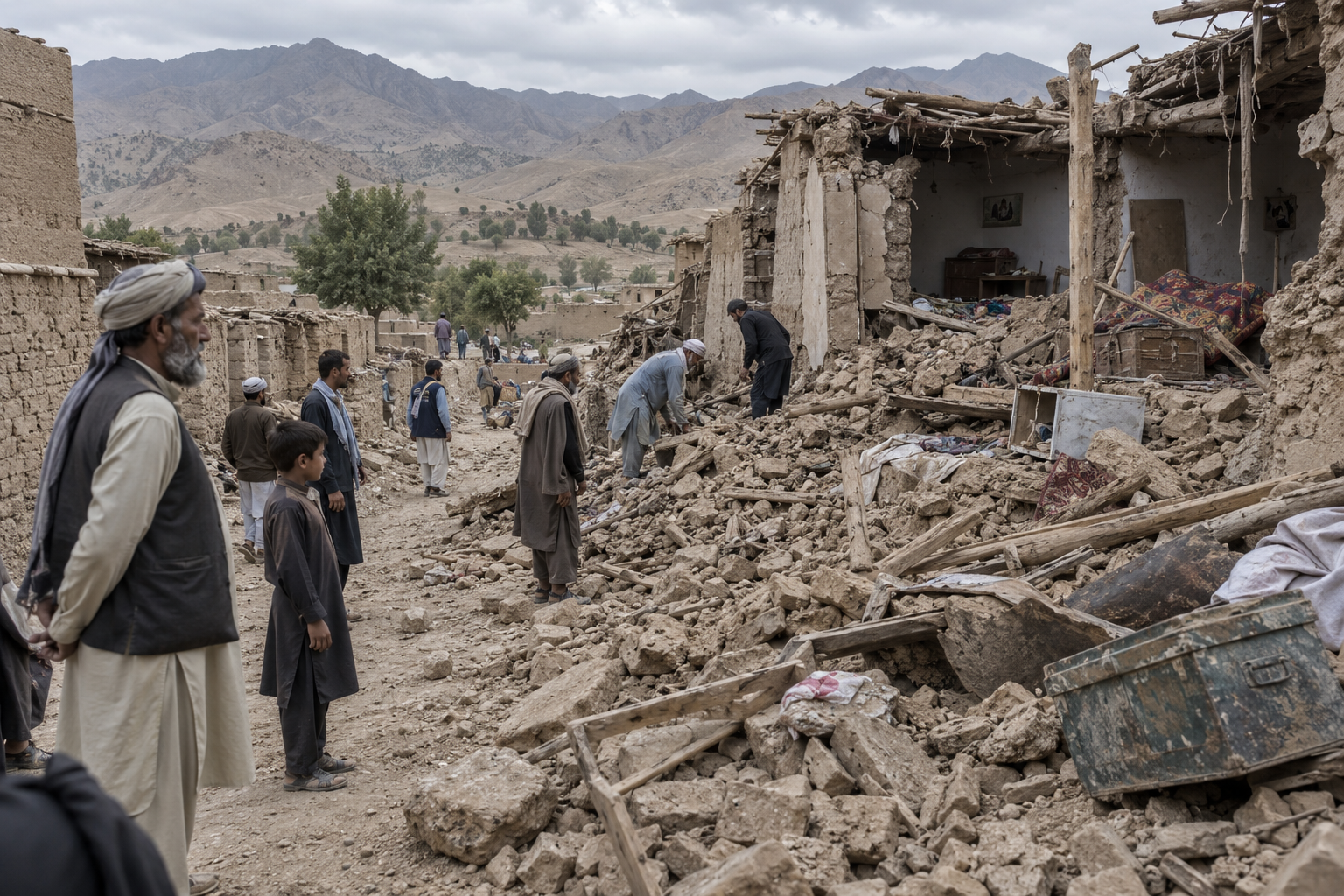
The report says Afghan officials attributed deadly air attacks in Afghanistan to Pakistan, claiming that at least nine women and children were killed and 11 people were wounded late Wednesday. The strikes reportedly destroyed three homes in the provinces of Kunar and Helmand. Pakistan gave a different account of the intended targets, saying it had targeted armed fighters. The short report does not provide further details about the locations of the homes, the identities of those killed or wounded, the circumstances of the attacks, or evidence supporting either side’s account. It also does not describe any response by survivors, local communities, or international authorities. As presented, the central issue is the contrast between Afghan officials’ reported civilian-casualty claims and Pakistan’s assertion that its targets were fighters. The report establishes that casualties and damage were alleged by Afghan officials, while clearly attributing Pakistan’s account to Pakistan; it does not independently verify either claim. The item is a brief news update rather than a detailed account, and it offers no wider background on relations between the two countries or on the military context of the air attacks. Its emphasis is on the reported deaths and injuries, the destruction of homes in Kunar and Helmand, and the differing descriptions of the targets.
Entities: Afghanistan, Pakistan, Afghan officials, Kunar, Helmand • Tone: neutral • Sentiment: negative • Intent: inform
01-10-2026
Pakistan said it carried out air attacks in Afghanistan on Wednesday, targeting hideouts used by armed groups in two locations and killing at least 22 fighters. The claim was announced Thursday by Pakistan’s Ministry of Information. Afghanistan’s government gave a sharply different account, accusing Pakistan of killing at least nine women and children in strikes on Kunar and Helmand provinces. Afghan government spokesperson Zabihullah Mujahid said at least nine people were killed and 11 wounded, and that three houses were destroyed. In a post on X, he condemned the attacks as aggression and a violation of accepted principles. Al Jazeera said it could not independently verify either side’s casualty claims.
The reported strikes come amid renewed fighting between the neighbouring countries after three months of relative calm. Islamabad says Kabul is harbouring armed groups, including Tehrik-i-Taliban Pakistan, which it accuses of staging cross-border attacks inside Pakistan. The Afghan government denies that accusation and says Pakistani attacks have hit civilian homes, killing and injuring women and children. The article presents the two governments’ competing accounts without independently resolving them, underscoring both the civilian toll alleged by Kabul and Pakistan’s stated focus on armed-group hideouts.
Entities: Pakistan, Afghanistan, Islamabad, Kabul, Kunar province • Tone: neutral • Sentiment: negative • Intent: inform
01-10-2026
Pakistan carried out overnight airstrikes in Afghanistan, killing at least 10 civilians and injuring nine, according to the United Nations Assistance Mission in Afghanistan (UNAMA). The mission said most of those killed were children. Although UNAMA did not identify who carried out the strikes, Pakistan was the only country known to have launched recent aerial attacks in Afghanistan. The strikes hit areas in Kunar and Helmand provinces. Afghanistan’s Taliban government said three civilian homes were destroyed and condemned the attacks as aggression. A resident of Kunar told CBS News that one strike hit a house where a family had arrived the previous day; all six family members, including children, were killed.
Pakistan offered a sharply different account. Its Ministry of Information said the strikes were intelligence-driven and carefully planned, targeting militant hideouts and camps at two locations. It said initial reports indicated 22 militants were killed and weapons and ammunition destroyed. The ministry described the attacks as a precise response to terrorist threats originating from Afghanistan, asserted that precautions prevented civilian harm, and said operations against alleged militant groups would continue.
The reported deaths come amid escalating cross-border clashes between the neighboring countries. Both governments have long accused the other of allowing armed groups to operate near their shared border and plot attacks on civilians and security forces. UNAMA said clashes have caused more than 1,100 civilian deaths and injuries in Afghanistan so far this year. The article presents the United Nations’ and Afghan accounts of civilian casualties alongside Pakistan’s claim that its strikes targeted militants.
Entities: Pakistan, Afghanistan, United Nations Assistance Mission in Afghanistan (UNAMA), Kunar province, Helmand province • Tone: neutral • Sentiment: negative • Intent: inform
01-10-2026
Pakistan carried out overnight airstrikes in Afghanistan’s Helmand and Kunar provinces, according to both governments. The Taliban government in Kabul said the attacks hit three civilian homes, killing at least nine people—identified as women and children—and wounding 11 others. Pakistan’s authorities gave a different account, saying 22 militants were killed and weapons and ammunition destroyed. Neither side’s casualty figures could be independently verified.
Afghan residents quoted by AFP said three bombs struck their village in Helmand, where, they said, there was no military presence. Taliban spokesman Zabihullah Mujahid condemned the strikes as an act of aggression and a crime. Pakistan’s Ministry of Information described its operation as carefully planned and precise, said it targeted militant hideouts, and asserted that precautions were taken to prevent civilian casualties.
The strikes were the third Pakistani attack on targets in Afghanistan in two weeks, amid conflict that has intensified since cross-border tensions erupted into open fighting last year. The two countries held peace talks in April to reinforce a March truce, but clashes have continued. Islamabad accuses Afghanistan’s Taliban authorities of harboring militants responsible for attacks in Pakistan; Kabul denies the allegation. Pakistan says the threat to its security comes from Afghanistan and that its operations target terrorist hubs.
The conflict has also affected civilians and trade. Pakistan has closed border crossings with Afghanistan, which relies heavily on foreign food and humanitarian aid. The United Nations said the previous week that more than 1,100 civilians had been killed or injured in Afghanistan as a result of cross-border conflict this year. Pakistan maintains that it does not target civilians. The competing accounts and continued flare-ups leave uncertainty over the strikes’ impact and the prospects for a lasting truce.
Entities: Pakistan, Afghanistan, Taliban government in Kabul, Zabihullah Mujahid, Pakistan’s Ministry of Information • Tone: analytical • Sentiment: negative • Intent: inform