01-10-2026
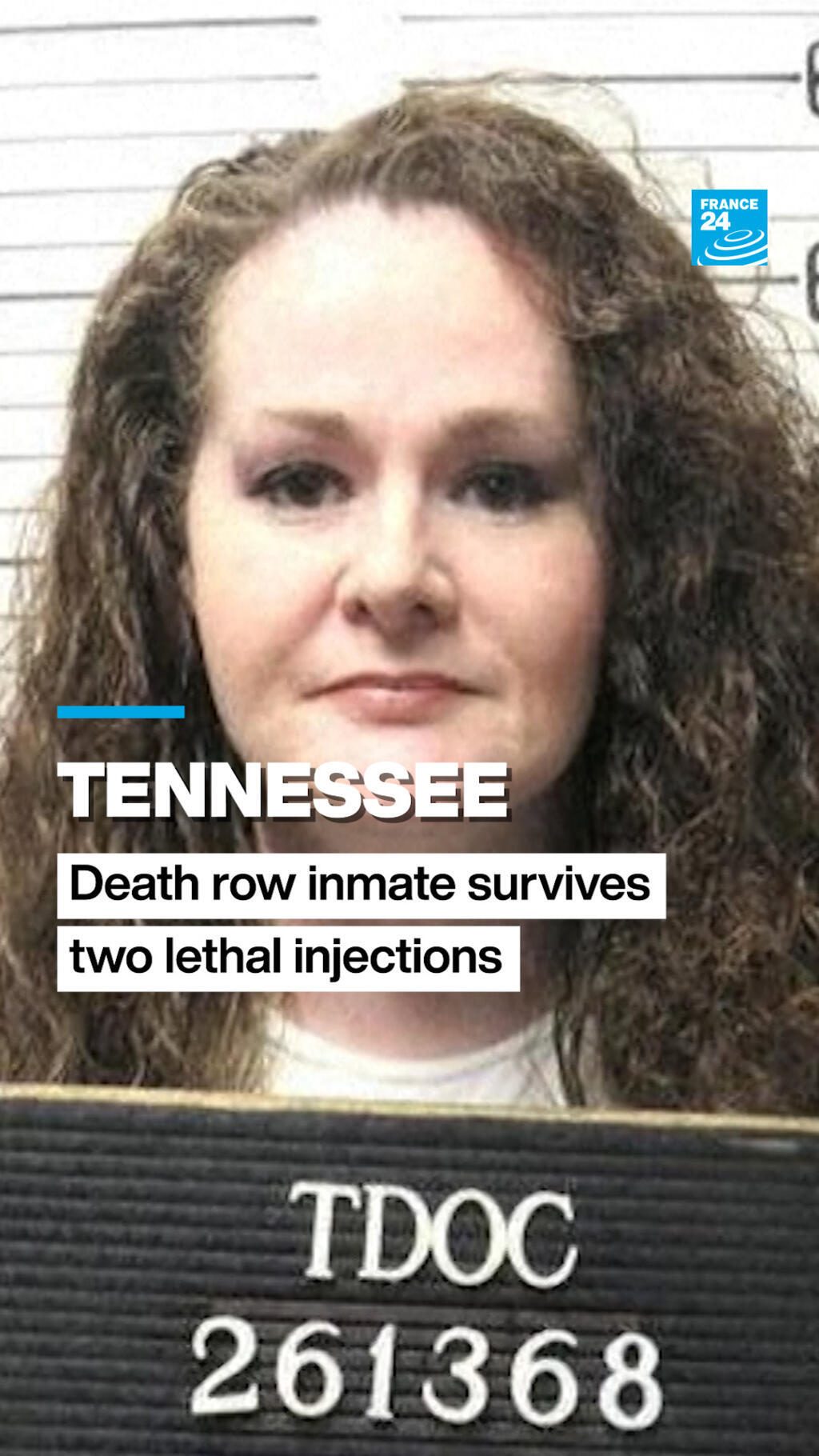
Christa Pike, a 50-year-old Tennessee death-row inmate, was reportedly still alive more than an hour after receiving two doses of pentobarbital during a lethal-injection execution attempt at Riverbend Maximum Security Institution in Nashville. Her execution, scheduled for September 30, was briefly delayed by a last-minute stay before the US Supreme Court allowed it to proceed. Witnesses described an unusually prolonged process, with the chamber curtain repeatedly closed. Associated Press journalist Kim Chandler said Pike appeared awake when the execution began, later gasped and audibly snored, and could still be heard snoring when media witnesses were told to leave. Emergency vehicles were seen leaving the prison, while witnesses and other media were asked to vacate the area.
Pike’s lawyers filed an emergency petition to halt the execution, alleging she had not lost consciousness and still had a heartbeat. They said she needed immediate medical care and later reported that she was being treated at a nearby hospital, though they did not know her condition. Her attorneys had previously raised concerns about difficult vein access and argued that the procedure could be torturous. Pike had requested an all-female execution team, citing a history of sexual abuse and violence that made her fear being restrained by men. Her lawyers accused Tennessee of failing to carry out a lawful execution; state officials said staff followed protocol and that the drug had consistently been effective.
Pike was sentenced to death for the 1985 murder of fellow student Colleen Slemmer, committed when Pike was 18. Tennessee Governor Bill Lee paused all executions scheduled for 2026 and ordered an independent review following Pike’s hospitalization. The article notes another failed execution attempt in the state this year: in May, officials could not establish an IV line for Tony Carruthers, who received a one-year reprieve after repeated attempts. The Death Penalty Information Centre has reported that lethal injection has the highest rate of botched executions, with 35 per cent of execution attempts it reviewed in 2022 described as visibly problematic.
Entities: Christa Pike, Colleen Slemmer, Tennessee, Riverbend Maximum Security Institution, US Supreme Court • Tone: neutral • Sentiment: negative • Intent: inform
01-10-2026
Christa Gail Pike, a 50-year-old Tennessee death-row prisoner, was not executed on Wednesday despite the US Supreme Court clearing the way for the lethal injection to proceed. Pike was sentenced to death for the 1995 killing of 19-year-old Colleen Slemmer, a classmate at a job-training facility in Knoxville. The execution had first been delayed when the 6th US Circuit Court of Appeals issued a stay shortly before it was due to begin, citing the need to consider whether Pike’s claims of childhood sexual abuse had been fully considered at sentencing. The Supreme Court later overturned that stay. Its conservative majority offered no explanation; three liberal justices dissented, with Justice Sonia Sotomayor saying the decision prevented meaningful consideration of Pike’s claim.
After the ruling, officials attempted to carry out the execution at Riverbend Maximum Security Institution in Nashville. Media witnesses said Pike appeared to receive two doses of pentobarbital and could be heard snoring after the viewing-room curtain was raised. The curtain was closed again, and witnesses later heard the snoring until the microphone was turned off. Officials did not immediately explain why the execution was not completed, and emergency vehicles were seen at the prison.
Pike and her then-boyfriend, Tadaryl Shipp, were convicted of stabbing and beating Slemmer to death. Shipp, who was 17 at the time, received life imprisonment with the possibility of parole; Pike alone received a death sentence. Pike does not dispute her role in the killing. Her supporters and lawyers argue that her age, mental illness, and allegations of severe sexual abuse should be considered. She was later diagnosed with bipolar disorder and post-traumatic stress disorder and expressed remorse in a clemency statement. Slemmer’s mother has said she wants the sentence carried out. If executed, Pike would have been Tennessee’s first woman executed in at least 200 years.
Entities: Christa Gail Pike, Colleen Slemmer, Tadaryl Shipp, Sonia Sotomayor, Tennessee • Tone: neutral • Sentiment: neutral • Intent: inform
01-10-2026
Tennessee death row inmate Christa Pike was taken to hospital after an attempt to execute her by lethal injection failed following two doses of pentobarbital. Her lawyers sought an emergency halt while she remained unconscious but had a heartbeat; an attorney said she was receiving life-saving treatment. A judge noted that medical care had begun. Tennessee Governor Bill Lee ordered an independent review and said another execution scheduled for this year would not proceed as planned. The state corrections department said staff followed the approved execution protocol, which does not authorize additional procedures beyond those used. Pike’s lawyers alleged that problems with vein access, possible drug degradation, and a lack of emergency medical care had contributed to the failure. A medical expert retained by the defence said Pike might not have received enough pentobarbital to cause respiratory and cardiovascular failure and warned that delayed resuscitation could cause brain injury.
The execution took place at Riverbend Maximum Security Institution in Nashville after a series of last-minute legal challenges. The US Supreme Court overturned a lower court’s temporary reprieve, allowing the procedure to go ahead. The Court had also rejected Pike’s argument that jurors were not allowed to consider evidence of her childhood sexual abuse when deciding her sentence. Tennessee’s governor denied her clemency request; Pike is the only woman on the state’s death row. Another Tennessee execution was postponed in May after staff could not find a vein.
Pike was sentenced to death in 1996 for the 1995 torture and murder of 19-year-old Colleen Slemmer, whom Pike and her boyfriend, Tadaryl Shipp, met at a job training camp for troubled teenagers. Pike, then 18, said in her clemency petition that she intended to beat Slemmer, not kill her, and expressed remorse. Shipp, who was 17 at the time, was spared the death penalty and remains in prison. Slemmer’s mother, May Martinez, had waited decades for the sentence to be carried out and travelled to witness the execution. The article notes that only 18 women have been executed in the United States since executions resumed in 1976, compared with 1,663 men.
Entities: Christa Pike, Colleen Slemmer, May Martinez, Tadaryl Shipp, Bill Lee • Tone: analytical • Sentiment: negative • Intent: inform
01-10-2026
Christa Pike, a 50-year-old Tennessee death-row inmate, survived an attempted lethal injection after receiving two doses of pentobarbital. Pike was sentenced to death in 1996 for the murder of 19-year-old Colleen Slemmer, whom Pike killed with her then-boyfriend, Tadaryl Shipp. The US Supreme Court permitted the execution to proceed shortly before it was scheduled, following a high-profile legal challenge. Pike’s lawyers said the injections did not stop her heartbeat and that she could still be heard snoring. She was taken to a hospital, where her lawyer said she was receiving life-saving measures; her condition was not known at the time of the report.
The Tennessee Department of Correction defended its execution method, but the state protocol does not clearly say what to do if an inmate remains alive after a second dose. Officials had not explained why the pentobarbital failed to prove fatal. Medical expert Joel Zivot said Pike may not have reached a sufficient drug concentration to cause breathing and cardiovascular failure, and warned that delayed resuscitation could result in brain injury. Governor Bill Lee ordered an independent review and said another execution scheduled for later in the year would not go ahead as planned. Authorities had not said whether they would attempt to execute Pike again.
The case renewed concerns about the suffering caused by botched executions and the secrecy surrounding lethal injection. Pentobarbital is a sedative used in high doses for executions, but a federal review under President Joe Biden raised concerns about unnecessary pain and suffering. The federal government banned the drug for federal executions, though that restriction does not apply to states. Pike’s lawyers alleged that Tennessee’s supply was degraded; the state did not directly address that claim.
The article places Pike’s case in a wider history of problematic executions. Tennessee postponed Tony Carruthers’s execution in May after staff could not find a vein. The Death Penalty Information Center reported that more than a third of US executions in 2022 were botched or highly problematic, and identifies lethal injection as having the highest rate of botched executions. The article also recalls Clayton Lockett’s 2014 execution in Oklahoma, when a ruptured vein disrupted the procedure. Shipp, who was 17 when Slemmer was killed, remains imprisoned and was spared the death penalty under state law.
Entities: Christa Pike, Colleen Slemmer, Tadaryl Shipp, Tennessee, Tennessee Department of Correction • Tone: analytical • Sentiment: negative • Intent: inform
01-10-2026
Tennessee Gov. Bill Lee has ordered an independent review after the state’s attempt to execute Christa Pike by lethal injection was halted on Wednesday. Pike, 50, was taken from Riverbend Maximum Security Institution to an off-site medical facility. Her condition was not immediately known. The attempt was Tennessee’s first effort to execute a woman in more than 200 years and the state’s second failed execution this year.
Pike’s lawyers said witnesses reported that she was still alive and snoring after officials administered two doses of pentobarbital. Journalists also described loud exhales, gasps and Pike complaining of arm discomfort. The Tennessee Department of Correction said it followed the state’s approved protocol, which does not permit additional procedures. Lee, who had rejected Pike’s clemency request, ordered a comprehensive third-party review and said the remaining scheduled execution would not occur this year.
The attempt followed a U.S. Supreme Court decision lifting a lower-court stay. Pike was convicted of first-degree murder for her role in the 1995 torture and killing of 19-year-old classmate Colleen Slemmer in Knoxville. Pike, then 18, and her 17-year-old boyfriend, Tadaryl Shipp, lured Slemmer to a wooded area with a third person. Pike and Shipp confessed and were convicted; Slemmer’s mother, May Martinez, has supported the execution.
Pike’s lawyers sought clemency, citing her childhood experiences of violence, neglect and sexual abuse, as well as diagnoses of bipolar disorder and post-traumatic stress disorder. They also argued that alcohol use by her mother during pregnancy affected Pike’s brain development. Pike was additionally convicted of attempted first-degree murder for an assault on another inmate. Women account for only 18 of 1,683 U.S. executions since capital punishment resumed in 1976, according to the Death Penalty Information Center.
Entities: Christa Pike, Tennessee, Gov. Bill Lee, Tennessee Department of Correction, Riverbend Maximum Security Institution • Tone: neutral • Sentiment: negative • Intent: inform
01-10-2026
Tennessee Governor Bill Lee halted the scheduled execution of Christa Gail Pike after authorities failed to carry it out on Wednesday. Pike, 50, was convicted of murdering a schoolmate more than 30 years ago, when she was 18. During the lethal-injection attempt at Riverbend Maximum Security Institution, she received two doses of pentobarbital but was still breathing. Her attorneys said she was alive and loudly snoring after the attempt, was taken by ambulance to a hospital, and received treatment; they said they had not yet been told her condition. Witnesses reported hearing her gasp and later snore behind a curtain. Before the attempt, Pike said her final words would be to leave the world “in love.”
Pike would have been the first woman executed in Tennessee in more than 200 years. Her attorneys filed an emergency motion with the Tennessee Supreme Court to halt the execution, arguing that she had suffered “unnecessary agony” and that the attempt violated her constitutional protection against cruel and unusual punishment.
Lee ordered a comprehensive, independent review of what happened and said scheduled executions would not be carried out in Tennessee this year. He said executions must be conducted legally and constitutionally, as well as effectively. The article notes that this was the second failed lethal-injection execution in Tennessee that year; Tony Carruthers’ execution attempt had also failed in May. Robin Maher of the Death Penalty Information Center called Pike’s case unprecedented and the worst botched execution she had seen in the modern era. Pike had previously described herself as a mentally ill 18-year-old at the time of the murder and said it took years for her to understand the gravity of her actions.
Entities: Christa Gail Pike, Bill Lee, Tennessee, Riverbend Maximum Security Institution, Tennessee Supreme Court • Tone: analytical • Sentiment: negative • Intent: inform
01-10-2026
France 24 reports that Christa Pike, a 50-year-old Tennessee death row inmate convicted of a murder committed three decades ago, survived two doses of lethal-injection drugs during an execution attempt on Wednesday. Pike had been scheduled to become the first woman executed in Tennessee in 200 years. The report describes the incident as a botched execution and says it was the second failed execution in the state this year. In response, Tennessee’s governor halted the one other execution scheduled for the remainder of the year and ordered what the article calls a “comprehensive review.” The report does not give details about the circumstances of the attempted execution, Pike’s condition afterward, the murder conviction, or the scope and timing of the review. Its central focus is the failure of the execution attempt and the immediate state response, rather than the underlying case or the wider debate over capital punishment. The article presents the event as an exceptional and serious development in Tennessee’s use of lethal injection, while providing only a brief account of the known facts. It identifies Pike’s age, the approximate time since the murder conviction, the number of doses she survived, and the historical significance of her planned execution. It also notes that the governor’s action affects the remaining scheduled execution for the year, but does not say whether the review could change future execution procedures or policies.
Entities: Christa Pike, Tennessee, United States, Tennessee governor, Lethal injection • Tone: neutral • Sentiment: negative • Intent: inform
01-10-2026
Tennessee officials halted executions for the rest of the year after failing to execute Christa Pike, 50, who survived an attempted lethal injection on Wednesday. Pike had been sentenced to death for a 1995 murder she committed when she was 18. According to her lawyers, she remained alive and was loudly snoring after officials administered two doses of pentobarbital. She was taken by ambulance from the prison to a hospital, where she was being treated; her lawyers said they had not been told about her condition.
Pike’s execution had been scheduled for 10am. If carried out, she would have been the first woman executed in Tennessee in more than 200 years. An appeals court issued a stay about an hour before the injection was due to begin, but the US Supreme Court overturned that stay hours later, clearing the way for the attempt to proceed.
A death penalty expert described the failure as unprecedented. Tennessee’s governor ordered an independent review and paused the remaining execution scheduled in the state for the rest of the year. The article reports the sequence of legal decisions and the failed execution attempt, while noting that Pike’s condition remained unknown to her lawyers at the time of their statements.
Entities: Christa Pike, Tennessee, Tennessee governor, US Supreme Court, Appeals court • Tone: neutral • Sentiment: negative • Intent: inform
01-10-2026
The US Supreme Court cleared the way for Tennessee to execute Christa Pike on September 30, 2026, after a series of last-minute legal challenges. Pike, the only woman on Tennessee’s death row, was scheduled to receive a lethal injection at Riverbend Maximum Security Institution. Her execution would be the first of a woman in Tennessee in two centuries and the first execution of a woman in the United States since 2023. Pike’s lawyer, Luke Ihnen, said they did not plan to seek another reprieve and that the execution could begin imminently.
The execution had been temporarily halted by a lower court less than an hour before it was scheduled. That court wanted time to assess arguments that allegations of Pike’s childhood sexual abuse had not been adequately considered in her original prosecution. The Supreme Court vacated the stay, allowing the execution to proceed. Justices Sonia Sotomayor, Elena Kagan and Ketanji Brown Jackson dissented, arguing that the decision prevented the lower court from properly considering Pike’s claims and let the state execute her before litigation over her conviction had run its course.
Pike was 18 when she and her boyfriend killed 19-year-old Colleen Slemmer at a job training camp. The murder drew national attention after Slemmer’s body was found with a pentagram carved into her chest. Pike’s lawyers sought clemency based on her age and mental health, citing her severe mental illness at the time of the crime. Governor Bill Lee said he would not intervene. The Supreme Court had also rejected an earlier request for a stay that cited Pike’s history of sexual assault, post-traumatic stress disorder and a blood condition, arguing that lethal injection would cause needless suffering.
UN human rights experts urged authorities to halt the execution and commute Pike’s sentence, citing her childhood abuse and decades in solitary confinement. The article notes that only 18 women have been executed in the United States since 1976, according to the Death Penalty Information Center.
Entities: Christa Pike, Colleen Slemmer, Luke Ihnen, Tennessee, US Supreme Court • Tone: analytical • Sentiment: negative • Intent: inform