29-09-2026
A US ban on several Canadian imports—including alcohol, dairy products and motorcycles—has taken effect amid an ongoing trade dispute between the neighbouring countries. The Trump administration announced the measures in executive orders on 8 September, saying they respond to what it calls Canadian discrimination against US dairy, automotive and alcohol industries. The ban follows Canada’s imposition of tariffs on US goods earlier this month, after trade talks broke down. Talks remain stalled, and US Trade Representative Jamieson Greer said the administration has no urgency to reach new deals with Canada.
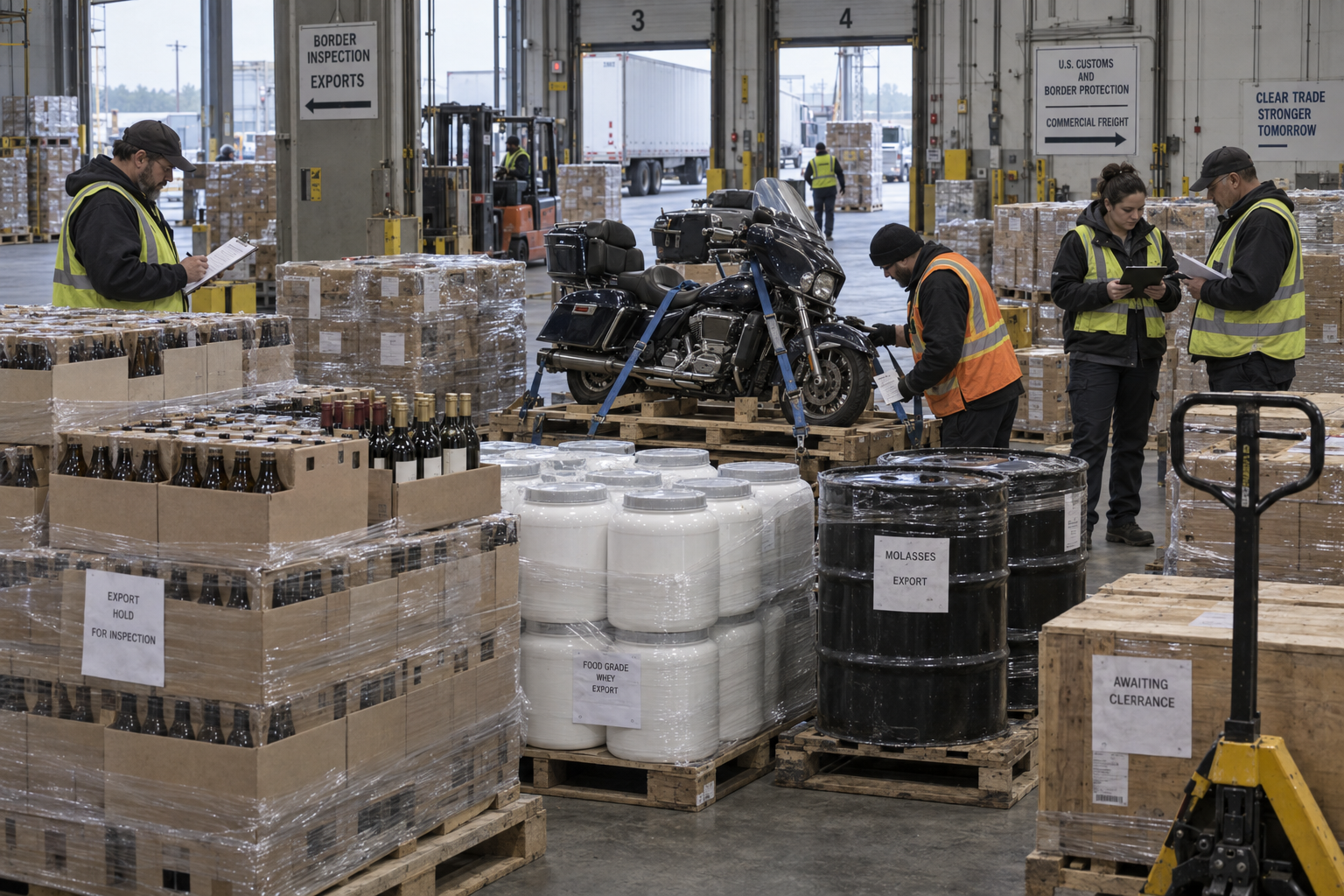
The ban covers nearly C$1bn in Canadian liquor exports to the US, as well as whey used in protein powder. Motorcycle exports will also be affected, although the value involved is comparatively small. Canada is not expected to impose further retaliation. Prime Minister Mark Carney described the bans as modest compared with other US trade measures, while acknowledging that businesses and sectors directly targeted will be hurt. A Scotiabank economist characterised the measures as largely symbolic and said that was positive.
The alcohol industry may nevertheless face significant consequences: about 93% of Canadian liquor exports went to the US in 2025. Canadian producers warned of serious effects, while US liquor producers said the ban could ripple through hospitality businesses ahead of the holiday season. Dozens of American producers have urged President Donald Trump to resolve the dispute. Canadian businesses and economists also warn that the conflict creates uncertainty in the country’s relationship with its largest trading partner.
The ban adds to existing US tariffs, including 50% duties on several Canadian goods and 25% tariffs on Canadian-built cars. Canada has responded with tariffs on more than 700 US products and certain steel and aluminium goods; most Canadian provinces have also stopped selling US liquor. The article notes that while Trump argues tariffs raise revenue and encourage domestic purchasing, economists say they increase consumer prices and disrupt the global economy.
Entities: United States, Canada, Donald Trump, Mark Carney, Jamieson Greer • Tone: analytical • Sentiment: neutral • Intent: inform
29-09-2026
A U.S. ban on a range of Canadian imports took effect Tuesday, escalating a trade dispute between the two countries. The affected goods include certain motorcycles and mopeds, dairy products such as whey, molasses, and numerous alcoholic beverages, including beer, cider, wine, whiskey, and vodka. The American Action Forum estimates the targeted imports are worth about $19.9 billion.
President Donald Trump said he expects Canada to agree to a “fair deal” within weeks and predicted Ottawa would remove its tariffs, while maintaining that the United States does not need Canadian goods. U.S. Trade Representative Jamieson Greer indicated there was no urgency on the U.S. side, noting that trade in oil, gas, potash, and other products continues. Canadian Trade Minister Dominic LeBlanc said U.S. tariffs are causing considerable hardship for businesses and workers, but Canada will not accept an agreement detrimental to its sovereignty or economy.
Canada has not announced new retaliatory measures since Sept. 9. It has, however, imposed tariffs of 15% to 50% on CA$27.6 billion of U.S. goods, describing them as a dollar-for-dollar response to U.S. tariffs. Prime Minister Mark Carney has also pursued closer ties with the European Union and criticized the U.S. use of economic policy as coercion.
Although the measures affect a relatively small share of the $715.5 billion in annual goods trade between the countries, prolonged confrontation could harm industries such as metals and autos, as well as small and medium-sized businesses on both sides of the border. The Bank of Canada has warned that the tariffs have made the country’s growth outlook more uncertain and increased upside risks to inflation. Officials continue discussions, but their public statements point to limited progress toward a deal.
Entities: Donald Trump, Jamieson Greer, Dominic LeBlanc, Mark Carney, United States • Tone: analytical • Sentiment: negative • Intent: inform
29-09-2026
The United States has begun blocking imports of several Canadian products, including alcoholic beverages, some dairy products, and large-engine motorcycles and mopeds. The restrictions took effect at 12:01 a.m. Eastern time on Tuesday and replace 50% tariffs that had applied to some of the goods since August. The ban affects nearly $1 billion in Canadian imports annually—small compared with the roughly $880 billion in goods traded between the two countries each year. Covered goods include beer, wine, whisky, vodka, rum, non-alcoholic beer, molasses, whey and protein concentrates, and motorcycles and mopeds with combustion engines larger than 800 cubic centimeters.
The Trump administration says Canada discriminates against US dairy, vehicle, and alcohol exporters. The ban is the latest step in a series of retaliatory trade measures: the United States previously imposed 50% tariffs on about $20 billion worth of Canadian imports, and Canada responded with tariffs of 15% to 50% on an equivalent value of US goods. Some Canadian provinces also removed US alcoholic beverages from store shelves. US Trade Representative Jamieson Greer said the new restrictions reflect Canada’s treatment of American exports.
The economic impact may be limited because the earlier tariffs had already made importing many of the affected goods uneconomical. Jacob Jensen of the American Action Forum estimated that the ban covers $967 million in Canadian imports using 2025 figures, with alcoholic beverages making up 87% of the total. Analysts nevertheless cautioned that the measure could prompt further Canadian retaliation and make renewal of the US-Mexico-Canada Agreement more difficult.
Entities: United States, Canada, Donald Trump, Jamieson Greer, Jacob Jensen • Tone: analytical • Sentiment: neutral • Intent: inform