29-06-2026
The article reports a sharp escalation in the confrontation between the United States and Iran, with both sides conducting strikes and accusing the other of violating a ceasefire arrangement tied to the security of shipping through the Strait of Hormuz. According to the piece, the U.S. Central Command said American fighter jets struck multiple Iranian military targets in and around the strait after an Iranian drone attack hit a Panama-flagged tanker, MT Kiku. Iran’s Islamic Revolutionary Guard Corps (IRGC) said it retaliated by launching missiles and drones at U.S. infrastructure in Kuwait and Bahrain, including sites connected to the Fifth Naval Fleet and Ali al-Salem base. The article emphasizes that both governments framed their actions as defensive and accused the other of breaching the ceasefire, while the Iranian Foreign Ministry denounced the U.S. attacks as “brutal” and evidence that Washington cannot be trusted to honor commitments.
The story also places the exchange in the broader context of tensions over maritime control in the Strait of Hormuz, a critical global shipping route for oil and gas. It describes an earlier 14-point memorandum of understanding between the two countries, under which Iran was supposed to help ensure safe, toll-free commercial passage for 60 days. However, the article says negotiations have been undermined by accusations that Iran is imposing or threatening tolls on tankers and by repeated attacks on commercial shipping. Trump’s public remarks on Truth Social add to the escalation, warning that the U.S. may be forced to “militarily complete the job” and declaring that if such a course is taken, “the Islamic Republic of Iran will no longer exist.” The article closes by noting that commercial vessels continue to operate in the strait, while Kuwait and Bahrain activated air defenses amid reports of missile and drone attacks, underscoring the regional risk of wider conflict.
Entities: United States, Iran, Strait of Hormuz, US Central Command (Centcom), Islamic Revolutionary Guard Corps (IRGC) • Tone: urgent • Sentiment: negative • Intent: inform
29-06-2026
The article reports that the U.S. military carried out strikes on Iranian targets in response to an Iranian drone attack on a commercial cargo ship in the Strait of Hormuz, the first American strikes on Iran since the two countries extended a fragile ceasefire. U.S. Central Command said the strikes hit Iranian missile and drone storage facilities and radar sites, describing them as a response to Iran’s “dangerous behavior” and saying the attack on commercial shipping violated the ceasefire. A U.S. official said the operation targeted four sites along the Strait of Hormuz and on Qeshm Island and was carried out by six land-based aircraft.
The escalation came after Iran’s Islamic Revolutionary Guard Corps struck a Singapore-flagged cargo ship off Oman, damaging the ship’s bridge but causing no reported casualties or environmental harm. President Trump denounced the attack as a “foolish violation” of the ceasefire and warned that Iran would face consequences, while Vice President JD Vance said violence would be met with violence. The article notes that the renewed fighting could undermine U.S. efforts to reopen the Strait of Hormuz to commercial shipping and stabilize maritime traffic and oil markets.
The story also highlights ongoing disagreements over shipping routes through the strait. The U.S. favors a southern route near Oman, while Iran insists ships should use a northern route closer to Iran and still seek Iranian permission. Iran’s Persian Gulf Strait Authority also warned that passage outside its designated framework would not receive safe-passage guarantees or insurance coverage. The article ends by noting that the strikes may complicate scheduled U.S.-Iran talks over Iran’s nuclear program and underscores the fragility of the ceasefire and broader regional diplomacy.
Entities: United States military, Iran, Strait of Hormuz, U.S. Central Command (CENTCOM), Qeshm Island • Tone: urgent • Sentiment: negative • Intent: inform
29-06-2026
Oil prices moved unevenly on Monday after fresh U.S.-Iran military strikes intensified fears that Middle East supply could be disrupted, particularly through the Strait of Hormuz, one of the world’s most important oil shipping chokepoints. West Texas Intermediate rose modestly to $69.52 per barrel after briefly topping $70, while Brent slipped slightly to $71.90. The price action reflected a market balancing two competing forces: immediate concern that renewed violence could interrupt crude flows, and optimism that a pause in hostilities might allow commercial shipping to resume.
The article describes how weekend clashes threatened to derail negotiations meant to end the conflict, even as U.S. officials said both sides would pause hostilities and allow vessels to transit the Strait of Hormuz freely. The fighting escalated after a tanker in the strait was reportedly hit by a projectile, prompting U.S. strikes on Iranian targets. Iran’s neighbors, Kuwait and Bahrain, also reported missile and drone activity. President Donald Trump warned Iran of devastating consequences and said the U.S. had struck missile and drone storage sites as well as coastal radar stations.
Market analysts at ING cautioned that energy traders may be too complacent about how quickly Gulf oil supplies can recover. They argued that the market is underestimating the risk of a slower-than-expected return of flows, or further escalation, both of which could push prices higher. Overall, the article frames oil markets as highly sensitive to geopolitical developments and vulnerable to additional upside risk if tensions persist.
Entities: Oil prices, West Texas Intermediate (WTI), Brent crude, U.S.-Iran conflict, Strait of Hormuz • Tone: analytical • Sentiment: negative • Intent: inform
29-06-2026
The article/video report covers a sharp escalation in tensions between the United States and Iran, with the conflict spilling into Gulf states that host American military facilities. According to the report, Iran’s Islamic Revolutionary Guard Corps said it targeted U.S. military sites in neighboring countries, including Kuwait and Bahrain, following U.S. strikes on Iranian sites. The piece frames the Gulf region as being at heightened risk because of its geographic proximity to both Iran and U.S. military assets, making it vulnerable to retaliation and further escalation. The report is concise and primarily focuses on the immediate military exchange and its regional implications rather than broader historical background or diplomatic efforts.
The article also appears within a CNN video news page that includes several unrelated video thumbnails and headlines, but the central story is the Iran-U.S. exchange and the threat it poses to Gulf nations. The language emphasizes direct action and retaliation, highlighting the possibility that allied countries in the region could become targets or battlegrounds in a wider confrontation. Overall, the report communicates urgency and instability, underscoring how quickly a bilateral conflict can expand to involve neighboring states and create broader security concerns across the Gulf.
Entities: Iran, United States, U.S. military sites, Islamic Revolutionary Guard Corps, Kuwait • Tone: urgent • Sentiment: negative • Intent: inform
29-06-2026
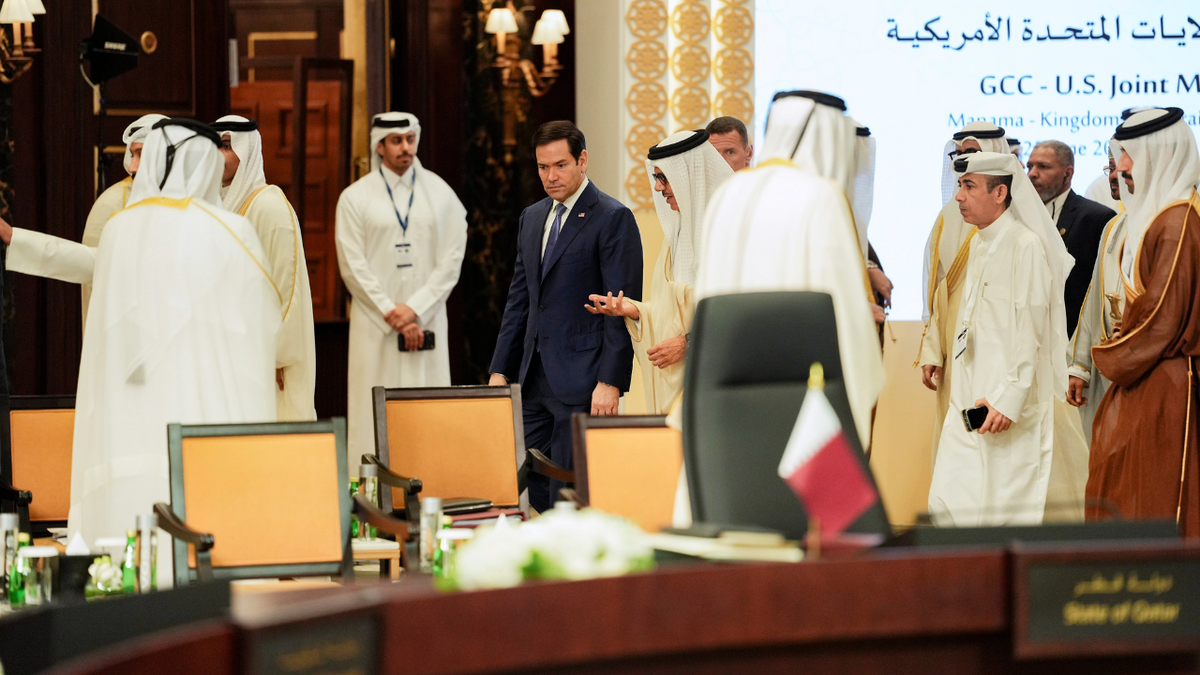
The article reports a fragile de-escalation between the United States and Iran after several days of cross-border strikes and retaliatory attacks around the Strait of Hormuz and in the wider Middle East. According to Trump administration officials, both sides will “stand down for now,” and technical talks between the two countries are still “on track,” with a new meeting scheduled in Doha, Qatar, on Tuesday. However, the article emphasizes that Iran’s actual position remains unclear, and the ceasefire-like understanding does not appear to be fully holding in practice. Commercial shipping in the Strait of Hormuz remains unsettled and dangerous, with vessels confronted by confusion over competing transit routes, the threat of sea mines, drones, and IRGC patrol boats.
The piece outlines a rapid escalation: Iran attacked a Singapore-flagged container ship near the strait; the U.S. responded with strikes on Iranian missile, drone, and radar sites; Iran then launched missiles and drones at American facilities in neighboring countries including Kuwait and Bahrain. While U.S. officials said there were no U.S. casualties or major damage, Qatar reported that a citizen on a vessel was killed by shrapnel from the military operations. The article also notes that oil prices rose after the fighting, while gas prices in the U.S. had recently fallen.
Beyond the U.S.-Iran conflict, the article says fighting in Lebanon continues to complicate the broader regional picture. Iran is demanding a full Israeli withdrawal from Lebanon as part of any final agreement, even as Israel continues strikes against Hezbollah in southern Lebanon despite a recent agreement in Washington. Overall, the article presents a volatile but potentially temporary pause in direct conflict, with diplomacy continuing alongside unresolved military and regional tensions.
Entities: United States, Iran, Strait of Hormuz, Donald Trump, Abbas Araghchi • Tone: urgent • Sentiment: negative • Intent: inform
29-06-2026
CNN’s analysis argues that the latest US-Iran clashes exposed both the fragility and the practical utility of the current truce. After four days of attacks on merchant shipping, US reprisals, and Iranian strikes on US bases and Gulf allies, both sides appeared to step back and agree to meet in Qatar, signaling a temporary stand-down. The article says the fighting centered on the Strait of Hormuz, a chokepoint vital to global trade, and reflected a struggle over who could control maritime traffic and shape the terms of a broader settlement, especially on Iran’s nuclear program.
The piece contends that Iran’s actions were meant to preserve new leverage gained from the memorandum of understanding by asserting influence over shipping and signaling a new regional order. For Washington, allowing Tehran to dominate the strait would amount to strategic defeat and threaten global economic stability. Yet both sides also have incentives to avoid full-scale war: Iran is benefiting from eased sanctions and resumed oil exports, while the US is seeing lower oil and gasoline prices, which could help President Trump politically. The article notes that Trump’s threats toward Iran were bellicose but that he ultimately avoided escalation, reflecting both his unpredictability and his interest in preserving the image of a successful dealmaker.
Overall, the article presents the truce as precarious but grounded in mutual self-interest. It argues that the ceasefire may hold because neither side wants the costs of escalation, even though future negotiations over the strait and Iran’s nuclear program remain highly uncertain and potentially more difficult than the initial agreement suggested.
Entities: Donald Trump, Marco Rubio, Mike Waltz, Jake Sullivan, Iran • Tone: analytical • Sentiment: neutral • Intent: analyze
29-06-2026
Several Gulf states strongly condemned Iran after it launched drone strikes on Bahrain, escalating tensions in the region and putting new pressure on a fragile U.S.-brokered ceasefire arrangement. The article frames the strikes as the latest threat to the memorandum of understanding signed by President Donald Trump and Iranian President Masoud Pezeshkian, following earlier violence in the Strait of Hormuz that prompted U.S. retaliatory airstrikes on Iranian missile, drone, and radar sites.
Bahrain said Iran had sent drones into its territory and described the attack as a blatant threat to its security. The Gulf Cooperation Council, through Secretary-General Jasem Mohamed Albudaiwi, called the attack treacherous and warned that it undermines peace efforts. Kuwait, the United Arab Emirates, Saudi Arabia, and Qatar also denounced the strikes, saying they violated Bahrain’s sovereignty, endangered regional stability, and breached international law. The article notes that Oman did not publicly comment, consistent with its more neutral and mediating role in regional diplomacy.
Iran’s Revolutionary Guard said it took responsibility for the attack and claimed it targeted several locations tied to what it called the U.S. military presence in the region, though no locations were specified. The report says there were no immediate reports of casualties or major damage. Overall, the piece highlights how the Gulf reaction underscores widening concern that Iranian actions could derail de-escalation efforts and deepen confrontation between Iran, the U.S., and its regional allies.
Entities: Iran, Bahrain, Gulf Cooperation Council (GCC), Jasem Mohamed Albudaiwi, Donald Trump • Tone: analytical • Sentiment: negative • Intent: inform
29-06-2026
CNBC’s Daily Open reports that Middle East tensions flared again over the weekend after the U.S. struck Iranian military targets and Iran allegedly attacked a Panamanian-flagged oil tanker and sent missiles and drones toward neighboring Kuwait and Bahrain. Despite the escalation and renewed warnings from President Donald Trump, the article says hostilities were again paused, allowing vessels to move freely while technical talks continue. Oil prices moved up only modestly, and broader markets appeared relatively calm, with investors focusing more on a recovery in tech stocks than on the conflict. The piece notes that SpaceX is set to become one of the fastest additions ever to the Nasdaq-100, which could trigger index-fund buying after July 6. It also highlights pressure in the tech sector from a memory shortage, saying larger firms like Apple and Microsoft are passing costs on to consumers while smaller companies such as GoPro and Sonos face severe margin pressure and business risk. The article closes with a separate business-news note about bots distorting access to concert and train tickets, underscoring how automated buying systems are affecting everyday consumers.
Entities: Iran, United States, Donald Trump, Kuwait, Bahrain • Tone: analytical • Sentiment: neutral • Intent: inform
29-06-2026
CNBC’s Daily Open focuses on a fragile de-escalation between Iran and the United States after renewed weekend clashes threatened shipping in the Strait of Hormuz. The two sides have reportedly agreed to pause hostilities, allow commercial vessel traffic to resume, and continue technical discussions toward a broader peace arrangement. Markets are reacting cautiously: U.S. futures are slightly higher, but crude oil has climbed back above $70 a barrel as investors weigh the risk that the ceasefire may not hold. The newsletter also previews an important week for central banks, with the European Central Bank’s forum in Sintra, Portugal, beginning with a speech from President Christine Lagarde, while the Bank for International Settlements is warning that rising public debt, financial fragilities, and uncertainty around the AI boom are elevating global risks.
On the technology front, the article notes mixed moves among major Asian chipmakers after Samsung and SK Hynix announced major investment plans for new fabs. It also highlights emerging tension between Google and Meta, with Alphabet reportedly limiting Meta’s access to Gemini. The closing section broadens the lens to climate risk, arguing that severe weather is becoming an increasingly material threat to the AI infrastructure buildout, especially data centers and chip manufacturing. It points out that heatwaves can strain power grids and disrupt operations, and cites Zurich data showing severe weather as a growing source of losses in U.S. data center construction insurance. Overall, the piece connects geopolitics, macroeconomic policy, technology investment, and climate stress as intersecting forces shaping markets.
Entities: Iran, United States, Strait of Hormuz, Washington, Tehran • Tone: analytical • Sentiment: neutral • Intent: inform