27-07-2026
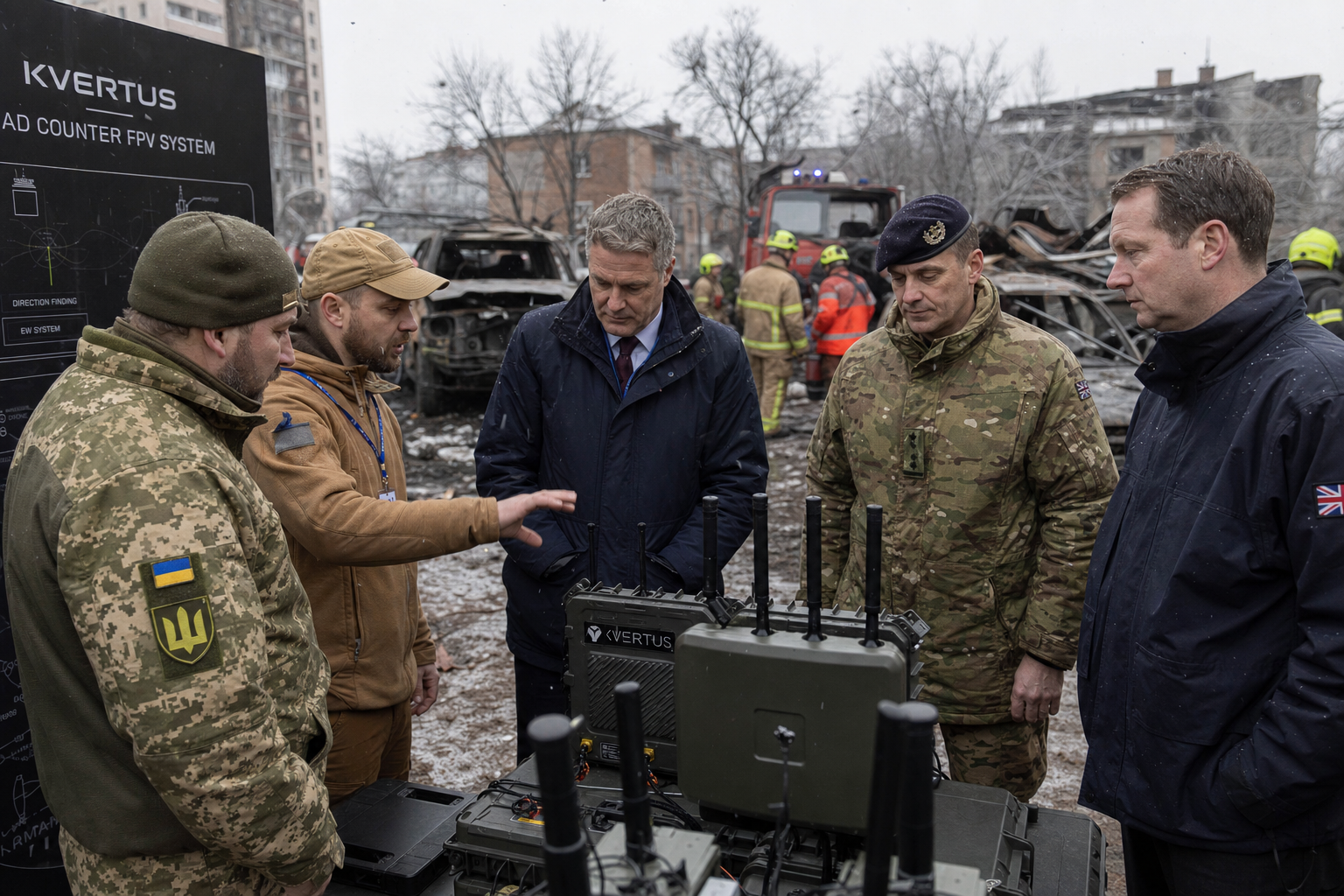
Andy Burnham has pledged that the UK will maintain its strong support for Ukraine ahead of welcoming President Volodymyr Zelensky on Monday, marking Zelensky’s first international visit since Burnham became prime minister. The meeting is intended to underscore the continuing strength of UK-Ukraine relations, with No 10 saying the visit demonstrates that bond. During the trip, Burnham will announce that the UK will share the intellectual property behind its new Stone Cloak electronic warfare system, allowing Ukraine to manufacture the technology at scale. The system’s tablet-sized jammers are designed to block drone detection, and many have already been supplied to Ukrainian forces. The article also notes that the technology will be incorporated into the UK’s next-generation long-range weapons, including Project Brakestop, a programme to develop low-cost cruise missiles.
The leaders will also visit a naval base and meet more than 200 Ukrainian military personnel who have spent three weeks in a maritime exercise in the UK. Exercise Sea Breeze is intended to improve warfighting and counter-mine capabilities in the Black Sea. The article places these developments in the wider context of sustained UK support for Ukraine since Russia’s invasion, citing £25bn in British funding for Ukraine’s war effort. It also recalls Burnham’s early phone call to Zelensky and Zelensky’s public appreciation of continued British backing. The piece concludes with Zelensky’s remarks about the uncertainty caused by political change, but his hope that relations with the UK will remain strong regardless of leadership changes.
Entities: Andy Burnham, Volodymyr Zelensky, Downing Street, No 10, Ministry of Defence • Tone: analytical • Sentiment: neutral • Intent: inform
27-07-2026
At least 15 people were killed in a wave of Russian attacks on Ukraine, including a deadly ballistic missile strike near Kyiv that hit an exhibition showcasing drone technology. Ukrainian officials said around 100 people were injured in the daytime attack, which took place at a public event attended by figures from the defense and technology sectors. Five more people were killed by Russian glide bombs in Sloviansk, and two men died in Sumy. The strike on the exhibition prompted concern because it was apparently publicly advertised, and Ukrainian authorities said they were investigating how the event was approved and what security arrangements were in place.
The article also describes Ukraine’s retaliatory strikes on Russian targets. On the same day as the Kyiv attack, Ukrainian forces hit a facility in Kirov that President Volodymyr Zelensky described as a key military site supplying aircraft and missile components. Ukrainian drones also struck warehouses belonging to Wildberries, Russia’s largest online retailer, which Kyiv says are useful logistics hubs for military supplies. These attacks have affected businesses in Russia and are part of Ukraine’s broader strategy to disrupt Russian military logistics.
The article places the attacks within the wider war context, noting that Zelensky warned of another possible major Russian missile strike within 48 hours and that he is expected to travel to the United States to meet President Donald Trump in an effort to revive peace talks. It also mentions Romania’s interception of a Russian drone that entered its airspace, underscoring the regional spillover of the conflict.
Entities: Volodymyr Zelensky, Kyiv, Ukraine, Russia, Sloviansk • Tone: urgent • Sentiment: negative • Intent: inform
27-07-2026
The article examines the political fallout in Ukraine after President Volodymyr Zelensky refused to reappoint Mykhailo Fedorov as defence minister during a cabinet reshuffle. Although Zelensky replaced the unpopular commander-in-chief with respected General Mykhailo Drapatyi, the move only partly calmed the controversy. Fedorov’s supporters, especially younger Ukrainians, continued protesting and demanding his return, while Fedorov himself rejected alternative government posts and appeared to frame himself as one of the few figures capable of influencing the war’s direction. The piece argues that Zelensky may have tried to limit a potential rival’s popularity, but the strategy backfired by increasing Fedorov’s public standing. It also explores how the dispute reflects broader tensions in Ukrainian politics: generational expectations, the desire for charismatic and anti-corruption leadership, and the strain of governing during wartime. Despite the political damage to Zelensky’s reputation, the article concludes that Ukraine’s battlefield position is unlikely to change dramatically in the short term, even as the country prepares for renewed Russian attacks on its energy infrastructure and another difficult winter.
Entities: Volodymyr Zelensky, Mykhailo Fedorov, Mykhailo Drapatyi, Oleksandr Syrskyi, Kyiv • Tone: analytical • Sentiment: neutral • Intent: analyze