27-07-2026
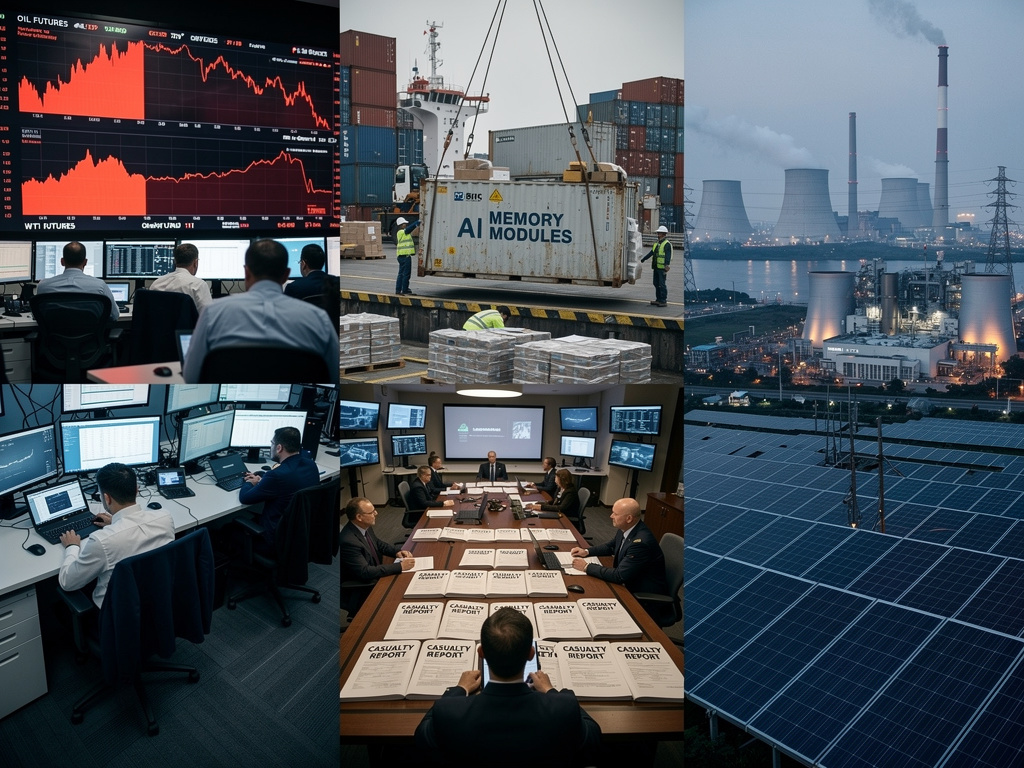
CNBC Daily Open frames the market mood as calmer at the start of the week after a pause in fighting between Iran and the United States helped push oil prices lower and stocks higher. However, the article emphasizes that geopolitical risks remain elevated: Ukraine carried out a long-range strike on an Iranian commercial vessel, and Iran said the attack killed one sailor and injured others. The piece also notes that the Trump administration is under legal pressure over new Section 301 tariffs, with business lawsuits arguing the duties may not withstand judicial scrutiny. In the U.K., new Prime Minister Andy Burnham signaled a willingness to confront Trump if necessary in defense of national interests.
On markets and investing, the article highlights Nvidia’s reported move to secure a massive memory supply deal with SK Hynix, potentially worth up to $500 billion, at a time when global memory supply is tight. CNBC suggests this agreement could become a catalyst for Nvidia’s stock after a difficult month. The article also points out that industrials in the S&P 500 have become unusually expensive, trading at a price-to-earnings ratio above 30, comparable to high-growth technology stocks.
Finally, the article turns to a consumer-price story: cocoa prices have eased significantly from record highs, but chocolate remains expensive because major chocolate makers are using premium and social-media-driven product strategies rather than passing savings on to consumers. The piece concludes that despite a 34% year-over-year decline in cocoa futures, the market is still far above its long-term historical range, so cheap candy is unlikely to return soon.
Entities: Iran, United States, Ukraine, Volodymyr Zelenskyy, Trump administration • Tone: analytical • Sentiment: neutral • Intent: inform
27-07-2026
The article reports that the Pentagon’s casualty website has changed how it lists four U.S. service members killed in Jordan and Iraq, placing them under “Overseas Operations Casualties” instead of counting them among the war with Iran’s dead. That change reduced the public tally for the conflict from 18 deaths to 14, despite the fact that the four troops died after President Trump said a ceasefire had ended and military action resumed on July 7. The article names the four killed: 1st Lt. Tyler James Feehan, Sgt. Angel S. Rampersad, Pvt. Isabella Gonzales, and Sgt. Michael Emmanuel Swinton.
The Pentagon attributed the discrepancy to “site errors” and a “temporary data disruption” in the Defense Casualty Analysis System, saying the anomalies were being corrected. Sean Parnell, the chief Pentagon spokesperson, also accused The New York Times of spreading a “completely fake story” based on anonymous sources. The article notes that the Pentagon has previously changed how it classified some of the deaths, including initially labeling two of the Jordan attack victims under Operation Inherent Resolve before revising that to “overseas operations.”
Beyond the casualty-count issue, the article emphasizes broader concerns about the Pentagon’s transparency during the conflict. It says officials have been slow to share information about injuries, have not briefed reporters on the Iran war since May, and referred questions about the wounded to an outdated website. CBS News reports that nearly 100 service members were injured since July 7, with Parnell saying 96% had returned to duty and most injuries were minor concussions. The casualty website’s wounded count also appears inconsistent, listing 417 wounded in the war with Iran on Sunday, down from 482 earlier in the week.
Entities: Pentagon, Defense Casualty Analysis System, Operation Epic Fury, Operation Inherent Resolve, Iran war • Tone: analytical • Sentiment: neutral • Intent: inform
27-07-2026
The article explains how the war in the Middle East has disrupted global liquefied natural gas (L.N.G.) supplies and forced developing Asian countries to rethink energy strategies that had assumed abundant, cheap imported gas. With ships unable to pass through the Strait of Hormuz and conflict also affecting the Red Sea, Asian buyers have been cut off from Qatar, a key supplier, and are now moving to reduce exposure to volatile global markets. The Philippines is presented as a case study: energy companies there are drilling more domestic gas from the Malampaya field, the country’s largest solar project is coming online, and policymakers and executives are reconsidering the role of coal, renewables, and even nuclear power to ensure reliable, affordable energy. The article shows that the war has accelerated a broader regional shift toward energy self-reliance, local resource development, and diversification away from dependence on imported L.N.G. It also notes that this shift could weaken future demand for new L.N.G. infrastructure, even as some analysts and companies expect demand to rebound once supply normalizes.
Entities: Iran War, Middle East, Strait of Hormuz, Red Sea, liquefied natural gas (L.N.G.) • Tone: analytical • Sentiment: neutral • Intent: inform