26-07-2026
The article reports a sharp escalation in regional tensions involving Saudi Arabia, the Iran-backed Houthi movement, the United States, and Iran. The Houthis claimed responsibility for a missile strike on the Saudi city of Jizan after Saudi Arabia conducted airstrikes on Houthi-linked targets in Yemen, including in the port city of Hodeida and nearby Kamaran island. The exchange of fire occurred against a broader backdrop of conflict in the Red Sea and surrounding waters, where attacks on shipping have raised international alarm and driven oil prices upward.
The piece also describes continued US military pressure on Iran, including the reported disabling of a tanker in the Gulf of Oman after the ship allegedly tried multiple times to evade the American blockade on Iranian ports. This was said to be the second commercial vessel disabled since the blockade was reimposed. At the same time, the article notes that no fresh overnight US or Iranian airstrikes were reported, marking a brief pause after nearly two weeks of sustained attacks and counterattacks.
Diplomatic efforts are also underway: Omani officials reportedly traveled to Tehran for talks on the Strait of Hormuz, while US and UK officials are expected to hold a conference in London on the same issue. The article frames the situation as highly volatile, with ongoing threats to shipping, military brinkmanship, and unresolved negotiations all contributing to a broader regional crisis.
Entities: Houthi movement, Saudi Arabia, Jizan, Hodeida, Kamaran island • Tone: urgent • Sentiment: negative • Intent: inform
26-07-2026
Ukrainian President Volodymyr Zelenskyy said he will provide the United States with evidence that Russia is helping Iran identify U.S. military bases in the Middle East using satellite surveillance. In a post on X, Zelenskyy said Russian satellites have been monitoring Gulf states and U.S. military facilities since early July and that the resulting imagery appears in Iran, where it is allegedly used to plan attacks, assess damage, and refine targeting. The article notes that this accusation is not new: CBS News previously reported, based on sources including a senior U.S. official, that Russia had been sharing intelligence with Iran about U.S. positions in the region, and some reports have also suggested China may be involved. Defense Secretary Pete Hegseth recently acknowledged that both Russia and China are helping Iran in some capacity, though he did not specify details and said the extent should remain classified. President Trump later contradicted that assessment, saying he did not believe Russia and China were assisting Iran and that both leaders had assured him they were not involved.
Zelenskyy’s comments come amid heightened concern over Iranian strikes on U.S. positions in the Middle East. He specifically cited Russian satellite interest in four air bases in Bahrain, Jordan, and Kuwait on July 19 and 20. The article also places these claims in the broader context of casualties from the Iran conflict, saying 18 American service members are believed to have been killed since the start of the war and that nearly 100 have been injured in recent Iranian attacks on bases in the region. Zelenskyy framed the situation as part of a wider pattern of aggression by Russia and urged stronger pressure on Moscow to stop the war and prevent further escalation.
Entities: Volodymyr Zelenskyy, Russia, Iran, United States, Middle East • Tone: analytical • Sentiment: negative • Intent: inform
26-07-2026
Iran summoned Ukraine’s chargé d’affaires in Tehran after Ukrainian forces reportedly struck an Iranian commercial vessel in the Caspian Sea, an incident Tehran called a “hostile and criminal act.” Iran said the attack killed one sailor and injured several others. Ukrainian President Volodymyr Zelenskyy later said Ukraine’s long-range strikes in the Caspian Sea targeted vessels involved in military cargo shipments connected to Iran, as well as a warship. The episode comes amid a broader regional spillover of the wars involving Ukraine, Iran, Israel, the U.S., and Iran-backed groups, with Saudi Arabia also intercepting missiles from Yemen and U.S. attacks on Iran temporarily paused for diplomacy.
The article frames the strike as part of a widening confrontation across multiple theaters. Russia continues to use Iranian-designed Shahed drones against Ukraine, while Ukraine is now hitting targets tied to Iranian logistics. At the same time, U.S. Central Command said its naval blockade of Iran remains in force, with multiple commercial vessels redirected or detained to enforce compliance. Iran’s Revolutionary Guard Navy claimed it had authority over the Strait of Hormuz and said it forced several ships to anchor after warnings. Although formal U.S.-Iran talks are stalled, technical discussions via Oman continued, and there were signs Washington was pausing escalation to preserve room for negotiations. Oil markets reacted to the diplomatic uncertainty and talk of renewed U.S.-Iran talks, with Brent and WTI crude prices falling on the day cited in the report.
Entities: Ukraine, Iran, Volodymyr Zelenskyy, Caspian Sea, Tehran • Tone: analytical • Sentiment: negative • Intent: inform
26-07-2026
CNN’s live updates describe a temporary pause in US military operations against Iran after nearly two weeks of consecutive strikes, while diplomatic activity appears to be increasing. A US source said operations are “on a hold” for now, and President Donald Trump is giving negotiations “some space” as talks continue. At the same time, Trump officials are reportedly weighing the risks of escalation, including concerns raised by Vice President JD Vance and Chairman of the Joint Chiefs Gen. Dan Caine about widening the war and depleting US munitions stockpiles. The piece also notes that the US military blockade on Iranian ports remains in effect, with vessels being boarded and redirected to enforce compliance.
The article places the Iran conflict in a broader regional context. Iran and Oman have held talks in Tehran concerning the Strait of Hormuz, a critical global shipping lane, while the US continues to block Iranian ports. CNN also reports on a separate development: Iran condemned a Ukrainian drone attack on an Iranian vessel in the Caspian Sea, which Tehran says killed one crew member and injured three. Ukraine claimed the targets were ships carrying military cargo from Iran to Russia. The updates underline how the war’s effects are spreading across multiple waterways and involving other regional actors, including Saudi Arabia and Houthi rebels in the Red Sea. Overall, the article portrays a volatile but momentarily paused conflict marked by military pressure, diplomatic maneuvering, and mounting geopolitical risk.
Entities: Donald Trump, JD Vance, Dan Caine, Mike Waltz, Bill Cassidy • Tone: analytical • Sentiment: neutral • Intent: inform
26-07-2026
President Trump has paused plans to significantly intensify U.S. military operations against Iran, at least temporarily, after advisers warned that a broader campaign could dangerously deplete America’s limited stockpile of Patriot missile interceptors and other air-defense munitions in the Middle East. According to officials briefed on internal deliberations, the administration is weighing a range of strategic risks: the possibility of a wider regional war, retaliation against vulnerable Gulf allies and U.S. bases, global economic disruption, and worsening energy and refugee crises. The decision followed a Friday meeting with top advisers and cabinet members, during which military leaders reportedly emphasized that while major combat operations were feasible, they would impose serious costs on U.S. defensive readiness.
The article describes Trump as still publicly open to escalation, while also signaling that diplomacy remains possible. He told reporters the U.S. was “locked and loaded” and ready for heavier strikes if needed, but the White House said he prefers a negotiated solution if Iran halts hostile actions in the Strait of Hormuz or against allies. Officials said some advisers, including Jared Kushner, favor continuing negotiations and economic pressure over a larger bombing campaign. Meanwhile, the Pentagon has already moved additional forces and supplies into the region and has considered strikes on Iranian air-defense systems, shipping-related military targets, energy infrastructure, and nuclear sites. The article also notes that U.S. air-defense inventories have been badly strained by the war, with more than 1,200 Patriot interceptors reportedly used earlier in the conflict, and that new sanctions were imposed on entities connected to Iranian financier Babak Zanjani. Overall, the piece portrays a tense internal debate over whether military escalation would meaningfully pressure Iran or instead deepen the conflict without achieving strategic goals.
Entities: Donald Trump, Iran, Pentagon, Patriot missile interceptors, U.S. Central Command • Tone: analytical • Sentiment: negative • Intent: analyze
26-07-2026
The article reports that the war between the United States and Iran remained on pause for a second consecutive day, with neither side launching new attacks. According to U.S. officials, President Trump has delayed further escalation of the American campaign, in part because U.S. missile-interceptor stockpiles are running low. The pause comes after roughly two weeks of fighting that pushed the conflict close to full-scale war. A cease-fire signed the previous month effectively collapsed when Iran continued blocking the Strait of Hormuz, a critical route for global oil and gas shipments, and U.S. bombing campaigns have so far failed to force Tehran to reopen it.
The article says there were signs of diplomatic movement: Iran’s foreign ministry said Omani officials visited Tehran over the weekend to discuss the strait, and Iranian spokesman Esmaeil Baghaei described the talks as useful and said progress had been made, though he gave no details. Oman has often played a mediating role between Tehran and Washington.
Even as the main U.S.-Iran front quieted, conflict continued elsewhere in the region, especially in Yemen. The Iran-backed Houthis escalated attacks against U.S.-allied Saudi Arabia, declaring a maritime blockade in the Red Sea and targeting ships they said were linked to the kingdom. Saudi-led forces responded with airstrikes on Houthi positions, while the Houthis claimed to have fired rockets and drones at Saudi Aramco installations. The fighting has increased pressure on global energy markets, with Brent crude briefly rising above $100 a barrel before easing slightly.
Entities: United States, Iran, President Trump, Strait of Hormuz, Oman • Tone: analytical • Sentiment: negative • Intent: inform
26-07-2026
CNN reports that Vice President JD Vance and Chairman of the Joint Chiefs of Staff Gen. Dan Caine raised concerns in a White House meeting about the risk of escalating the war with Iran, including the impact on U.S. munitions stockpiles and the possibility of heavy civilian casualties. The article says the Trump administration appeared to pause consecutive nights of bombing on Iran after nearly two weeks of strikes, though it was unclear whether the pause was driven by stockpile concerns, escalation risks, or ongoing diplomatic talks. Caine reportedly told Trump that the military could execute the available options successfully, but warned about the implications of a broader campaign. The discussion also included warnings that attacking civilian infrastructure in Iran could constitute war crimes and could leave many Iranians without power or food. White House officials said Trump still prefers a diplomatic solution while keeping all options open if Iran continues hostile actions. The piece places this debate in the context of depleted U.S. weapons inventories, some of which were reduced by aid to Ukraine and operations against the Houthis, and notes that Democrats accused the administration of recklessly entering a war. Overall, the story portrays a divided and cautious internal debate inside the Trump administration about whether to escalate military action or continue negotiations.
Entities: Donald Trump, JD Vance, Gen. Dan Caine, Pete Hegseth, Steven Cheung • Tone: analytical • Sentiment: negative • Intent: inform
26-07-2026
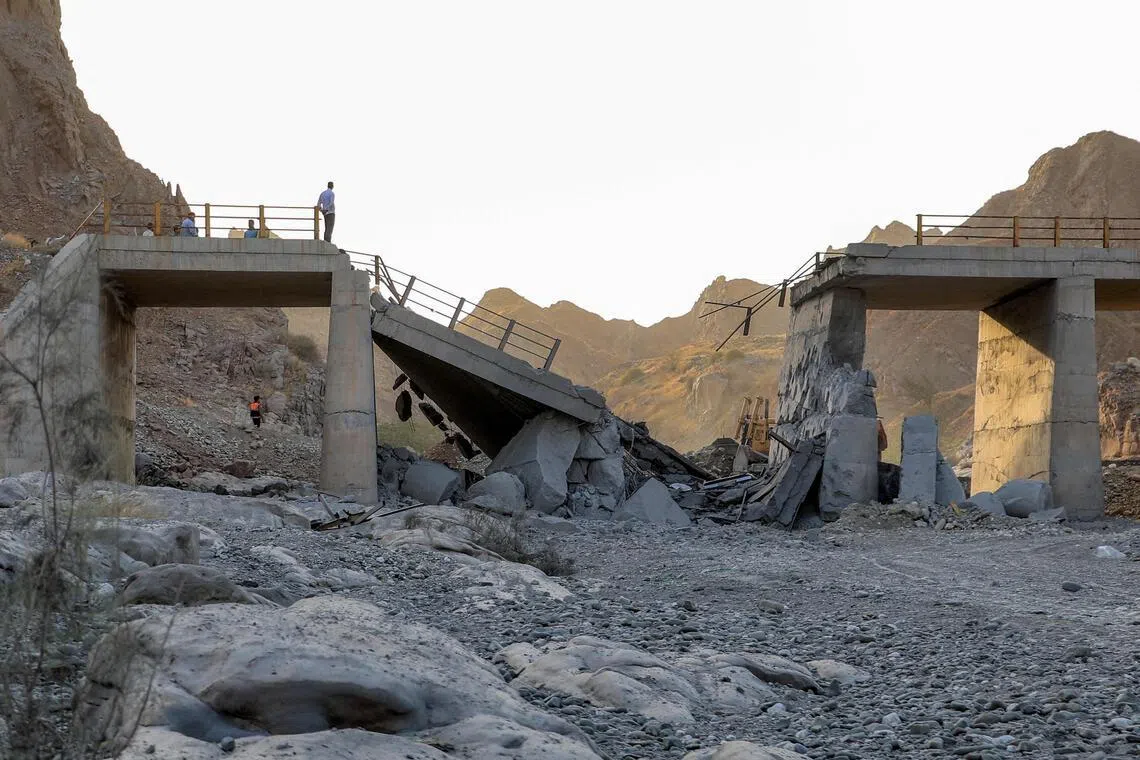
The article examines how US strikes on infrastructure in southern Iran, especially near the Strait of Hormuz, are affecting civilian life and exposing regional vulnerabilities. While Iranian state television projects confidence and vows retaliation, the reality on the ground in cities such as Bandar Abbas, Bushehr, Ahvaz, and on islands like Qeshm is one of fear, disruption, and worsening shortages. The attacks have reportedly hit bridges, roads, water desalination facilities, power plants, telecom towers, and military sites, with the stated strategic goal of degrading Iran’s ability to control the Strait of Hormuz, a critical global shipping chokepoint.
The piece highlights how the south is uniquely vulnerable because of its neglected infrastructure, ethnic diversity, dependence on transport and port commerce, and proximity to the Gulf. Residents describe long fuel queues, cut-off utilities, and shrinking economic activity. Analysts quoted in the story argue that Iranian retaliation against US interests elsewhere in the region does little to offset the damage being done inside Iran, particularly to civilian infrastructure. The article also notes that the south has suffered heavily in the conflict, including an alleged US strike on a school in Minab that killed many children and adults, deepening resentment toward the war. Overall, the article portrays a widening gap between regime rhetoric and the lived reality of civilians in Iran’s south, suggesting that sustained strikes there could weaken Tehran’s grip and raise the risk of future unrest.
Entities: Iran, Strait of Hormuz, United States, Revolutionary Guard, Borzou Daragahi • Tone: analytical • Sentiment: negative • Intent: inform