26-07-2026
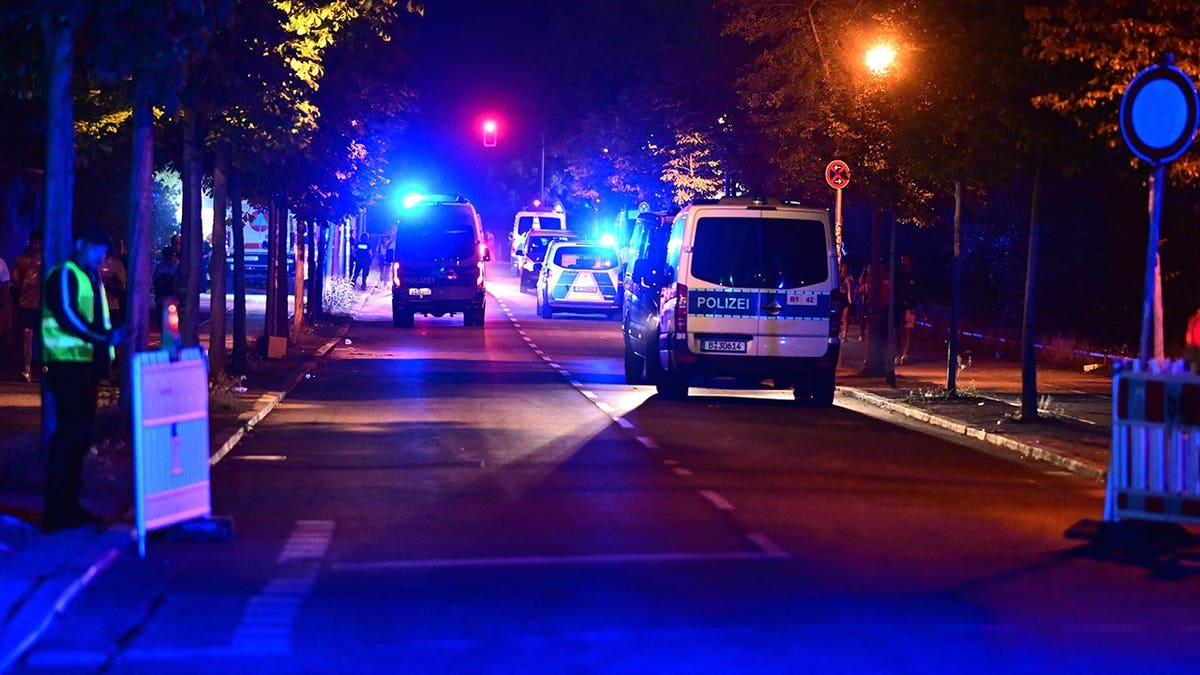
The article reports on a deadly vehicle-ramming attack at Berlin Pride on Saturday night, in which one woman was killed and at least 29 others were injured. German authorities said the incident was likely an Islamist terror attack and launched a major manhunt across Berlin. The attack took place around 22:00 local time in Tiergarten park near the Brandenburg Gate, where hundreds of thousands of people had gathered for the annual Christopher Street Day celebration. Some victims were also reportedly stabbed, possibly with a machete-like blade, and the event was quickly cancelled as organisers evacuated attendees.
Police later found the vehicle believed to have been used in the attack after it crashed into a tree. By early Sunday, investigators said they had identified a suspect with Islamist links, naming him as 21-year-old Abdul Ballout, a German citizen of Lebanese background. Officials said he was already known to police, had a criminal record, and had been radicalised. Media reports cited possible links to Islamic State and said he had previously tried unsuccessfully to join the group. Authorities warned that additional suspects may have fled the scene and told the public not to approach the suspect, who may be armed and dangerous.
The article also situates the attack in Tiergarten and reports strong condemnations from European leaders, including Ursula von der Leyen, Rob Jetten, Georgia Meloni, and UK Defence Secretary Wes Streeting, all of whom expressed sympathy and solidarity with the victims and Germany. Overall, the piece is a factual live-style account of what is known so far, the ongoing police response, and the wider political reaction.
Entities: Berlin Pride, Christopher Street Day, Tiergarten park, Brandenburg Gate, Victory Column • Tone: urgent • Sentiment: negative • Intent: inform
26-07-2026
German authorities believe the deadly car-ramming attack on a Berlin LGBTQ+ Pride parade was carried out by a suspect motivated by Islamist extremist ideology, according to statements from Interior Minister Alexander Dobrindt and police. The attack at one of Europe’s largest Pride events killed one person and injured at least 29 others, with some victims suffering life-threatening injuries. Police identified the suspect as 21-year-old Abdul Ballout, described as being part of Berlin’s “Islamist scene” and already known to authorities. A search for him continued after police checked an apartment in Schöneberg and found no one there, while warning that he may be armed and dangerous.
Investigators are also trying to determine whether the suspect acted alone. Authorities said one or more people may have exited the vehicle after it stopped, and the presence of stab wounds among some victims raised the possibility of additional attackers, though this has not been confirmed. Dobrindt said the suspect is believed to have used a machete. The article places the attack in a broader context of recent vehicle-ramming incidents in Germany, including deadly attacks in Magdeburg, Munich, and Mannheim, which have intensified national debate over public safety, immigration, extremism, and political pressure on Chancellor Friedrich Merz and mainstream parties. Merz condemned the Berlin attack as an assault on freedom and vowed justice.
Entities: Berlin, LGBTQ+ Pride parade, Christopher Street Day, Abdul Ballout, Alexander Dobrindt • Tone: urgent • Sentiment: negative • Intent: inform
26-07-2026
Berlin police said they have identified a suspect in Saturday’s deadly attack on the city’s LGBTQ+ parade and that the man has ties to Islamic circles in Berlin. The attack occurred when a car drove into a crowd near the Tiergarten park along the route of Berlin’s Pride march, killing one person and injuring at least 16 others, some critically. Police spokesman Florian Nath said investigators were taking action against the suspect and that the manhunt was continuing at full speed, though the suspect was not publicly named. Authorities said the suspect was already known to police and was from Berlin.
The incident forced the cancellation of Christopher Street Day, one of Europe’s largest LGBTQ+ celebrations, and led officials to urgently clear the area near the Brandenburg Gate. Emergency crews, including firefighters and ambulances, responded to the scene as police warned attendees to leave immediately and avoid the park route. Berlin Mayor Kai Wegner condemned the assault as an attack on a tolerant and peaceful city, expressing confidence in law enforcement and security authorities. Witnesses described the sudden disruption after hours of peaceful celebration, dancing, and parade floats, with many attendees shocked by violence at an event meant to celebrate diversity and inclusion.
Entities: Berlin, Tiergarten park, Christopher Street Day, LGBTQ+ parade, Brandenburg Gate • Tone: urgent • Sentiment: negative • Intent: inform
26-07-2026
German authorities canceled Berlin’s annual Christopher Street Day festival after a car rammed into the crowd, injuring several people, according to police. The incident occurred during the city’s major LGBTQ+ pride event in the Großer Tiergarten area near the Brandenburg Gate. Police said they deployed numerous officers and rescue units from the Berlin Fire Department to the scene and urged festivalgoers to leave the area as emergency responders treated the injured. Authorities also launched an intensive manhunt for suspects, but they did not immediately release information about a possible motive or the severity of the injuries.
The festival, which draws hundreds of thousands of attendees, included a parade and was scheduled to conclude with a show at Tiergarten park. The article frames the incident as breaking news and emphasizes the rapid police response, the cancellation of the celebration, and the uncertainty surrounding what happened. It also situates the event within a broader context of public safety concerns at large urban gatherings. No official link has yet been established between the crash and any targeted attack, and authorities have not stated whether the event was intentional or accidental. The piece relies on police statements and eyewitness-style scene descriptions to convey urgency while withholding key details pending investigation.
Entities: Berlin, Germany, Christopher Street Day, LGBTQ+ pride event, Großer Tiergarten • Tone: urgent • Sentiment: negative • Intent: inform
26-07-2026
A car attack in Berlin’s Tiergarten park disrupted one of Europe’s largest Pride celebrations, killing one woman and injuring 29 others, many critically. The violence occurred late Saturday during Christopher Street Day, a major annual L.G.B.T.Q. Pride festival that had drawn hundreds of thousands of people to central Berlin. According to police, a white minivan drove through a side street leading out of the park and was later found abandoned after crashing into a tree. Officials also said the attacker appeared to have wielded a machete, and some victims suffered stab wounds.
German authorities identified a 21-year-old suspect, Abdul B., and said they were conducting a manhunt. Police said he was already known to law enforcement and active in local Islamist groups. Government officials called the crime most likely an Islamist terrorist attack. The assault ended the festivities abruptly, and officials canceled the remainder of the program. Chancellor Friedrich Merz condemned the attack as one against society, while Berlin Mayor Kai Wegner said the city’s freedom had been “horribly attacked.”
Beyond the immediate violence, the incident quickly became part of a larger national debate in Germany about migration, religious extremism, and public safety. The timing is politically sensitive, coming months before regional elections in Berlin and two eastern states, where far-right parties are expected to benefit from public concern over violence.
Entities: Berlin, Tiergarten, Christopher Street Day, L.G.B.T.Q. Pride festival, Pride celebration • Tone: analytical • Sentiment: negative • Intent: inform
26-07-2026
German officials said an attack near Berlin’s Christopher Street Day Pride celebration was most likely an Islamist terror attack, prompting a citywide and nationwide manhunt for the suspect while also intensifying debates over security, migration, and extremism. The assault occurred late Saturday evening on the edge of the annual parade, when a white minivan struck pedestrians near a park and the driver then fled. Authorities said 30 people were affected in total, with 29 injured and one woman killed, and that some victims were critically hurt, though others were treated and released from Charité hospital. Chancellor Friedrich Merz, Berlin Mayor Kai Wegner, and Interior Minister Alexander Dobrindt publicly framed the attack as an assault on Germany’s liberal democracy and openness. Police released a photo and partial name of the suspected attacker, Abdul B., 21, and said he was a German citizen born in Germany with family roots in Lebanon, known to police, and associated with the Islamist spectrum. Officials said there may have been more than one attacker and that searches were ongoing at airports, train stations, and border crossings. The attack ended festivities that had drawn hundreds of thousands of revelers and raised fears in Berlin’s LGBTQ community, with organizers canceling Sunday’s events and emergency workers supporting traumatized witnesses. The incident quickly became part of Germany’s broader political conversation about public safety and far-right gains ahead of regional elections.
Entities: Friedrich Merz, Kai Wegner, Alexander Dobrindt, Abdul B., Berlin • Tone: urgent • Sentiment: negative • Intent: inform
26-07-2026
Germany’s government said the deadly crowd-ramming near a Pride event in Berlin should be treated as a terrorist attack and identified the suspect as an Islamist sympathiser with a history of criminal offenses and radicalisation. The incident happened late Saturday near the Brandenburg Gate in Tiergarten, close to Christopher Street Day, one of Europe’s largest annual LGBTQ Pride celebrations. A white minivan struck pedestrians, killing one person and injuring 29 others, including eight seriously and three in life-threatening condition. Interior Minister Alexander Dobrindt said the evidence pointed to an Islamist terrorist attack and described the suspect as having Lebanese background, being born in Germany in 2005, and previously involved in the Islamist scene. Berlin police named the suspect as Abdul B and circulated his photo, warning the public not to approach him because he may be armed and dangerous.
Authorities said the investigation was still developing and that it was unclear whether the suspect acted alone; police noted that more than one person may have exited the van. Security sources told Reuters the suspect had recently been released from juvenile detention and had sought contact with Islamic State, while also being known to domestic intelligence and classified as potentially dangerous. The attack prompted organisers to cancel the rest of Christopher Street Day events. The article places the incident in Germany’s broader context of vehicle attacks in recent years and highlights its political significance, coming amid pressure on Chancellor Friedrich Merz’s unpopular coalition government and ahead of state elections. The far-right AfD quickly used the attack to argue against religious extremism and immigration, underscoring the event’s political fallout.
Entities: Berlin, Germany, Tiergarten, Brandenburg Gate, Christopher Street Day • Tone: urgent • Sentiment: negative • Intent: inform
26-07-2026
Berlin is reeling after a deadly attack on Saturday night during Christopher Street Day, the city’s major Pride celebration, when a white minivan drove into crowds in Tiergarten park, killing one woman and injuring at least 29 people. Authorities say the suspect, a 21-year-old German national identified as Abdul B., remains at large and may be armed and dangerous. Interior Minister Alexander Dobrindt said investigators believe the attack points to Islamist terrorism and that the suspect had undergone radicalization and had ties to Islamist circles. Police also said the attacker may have used a blade after the vehicle attack, raising questions about whether more than one method or even more than one attacker was involved.
The attack abruptly ended a peaceful, colorful event that had drawn hundreds of thousands of revelers and major security resources. More than 2,200 officers had been deployed, and organizers canceled the rest of the day’s Pride events after the assault. Berlin officials, including Chancellor Friedrich Merz and Mayor Kai Wegner, condemned the violence as an attack on an open, free society. By Sunday, people gathered at the Brandenburg Gate for a vigil.
The incident is also politically explosive in Germany, reviving debates over migration, Islam, and extremism ahead of regional elections in which the far-right Alternative for Germany is leading. The story situates the attack within a broader European pattern of vehicle-ramming attacks inspired by Islamic State propaganda and references earlier attacks in Germany and elsewhere, including Berlin’s 2016 Christmas market attack and the 2016 Nice attack in France.
Entities: Berlin, Tiergarten park, Christopher Street Day, Pride celebration, Abdul B. • Tone: urgent • Sentiment: negative • Intent: inform