26-06-2026
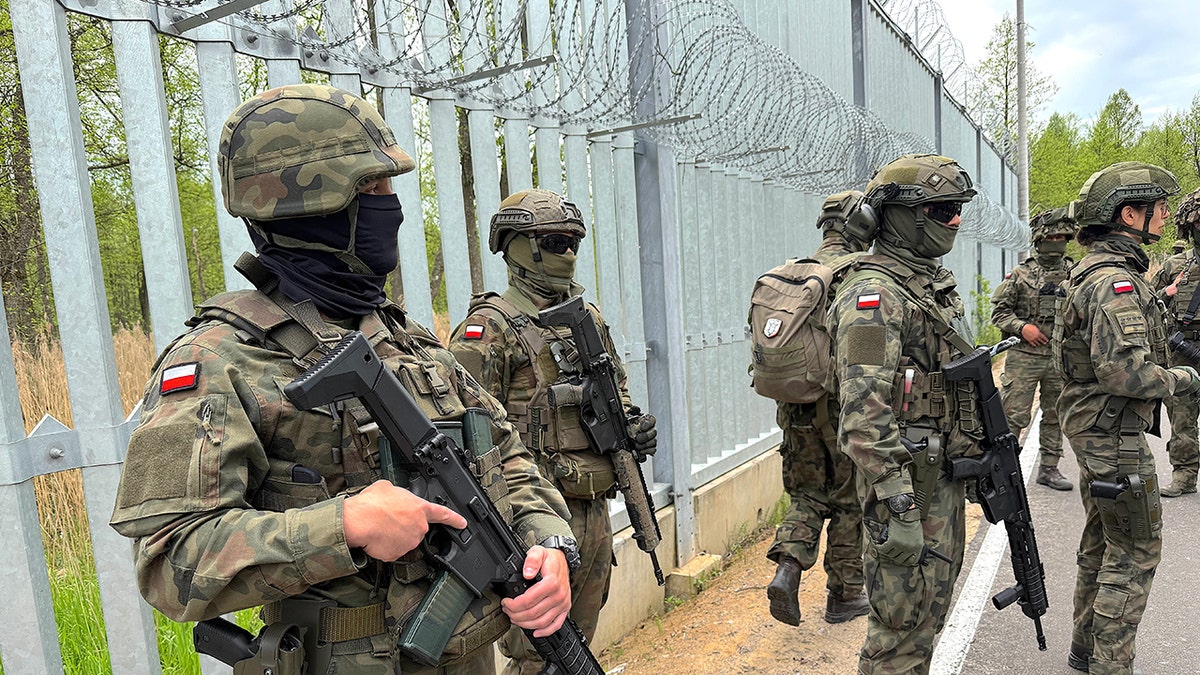
Poland’s Deputy Prime Minister Radek Sikorski told CBS News that he would not rule out Russia staging a “false flag operation” within the next two years to create a pretext for attacking a NATO member state. Sikorski said Western leaders should signal clearly to Vladimir Putin that NATO would recognize and reject such a provocation and would defend every inch of allied territory. He argued that Ukraine’s battlefield resilience has reduced Russia’s ability to threaten NATO’s eastern flank, pointing to Ukraine’s gains in the Black Sea, Russia’s lack of air superiority, and stalled ground fighting. The article also notes that Ukraine has retaken territory this year and that Russian authorities were forced to cut gas sales to civilians in occupied Crimea after attacks on energy infrastructure.
The story highlights Poland’s central role in Ukraine’s defense, including the fact that most foreign military aid to Kyiv passes through the Poland-Ukraine border. It also discusses recent tensions between Poland and Ukraine over a Ukrainian military unit named after a World War II-era militia associated in Poland with the Volhynia massacre. Sikorski urged both countries not to let historical disputes distract from their shared opposition to Moscow. On diplomacy, he said future negotiations should be direct between President Volodymyr Zelenskyy and Vladimir Putin, without third-party mediation, and framed Europe as openly aligned with Ukraine as the victim of aggression. He added that the United States remains supportive, though less than before, and that if Putin truly wants peace, he knows how to reach Zelenskyy.
Entities: Radek Sikorski, Poland, Russia, NATO, Vladimir Putin • Tone: analytical • Sentiment: neutral • Intent: inform
26-06-2026
Ukraine is intensifying strikes on Russian-controlled Crimea in an effort to increase pressure on Moscow and disrupt military logistics, while also making daily life more difficult for residents and tourists on the peninsula. The article says repeated Ukrainian drone and missile attacks have caused power outages in Sevastopol, fuel restrictions across Crimea, empty shelves in some stores, and the suspension of children’s summer camps. These disruptions are described as part of a broader Ukrainian strategy to target transport links, supply routes, and infrastructure connected to Russian forces, with the aim of isolating military assets and forcing the Kremlin toward peace talks.
The piece details how Crimea, annexed by Russia in 2014, has become increasingly strained under the weight of Ukrainian attacks. Residents describe more frequent air raid alerts, damaged routines, and shortages that affect transport and businesses. Some tourists remain in a “cautious” mood, but the peninsula’s role as a holiday destination is clearly under pressure. The article also includes the Kremlin-backed regional leadership’s public responses, including power restrictions and a ban on gas sales to ordinary residents and businesses.
At the strategic level, the article frames Ukraine’s campaign as part of a broader push to bring the war closer to ordinary Russians and degrade Russia’s war machine. While Ukrainian leaders present the strikes as carefully calculated pressure tactics, one analyst quoted in the article argues that the attacks are unlikely to prompt a political shift in Moscow, and may instead harden anti-Ukrainian sentiment in Russia.
Entities: Crimea, Sevastopol, Simferopol, Kerch, Yalta • Tone: analytical • Sentiment: negative • Intent: inform
26-06-2026
Latvian intelligence is warning that Russia may be preparing hybrid provocations against the Baltic states or Poland, including drone, missile, cyber, or other nonconventional attacks intended to pressure NATO into reducing support for Ukraine. The article says the immediate concern is not a conventional Russian war with NATO, but rather miscalculation: Latvian officials believe Vladimir Putin may be isolated and receiving distorted information from his inner circle, increasing the risk of reckless decisions. The warning echoes recent Polish concerns that Russia is already conducting a hybrid campaign on NATO’s eastern flank through assassinations, drone activity, cyberattacks, and sabotage of critical infrastructure.
The piece also emphasizes that Western sanctions are reportedly having a measurable effect on Russia’s economy, even if Moscow publicly downplays them. Latvian intelligence says sanctions are limiting Russia’s financial resources and forcing difficult choices about military spending, recruitment, and business pressure, describing the war economy as fragile. In addition, Latvia’s Constitution Protection Bureau says Russia is intensifying “lawfare” against the West, using legal systems and international institutions to undermine support for Ukraine and possibly justify future aggression. The report says Russian experts are studying how Iran challenged Western sanctions through legal channels, suggesting Moscow may try to adapt similar strategies against Western governments.
Entities: Latvian intelligence, Russia, Baltic states, Poland, NATO • Tone: urgent • Sentiment: negative • Intent: inform