26-06-2026
Oil prices have fallen back to roughly pre-conflict levels as traffic through the Strait of Hormuz slowly resumes after the Iran war disrupted global energy markets. Brent crude briefly dipped below $72.48 a barrel, matching its level before the US and Israel launched strikes on Iran, before recovering slightly. The decline has been driven by the gradual reopening of shipping routes and a June memorandum of understanding between the US and Iran that established a 60-day period for talks over Tehran’s nuclear programme and broader steps to end the conflict. Maritime data show vessel traffic through the strait has increased substantially since the deal, though it remains below normal pre-war volumes, and many ships are still waiting in the Gulf.
Despite the price drop, analysts caution that the situation remains fragile. Regional tensions could quickly push prices higher again if negotiations falter or conflict flares up. The article also connects falling wholesale oil prices to fuel prices for consumers, with UK motorists expected to see petrol and diesel prices ease in the coming weeks. In the US, gasoline prices have already fallen from their spring peak, though they remain above pre-war levels. The article closes by noting political scrutiny of energy firms, including accusations from President Donald Trump that major oil companies have not reduced pump prices quickly enough, while industry and regulators argue that fuel prices do not track crude oil exactly and that there is no clear evidence of widespread profiteering in the UK.
Entities: Brent crude, Strait of Hormuz, Iran war, US, Israel • Tone: analytical • Sentiment: neutral • Intent: inform
26-06-2026
The article reports that the UN’s International Maritime Organization (IMO) has paused a planned evacuation of more than 11,000 sailors stranded in and around the Strait of Hormuz after a cargo ship was attacked near Oman. The IMO said it needed fresh safety assurances before continuing the operation, which had only recently begun after the waterway reopened. The attacked vessel, the Singapore-flagged Ever Lovely, was reported by UK maritime authorities to have been hit by an unknown projectile, though no casualties were reported and the ship continued through the strait. US officials, according to media reports, blamed Iran for the attack. The pause underscores how fragile the situation remains in a strategic shipping lane that has been affected by the wider US-Israel war against Iran and by disputes over navigation rights and fees.
The piece also explains the broader diplomatic and economic context. Iran has said vessels outside designated routes are not guaranteed safe passage and has suggested it may charge maritime service fees, which the US opposes as illegal tolls on an international waterway. The article notes that the strait’s closure earlier in the conflict caused oil prices to spike and disrupted shipments of key goods such as fertiliser, while prices have eased somewhat since a US-Iran memorandum of understanding on June 17 set a 60-day negotiation period over Iran’s nuclear programme and other war-ending measures. Overall, the story highlights the continuing risk to maritime traffic, the sensitivity of the evacuation effort, and the geopolitical stakes tied to the Strait of Hormuz.
Entities: International Maritime Organization (IMO), Arsenio Dominguez, Strait of Hormuz, UKMTO, Oman • Tone: analytical • Sentiment: neutral • Intent: inform
26-06-2026
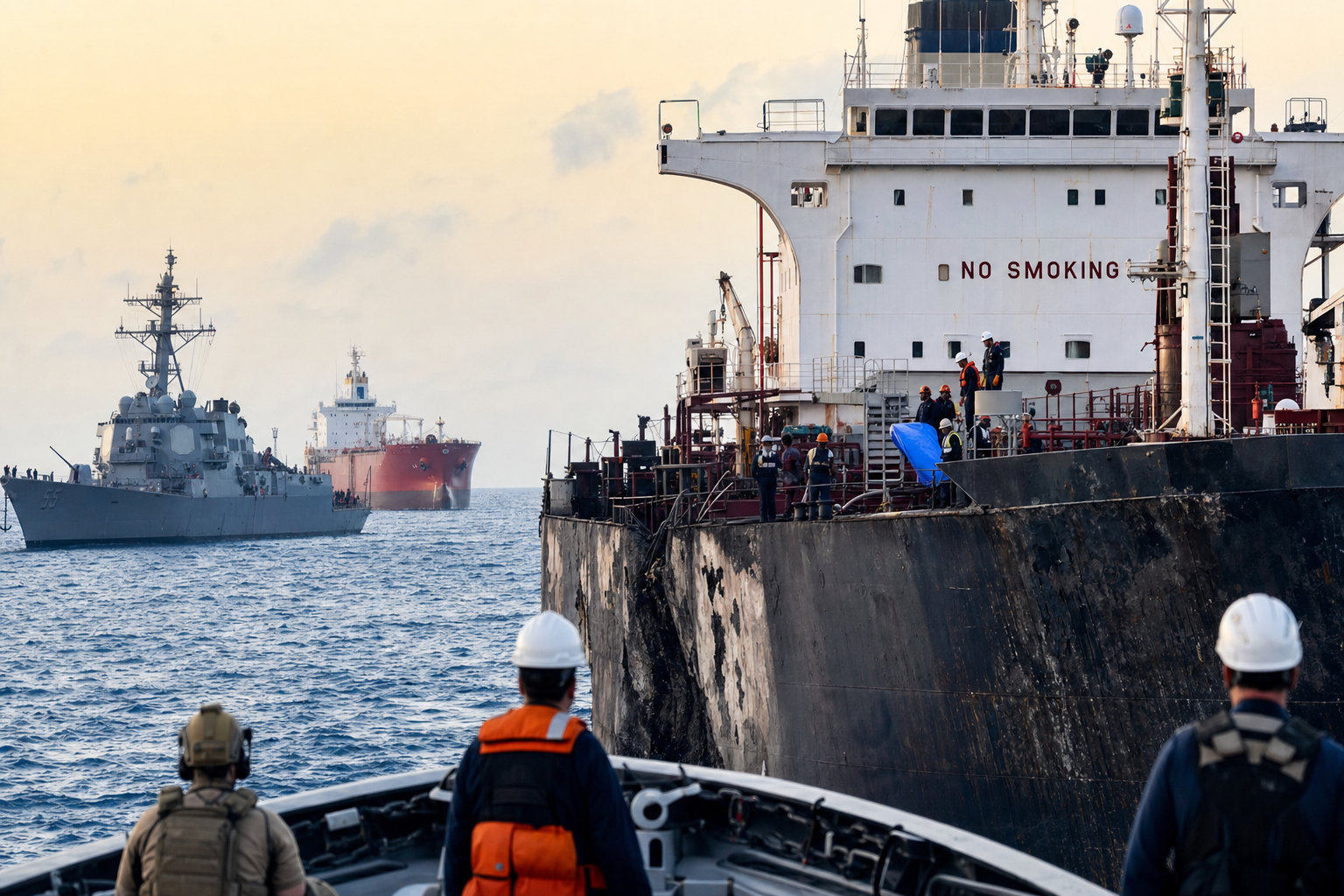
Iranian forces reportedly attacked a Singapore-flagged commercial vessel in the Strait of Hormuz with a drone, according to a U.S. official and a U.K. maritime advisory, in a development that threatens renewed efforts to stabilize shipping through one of the world’s most important oil chokepoints. The vessel’s bridge was damaged, but no casualties or environmental damage were reported. The strike prompted the International Maritime Organization to pause a newly launched evacuation plan for vessels and mariners stranded in the Persian Gulf until safety guarantees can be reaffirmed.
The article places the attack in the context of a recent U.S.-Iran memorandum of understanding that had raised hopes of reopening shipping lanes through the strait after months of disruption. Since the agreement, ship traffic had increased sharply and oil prices had fallen, while the IMO prepared a large-scale evacuation effort using routes through either Iranian or Omani waters. However, longstanding disputes remain over who controls transit permissions, whether ships need Iran’s approval, and whether Iran may charge tolls after the 60-day understanding expires.
U.S. and regional officials, including Secretary of State Marco Rubio, said the administration will judge Iran by its actions, not rhetoric, and warned that threats or interference with shipping would violate the agreement. Iran, meanwhile, said only ships using routes outside its designated framework would lose safe passage guarantees and insurance coverage. The piece underscores the fragility of the shipping deal and the continuing risk of confrontation in the Strait of Hormuz.
Entities: Iran, Iran's Revolutionary Guards, Strait of Hormuz, Singapore, United States • Tone: analytical • Sentiment: negative • Intent: inform
26-06-2026
The International Maritime Organization (IMO) has temporarily paused its plan to help evacuate ships and seafarers stranded in the Middle East Gulf after a container ship was attacked near Oman in the Gulf of Oman. The attack, which struck a Singapore-flagged vessel owned by Evergreen, heightened concerns about safety in and around the Strait of Hormuz, a critical global shipping and energy corridor. A U.S. official said the United States believes Iran was behind the attack, while Iran’s military separately warned vessels not to use the southern route approved by the IMO and said any alternate route not approved by Tehran would be dangerous and unacceptable.
The IMO’s evacuation framework, launched earlier in the week, was designed to help hundreds of stranded ships and thousands of seafarers leave the Gulf using either a northern route through Iranian waters or a southern route through Omani waters with U.S. oversight. The pause was described as temporary and intended to reconfirm that safety guarantees remain in place for ships on the evacuation list and for others in the region. The incident comes as traffic through the Strait of Hormuz has partially recovered after the U.S. and Iran agreed to a 60-day interim peace deal, but volumes remain below pre-war levels. According to Lloyd’s List Intelligence, 125 vessels crossed the strait in the week after the ceasefire, the highest weekly total since fighting began in late February. However, Iran’s warnings and the attack underscore the fragility of the shipping situation and Tehran’s efforts to maintain control over the waterway.
Entities: International Maritime Organization (IMO), Strait of Hormuz, Gulf of Oman, Middle East Gulf, Iran • Tone: urgent • Sentiment: negative • Intent: inform
26-06-2026
Oil prices fell on Friday even as new tensions flared in the Middle East, because traders were increasingly focused on the broader supply outlook rather than the immediate geopolitical risk. Brent crude dropped 2.03% to $73.73 a barrel and U.S. West Texas Intermediate fell 2.11% to $70.40 per barrel. The decline came after a U.S. official told MS NOW that Iran was behind an attack on a cargo ship near Oman in the Strait of Hormuz, a critical chokepoint for global energy shipments. The incident raised fresh concerns about maritime security, but markets appeared to be weighing whether recent diplomatic efforts might limit disruptions to oil flows.
The article also describes continued friction between Iran and the U.S. over the use of funds listed under a memorandum of understanding. Iranian officials rejected the Trump administration’s claim that unfrozen assets would be used to buy U.S. agricultural products, while U.S. officials said any released funds would still require American approval. A market analyst quoted by CNBC argued that the agreement remains unresolved and that Iran could still threaten the Strait of Hormuz if it wished. Beyond the Iran-related risks, the story notes a separate supply-side concern for OPEC: Iraq is reportedly seeking a higher production quota and may consider leaving the cartel if its demands are not met, following the United Arab Emirates’ earlier exit. Overall, the piece frames oil prices as being pulled lower by expectations around supply and cartel dynamics even amid renewed geopolitical tension.
Entities: Oil prices, Brent crude, West Texas Intermediate (WTI), Iran, United States • Tone: analytical • Sentiment: negative • Intent: inform
26-06-2026
A United Nations maritime agency has paused an effort to evacuate stranded ships through the Strait of Hormuz after a vessel was reportedly struck off Oman, sharply escalating tensions around one of the world’s most important shipping chokepoints. The pause came after the British military reported a projectile strike and a U.S. official said the merchant vessel Ever Lovely was hit by an Iranian drone, though the attack vessel was not part of the evacuation operation. The International Maritime Organization said it would wait until it could verify safety guarantees for ships on the evacuation list and for traffic in the region.
The article places the incident within a broader crisis involving Iran, the United States, Gulf states, and ongoing interim peace talks. Iran has threatened ships using the strait without Tehran’s permission and warned that only its designated route is authorized. Meanwhile, the U.S. says it will ensure ships can transit without tolls or obstruction, with Secretary of State Marco Rubio meeting Gulf Cooperation Council foreign ministers to reassure regional allies. Traffic through Hormuz has increased somewhat since the conflict began, but remains below prewar levels, and some ships are still moving through a route backed by Oman and the IMO.
The report also notes continuing instability beyond the strait, including renewed Israeli strikes in Lebanon against Hezbollah-linked targets, which risks undermining the wider truce. Overall, the article portrays a fragile regional situation in which maritime security, energy flows, and diplomatic negotiations remain tightly linked and highly vulnerable to renewed violence.
Entities: Strait of Hormuz, International Maritime Organization, United Nations, British military, Oman • Tone: urgent • Sentiment: negative • Intent: inform