25-08-2026
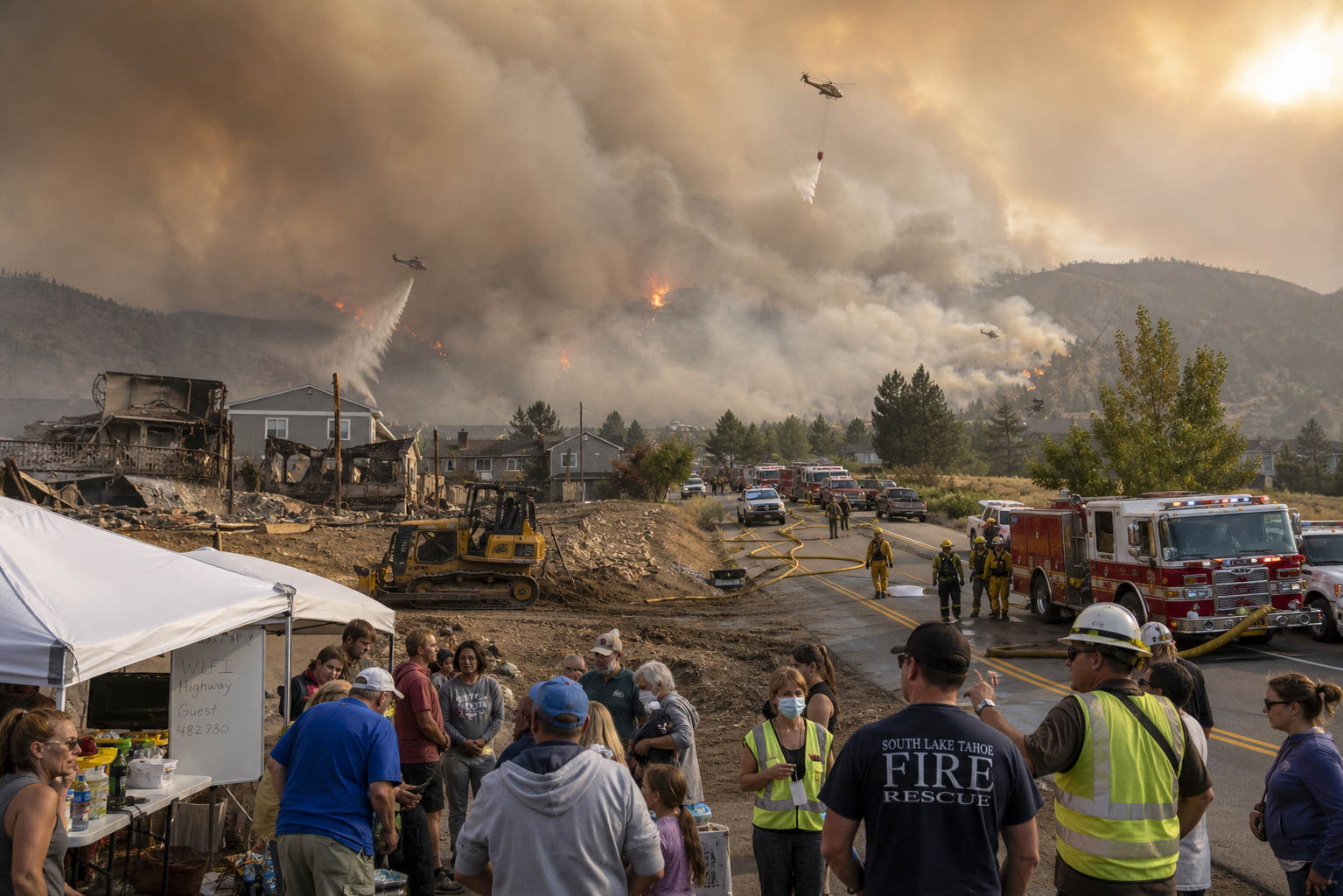
Firefighters battling the Hawk Fire near Reno, Nevada, say they have made progress, with the blaze reported to be 27% contained by Monday afternoon. The wildfire began Saturday morning near Hawk Meadow Trail in the foothills of the Sierra Nevada and had spread across more than 15,000 acres by Monday. Strong, shifting winds and dry conditions have helped the fire spread rapidly, and unfavorable weather expected over the following two days could make containment more difficult.
Evacuation orders remain in effect for about 23,000 people, while others have been allowed to return home. Tens of thousands more residents have been warned to prepare to leave. The affected evacuation zones do not include central Reno, but they cover large urban areas and part of a major highway. Firefighters are using large air tankers and helicopters to drop water and fire retardant.
No deaths have been reported, but seven people—four civilians and three firefighters—have suffered minor burns. At least 32 homes have been destroyed and six damaged, with officials expecting those figures to rise. Shelters are accommodating residents displaced by the fire, while more than two-thirds of the fire’s perimeter remains uncontrolled.
Officials believe the fire was caused by human activity, although investigators have not determined whether it was deliberately started. Nevada Governor Joe Lombardo declared a state of emergency in Washoe County and mobilized the National Guard. Crews from 15 US states, as well as Australia and New Zealand, are assisting the response.
The University of Nevada, Reno, is monitoring conditions near its campus. Residents described the fire’s advance as “apocalyptic,” while one homeowner said a water truck helped save his property after neighboring homes were destroyed. Scientists say climate change is making the warm, dry conditions that support increasingly severe wildfires more likely.
Entities: Hawk Fire, Reno, Nevada, Sierra Nevada mountains, Washoe County, Truckee Meadows Fire Protection District • Tone: urgent • Sentiment: negative • Intent: inform
25-08-2026
A fast-moving wildfire near Reno, Nevada, forced approximately 24,000 people to remain under evacuation orders on Monday, August 24, while tens of thousands more were placed on alert and told to prepare to leave. The Hawk Fire, which began Saturday, had expanded to more than 15,000 acres, or about 6,000 hectares, by Monday. Driven by strong winds and dry vegetation, the blaze had reached within roughly five miles of Reno, a city of about 280,000 people near the California border. Smoke covered the city and prompted officials to close schools.
Firefighters had contained 27 percent of the fire’s perimeter, but authorities warned that wind-driven flames could move rapidly into residential areas. More than 900 firefighters were deployed, supported by fire engines, helicopters and bulldozers. Fire crews from Australia and New Zealand joined responders from across the United States.
The fire had caused no reported deaths, but seven people were injured, including three first responders. At least 32 properties were completely destroyed, and several others were damaged. Officials expected the damage total to rise as crews gained access to the fire’s interior.
Truckee Meadows Fire Chief Richard Edwards said investigators had determined that the fire was human-caused, although they did not yet know whether it had been intentional or accidental. He said the cause would likely be classified as undetermined. Edwards and Reno Mayor Hillary Schieve urged residents under evacuation orders to leave immediately and encouraged others to be ready to evacuate at short notice. The report highlights the continuing danger posed by the wind-driven wildfire and the large-scale emergency response underway.
Entities: Hawk Fire, Reno, Nevada, Truckee Meadows Fire, Richard Edwards, Hillary Schieve • Tone: urgent • Sentiment: negative • Intent: inform
25-08-2026
The Hawk Fire in Nevada’s Reno area had burned more than 15,000 acres by Monday, leaving about 23,000 people under mandatory evacuation orders and another 40,000 prepared to leave. At least 32 homes were destroyed and six damaged, while four civilians and three emergency personnel suffered minor burns. No deaths had been reported. Firefighters had contained 27% of the blaze, which covered roughly 23 square miles and had stopped expanding, although heat, low humidity and the possibility of shifting winds continued to threaten nearby residential areas.
More than 900 firefighters from 15 US states, as well as Australia and New Zealand, were working to control the fire. Nevada Governor Joe Lombardo declared a state of emergency in Washoe County and deployed National Guard helicopters and personnel. Officials said the fire was human-caused, but investigators had not determined whether it was accidental or deliberate. Schools in Washoe County were closed, and authorities warned residents not to return because embers and light winds could reignite the fire.
The article also examines the wider financial and political consequences of wildfires. California Governor Gavin Newsom is proposing changes to the state’s system for assigning liability when utility equipment causes fires. His plan could reduce utilities’ financial exposure while requiring insurers to cover more property losses, with the stated goals of speeding aid to survivors and stabilizing electricity prices. Fire survivors and insurers oppose parts of the proposal, while firefighters support it. California lawmakers face an August 31 deadline to act.
The report concludes by connecting the current crisis to broader western wildfire trends, including warnings that up to 40% of western conifer forests could become shrubland by 2100.
Entities: Hawk Fire, Reno, Nevada, Washoe County, Sierra Nevada, Humboldt-Toiyabe National Forest • Tone: urgent • Sentiment: negative • Intent: inform