25-08-2026
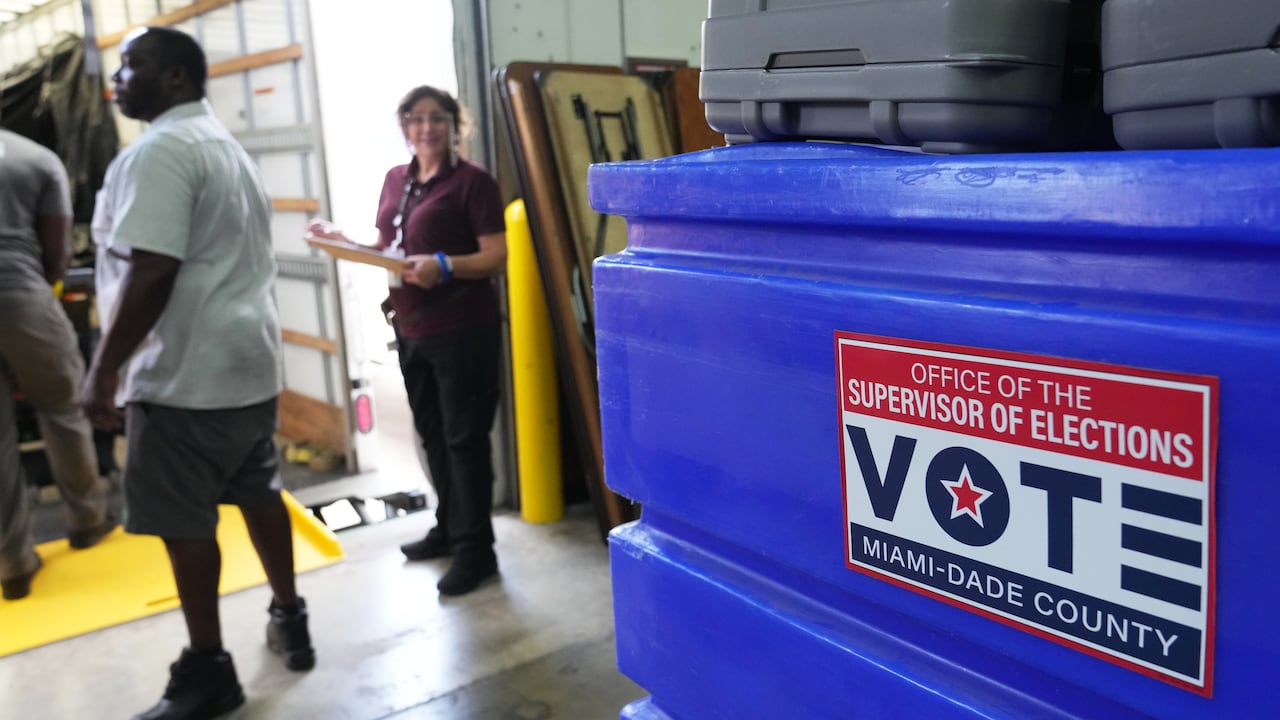
The US Supreme Court has allowed the Trump administration to proceed, at least temporarily, with implementing President Donald Trump’s executive order restricting mail-in voting ahead of the November midterm elections. The 6-3 decision, issued by the court’s conservative majority, overturned or limited a Massachusetts-based injunction, while leaving open the possibility of further legal challenges that could delay the policy.
Trump’s March executive order directs the administration to create lists of eligible voters and instructs the US Postal Service to deliver mail ballots only to voters on those lists. Democratic officials from 23 states and the District of Columbia challenged the order, arguing that the Constitution gives states and Congress authority over election administration. They warned that changing mail-voting procedures so close to the elections could cause administrative chaos and enable partisan abuse. Election officials also urged the court to preserve the injunction while preparations were already under way.
A Massachusetts judge initially blocked the policy for the midterms, and later issued a nationwide injunction. The Trump administration appealed on procedural grounds, arguing that the states had filed their lawsuit prematurely. A separate ruling from Washington state allowed the order to proceed, and an appeals court upheld that decision while permitting future challenges.
The ruling comes as states prepare to begin sending mail ballots within weeks, making the timeline for major changes uncertain. Trump has repeatedly attacked mail voting, alleging widespread fraud despite evidence that such fraud is extremely rare and despite having used mail ballots himself. The administration is also urging Congress to pass the SAVE America Act and require proof of citizenship for voting.
The Supreme Court recently ruled in a separate case that states may count ballots arriving after Election Day. Mail voting accounted for about 30 percent of ballots in the 2024 presidential election, while a 2025 Brookings Institution study found approximately four fraud cases per 10 million mail ballots, underscoring the security of the process.
Entities: US Supreme Court, Donald Trump, US Postal Service, US Department of Justice, November 2026 midterm elections • Tone: analytical • Sentiment: negative • Intent: inform
25-08-2026
The U.S. Supreme Court has rejected a legal challenge to President Donald Trump’s executive order restricting mail-in voting, but the ruling did not decide whether the order is constitutional. In an unsigned order, the court’s majority said the states that brought the case did not have legal standing to challenge the policy. Justice Ketanji Brown Jackson dissented, warning that the decision could create “chaos and uncertainty” before the November 3 midterm elections.
Trump’s March executive order directs the administration to create lists of eligible mail voters and requires the U.S. Postal Service to deliver ballots only to people on those lists. A separate injunction still prevents the Postal Service from implementing changes required by the order. The administration has asked for that injunction to be lifted and issued regulations that could take effect if the legal barriers are removed. The proposed rules would require specific envelope formats and an electronic system for identifying mail voters; jurisdictions that failed to comply could have their ballots rejected by the Postal Service.
Election officials say the requirements are impractical because voting is administered by thousands of decentralized local offices, many without full-time staff. They warn that states have already printed ballots and envelopes and may not be able to revise their procedures before the election. The article also places the dispute within Trump’s broader efforts to reshape election administration, including attempts to obtain voter-roll data and his criticism of mail voting. It notes that mail voting is now more common among Democrats and that there is no evidence supporting Trump’s claims of widespread or systematic voter fraud.
Entities: Donald Trump, U.S. Supreme Court, Justice Ketanji Brown Jackson, U.S. Postal Service, Federal Election Assistance Commission • Tone: analytical • Sentiment: negative • Intent: inform
25-08-2026
NPR’s August 25, 2026, Up First briefing covers the Trump administration’s expanding economic pressure campaign against Iran, a temporary Supreme Court victory for President Trump in a dispute over mail-in voting, and newly revealed surveillance tactics by Department of Homeland Security agents. Treasury Secretary Scott Bessent announced sanctions targeting Iran and its alleged financial facilitators, describing the effort as an “economic D-Day” and warning countries that assist Iran that they could face penalties. The United Arab Emirates said it would cut commercial ties with Iran, while China condemned the measures and Iran’s economy minister said his country had prepared for the consequences. The administration appears to view economic isolation as a way to pressure Iran over its nuclear program and potentially encourage regime change.
The Supreme Court paused a lower-court ruling that had blocked parts of Trump’s executive order requiring the Postal Service to deliver mail-in ballots only to voters on lists of U.S. citizens. The justices did not decide whether the order is constitutional, but the decision could complicate preparations for the upcoming midterm elections in 23 states and Washington, D.C. Critics warn the policy could create confusion and disrupt voting.
The briefing also reports that DHS agents secretly recorded meetings at churches, libraries, restaurants and schools in the Twin Cities during a period of heightened immigration enforcement. Agents allegedly infiltrated private group chats and collected information about community members, prompting ethical concerns in an ongoing case involving ICE protesters.
Additional segments examine research on the potential benefits and limitations of high-intensity interval training, Washington, D.C.’s inaugural Freedom 250 Grand Prix, an investigation involving people emerging from a New York manhole, drug risks on college campuses, and a study finding chronic traumatic encephalopathy in at least 25% of deceased former NFL players examined.
Entities: Donald Trump, Scott Bessent, U.S. Department of the Treasury, Iran, United Arab Emirates • Tone: analytical • Sentiment: neutral • Intent: inform
25-08-2026
The Guardian’s “First Thing” newsletter leads with a US Supreme Court decision favoring Donald Trump’s effort to restrict mail-in voting ahead of the November midterm elections. By a 6–3 ideological vote, the court lifted an injunction against Trump’s executive order, although another injunction remains and further legal challenges are possible. The order would create a citizenship list for eligible voters and prioritize investigations of election officials who issue ballots to people deemed ineligible. Critics, including Justice Ketanji Brown Jackson and NAACP president Derrick Johnson, warned that the ruling could create confusion and make voting more difficult.
The newsletter also reports a sharp deterioration in US-Canada trade relations after Trump announced a 50% tariff on Canadian automobiles and key raw materials. Canadian Prime Minister Mark Carney said Canada would retaliate dollar for dollar while defending French-language protections. Separately, the US military acknowledged striking a vessel in the eastern Pacific, killing two alleged drug traffickers, although it provided no evidence of the vessel’s involvement. The administration also threatened severe sanctions against countries and entities maintaining economic ties with Iran, prompting Iranian threats of retaliation and raising questions about a potential confrontation with China.
Other items include a far-right immigration crackdown in Colombia, a deadly earthquake’s aftermath, an alfalfa-sprout food-poisoning outbreak, a withdrawn Halloween costume, and the discovery of a missing mental-health advocate’s body. The Washington Post was ordered to rehire columnist Karen Attiah. The newsletter says the administration may revoke visas for as many as 200,000 asylum seekers. Cultural coverage focuses on a Muppets-themed Star Trek project and continuing public fascination with Meg White. Environmental stories highlight fears that bird flu could devastate Australia’s remaining sea lions and Nevada’s lawsuit against a federal Colorado River water-cut plan affecting millions of people and farmland.
Entities: Donald Trump, US Supreme Court, Mail-in voting and the 2026 midterm elections, Ketanji Brown Jackson, National Association for the Advancement of Colored People (NAACP) • Tone: urgent • Sentiment: negative • Intent: inform
25-08-2026
The supplied material is primarily an AP News website navigation scrape and does not include the full body of the article. Based on the headline, article URL, and the repeated Politics-section headline, the story examines a Supreme Court order concerning U.S. elections and mail voting. The order does not immediately change how elections are conducted, meaning there is no instant alteration to voting rules, ballot processing, or election results. However, the article warns that the ruling could create significant uncertainty in future elections and potentially invite confusion or “chaos.”
The central concern appears to be the order’s possible effect on the legal framework governing elections, particularly the timing and handling of mail-in ballots. Even if the order has no immediate operational effect, its reasoning could encourage new lawsuits, affect how states interpret election laws, or lead to differing procedures across jurisdictions. Such uncertainty could be especially consequential during closely contested races, when small procedural differences can produce disputes over whether ballots should be counted.
The article’s framing is cautious rather than declarative. It distinguishes between what the Supreme Court’s order does now and what it might enable later. The emphasis on potential chaos suggests concern among election administrators, legal experts, or other observers that future litigation could disrupt established practices and make election administration more difficult.
Because the article body is absent from the supplied content, specific details—such as the case name, vote of the justices, states involved, legal arguments, and reactions from officials—cannot be reliably extracted. The available text supports the conclusion that the story is an analysis of the order’s immediate limits and its potentially broad long-term consequences for election administration and mail voting.
Entities: U.S. Supreme Court, AP News, U.S. elections, Mail voting, Election administration • Tone: analytical • Sentiment: neutral • Intent: analyze