24-08-2026
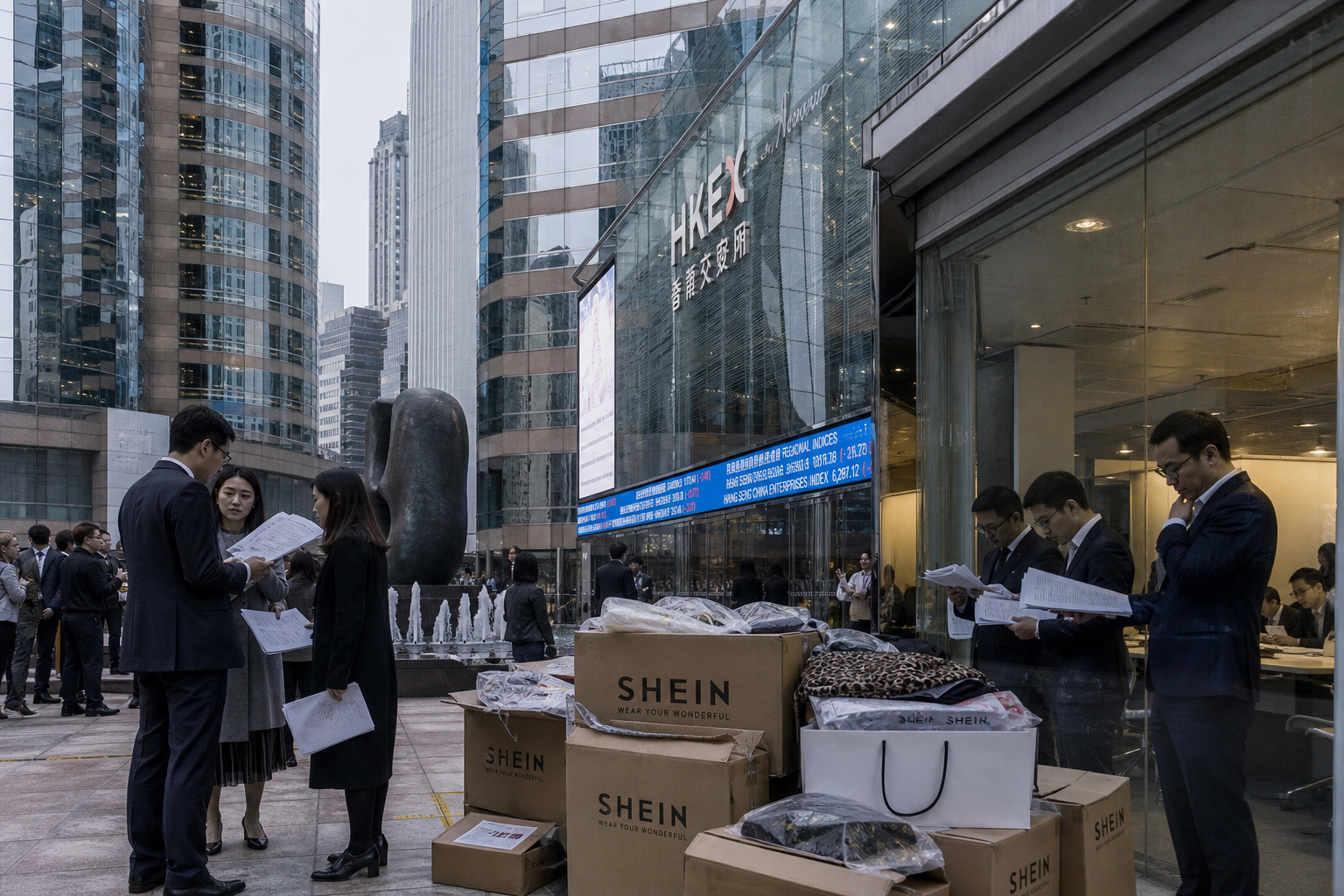
Shein plans to raise up to HK$13.86bn (£1.3bn; $1.77bn) through an initial public offering on the Hong Kong stock market, with trading scheduled to begin on 1 September. The fast-fashion retailer will offer nearly 280 million shares at between HK$47.60 and HK$49.50. At the top of that range, Shein would be valued at almost $27bn (£19.8bn), significantly below the $100bn valuation achieved during private fundraising in 2022. The lower valuation reflects slower sales growth, rising costs and increased regulatory scrutiny.
The Hong Kong listing follows unsuccessful efforts to list Shein in the United States and London. The company, founded in China and now headquartered in Singapore, has faced questions about its supply chains and alleged forced labour. Goldman Sachs, Morgan Stanley and JP Morgan are backing the offering.
Shein reported a $99m loss in the first quarter, compared with net income of $395m in the same period a year earlier. The company attributed the deterioration partly to slower US sales after Donald Trump removed an import-duty exemption for small packages. It is considering price increases to offset higher duties and taxes. Shein also said the Iran war affected demand, raised costs and delayed deliveries in some markets. A $328m paper loss resulting from an accounting change involving special investor shares also contributed to the reported figures.
Founded in 2008, Shein has grown into one of the world’s largest fast-fashion retailers, serving customers in more than 150 countries. By the end of March 2026, it reported 281 million active customers and more than one billion orders. However, its ultra-low-cost, rapidly produced clothing has generated concerns about environmental damage and labour conditions. Shein says it has zero tolerance for forced labour, but its London listing attempt collapsed after scrutiny of its supply-chain practices.
Entities: Shein, Hong Kong stock market, Hong Kong initial public offering, Singapore, China • Tone: analytical • Sentiment: neutral • Intent: inform
24-08-2026
Shein is preparing for a long-awaited initial public offering in Hong Kong that could raise up to HK$13.86 billion, or approximately $1.77 billion. The company plans to sell about 280 million Class B shares at between HK$47.60 and HK$49.50 each, giving it a valuation of nearly $27 billion at the top of the range. Shein is expected to announce the final price on Aug. 31, with trading scheduled to begin on Sep. 1.
The proposed valuation represents a steep decline from Shein’s previous private-market valuations. The company was valued at $98.2 billion in 2022 and $64 billion in 2023 and April 2024. Its value has fallen as growth has slowed and profitability has come under pressure. Revenue growth decreased to 8% in 2025 from 20.7% the previous year. The loss of a U.S. import-duty exemption, tariffs, and a one-time accounting charge contributed to a $99 million loss in early 2026. Shein said tariffs forced it to absorb additional costs and raise prices for customers.
Shein secured approval for the Hong Kong listing from China’s securities regulator in early July after unsuccessful efforts to list in London and New York. However, investor enthusiasm has weakened. Analysts cited in the article said the company may have missed the best opportunity to go public, while Hong Kong’s IPO market is currently attracting greater interest in artificial-intelligence and chip companies.
The company also faces broader strategic and reputational challenges. Ethical concerns about working conditions among its suppliers have damaged its image, the retailer has reportedly lost momentum among shoppers under 35, and it is struggling to compete with rival Temu. Together, these issues have contributed to a less favorable market reception for Shein’s IPO.
Entities: Shein, Hong Kong initial public offering, Hong Kong, China Securities Regulatory Commission, Guangzhou, China • Tone: analytical • Sentiment: negative • Intent: inform
24-08-2026
Shein will debut on the Hong Kong stock exchange on 1 September at a valuation of nearly $27bn (£19.8bn), marking a substantial reduction from the almost $100bn valuation it reached in a 2022 private funding round. The company plans to offer nearly 280 million shares at between HK$47.60 and HK$49.50 each, potentially raising about £1.3bn at the top of the range. The final price will be determined immediately before trading begins.
The listing is one of the most closely watched IPOs in recent years. Shein initially sought a New York listing, but regulators blocked the plan amid concerns about forced labour. A possible £50bn London listing also faced scrutiny from campaigners, MPs and investors over the retailer’s supply chain. Shein moved its headquarters to Singapore between 2021 and 2022, although most of its operations remain in China. The company has also declined to assure British MPs that its products are free from cotton linked to forced Uyghur labour in Xinjiang.
The lower valuation comes as Shein confronts slower growth and rising costs. It reported a $99m loss in the first quarter, compared with net income of $395m during the same period a year earlier. The company blamed part of the decline on the US ending an import-duty exemption for small packages, which affected sales in one of its most important markets. It also cited delivery delays and weaker consumer demand linked to the Iran war.
Despite these challenges, Shein remains a major e-commerce platform, reporting 156 million average monthly European users by the end of last year. Its direct-shipping model has helped it reduce tax exposure in markets such as the UK and US, but has prompted calls for regulatory changes. Its first permanent physical outlet, opened in Paris, attracted customers as well as protests. Analysts now question whether Shein’s low-price model can continue to generate the growth expected by investors.
Entities: Shein, Hong Kong stock exchange IPO, Chris Xu, China, Singapore • Tone: analytical • Sentiment: negative • Intent: inform