24-08-2026
The Democratic Republic of Congo (DRC) and the Rwanda-backed AFC/M23 rebel movement have agreed on a roadmap to resume and structure peace negotiations under the Doha framework. The agreement follows meetings held in Switzerland from August 17 to 21, after months of stalled diplomacy, renewed fighting and repeated accusations of ceasefire violations in eastern Congo.
According to a joint statement issued by the Swiss government, the roadmap establishes the successive stages and timetable for negotiations aimed at achieving a comprehensive peace agreement. The parties also agreed to use a standardised system for reporting alleged ceasefire violations, a measure intended to rebuild trust and improve accountability.
A first ceasefire verification mission under the MCVE+ mechanism is scheduled to take place in Minembwe, South Kivu province. The participants also agreed to create a mechanism for assessing progress and identifying obstacles to implementation of commitments made under the Doha framework. Efforts will include strengthening the MCVE+ system, establishing its secretariat and preparing for field verification missions.
The United States welcomed the developments. Massad Boulos, a senior adviser to President Donald Trump and the State Department’s Africa adviser, said he was encouraged by the Swiss meetings and reaffirmed Washington’s support for peace and stability in eastern Congo and the wider Great Lakes region. He also credited Qatar, Togo, Switzerland, the African Union Commission and other partners for supporting the diplomatic process.
Analysts have responded cautiously. Political analyst Christian Moleka said the monitoring measures represented progress but warned that negotiations remained at an early stage. He noted that the ceasefire commitments constitute only part of the first Doha protocol, while six additional protocols remain unsigned. Although the roadmap provides a clearer structure for talks, continued military pressure, unresolved interests and the possibility of renewed fighting could still undermine the process. Its success will depend on implementing the ceasefire, verifying violations and advancing the remaining protocols toward a lasting settlement.
Entities: Democratic Republic of Congo (DRC), AFC/M23, Rwanda, Doha framework, Swiss government • Tone: analytical • Sentiment: neutral • Intent: inform
24-08-2026
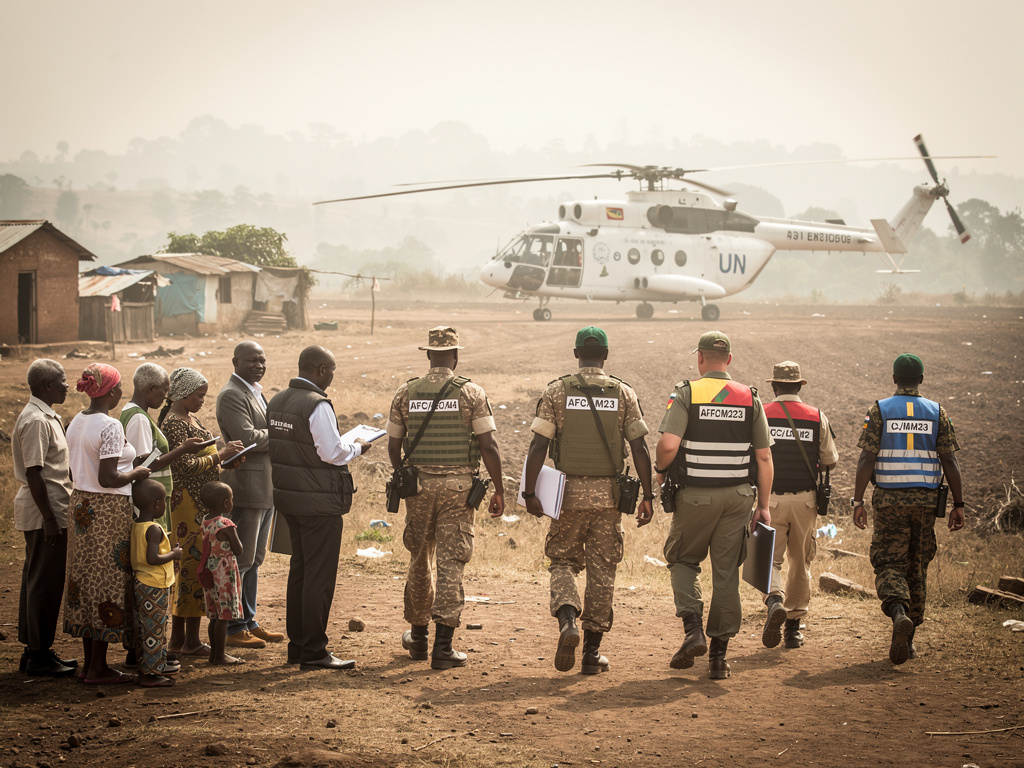
A ceasefire-verification mission involving representatives of the Democratic Republic of the Congo, the Rwanda-backed M23 rebel movement, and observers from the International Conference on the Great Lakes Region began work in eastern DRC on Monday. The team traveled by United Nations helicopter to Minembwe in South Kivu, an area that has experienced intense fighting, and is expected to visit Uvira and Kalehe, where clashes have also occurred. The mission follows Switzerland’s announcement that Kinshasa and M23 had agreed on a peace roadmap after negotiations held from August 17 to 21, with participation from the United States, Qatar, Switzerland, the African Union Commission and Togo.
Entities: Democratic Republic of the Congo (DRC), M23 rebel movement, Rwanda, South Kivu, Minembwe • Tone: analytical • Sentiment: negative • Intent: inform
24-08-2026
A ceasefire verification mission involving representatives of the Democratic Republic of Congo’s government, the Rwanda-backed AFC/M23 rebel group, and observers from member states of the International Conference on the Great Lakes Region (ICGLR) was deployed to South Kivu on August 24. The mission’s arrival followed an agreement reached by the DRC and AFC/M23 in Switzerland on a roadmap for renewed peace negotiations.
The mission, transported by UN helicopters, began work in Minembwe, an area that has experienced intense fighting in recent months. It is also expected to visit Uvira, where AFC/M23 forces withdrew in January, and Kalehe territory, where clashes have recently been reported. The deployment is the first mechanism of its kind intended to verify alleged ceasefire violations on the ground.
The ceasefire arrangement builds on previous diplomatic initiatives. The DRC government and AFC/M23 agreed to a ceasefire commitment in Doha in July 2025, while the DRC and Rwanda signed a US-brokered peace agreement in Washington in December. Despite these agreements, fighting has continued across eastern DRC, a mineral-rich region affected by decades of conflict involving numerous armed groups.
The parties recently agreed to standardise the reporting of alleged violations and to create a mechanism for reviewing progress under the Doha Framework Agreement. However, both sides continue to accuse one another of abuses. The Congolese government alleged that M23 forces committed serious crimes and killed more than 300 people in June and July. AFC/M23, meanwhile, accused government forces of launching a deadly artillery attack near Minembwe.
Independent verification remains difficult because the contested region is often inaccessible to international organisations. UN experts and nongovernmental organisations have also reported restrictions on journalists, activists and other dissenting voices in areas controlled by AFC/M23, underscoring the fragile and uncertain nature of the ceasefire.
Entities: Democratic Republic of Congo (DRC), South Kivu, AFC/M23, Rwanda, International Conference on the Great Lakes Region (ICGLR) • Tone: analytical • Sentiment: negative • Intent: inform
24-08-2026
Representatives of the Democratic Republic of Congo (DRC) government and the Rwanda-backed M23 rebel group have agreed on a peace roadmap following negotiations in Geneva. The agreement builds on a US-brokered framework signed in Doha and establishes steps, timelines and a ceasefire-monitoring mechanism that is expected to receive support from the UN peacekeeping mission MONUSCO. The United States, Qatar, the African Union and Switzerland have endorsed the process.
However, the roadmap is not a comprehensive peace agreement with binding terms. Major disputes remain over possible sanctions against M23, the release of detainees, the timing of political reforms and the role of various armed groups. Analysts Alex Vines and Clifton Chifuwe warn that implementation will be much harder than signing the document, particularly given the deep mistrust between Kinshasa and Kigali, the presence of multiple militias and competition over eastern Congo’s mineral resources.
Rwanda’s relationship with M23 is central to the prospects for peace. Kigali denies supporting the rebels and instead says its security concerns are linked to the Democratic Forces for the Liberation of Rwanda (FDLR), which fights alongside Congolese forces against M23. President Paul Kagame has warned that Rwanda could act to protect itself if the FDLR threat is not resolved.
There are grounds for cautious optimism because the roadmap includes sequenced implementation and monitoring intended to detect warning signs before violence resumes. Nevertheless, mediators will need to maintain pressure on all parties while ensuring that African and regional concerns are included.
The ultimate measure of success will be whether displaced Congolese civilians become safer and can return home. Restoring state authority, managing mineral resources and rebuilding livelihoods are essential. For people such as Linda Kasongo, who has been stranded in Zambia for five years, peace is not an abstract diplomatic goal but the possibility of returning to family and home after years of war.
Entities: Democratic Republic of Congo (DRC), Eastern DRC, M23 rebel group, Rwanda, North Kivu and South Kivu • Tone: analytical • Sentiment: negative • Intent: analyze