24-07-2026
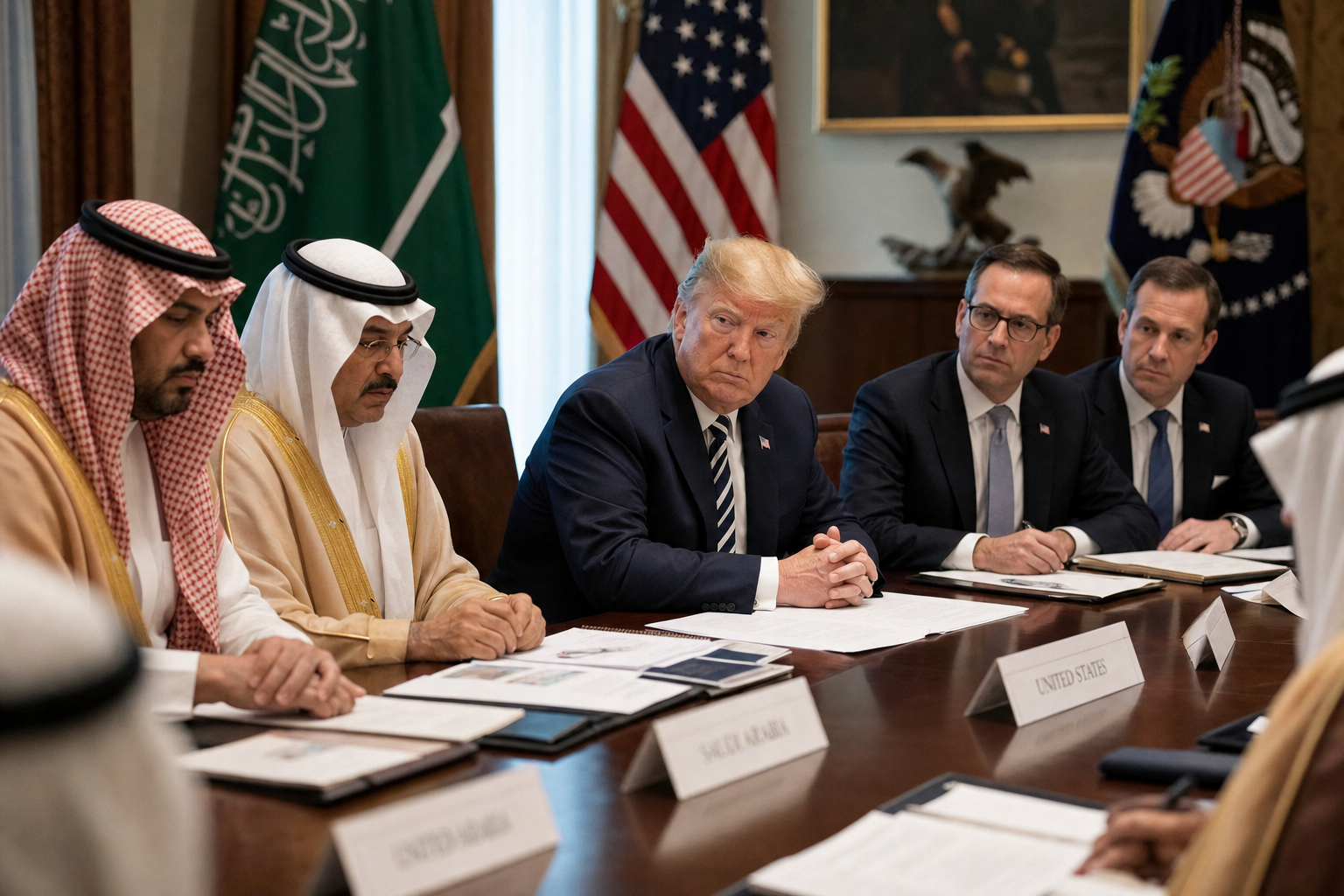
President Donald Trump has said that a U.S.-Saudi civil nuclear deal will depend on Saudi Arabia formally recognizing Israel by joining the Abraham Accords, tying a major energy and security agreement to Middle East normalization. In a post on Truth Social, Trump said the deal would be approved only if it remained limited to non-military use and if Riyadh joined the accords. The White House later said Trump had raised this condition repeatedly with Saudi leaders and that negotiations would continue. The article notes that the condition’s exact legal status remains unclear because the nuclear deal text has not been released.
The report places Trump’s announcement in the context of rising concern among experts and lawmakers that a Saudi nuclear program could increase proliferation risks in an already unstable region, especially if uranium enrichment were permitted in the future. U.S. officials say the arrangement includes a peaceful nuclear cooperation agreement and bilateral safeguards, with the Department of Energy describing it as a long-term partnership that supports nonproliferation and will go to Congress for review. The International Atomic Energy Agency also said it expects to work with the U.S. and Saudi Arabia on verification measures.
Israel welcomed the prospect of Saudi Arabia joining the Abraham Accords, though some Israeli officials and former defense minister Avigdor Lieberman warned that civilian nuclear programs can create pathways to military ones. Saudi Arabia has previously said it would not normalize ties with Israel without a Palestinian state. The article also recalls that Trump’s first-term Abraham Accords normalized relations between Israel and several Arab states, while highlighting the broader regional tension surrounding Iran’s nuclear ambitions and the possibility that Saudi Arabia could respond if Iran ever acquired a nuclear weapon.
Entities: Donald Trump, Saudi Arabia, Israel, Abraham Accords, Karoline Leavitt • Tone: analytical • Sentiment: neutral • Intent: inform
24-07-2026
The article reports that the United States and Saudi Arabia have signed a commercial nuclear cooperation deal that could open the door to a civilian nuclear program in Saudi Arabia with help from American companies. However, President Trump quickly added a major condition: Saudi Arabia must join the Abraham Accords and normalize relations with Israel for the deal to move forward, and he also said the agreement would not permit uranium enrichment. The text of the deal has not yet been released, but it will undergo congressional review, as required by U.S. law for nuclear cooperation agreements.
The article explains that the deal is being framed by the Trump administration as peaceful and focused on nonmilitary uses such as energy generation and possibly power for emerging needs like AI data centers. Energy Secretary Chris Wright and Saudi Energy Minister Prince Abdulaziz bin Salman signed the agreement, and U.S. officials emphasized safety, nonproliferation, and economic benefits. Westinghouse Electric Company also welcomed the announcement, saying it could strengthen energy security and create business opportunities.
The piece places the agreement in a broader geopolitical context. It notes that earlier U.S.-Saudi nuclear discussions under both the Trump and Biden administrations had been linked to normalization with Israel, but that track was disrupted after the Oct. 7, 2023 Hamas attack and the Gaza war. The article also highlights that the deal could strain relations with Iran, Saudi Arabia’s regional rival, while reinforcing U.S. ties with the kingdom. It compares the planned program with the United Arab Emirates’ existing civilian nuclear arrangement and notes the longstanding U.S. legal requirement for congressional oversight of such deals.
Entities: United States, Saudi Arabia, President Trump, Chris Wright, Prince Abdulaziz bin Salman • Tone: analytical • Sentiment: neutral • Intent: inform
24-07-2026
CNN reports that a long-anticipated civilian nuclear agreement between the United States and Saudi Arabia quickly unraveled less than a day after its signing ceremony, after President Donald Trump publicly imposed a new condition: Saudi Arabia must join the Abraham Accords. The deal had been formally announced Wednesday at the Energy Department after months of delay, with Energy Secretary Chris Wright and Saudi officials presenting it as a major diplomatic breakthrough. But Trump’s Thursday morning social media post, combined with his denial that the agreement would permit uranium enrichment, dramatically changed the political picture and blindsided both Saudi negotiators and some U.S. officials.
According to sources familiar with the matter, Trump was angered that Wright announced the deal without informing him, and his frustration deepened after criticism from conservative media, including Fox News and The Wall Street Journal, which questioned why the Saudis were receiving nuclear cooperation without normalization with Israel. The White House insisted the Abraham Accords condition had long been Trump’s position and said his energy team was aligned with that stance. The Energy Department, however, said it had coordinated closely with the White House and State Department and denied that anything was out of sync.
The article frames the episode as the latest twist in a years-long effort to establish civil nuclear cooperation with Saudi Arabia, with concerns over enrichment, nonproliferation safeguards, and regional geopolitics at the center. It also notes speculation that Israeli Prime Minister Benjamin Netanyahu may have played a role, though the White House said Trump and Netanyahu had not spoken. In the end, the piece portrays a policy rollout derailed by internal administration confusion, conservative-media pressure, and Trump’s insistence on linking the nuclear deal to broader Middle East normalization.
Entities: Donald Trump, Chris Wright, Saudi Arabia, United States, Energy Department • Tone: analytical • Sentiment: neutral • Intent: inform
24-07-2026
CNN reports that President Trump is placing a new condition on a controversial civilian nuclear agreement with Saudi Arabia: he now wants the kingdom to join the Abraham Accords. The segment frames the move as an added requirement amid ongoing criticism of the deal, which has drawn scrutiny because of the strategic and proliferation implications of civilian nuclear cooperation with a major Middle Eastern power. The story centers less on the technical details of the agreement than on the political and diplomatic significance of Trump’s demand, which links the nuclear deal to broader U.S. regional normalization efforts.
The article/video package features former U.S. ambassadors Michael Ratney and Ryan Crocker offering analysis of the decision. Their presence suggests the discussion is intended to assess the policy tradeoffs, diplomatic leverage, and possible consequences of tying Saudi nuclear cooperation to normalization with Israel through the Abraham Accords. The headline and accompanying copy emphasize that the new condition comes in response to criticism, indicating that the administration is navigating backlash while attempting to reshape the deal on terms aligned with Trump’s broader Middle East agenda.
Overall, the piece presents a breaking political and foreign-policy development involving U.S.-Saudi relations, the Abraham Accords, and nuclear diplomacy. It highlights an evolving negotiating position by the Trump administration and invites expert reaction to whether the added requirement makes the deal more politically viable, or more difficult to complete.
Entities: Donald Trump, Saudi Arabia, civilian nuclear deal, Abraham Accords, Michael Ratney • Tone: analytical • Sentiment: neutral • Intent: inform