21-03-2026
The US has lifted sanctions on some Iranian oil as gas prices soar due to the ongoing conflict in the region. Treasury Secretary Scott Bessent announced a short-term authorization allowing the sale of Iranian oil currently stranded at sea. Experts warn that this move is likely to have a limited effect on prices and may boost funds going to the Iranian regime. The decision marks a reversal of longstanding American policy and has uncertain consequences. The US is trying to contain the impact of the war on energy markets, with energy prices shooting up globally.
Entities: US, Iran, Scott Bessent, Treasury Secretary, China • Tone: neutral • Sentiment: negative • Intent: inform
21-03-2026
The Trump administration is taking measures to lower oil and gas prices amid the escalating Iran conflict, including tapping the Strategic Petroleum Reserve, easing regulations, and considering other options. However, experts are skeptical about the effectiveness of these measures, citing the significant impact of the conflict on global oil supplies. The average US gasoline price has neared $4 a gallon, and Brent crude has surged 48% since the start of the war. The administration's efforts include releasing emergency oil reserves, providing political risk insurance to cargo ships, and temporarily freeing up sanctioned oil. Despite these efforts, oil prices remain high, and experts warn that they may not drop significantly until the conflict is resolved.
Entities: Trump administration, Iran, Strait of Hormuz, Persian Gulf, United States • Tone: neutral • Sentiment: negative • Intent: inform
21-03-2026
The Strait of Hormuz, a critical waterway for global oil shipments, remains effectively closed due to the ongoing Iran conflict, causing oil prices to surge above $100 per barrel. President Trump has urged US allies to help open the strait, but so far, few have committed to assisting. The closure has significant implications for global energy markets, with experts warning of prolonged upward pressure on fuel prices. Alternative routes for oil exports exist, but they can only accommodate a fraction of the volume that normally passes through the strait.
Entities: Strait of Hormuz, Iran, United States, President Trump, Persian Gulf • Tone: neutral • Sentiment: negative • Intent: inform
21-03-2026
The article discusses the potential consequences of a war between America and Iran on Bahrain, a small Gulf island nation. Bahrain's economy is heavily dependent on its financial and oil sectors, which are being severely impacted by the conflict. The country's infrastructure has been damaged by Iranian retaliatory drones and missiles, and its main sources of revenue are drying up. The article highlights the vulnerability of Bahrain's economy and the potential for the conflict to have far-reaching consequences for the region.
Entities: America, Iran, Bahrain, Israel, Manama • Tone: analytical • Sentiment: negative • Intent: inform
21-03-2026
The article discusses the severe and uneven damage to the world economy caused by the Iran war, which has resulted in the biggest energy supply shock in history. The conflict has led to a profound crisis, with far-reaching consequences for the global economy. The article highlights the potential for the war to intensify, its impact on American military power, and the effects on other countries such as Bahrain. The war's consequences are not limited to the energy sector, with potential long-term effects on the global economy.
Entities: Iran, United States, Middle East, Gulf, Strait of Hormuz • Tone: analytical • Sentiment: negative • Intent: inform
21-03-2026
The article discusses the potential long-term impact of the Iran war on American military power. It highlights that the war is devouring munitions and exhausting the US Navy, leaving the military less prepared for a conflict in Asia. The article cites analysis by experts who estimate that the US used over 5,000 munitions in the first four days and 11,000 in the first 16 days of the war, making it the most intensive opening air campaign in modern history. The war's impact could last for years, and there is a risk of it intensifying further. The article also touches on the broader implications of the war, including its potential effects on the world economy and regional stability.
Entities: J.D. Vance, Donald Trump, Iran, America, Asia • Tone: analytical • Sentiment: negative • Intent: inform
21-03-2026
The article discusses the ongoing conflict between the US, Israel, and Iran, describing it as two parallel wars: a military campaign of air strikes against Iran and Iran's war on the global economy. The conflict is largely one-sided, with Iran unable to defend against air strikes and the US struggling to reopen the Strait of Hormuz or stop Iranian attacks on energy facilities. The article highlights the potential consequences of the conflict, including the strain on American military power, the impact on the global economy, and the unpredictable nature of the Iranian regime.
Entities: Iran, United States, Israel, Middle East, Strait of Hormuz • Tone: analytical • Sentiment: negative • Intent: inform
21-03-2026
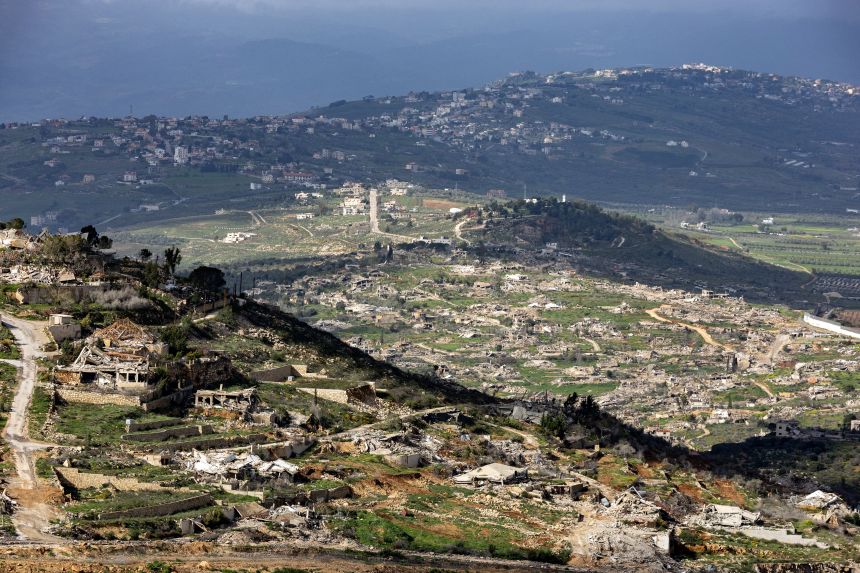
The US is deploying thousands more troops to the Middle East as the war with Iran enters its fourth week. Iran's new Supreme Leader, Mojtaba Khamenei, has sent a message on state TV, but without proof of life, raising concerns about the legitimacy of his leadership. The conflict is having far-reaching consequences, including the potential for Gulf countries to be drawn in, the impact on Lebanon's children, and the risk of escalation with the strike on Iran's nuclear power plant. Meanwhile, North Korea's leader Kim Jong Un has overseen live fire exercises with his daughter, highlighting the ongoing tensions in the region.
Entities: United States, Iran, Middle East, Mojtaba Khamenei, Kim Jong Un • Tone: neutral • Sentiment: negative • Intent: inform
21-03-2026
The US and Israel are engaged in a war with Iran, entering its fourth week. The Trump administration has granted a temporary license for Iran to sell 140 million barrels of crude oil to calm markets. President Trump stated that the US is considering 'winding down' its military efforts, but a senior Iranian source disputed this claim. The conflict continues with Iran launching missiles at a joint US-UK military base in the Indian Ocean and targeting the US Embassy's logistics base in Baghdad. Gulf states, including Bahrain, are working to reopen the Strait of Hormuz. The situation remains tense with ongoing missile and drone attacks.
Entities: Donald Trump, Iran, Israel, US, Laura Sharman • Tone: neutral • Sentiment: negative • Intent: inform
21-03-2026
The article reports on the escalating conflict between the US, Israel, and Iran. US President Donald Trump is considering 'winding down' military operations against Iran, despite the US sending more marines and amphibious assault ships to the region. Israel continues to launch air strikes on Tehran and Beirut, while Iran has fired missiles at a US-UK base in the Indian Ocean. The conflict has led to a spike in global oil prices and has prompted concerns from Arab nations and other countries.
Entities: Donald Trump, Iran, US, Israel, Tehran • Tone: neutral • Sentiment: negative • Intent: inform
21-03-2026
US President Trump may have indicated he's done with the Iran war, but his history of changing his mind and mixed messaging leaves uncertainty. Trump listed accomplishments in the conflict, including degrading Iran's military capabilities and protecting Middle Eastern allies. However, he also stated that the US will not be responsible for guarding the Hormuz Strait, potentially shifting the burden to other nations. The Iranian government's response to Trump's statement is awaited, and the danger of retaliation remains high.
Entities: Donald Trump, Iran, United States, Israel, Saudi Arabia • Tone: neutral • Sentiment: negative • Intent: analyze
21-03-2026
The article discusses the escalating conflict between Iran and other countries, including Israel and Saudi Arabia, and the potential economic consequences of a prolonged war. In the last 24 hours, Iran has launched missile attacks on energy targets in Saudi Arabia, Qatar, Kuwait, and Israel, causing significant damage and disruption to global energy supplies. The article highlights the concerns of economists and analysts, who warn that a prolonged conflict could have calamitous effects on the global economy, including soaring prices for oil, gas, and other commodities. The US President, Donald Trump, is considering sending troops to secure the Strait of Hormuz, which could escalate the conflict further. An interview with an Iranian diplomat, Esmail Baghaei, reveals that Iran will not exercise restraint in the face of aggression and is unlikely to offer an olive branch to its enemies. The article concludes that a prolonged war could have far-reaching and devastating consequences for the global economy.
Entities: Iran, Israel, Saudi Arabia, Qatar, Kuwait • Tone: urgent • Sentiment: negative • Intent: inform