20-10-2026
The article reports that Ukrainian President Volodymyr Zelenskyy is seeking an explanation for restrictions on SpaceX’s Starshield service, which he says are disrupting early-warning air defence systems. Starshield is described as the Pentagon-controlled military arm of SpaceX’s Starlink system. The account says the US government has not explained why the speed restrictions were imposed. The report therefore highlights a concern about the effect of a technical restriction on systems used for air-defence warning in Ukraine, while leaving the cause and rationale for the restriction unanswered. It does not provide details about when the restrictions began, which systems or locations are affected, how severe the disruption is, or what response the US government or SpaceX has offered. Nor does it specify what answers Zelenskyy is seeking beyond an explanation of the restrictions. The central issue presented is the reported tension between limits on a military satellite communications service and the operation of early-warning air defence systems. The article is brief and offers no additional technical or political context, so it does not establish whether the restrictions are temporary, intentional, or connected to a specific policy decision. Its focus is the Ukrainian president’s warning and the absence of a publicly stated explanation from the US government.
Entities: Volodymyr Zelenskyy, Ukraine, SpaceX, Starshield, Starlink • Tone: neutral • Sentiment: negative • Intent: inform
20-10-2026
Ukrainian President Volodymyr Zelensky is due to meet US special envoy Steve Witkoff in Oslo as tensions between Kyiv and President Donald Trump’s administration continue to rise. Norwegian Prime Minister Jonas Gahr Støre said Zelensky had asked Norway and Finland to organise talks with the United States and European allies at a critical point in the war. Finland’s President Alexander Stubb and Støre met Zelensky before the planned discussions, which Jared Kushner, Trump’s son-in-law, was expected to join remotely. Støre said the aim was to put relations on a more constructive path and pursue a diplomatic settlement that would be both lasting and just.
The meeting comes amid accusations that the United States is not reliably sharing intelligence with Ukraine. Zelensky adviser Serhii “Flash” Beskrestnov told the BBC that inconsistent warnings had cost lives. Secretary of State Marco Rubio called the accusation scandalous and outrageous, saying nothing had been intentionally withheld, while acknowledging that Patriot interceptor missiles might not yet have arrived. Zelensky said he had had a constructive discussion with Rubio about early warnings, missile interceptors and Starlink. US senators have also sought an investigation into disruptions to Starlink in Ukraine.
The article describes broader strains in US-Ukraine relations, including Trump’s remarks that Ukraine should have a new president or a different negotiator. It also notes concerns among European leaders about Washington’s approach to Russia. German Chancellor Friedrich Merz said the United States was sending mixed messages and emphasised that Europe and other countries had been paying for Ukraine’s defence since 2025. Vice-President JD Vance described Ukraine as a partner, but not a formal ally, and said the two countries sometimes have divergent interests.
The talks take place against the backdrop of Trump’s recent conversation with Vladimir Putin and an announced Russian diesel supply deal that Trump said would end US sanctions on Russian diesel exports. Zelensky criticised the timing as a “happy birthday present for Putin.” It remains uncertain whether Witkoff will travel to Russia after Oslo, although the Kremlin said it hoped to arrange a meeting with him.
Entities: Volodymyr Zelensky, Donald Trump, Steve Witkoff, Marco Rubio, Jared Kushner • Tone: analytical • Sentiment: negative • Intent: inform
20-10-2026
U.S. Secretary of State Marco Rubio said he had an extensive, substantive conversation with Ukrainian President Volodymyr Zelenskyy and rejected allegations that Washington is deliberately withholding intelligence or otherwise hindering Ukraine’s defences. Rubio called claims that Ukrainians were dying because the U.S. denied them information “scandalous” and “outrageous,” but did not explain reports of missing or delayed warnings about Russian attacks. Zelenskyy said he appreciated Rubio’s willingness to help, while continuing to raise concerns about intelligence sharing, restrictions on Ukraine’s use of Starlink, and delays in delivering Patriot interceptors purchased by other countries. He has also told U.S. lawmakers that he believes a political decision may have been made to slow support for Ukraine.
The dispute is unfolding amid renewed Russian attacks on civilian areas. Ukrainian officials reported at least seven deaths, including casualties in the Obukhiv and Bucha districts and on the Kyiv-Odesa highway, along with numerous injuries and damage to buildings and warehouses.
The article places the tensions in the context of Donald Trump’s strained relationship with Zelenskyy and recent U.S. decisions, including waiving sanctions related to a diesel transaction with Moscow. Trump has complained that Ukraine has given the U.S. nothing in return for its support and said Russia has been “fine on Ukraine.” Rubio argued that the U.S. must balance Ukraine’s demand for interceptors with requests from other allies and its own military needs. Zelenskyy, meanwhile, was seeking additional European support in Norway, where meetings with Norwegian and Finnish leaders were planned. A U.S. envoy and Jared Kushner were also expected to take part in discussions there. The article reports that European countries and EU institutions have allocated substantially more assistance to Ukraine than the U.S., according to the Kiel Institute, and notes that EU foreign policy chief Kaja Kallas questioned the U.S. role in peace negotiations. The supplied article ends mid-quotation while describing Ukrainian officials’ concerns that Washington is pressing Kyiv to surrender territory.
Entities: Marco Rubio, Volodymyr Zelenskyy, Donald Trump, Vladimir Putin, Kaja Kallas • Tone: analytical • Sentiment: negative • Intent: inform
20-10-2026
The article is a transcript of Margaret Brennan’s interview with Ohio Republican Rep. Mike Turner on “Face the Nation.” Brennan asks Turner about Republicans’ efforts to distinguish themselves from President Donald Trump, public concern about corruption and presidential conduct, his own record, and the disruption of Starlink service used by Ukraine. Turner urges voters to participate in every race, arguing that elections are decided by turnout and that voters judge candidates individually rather than as a party slate. He says he has pushed back on the administration and emphasizes local economic development, jobs, senior housing, and his long-running effort to restore pensions for former Delphi employees. Brennan notes that the pension legislation has not yet passed and that the president’s support is not the same as enactment.
The interview then turns to reports that Starlink service in Ukraine was slowed or disrupted, affecting communications and drone operations. Secretary of State Marco Rubio said the U.S. government did not order a slowdown and that service had been restored. Turner rejects that explanation as insufficient and calls for a congressional investigation to establish who was responsible. He cites past interruptions in weapons deliveries, funding, and intelligence, and says such failures put lives at risk. He also notes reports suggesting service may remain inconsistent in some areas of Ukraine, where it is important to the country’s defense against Russian attacks. The supplied transcript ends as Brennan begins asking about Elon Musk’s public opposition to Ukrainian President Volodymyr Zelenskyy and his views on Starlink’s use for offensive purposes; the remainder of the interview is not included.
Entities: Mike Turner, Margaret Brennan, Donald Trump, Ukraine, Russia • Tone: analytical • Sentiment: negative • Intent: inform
20-10-2026
Ukrainian President Volodymyr Zelenskyy urged President Donald Trump to provide Ukraine with urgently needed interceptor missiles if the United States cannot restrain Russian President Vladimir Putin. In an interview with Italy’s Corriere della Sera, Zelenskyy said the missiles would help protect Ukraine’s energy infrastructure and civilian lives amid continuing Russian attacks. He also called for the restoration of Starshield access, which Ukraine says is important to its efforts to intercept Russian drones.
The appeal comes amid worsening public tensions between Zelenskyy and Trump and Ukrainian claims that the U.S. is delaying Patriot interceptor shipments already purchased by European countries. Secretary of State Marco Rubio acknowledged that some missiles might not yet have been delivered, but denied any deliberate political decision to harm Ukraine. He said demand for Patriot interceptors is exceptionally high and the United States must balance its commitments to other partners and its own needs. Rubio also said Trump was frustrated by accusations that he had deliberately restricted support or intelligence sharing.
Zelenskyy was preparing to meet U.S. envoy Steve Witkoff in Norway, with Jared Kushner expected to participate remotely. Norwegian Prime Minister Jonas Gahr Store said Finnish President Alexander Stubb would also join, with the stated goal of making diplomatic efforts more constructive. The talks take place as Russian drone and missile strikes continue, killing civilians, and as U.S.-led efforts to end the war have stalled.
The article also describes disputes over Starshield restrictions, Trump’s criticism of Zelenskyy, and Trump’s decision to waive some sanctions on Russian energy sales. Zelenskyy argues that easing those penalties could embolden Moscow. Trump has floated meeting Putin and Chinese President Xi Jinping in China, while Ukraine’s foreign minister warns that any discussion about Ukraine’s future without Ukraine present could encourage Russia to continue the war.
Entities: Volodymyr Zelenskyy, Donald Trump, Vladimir Putin, Marco Rubio, Steve Witkoff • Tone: analytical • Sentiment: negative • Intent: inform
20-10-2026
Ukrainian President Volodymyr Zelenskyy said Russia carried out another night of missile and drone strikes, hitting energy and other infrastructure as well as a medical clinic, school, metro station and homes. He complained that Ukraine received no warning from its partners and said some U.S. military supplies had been delayed. His remarks come amid strained relations with President Donald Trump and questions about U.S. intelligence sharing and satellite support for Ukraine.
Ukraine has said it cannot use Starshield, a military version of SpaceX’s Starlink service, to help intercept Russian drones. The Trump administration and Secretary of State Marco Rubio deny deliberately changing intelligence or slowing the service; Rubio said the service disruption was not intentional and had been restored. Ukraine’s top diplomat in Washington said Kyiv had not received confirmation from the Pentagon or SpaceX that service had returned to normal.
Trump accused Zelenskyy of not wanting to end the war, while Zelenskyy said Ukraine had welcomed efforts to reach a dignified end. Trump has also eased some sanctions on Russia, and a proposed energy ceasefire was not acknowledged by either side; Ukraine reported further attacks on energy facilities after Trump announced it. Zelenskyy argued that Russian attacks show Moscow is not pursuing de-escalation. The Kremlin says it values U.S. mediation, though direct talks have so far produced prisoner swaps rather than a ceasefire. A reported proposal by Vladimir Putin for U.S., Chinese and Russian officials to discuss the war without Ukraine drew criticism from Ukraine’s foreign minister, who warned that such a meeting could encourage Russia to continue the conflict.
Entities: Volodymyr Zelenskyy, Donald Trump, Vladimir Putin, Marco Rubio, Andrii Sybiha • Tone: analytical • Sentiment: negative • Intent: inform
20-10-2026
Ukrainian President Volodymyr Zelenskyy is due to travel to Oslo on Tuesday for talks with U.S. special envoys Steve Witkoff and Jared Kushner, Norwegian Prime Minister Jonas Gahr Støre, and Finnish President Alexander Stubb. Norway and Finland say the discussions are intended to put diplomatic efforts on a more constructive path; Støre said Ukraine asked for the U.S. envoys to participate. The meeting takes place amid growing friction between Zelenskyy and U.S. President Donald Trump, as the United States has recently eased some pressure on Russia, which launched its full-scale invasion of Ukraine in 2022.
Trump renewed his criticism of Zelenskyy on Monday, arguing that Ukraine’s leader should have settled the war earlier and calling for someone else to negotiate on Ukraine’s behalf. Trump also said he would meet Russian President Vladimir Putin and Chinese President Xi Jinping to discuss ending the war, adding that he would pursue steps to end it whether or not other parties were present. The article notes that such a meeting could exclude Zelenskyy.
A second source of tension is Ukraine’s access to satellite services. Zelenskyy criticized restrictions affecting Starshield, SpaceX’s military satellite system, which the article describes as important to Ukraine’s defense against Russian strikes. He said the U.S. had not explained the restrictions to Ukraine. SpaceX CEO Elon Musk attributed any service slowdowns to the U.S. government and Trump, while Secretary of State Marco Rubio denied U.S. responsibility. Treasury Secretary Scott Bessent urged Zelenskyy to be careful about making claims he said were untrue. Trump said he did not know who had restricted the service but wanted to find out. The Oslo meeting therefore comes amid both diplomatic efforts and disputes over U.S. policy and support for Ukraine.
Entities: Volodymyr Zelenskyy, Donald Trump, Steve Witkoff, Jared Kushner, Jonas Gahr Støre • Tone: analytical • Sentiment: negative • Intent: inform
20-10-2026
Ukrainian President Volodymyr Zelenskyy has accused the US administration of delaying Patriot air-defense missiles that Ukraine needs to protect itself from Russian attacks. Speaking to US senators, he said the Pentagon had held up missiles already paid for by European allies. According to Zelenskyy, one shipment awaits approval from US Defense Secretary Pete Hegseth, while a separate transfer of Patriot missiles from European countries also requires US authorization. He said the missiles were ready to be sent but had not received approval.
Zelenskyy also said Ukraine had again received no advance warning of incoming Russian missile strikes. Ukraine relies on US intelligence to detect fast-moving ballistic missiles, and concerns have also grown over access to Starshield, SpaceX’s military satellite communications network, which Ukrainian forces use for communications and drone operations. President Donald Trump denied ordering restrictions on Starshield, and Secretary of State Marco Rubio said the US had not paused intelligence sharing with Kyiv.
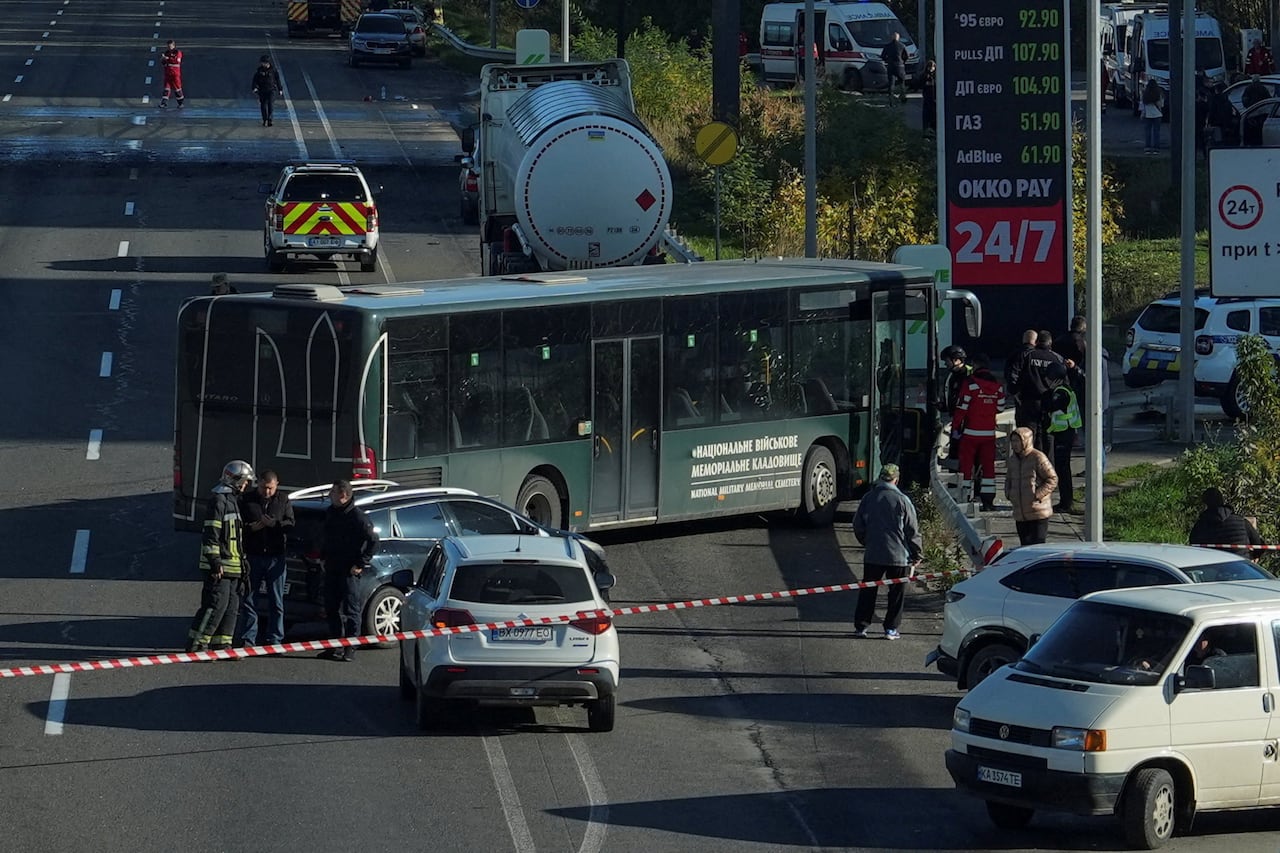
The dispute comes amid renewed Russian attacks on Ukrainian energy infrastructure. Russian ballistic missiles struck Kyiv and nearby areas overnight, leaving more than half a million households without electricity. Zelenskyy said the attack came in several waves without an early warning from Ukraine’s partners.
The article describes increasingly strained relations between Washington and Kyiv. Trump has eased sanctions on Russia and criticized Zelenskyy, including over a diesel deal between Washington and Moscow. He accused Ukraine of ingratitude, saying the US had given Ukraine a great deal while receiving nothing in return, and suggested someone else should negotiate on Ukraine’s behalf. The US government, however, rejected the claim that it was withholding intelligence.
Entities: Volodymyr Zelenskyy, Donald Trump, Pete Hegseth, Marco Rubio, Ukraine • Tone: analytical • Sentiment: negative • Intent: inform
20-10-2026
US President Donald Trump said he is willing to meet Russian President Vladimir Putin and Chinese President Xi Jinping in China next month, potentially on the sidelines of the Asia-Pacific Economic Cooperation (APEC) summit in Shenzhen. Trump said the main purpose of such a meeting would be to discuss nuclear weapons and denuclearisation, rather than the war in Ukraine, though he also said he would do what he could to end the conflict. He characterized Russia as having “been fine with Ukraine” and said it had not been doing much, remarks that contrast with the ongoing war.
The Kremlin confirmed that a hypothetical meeting had been mentioned because all three leaders could attend the summit, scheduled for 18–19 November. However, spokesman Dmitry Peskov said no substantive proposals or agreements had been made about holding the meeting or setting its agenda. China’s foreign ministry spokeswoman Mao Ning said she had no information about it.
Ukraine objected to the possibility of discussions among the three leaders without Kyiv. Foreign Minister Andriy Sybiga argued that such a meeting could encourage Putin to continue the war and described the Russian leader as a war criminal. Peskov, meanwhile, said a final settlement would require participation by someone from Kyiv who could accept responsibility. Putin has repeatedly ruled out meeting Ukrainian President Volodymyr Zelensky until a final peace deal is ready and has questioned Zelensky’s authority to sign one after his five-year term expired under martial law.
Trump renewed his criticism of Zelensky, saying it was time for someone else to negotiate on Ukraine’s behalf and dismissing the Ukrainian president’s comments. The article presents the proposed meeting as uncertain: the leaders may be in China at the same time, but no meeting has been agreed and the countries differ over Ukraine’s participation and the purpose of any talks.
Entities: Donald Trump, Vladimir Putin, Xi Jinping, Volodymyr Zelensky, Dmitry Peskov • Tone: analytical • Sentiment: negative • Intent: inform
20-10-2026
Ukrainian President Volodymyr Zelensky accused the United States of delaying Patriot interceptor missiles that European countries have already paid for. Speaking to US senators, he said the missiles were awaiting Defence Secretary Pete Hegseth’s approval and that European countries willing to transfer missiles from their own stockpiles also lacked US authorization. The accusations come amid worsening relations between Kyiv and Washington over military aid and intelligence sharing. Ukraine says it received no early warning of recent Russian attacks, while the Trump administration denies changing intelligence-sharing arrangements. Zelensky also said there was no warning before the latest strikes, which hit energy facilities and infrastructure, leaving more than 500,000 people without power. Ukrainian authorities reported six deaths, including three children, near Kharkiv.
Relations have been further strained by President Donald Trump’s decision to partially lift sanctions for a diesel-supply deal with Russian President Vladimir Putin, his criticism of Zelensky, and his suggestion that someone else should negotiate for Ukraine. Trump said he was willing to meet Putin and Chinese leader Xi Jinping in China next month to discuss denuclearisation, potentially including the Ukraine war. The possibility of such a meeting raised concern in Kyiv that Ukraine could be excluded from decisions about its future. Ukrainian Foreign Minister Andriy Sybiga warned that a meeting could encourage Putin to continue the war. The Pope also spoke with Zelensky after a call with Putin, urging both sides to permit aid into Russian-occupied Oleshky and allow civilians to leave.
US Secretary of State Marco Rubio denied that intelligence sharing had been withdrawn and echoed Trump’s call for Zelensky to focus on ending the conflict. Peace talks remain deadlocked: Russia refuses to relinquish its territorial claims, while Ukraine rejects being forced to surrender territory. The article describes an increasingly tense diplomatic relationship and the continued effects of Russian attacks on Ukraine.
Entities: Volodymyr Zelensky, Donald Trump, Pete Hegseth, Vladimir Putin, Xi Jinping • Tone: analytical • Sentiment: negative • Intent: inform
20-10-2026
The article introduction describes President Donald Trump’s renewed, changeable approach to Russia as he seeks a way to end the war in Ukraine. It frames his diplomatic efforts against domestic political and economic pressures: energy costs are high, and the U.S. midterm elections are approaching. The headline characterizes some of Trump’s actions as “Russia-friendly,” while the introductory text says his relationship with Russia is “up and down.” Together, those descriptions suggest a focus on the tension between his effort to pursue an end to the war and the implications of his dealings with Moscow.
The provided content is only a headline, a one-sentence introduction, and publication details; it does not include the full article or explain which specific moves Trump has made, what proposals are under consideration, or how Ukraine, Russia, or other parties have responded. It therefore supports only a limited account of the story. The article is attributed to NPR journalists Emily Feng and A Martínez and was published on October 20, 2026, as a segment heard on Morning Edition. Its framing connects foreign policy with U.S. domestic concerns, particularly energy prices and the midterm-election calendar, but the supplied excerpt does not establish how those pressures affect negotiations. The primary purpose appears to be to inform readers about Trump’s approach to pursuing an end to the war and the political context surrounding it, rather than to provide enough evidence in the excerpt to assess the likely outcome.
Entities: Donald Trump, Emily Feng, A Martínez, NPR, Russia • Tone: analytical • Sentiment: neutral • Intent: inform
20-10-2026
Secretary of State Marco Rubio told Ukrainian President Volodymyr Zelensky during a 45-minute call that the Trump administration’s policy toward Ukraine had not changed and that no assistance was being deliberately withheld. Rubio said he called to correct what he described as inaccurate media reports about US support, intelligence sharing and Ukraine’s access to military resources.
The call followed Ukrainian complaints that the United States had failed to provide advance warnings of Russian ballistic missile attacks. Zelensky said Ukraine had been struck three times in one week without US warnings. Rubio rejected claims that Washington had made a political decision to stop sharing intelligence, saying any interruptions on October 13 and 18 were technical problems and that the United States was again providing the same warnings as before. He also said President Donald Trump was frustrated at being blamed for events he believed were being misrepresented.
Another point of friction was Ukraine’s reported access to Starshield, the satellite internet network, which Ukrainian officials said had been throttled in a way that hindered drone operations. The Trump administration and SpaceX chief Elon Musk denied that a deliberate slowdown had occurred.
Rubio said Ukraine’s request for more Patriot missile interceptors reflected global demand for a scarce defense system, not a decision to deny Ukraine assistance. He noted that the United States has its own needs for the interceptors. Zelensky thanked Rubio and said they would speak again. The call came before Zelensky was due to meet US envoy Steve Witkoff and European allies in Oslo for another round of peace discussions. Witkoff was expected to travel to Russia afterward to present a proposal to Vladimir Putin; Jared Kushner was not expected to attend in person because he was reportedly ill with the flu.
Entities: Marco Rubio, Volodymyr Zelensky, Donald Trump, Vladimir Putin, Steve Witkoff • Tone: analytical • Sentiment: negative • Intent: inform
20-10-2026
US Secretary of State Marco Rubio said a batch of ballistic missile interceptors intended for Ukraine under the Prioritised Ukraine Requirements List (PURL) programme may not have been delivered. Speaking to journalists in Mumbai as he began a trip to India, Rubio said any failure to deliver was not the result of a deliberate political decision to harm or deny support to Ukraine. He said he had spoken with Ukrainian President Volodymyr Zelenskiy for 45 minutes on Tuesday.
Zelenskiy said the conversation covered ballistic missile interceptors, advance warning of Russian attacks, and the status of Starlink and Starshield satellite services, which he said needed to be restored. The remarks come amid reports that US Defense Secretary Pete Hegseth had not yet authorized delivery of the latest US weapons package bought by NATO allies through PURL. Zelenskiy had also said the Pentagon delayed missile deliveries under the programme.
The reported delays have emerged as relations between Kyiv and Washington have deteriorated during the month, while US President Donald Trump has pursued engagement with Moscow. Reuters had reported that the United States threatened to halt the PURL mechanism in an effort to pressure Kyiv to stop deep strikes on Russian energy infrastructure. Trump also announced an energy ceasefire between Ukraine and Russia. Rubio’s comments acknowledge uncertainty over whether the interceptors reached Ukraine while rejecting the suggestion that any non-delivery was politically directed.
Entities: Marco Rubio, Volodymyr Zelenskiy, Pete Hegseth, Donald Trump, Ukraine • Tone: analytical • Sentiment: neutral • Intent: inform
20-10-2026
The article reports that escalating tensions between US President Donald Trump and Ukrainian President Volodymyr Zelensky may weaken Ukraine’s ability to defend itself as Russia’s invasion continues. Zelensky has accused the Trump administration of delaying Patriot air-defence interceptors and restricting access to satellite technology and intelligence, including early warnings of Russian ballistic-missile attacks. The dispute is worsening as Ukraine approaches another winter, with civilian casualties rising and interceptor supplies reportedly dangerously low. A defence analyst warns that European countries have limited ability to replenish Ukraine’s missile stocks.
NATO officials are concerned that the relationship may be beyond repair and urge Kyiv to de-escalate. They fear a breakdown could affect weapons supplied through a programme financed mainly by European countries, and could leave Ukraine under pressure to accept a painful settlement with Russia. Zelensky is scheduled to meet Trump envoy Steve Witkoff in Oslo for peace talks, with Jared Kushner participating remotely. NATO Secretary-General Mark Rutte is seeking to reduce tensions and preserve practical support for Ukraine.
The article also describes Trump’s public criticism of Zelensky and moves that may benefit Moscow, including a diesel-export deal with Russia and waivers of sanctions on Russian energy. Trump has questioned Zelensky’s role in negotiations and downplayed Russian actions. Meanwhile, European leaders, including German Chancellor Friedrich Merz, are trying to repair relations with Washington and arguing that a stable Europe serves US interests. The dispute has wider stakes for European security and is unfolding as Trump’s party faces midterm election pressure. US officials cite limited Patriot inventories and competing military needs in the Middle East and a potential conflict with China. Secretary of State Marco Rubio says Trump is willing to press both sides to end the war.
Entities: Volodymyr Zelensky, Donald Trump, Ukraine, Russia, NATO • Tone: urgent • Sentiment: negative • Intent: inform
20-10-2026
NPR’s Steve Inskeep speaks with Michael McFaul, a former U.S. ambassador to Russia, about President Donald Trump’s recent moves to embrace Russia. The conversation considers what those moves could mean for Ukraine and for prospects of achieving peace. The article description frames the discussion around the implications of Trump’s approach, but the supplied text does not include the interview transcript or further details about the specific moves, McFaul’s views, or the discussion’s conclusions. It therefore establishes the subject and participants without providing enough information to explain the arguments or outcomes of the interview in depth. The segment aired on NPR’s Morning Edition on October 20, 2026, and is listed as lasting 5 minutes and 27 seconds. NPR also includes a notice stating that it does not offer or accept money for coverage or interviews, and that anyone making such an offer or request is not an NPR employee and does not represent the organization.
Entities: Donald Trump, Michael McFaul, Steve Inskeep, NPR, Russia • Tone: analytical • Sentiment: neutral • Intent: inform