20-10-2026
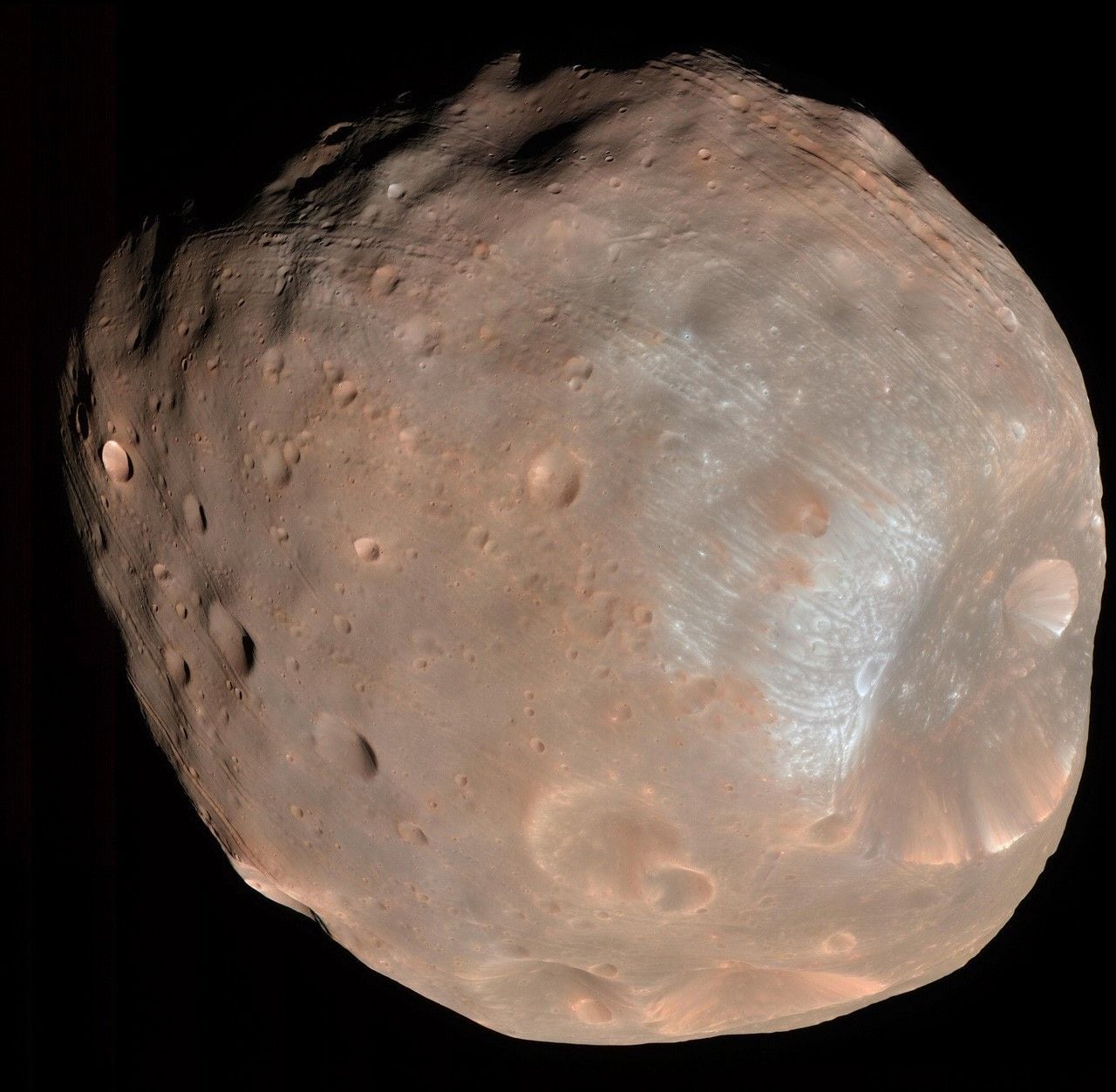
Japan has launched an uncrewed mission designed to collect material from Phobos, one of Mars’s two moons, and return those samples to Earth by 2031. The mission is planned to last five years. If it succeeds, it would mark the first time samples have been brought back to Earth from a moon of Mars, giving scientists material to study directly. The report identifies Phobos as the target and describes sample return as the mission’s central objective, but provides no details about the spacecraft, launch vehicle, mission operators, launch site, or the scientific questions the samples are intended to address. It also does not name the mission or explain the stages of the journey. The item was published on 20 October 2026. Its central point is the mission’s historic potential: the achievement depends on successful collection and return, so the report presents the first-of-its-kind result as conditional rather than accomplished. In brief, the article announces a Japanese effort to bring samples from a Martian moon to Earth within a five-year timeframe, with 2031 set as the planned return year. The scientific significance described is that researchers would be able to study returned Phobos material. No further claims about findings, mission outcomes, or the samples’ composition are given.
Entities: Japan, Phobos, Mars, Earth, Al Jazeera • Tone: neutral • Sentiment: positive • Intent: inform
20-10-2026
Japan has launched the Martian Moons eXploration (MMX) spacecraft on a five-year international mission to study Phobos and Deimos and return samples from Phobos to Earth. The H3 rocket lifted off from Tanegashima Island, and the spacecraft separated successfully from its upper stage about an hour later. Japan Aerospace Exploration Agency (JAXA) leads the mission, with contributions from NASA and European partners. The spacecraft is expected to reach Mars by late summer 2027. A small French-German rover, Idefix, will descend onto Phobos and explore for about 100 days, helping identify terrain suitable for the main spacecraft’s landing. In late 2028 or 2029, the lander is planned to spend two hours on the moon collecting at least 10 grams of dust, soil, and rock. The spacecraft will also conduct flybys of Deimos, then return to Earth with the Phobos samples in 2031. The mission is scientifically significant because no spacecraft has landed on either Martian moon, and no samples have yet been returned from Mars or its moons. Studying Phobos may reveal whether the moons formed from debris after an impact on Mars or are captured asteroids. Researchers also expect the material could contain traces of Mars, offering insights into planetary formation and potentially the conditions relevant to life. The mission has experienced a successful launch despite a history of setbacks in Mars exploration by Japan, Russia, and other agencies. China is also planning a Mars sample-return mission, targeting a 2031 return, while NASA is still weighing how to retrieve samples collected by the Perseverance rover. Japan is investing $350 million in MMX, with additional funding from NASA, France, Germany, and the European Space Agency.
Entities: Martian Moons Exploration (MMX), Japan Aerospace Exploration Agency (JAXA), Phobos, Deimos, Tanegashima Island • Tone: analytical • Sentiment: positive • Intent: inform
20-10-2026
Japan’s uncrewed Martian Moons eXploration (MMX) spacecraft has successfully launched aboard an H3 rocket from the Tanegashima Space Center, beginning a journey to Mars’ moons. The Japan Aerospace Exploration Agency (JAXA) confirmed that the probe separated from the rocket about an hour after liftoff and was operating normally. The mission is scheduled to reach the Martian system around August 2027.
MMX will study both Phobos and Deimos, with its main goal being to collect at least 10 grams of material from Phobos, the larger moon, before returning the samples to Earth. A small French-German rover named IDEFIX will explore Phobos’ surface, conduct observations, and help assess conditions for the probe’s landing and sampling. After its work at Phobos, MMX will make flybys of Deimos and is expected to leave the Martian region in 2030.
Scientists hope that the samples and observations will clarify how Mars’ moons formed. Competing explanations suggest they either formed from material ejected after a large object struck Mars or were asteroids captured by the planet’s gravity. Resolving the question could improve understanding of how habitable environments arose on rocky planets. The mission may also help establish whether Phobos could serve as a “natural space station” for future exploration and support plans for human missions to Mars.
MMX is a collaboration involving JAXA, US and European space agencies, universities, and private technology companies. It is part of a wider international effort to return material from Mars or its moons. NASA’s Perseverance rover has collected samples on Mars, but the US sample-return mission was canceled by the Trump administration following a congressional vote in January.
Entities: Martian Moons eXploration (MMX), Japan Aerospace Exploration Agency (JAXA), H3 rocket, Tanegashima Space Center, Phobos • Tone: analytical • Sentiment: neutral • Intent: inform
20-10-2026
Japan has launched the Martian Moons eXploration (MMX) spacecraft, a five-year, multinational mission led by the Japan Aerospace Exploration Agency (JAXA). Its goal is to reach Phobos, the larger and nearer of Mars’ two small moons, deploy a French-German rover called Idefix, collect at least 10 grams of surface material, and return the samples to Earth in 2031. The spacecraft launched from Tanegashima Island, and officials reported that it separated successfully from its rocket.
The approximately $578 million mission is unprecedented: no spacecraft has landed on either Phobos or Deimos, and no samples have yet been returned from Mars or its moons. Idefix will explore Phobos for about 100 days, moving extremely slowly because the moon’s gravity is weak and its surface may be hazardous. Its observations will help Japanese controllers select a safe location for the larger lander, which is expected to touch down in late 2028 or 2029. The lander will spend about two hours collecting dust, soil and rock, then return to space. The spacecraft will also conduct flybys of Deimos before heading back to Earth.
Scientists hope the samples will help determine whether the moons formed from debris after a large impact on Mars or were asteroids captured by the planet’s gravity. Phobos may also contain traces of Mars, offering a chance to study material from both the moon and the planet. The results could improve understanding of how planets and moons form and inform future Mars missions, including crewed exploration.
The mission draws on Japan’s experience returning asteroid samples and is supported by NASA, the French and German space agencies, and the European Space Agency. It faces a history of failed Mars and Phobos missions by other countries, and success is not guaranteed. China plans a Mars sample-return mission for 2028, with both countries aiming to bring samples back in 2031. NASA is separately considering how to retrieve samples collected by its Perseverance rover.
Entities: Japan Aerospace Exploration Agency (JAXA), Martian Moons eXploration (MMX), Phobos, Deimos, Idefix rover • Tone: analytical • Sentiment: neutral • Intent: inform
20-10-2026
Japan has launched the Martian Moons Exploration (MMX) spacecraft on a five-year mission to investigate Phobos and Deimos, with the goal of returning samples from Phobos to Earth in 2031. The Japan Aerospace Exploration Agency (JAXA) leads the $578 million project, supported by NASA and European partners. The spacecraft separated successfully from its rocket after a pre-dawn launch from Tanegashima, Japan. If successful, the mission will be the first to land on either of Mars’ moons and the first to return samples from the Martian system.
The spacecraft is expected to reach Mars in 2027 and enter an orbit coordinated with Phobos. A French-German rover, Idefix, will deploy onto the moon and explore for about 100 days, helping mission controllers identify a suitable landing area. Because Phobos has extremely weak gravity, the rover will bounce upon landing and move very slowly; soft soil or rocks could still prevent it from operating as planned. A stationary Japanese lander will later spend about two hours collecting at least 10 grams of material. The spacecraft will also observe Deimos during flybys before departing for Earth in 2030, with delivery of the samples planned for the Australian desert in 2031.
Scientists hope the samples will clarify whether Phobos and Deimos formed from debris created by an impact on Mars or are asteroids captured by the planet’s gravity. Phobos may also contain traces of Mars, offering a possible scientific “two-for-one” and insights into planetary formation and the origins of life. The findings could inform future Mars exploration, including human missions. Japan’s experience returning samples from asteroids gives it a foundation for the effort, though past Mars missions by Japan and Russia have failed. China is also targeting a Mars sample-return mission for 2031, while NASA is weighing how to retrieve samples collected by its Perseverance rover. The article describes the Japanese-led mission as a potentially historic and technically challenging undertaking.
Entities: Japan Aerospace Exploration Agency (JAXA), Martian Moons Exploration (MMX), Phobos, Deimos, Mars sample-return mission • Tone: analytical • Sentiment: positive • Intent: inform