19-10-2026
Russian Foreign Minister Sergey Lavrov met Iranian Foreign Minister Abbas Araghchi in Tehran to discuss the US-Israeli war on Iran, regional security and efforts to end the conflict. The visit, Lavrov’s first to Iran since February 2025, comes as Moscow seeks to maintain ties across the region and uphold a strategic partnership with Tehran that took effect on October 2, 2026. Lavrov was also due to meet Iranian President Masoud Pezeshkian.
The trip followed Lavrov’s visit to Bahrain for talks with the Gulf Cooperation Council (GCC). GCC members urged Russia to use its influence with Iran to encourage serious dialogue and restore shipping through the Strait of Hormuz, where attacks on commercial vessels have disrupted traffic. The council’s members also called for Iran’s nuclear and missile programmes and support for regional armed groups to be included in future negotiations. Araghchi, by contrast, blamed Israeli-American aggression for insecurity in the Gulf and Strait of Hormuz.
Analyst Nikita Smagin said the near-simultaneous visits to Iran and Gulf monarchies signal Moscow’s intention to present itself as an even-handed regional partner and mediator, despite damage to its international reputation from the war in Ukraine. Lavrov has proposed a regional “collective security” framework drawing on initiatives from countries in the region as well as Russia and China. He also backed a US-Iran memorandum signed in June that later collapsed, which Iran wants to revive alongside a separate Iran-Oman arrangement for managing territorial waters.
Russia’s interests are mixed. Higher oil prices and reduced Iranian oil exports to China may benefit Moscow, but Russia does not want the conflict to escalate unpredictably. Smagin said Russia has limited leverage over either side, though it is likely to expand political ties, Caspian trade and some military cooperation with Iran. Reports that Russia and China are supplying Iran with military-related support have been contradicted by US President Donald Trump. Meanwhile, Washington has issued sanctions waivers for Russia to help reduce fuel prices. Strikes and contestation over the waterway continue as US midterm elections approach.
Entities: Sergey Lavrov, Abbas Araghchi, Masoud Pezeshkian, Nikita Smagin, Donald Trump • Tone: analytical • Sentiment: neutral • Intent: analyze
19-10-2026
The live report describes escalating conflict and diplomatic efforts across the Middle East. Russian Foreign Minister Sergey Lavrov is expected in Tehran for talks with Iranian officials, saying his visit is intended to prevent a return to “large-scale war.” Iran says its proposal for a seven-day ceasefire, phased reopening of the Strait of Hormuz, and renewed nuclear negotiations remains available, though President Trump rejected it last month. The proposal also calls for the United States to lift its naval blockade of Iranian ports and sanctions on Iranian oil.
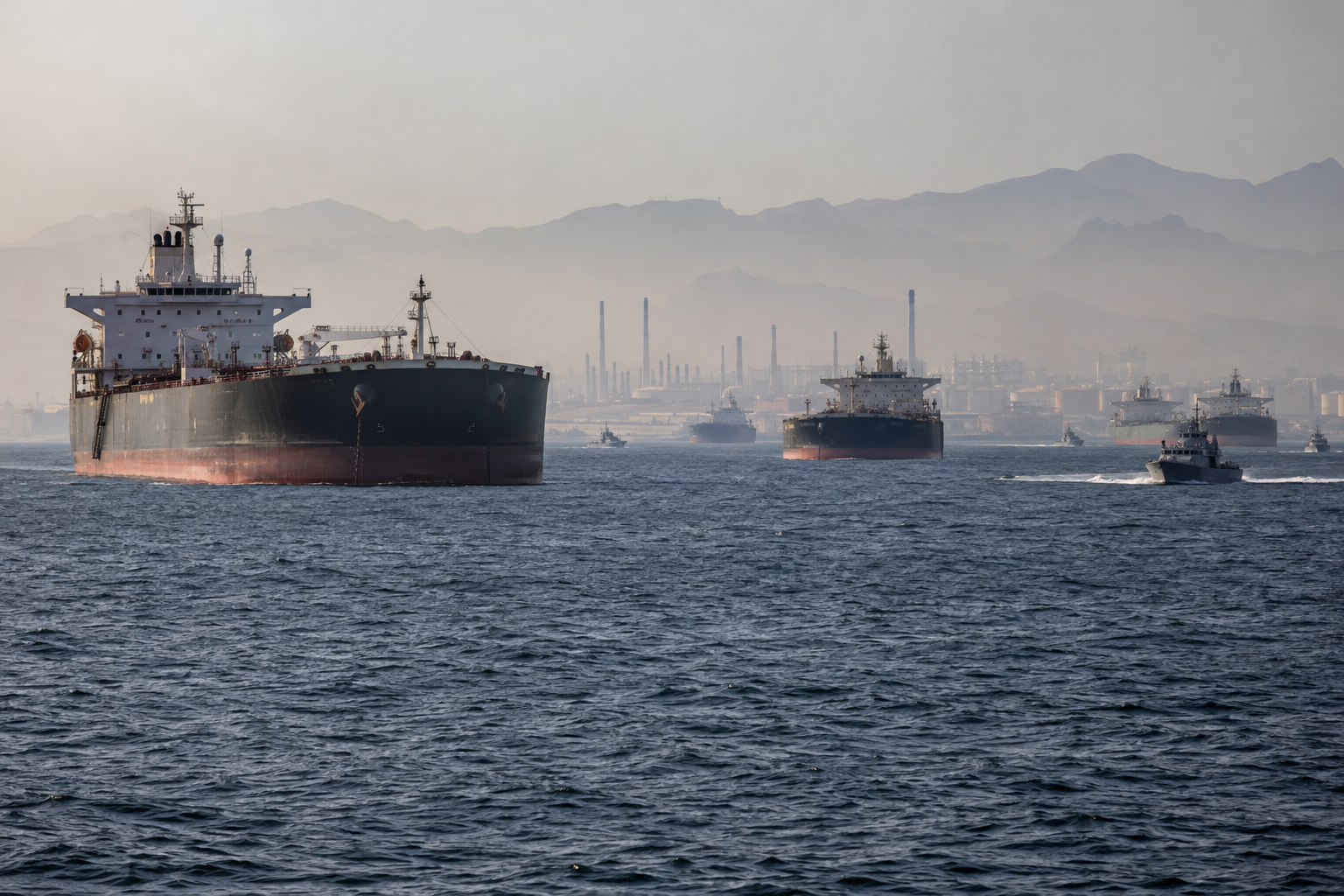
Shipping and energy markets remain under pressure. The U.K. Maritime Trade Operations center reported 10 attacks on commercial vessels in and near the Strait of Hormuz during the previous week, making October the worst month for shipping attacks there since the war began in March. A tugboat near the strait was hit by two unidentified projectiles, causing damage and one minor injury. Oil prices, which had approached $110 per barrel, eased Monday after Trump delayed new sanctions on Russia, but remained elevated amid risks to regional energy supplies.
The report also covers widening violence involving Iran-backed Houthi rebels in Yemen. A missile strike on a government military camp in Shabwa killed at least 50 people and injured more than 100, according to a local official; earlier military accounts had reported at least 20 soldiers killed. The conflict is increasingly entangled with the broader regional war, including Houthi attacks on Saudi infrastructure. The United States warned Americans in the Middle East to exercise heightened vigilance, citing the possibility of rapid escalation and threats to U.S. interests. Separately, Iran’s acting oil minister met Qatar’s energy minister in Doha to discuss bilateral energy relations and cooperation.
Entities: Sergey Lavrov, Donald Trump, Vladimir Putin, Iran, United States • Tone: analytical • Sentiment: negative • Intent: inform
19-10-2026
Oil prices fell on Monday as traders assessed the possibility that Russian crude and other energy supplies could increase after the United States eased sanctions-related restrictions. Brent crude dropped 1.88% to $107.80 a barrel, while U.S. West Texas Intermediate fell 0.84% to $100.56. The price decline came amid a supply outlook complicated by attacks on energy infrastructure and shipping.
In Russia, fires broke out at an oil terminal and depot in St. Petersburg after Ukrainian drone strikes on Sunday, according to Governor Alexander Beglov. The terminal handles about 120,000 barrels per day of refined products, mainly fuel oil, according to Kpler, but the extent of the damage was not known. Ukraine had briefly paused strikes on Russian energy facilities following U.S. President Donald Trump’s October 11 announcement that Kyiv and Moscow had agreed to a truce. Russian authorities said they shot down dozens of Ukrainian drones near St. Petersburg; the attack also disrupted flights at a major airport.
Separately, two tankers were attacked off Saudi Arabia in the Persian Gulf on Friday, according to the United Kingdom Maritime Trade Operations Centre. One incident involved a rocket-propelled grenade fired from a small boat at an unidentified tanker northeast of Al Jubayl; another tanker, the ST3, was struck by an unknown projectile. The article reports that Iran has escalated attacks on tankers in the Persian Gulf, Strait of Hormuz, and Gulf of Oman, seeking to obstruct regional crude exports. Together, sanctions relief and security risks leave traders weighing the prospect of increased supply against possible disruptions.
Entities: Donald Trump, Alexander Beglov, Russia, Ukraine, St. Petersburg • Tone: analytical • Sentiment: negative • Intent: inform
19-10-2026
Thousands of seafarers remain stranded near the Strait of Hormuz as attacks on commercial vessels escalate, according to International Maritime Organization Secretary-General Arsenio Dominguez. He described conditions for international shipping as “severe and critical,” saying there is a “double blockade,” vessels have been attacked, and about 6,000 sailors have been trapped since the conflict began. He urged ships not to transit the strait or put crews at risk until safety guarantees are in place. Reports cited by the article say 24 ships were attacked over roughly two weeks; the IMO had recorded 100 confirmed maritime incidents in the region as of Oct. 9, with 24 seafarers killed since the conflict began Feb. 28.
The warning comes amid an Iranian complaint that US forces used VHF Channel 16, an international maritime distress and safety channel, to threaten Iranian crews in the Persian Gulf and urge some to abandon their vessels. Iran’s letter, submitted by its IMO ambassador and circulated to member states, described the alleged use of the channel as intimidation. It did not include recordings, transcripts, or specific details, and Fox News Digital said it could not independently verify the allegations. US Central Command said the blockade of Iranian ports is professionally communicated, that vessels receive repeated warnings and time to comply, and that US forces remain vigilant and professional.
Dominguez said the IMO may consider whether technical or operational safeguards, or clearer guidance on Channel 16, are needed, but he did not announce a formal investigation. He emphasized that seafarers are civilians and that member states can raise concerns through the organization. He also identified fraudulent ship registries and false flags—used by some vessels to move goods—as factors contributing to the danger, criticizing shipowners who take risks to continue trading. Dominguez said diplomatic communications with Iran remain open, although reaching decisions is difficult amid the conflict; he has no direct contact with the Islamic Revolutionary Guard Corps.
Entities: Strait of Hormuz, Arsenio Dominguez, International Maritime Organization (IMO), Iran, United States Central Command (CENTCOM) • Tone: analytical • Sentiment: negative • Intent: warn