19-10-2026
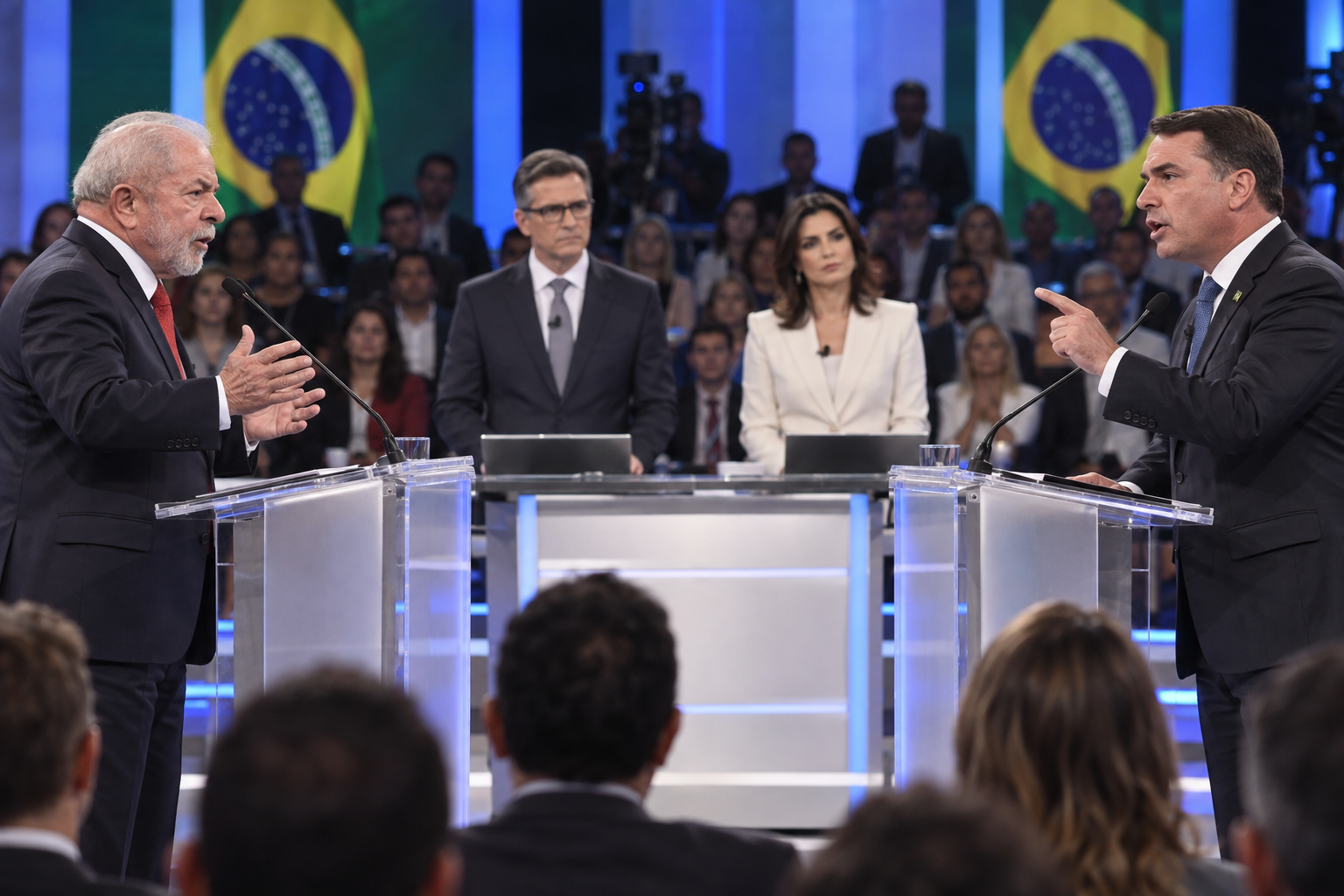
Brazilian President Luiz Inacio Lula da Silva and right-wing Senator Flavio Bolsonaro traded personal insults and accusations during their first presidential run-off debate, held one week before the October 25 vote. The debate was marked by repeated claims of dishonesty and corruption, and arguments over public security, healthcare, living costs and government spending. Bolsonaro finished first in the October 4 opening round with 47 percent of the vote, narrowly ahead of Lula at 45 percent, and polls suggest a close contest.
Lula called Bolsonaro a “habitual liar”, “thug” and “militiaman”, and pressed him to address a corruption investigation involving his father, former President Jair Bolsonaro. Flavio Bolsonaro avoided that question and raised a possible corruption case involving one of Lula’s sons. He also mocked Lula, while Lula accused him of being disconnected from ordinary Brazilians and unfamiliar with public transport and the public healthcare system. Bolsonaro criticized Lula’s spending and cost-of-living policies; Lula asked whether Bolsonaro would follow the severe spending cuts made by Argentina’s President Javier Milei. Bolsonaro did not give a direct answer. He did acknowledge shortcomings in his father’s handling of the COVID-19 pandemic.
The debate took place amid investigations and a politically polarized campaign. Jair Bolsonaro is under house arrest while serving a 27-year sentence related to efforts to overturn the 2022 election. Federal police also asked the Supreme Court to investigate Flavio Bolsonaro over an alleged money-laundering accusation involving an associate. Lula, meanwhile, spent 580 days in prison in 2018 and 2019 after a corruption conviction that was later annulled over flaws in the investigation and legal proceedings.
Supporters rallied for both candidates in several cities. With about 33 million voters—roughly one in five eligible voters—absent in the first round, both campaigns are seeking to attract them. A second debate is scheduled for October 23.
Entities: Luiz Inacio Lula da Silva, Flavio Bolsonaro, Jair Bolsonaro, Brazil, Sao Paulo • Tone: analytical • Sentiment: neutral • Intent: inform
19-10-2026
Brazilian President Luiz Inácio Lula da Silva and right-wing senator Flávio Bolsonaro traded personal insults and accusations during their first presidential debate, held one week before Brazil’s October 25 runoff. The debate reflected the country’s deeply polarized campaign, with the candidates arguing over the economy, public security, healthcare, corruption and Brazil’s relationship with the United States. Bolsonaro, 45 and the son of former president Jair Bolsonaro, had unexpectedly led the first round; polls described the runoff as close, with two recent surveys giving him 51 percent of voting intentions to Lula’s 49 percent.
Bolsonaro criticized Lula’s spending and cost-of-living policies, accusing him of using social measures to win re-election. Lula challenged Bolsonaro over whether he would follow Argentina’s spending cuts under President Javier Milei, and questioned the Bolsonaro family’s ties to US President Donald Trump and its intentions toward Brazil’s rare-earth minerals. Bolsonaro avoided directly answering some questions, while both candidates invoked corruption scandals and past events. Lula, who is seeking a fourth term at nearly 81, repeatedly urged viewers to verify his claims online. Bolsonaro taunted Lula about his imprisonment on corruption charges that were later annulled; Lula, in turn, referred to Bolsonaro’s alleged links to paramilitary groups. The article notes that Jair Bolsonaro is under house arrest, serving a 27-year sentence for a failed coup attempt after his unsuccessful 2022 re-election bid.
The campaign also produced large rallies for both candidates. In São Paulo, about 71,000 Bolsonaro supporters gathered, with some describing economic hardship and difficulty paying bills. In Rio de Janeiro, Lula supporters formed his name in the water at Praia Vermelha, and a democracy rally on Copacabana Beach featuring singer Caetano Veloso drew an estimated 56,000. One Lula supporter credited social welfare programs with helping her rebuild her life after wrongful incarceration and losing custody of her daughters.
Entities: Luiz Inácio Lula da Silva, Flávio Bolsonaro, Jair Bolsonaro, Brazil, Brazilian presidential election runoff • Tone: neutral • Sentiment: neutral • Intent: inform
19-10-2026
Brazilian President Luiz Inacio Lula da Silva and right-wing senator Flavio Bolsonaro traded insults and accusations during their first debate ahead of the Oct 25 presidential run-off. The debate reflected a deeply polarised campaign, with both candidates attacking each other over corruption, the economy, public security, healthcare and Brazil’s relationship with the United States. Bolsonaro, son of former president Jair Bolsonaro, had taken a surprise lead in the first round. Although he remained narrowly ahead, two polls published that week showed his advantage slipping to 51% of voting intentions against Lula’s 49%.
Bolsonaro focused on the cost of living and insecurity, accusing Lula of reckless spending to win re-election. Lula challenged Bolsonaro on whether he would follow Argentina’s Javier Milei in making large public-spending cuts, and criticised the Bolsonaro family’s relationship with US President Donald Trump and what he described as its deference to American interests. The candidates also invoked past scandals: Bolsonaro referred to Lula’s former imprisonment on corruption charges that were later annulled, while Lula alluded to Bolsonaro’s alleged connections to paramilitary groups. Jair Bolsonaro’s 27-year sentence under house arrest for a failed coup attempt also came up.
The debate took place amid large public rallies for both candidates. About 71,000 Bolsonaro supporters gathered in Sao Paulo, where some described economic hardship and difficulty paying bills. In Rio de Janeiro, around 56,000 people attended a pro-Lula rally on Copacabana Beach, following a swimming display spelling out Lula’s name. One Lula supporter credited his social welfare programmes with helping her rebuild her life after wrongful incarceration and losing custody of her daughters. The rallies illustrated the scale and intensity of the contest as voters prepared to choose between the two candidates.
Entities: Luiz Inacio Lula da Silva, Flavio Bolsonaro, Jair Bolsonaro, Javier Milei, Donald Trump • Tone: analytical • Sentiment: neutral • Intent: inform