19-10-2026
China’s economy grew 4.5% year over year in the third quarter, accelerating from 4.3% in the second quarter and exceeding economists’ 4.4% forecast. Growth in the first nine months averaged 4.6%, broadly within Beijing’s official full-year target range of 4.5% to 5%. September data showed retail sales up 1.1%, above expectations, and industrial output rising 5.5%, in line with forecasts. Urban unemployment was 5.2%.
The article describes an uneven economy in which exports and industrial production are supporting growth while domestic demand, private investment, and property remain weak. China’s monthly trade surplus reached a record $133.5 billion, and economist Tianchen Xu said stronger government investment, external demand, and a weak comparison base helped September recover from subdued July and August figures. Xu expects these supports to persist into the fourth quarter and forecasts 4.7% full-year growth.
However, urban fixed-asset investment fell 7.2% in the first nine months, and real-estate development investment dropped 20.6%. Oxford Economics’ Sheana Yue said the prolonged housing downturn is limiting the benefits of stronger industrial activity, with sales, construction starts, and prices offering little evidence that the slump is bottoming out. Cornell economist Eswar Prasad also warned that imbalances between supply and demand are increasing and questioned whether the government would provide sufficient stimulus alongside reforms.
Producer prices rose 5% in September, their fastest increase in more than four years, while consumer inflation remained below 1%. This combination reflects excess capacity and weak demand, potentially forcing businesses to absorb higher costs through lower margins. Economists generally expect the People’s Bank of China to leave lending rates unchanged for the rest of the year. Authorities have instead expanded fiscal support, including targeted rate cuts, mortgage subsidies, and 550 billion yuan in unused debt quota for local governments and infrastructure. Analysts expect announced measures to be implemented more quickly, though the relatively solid growth figure may reduce immediate pressure for additional stimulus.
Entities: China, Beijing, Tianchen Xu, Economist Intelligence Unit, Sheana Yue • Tone: analytical • Sentiment: neutral • Intent: analyze
19-10-2026
China’s economy grew 4.5% year over year in the July–September quarter, accelerating from 4.3% in April–June and beating expectations. The result puts China within its 2026 growth target range of 4.5% to 5%, although the International Monetary Fund has forecast growth at the bottom of that range. The article says exports were a major driver, while domestic demand remained weak.
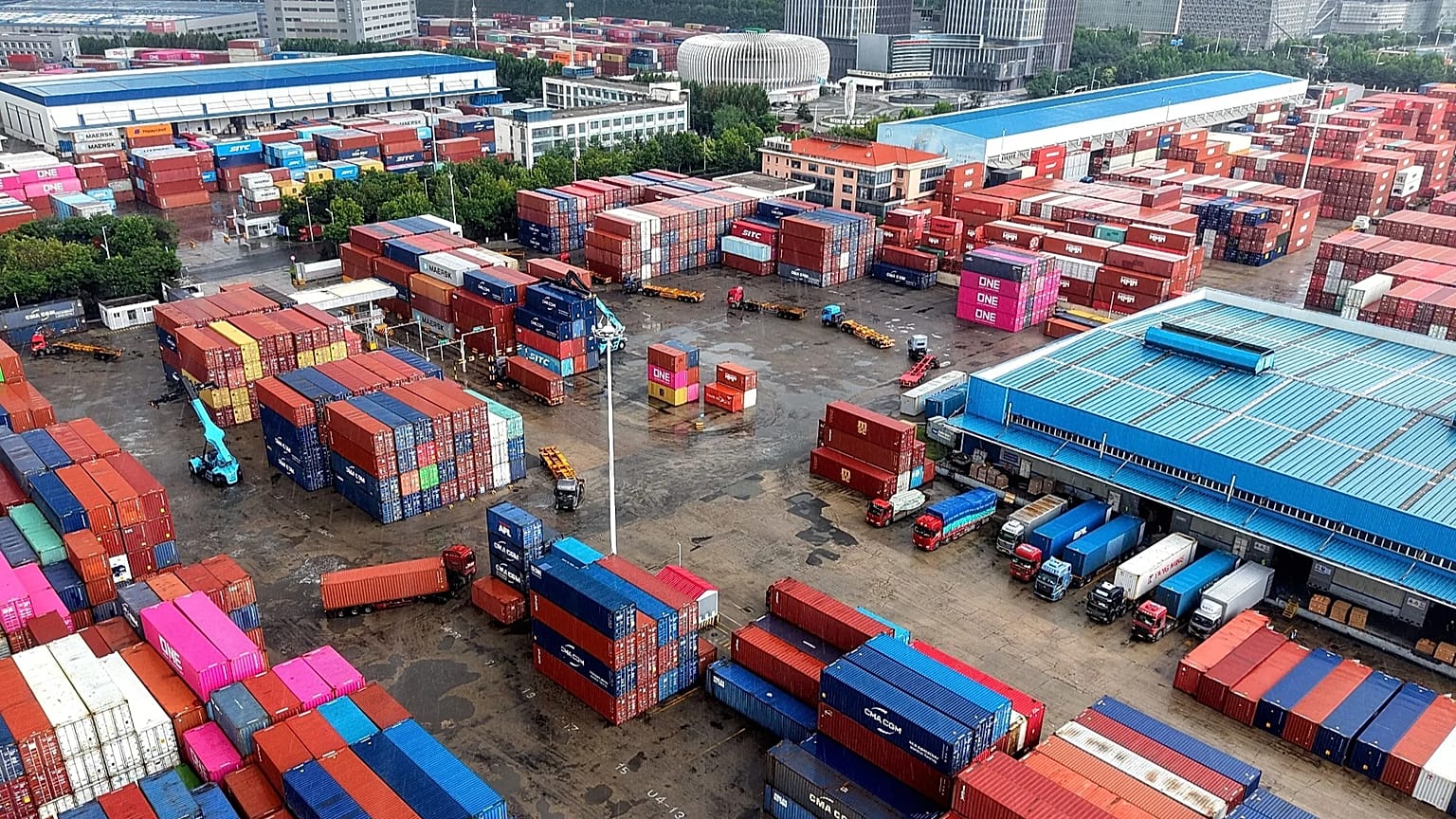
China’s export performance has been strong: it recorded a $938 billion trade surplus in the first nine months of the year and could surpass last year’s record $1.2 trillion surplus. Higher US tariffs have encouraged exporters to seek markets in Southeast Asia, Latin America and Europe. High-tech products, including semiconductors and hybrid and electric vehicles, are prominent sources of growth. However, rapid manufacturing expansion has outpaced consumption, leaving substantial output to be sold abroad. Analysts say this export- and technology-led model has produced limited job and income gains and that the headline growth figure obscures uneven conditions across industries, regions and households.
At home, a prolonged property downturn has reduced household wealth and contributed to higher savings, weakening domestic demand. Meanwhile, China’s expanding exports are prompting trade concerns among partners. The European Union has a substantial deficit with China, and Chinese exports to the bloc rose 16% in the first nine months of 2026. The EU has agreed to cap Chinese hybrid-vehicle imports at 350,000 annually, roughly halving imports over the coming years, while some member states seek additional restrictions. Analysts suggest the agreement could preserve Chinese market access while averting broader tariff increases, but warn that trade imbalances will be difficult to resolve quickly. Beijing rejects the claim that an undervalued yuan is driving its surplus and says it is committed to increasing domestic demand.
Entities: China, European Union, International Monetary Fund (IMF), US tariffs, China–EU trade imbalance • Tone: analytical • Sentiment: neutral • Intent: analyze
19-10-2026
China’s economy grew 4.5% year on year in the third quarter, beating economists’ forecasts and improving on the 4.3% rate recorded in the second quarter, according to the National Bureau of Statistics of China. Growth for the first nine months reached 4.6%, putting the country on course to meet its 2026 target of 4.5% to 5% without additional stimulus, the article says.
Exports and industrial production were the main supports for growth. Industrial production rose 5.5% in September, with manufacturing output up 6.0% year on year, as overseas demand for electronics, AI-related equipment and cars strengthened. Analysts also linked export performance to the global AI and technology boom. September exports surged by more than a third, according to data reported the previous week. China’s high-tech manufacturing sector continued to outperform traditional industries, reflecting a move toward higher-value production.
Domestic demand remained weak by comparison. Retail sales rose just 1.1% in September, while fixed-asset investment fell 7.2% in the first nine months of the year. Property investment dropped 20.6%, and infrastructure spending was also weak. Analysts at ABN Amro said export strength was offsetting the effects of the Iran conflict and persistent weakness in domestic demand. An economist at Pantheon Macroeconomics suggested policymakers would likely view the third-quarter growth outcome as evidence that their efforts to stabilise the headline figure had succeeded. Overall, the report presents stronger-than-expected growth, but highlights its reliance on exports and continuing imbalances between industrial performance and domestic demand.
Entities: China, National Bureau of Statistics of China, Duncan Wrigley, Pantheon Macroeconomics, ABN Amro • Tone: analytical • Sentiment: neutral • Intent: inform