19-08-2026
Al Jazeera reports on the continuing humanitarian emergency on Indonesia’s Flores Island following a 7.7-magnitude earthquake. The disaster killed at least 70 people and left thousands of others displaced from their homes. The report focuses on Manggarai, where residents remain in urgent need of basic necessities and local authorities are working to provide assistance.
According to the report, emergency responders are rushing to deliver food, water, and medicine to affected communities. The emphasis on these supplies indicates that the immediate response is centered on meeting essential survival and public-health needs among people who have been displaced by the earthquake. The phrase “desperate for help” underscores the severity of conditions facing survivors and the urgency of the relief effort.
Al Jazeera correspondent Jessica Washington reports from Manggarai, providing on-the-ground coverage from the quake zone. Her report highlights both the scale of the disaster—thousands displaced and at least 70 people dead—and the continuing challenges of reaching communities with critical aid. The supplied article text does not provide further details about the extent of structural damage, the identities of victims, or the specific agencies involved in the response. It presents a concise account of a deadly earthquake and the immediate relief operation under way on Flores Island.
Entities: Al Jazeera, Jessica Washington, Indonesia, Flores Island, Manggarai • Tone: urgent • Sentiment: negative • Intent: inform
19-08-2026
A magnitude 7.7 earthquake struck off Indonesia’s Flores region early Saturday, causing buildings and homes to collapse, widespread panic and at least 38 deaths, according to the article’s headline and opening report. The U.S. Geological Survey said the shallow earthquake occurred at 5:58 a.m. local time at a depth of 10 kilometres, with the epicentre about 68 kilometres north-northwest of Ende in East Nusa Tenggara province. Several aftershocks followed.
Authorities initially issued a tsunami warning for parts of East and West Nusa Tenggara, South Sulawesi and Southeast Sulawesi. Residents in coastal areas were told to move to higher ground and stay away from beaches and riverbanks. The warning was later lifted after Indonesia’s Meteorology, Climatology and Geophysics Agency reported no significant sea-level changes threatening coastal communities.
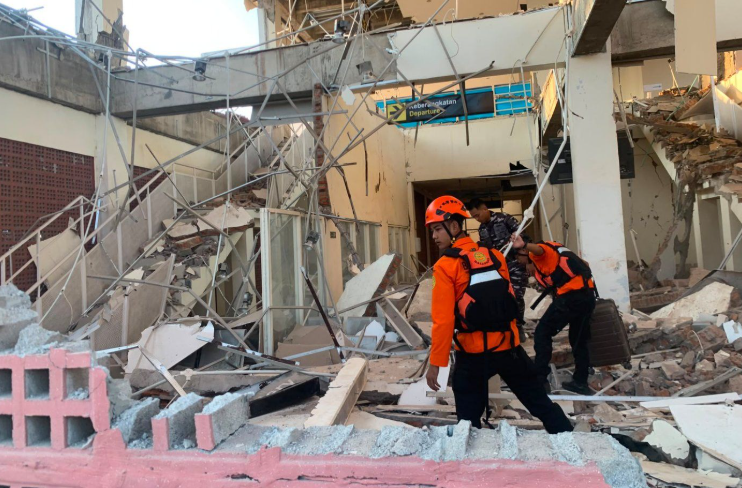
The article describes severe damage across Flores island. Hospitals evacuated patients as a precaution, moved medical equipment outdoors and established temporary treatment areas. Buildings reportedly collapsed in Maumere and other locations. Yohanna Embu, a resident of Sikka, said people fled toward higher ground after seeing extensive damage, including the collapse of a port terminal waiting room. At St. Peter Major Seminary, students and nuns ran from a collapsing roof during morning Mass, while rector Rev. Guidelbertus Tanga said a priest broke his leg after jumping from a second-floor building.
The supplied article contains inconsistent casualty figures: while the headline and lead report at least 38 deaths, a later preliminary account from the Maumere Search and Rescue Agency cites two deaths and two injuries. Indonesia is highly vulnerable to earthquakes and volcanic activity because it lies along the Pacific Ring of Fire. The article also recalls deadly past events, including a 1992 Flores tsunami and the 2018 Sulawesi earthquake and tsunami.
Entities: Magnitude 7.7 Flores earthquake, Flores island, Ende, East Nusa Tenggara province, Maumere • Tone: urgent • Sentiment: negative • Intent: inform
19-08-2026
Thousands of people on Indonesia’s Flores Island were still awaiting food, medicine, clean water and other emergency assistance on August 17, days after a magnitude 7.7 earthquake struck East Nusa Tenggara province. The disaster killed at least 68 people, injured 213 and damaged more than 1,300 homes, including nearly 250 that were destroyed on Flores. Around 5,000 residents were forced into temporary shelters, while many others slept outdoors under tarpaulins because of continuing aftershocks and the risk of further building collapses.
The earthquake struck at a depth of about 10 kilometres shortly before 6 a.m. Saturday. Authorities issued tsunami warnings that were later lifted and recorded 1,576 aftershocks by Monday. Landslides, blocked roads, fallen trees and large boulders made it difficult for aid workers and rescue teams to reach isolated communities. Palue Island, near the epicentre, was reached only after a dangerous journey by sea and land; officials reported one death, two serious injuries and almost 150 destroyed homes there.
Indonesia’s National Disaster Management Agency deployed nearly 1,500 military and police personnel, 10 aircraft and 275 tons of aid. Two emergency field hospitals were established in Ruteng after local hospitals were damaged, and rescue teams continued searching affected areas even though no additional missing people had been reported. The provincial governor declared a 14-day state of emergency. The earthquake occurred as Indonesia marked its 81st Independence Day, prompting President Prabowo Subianto to lead a moment of silence and ask the public to pray for disaster victims. The destruction also revived memories of the 1992 Flores earthquake and tsunami, which killed about 2,500 people.
Entities: Flores Island, East Nusa Tenggara province, Indonesia, 7.7-magnitude earthquake, Earthquake aftershocks • Tone: urgent • Sentiment: negative • Intent: inform
19-08-2026
A 39-year-old Indonesian woman, Maria Florida Nogo Kelen, gave birth by emergency caesarean section under torchlight after a magnitude-7.7 earthquake cut power to a hospital in East Nusa Tenggara. Kelen was eight months pregnant and had a complicated pregnancy; doctors feared that delaying delivery could trigger a potentially fatal seizure. Medical staff proceeded with the surgery as aftershocks continued and parts of the hospital were damaged.
Kelen said she was not afraid during the operation because she needed to remain healthy for her children. Obstetrician Yona Sara Pardede described the procedure as extremely difficult, noting that the team lacked even a ventilator. The baby girl was born prematurely, weighing 1.3 kilograms, and was named Gempita, a name derived from “gempa,” the Indonesian word for earthquake. She remained stable in an incubator placed inside a tent on grass in Nagekeo. Kelen experienced a haemorrhage after the delivery but survived, and she expressed gratitude that doctors continued treating her despite the damaged hospital.
The earthquake caused widespread destruction across the province. Medical teams moved treatment facilities into tents, while rescuers searched damaged buildings for people trapped under rubble. Authorities recorded at least 995 aftershocks, including a magnitude-5.9 tremor on Monday, although only 46 of the aftershocks were felt. The main earthquake struck shortly before 6 a.m. at a depth of approximately 10 kilometers, with its epicentre about 68 kilometers northwest of Ende on Flores, according to the US Geological Survey. Tsunami warnings were issued and later lifted after no significant sea-level changes were detected. At least 68 people were killed, 135 injured and more than 1,300 homes damaged, including nearly 250 destroyed. Around 5,000 people moved into temporary shelters, and the provincial governor declared a 14-day state of emergency.
Entities: Maria Florida Nogo Kelen, Yona Sara Pardede, Indonesia, East Nusa Tenggara, Nagekeo • Tone: emotional • Sentiment: negative • Intent: inform