19-07-2026
The article explains that severe wildfire seasons in Canada and the United States are being intensified by climate extremes, including prolonged drought, record heat, and unusually low snowpack. In Canada, more than 100 fires were active at once and roughly 3,500 fires had burned about 2.3 million acres, sending smoke into the Upper Midwest and Northeast U.S. In the United States, nearly 40,000 fires had burned more than 3.6 million acres by mid-July, far above seasonal averages, with the West especially hard hit.
Experts cited in the story say the conditions driving these fires are increasingly shaped by climate change. Reduced snowpack means less spring runoff and drier soils, while repeated heat waves and hotter droughts lengthen and intensify fire seasons. Scientists note that climate change is not the only factor in any single fire season, but it has become a major underlying force making extreme fire weather more likely. The article also highlights that fire seasons are starting earlier, lasting longer, and becoming harder to contain, sometimes persisting through winter as “zombie fires.”
Looking ahead, forecasters expect above-normal wildfire risk to continue across much of the West into fall, with particular concern for Northern California, Oregon, Washington, and the Northern Rockies. Even if monsoon moisture provides some relief in parts of the region, experts warn that the most dangerous fire weather may still lie ahead, especially before autumn winds arrive.
Entities: Canada, United States, Canadian wildfires, wildfire smoke, climate change • Tone: analytical • Sentiment: negative • Intent: inform
19-07-2026
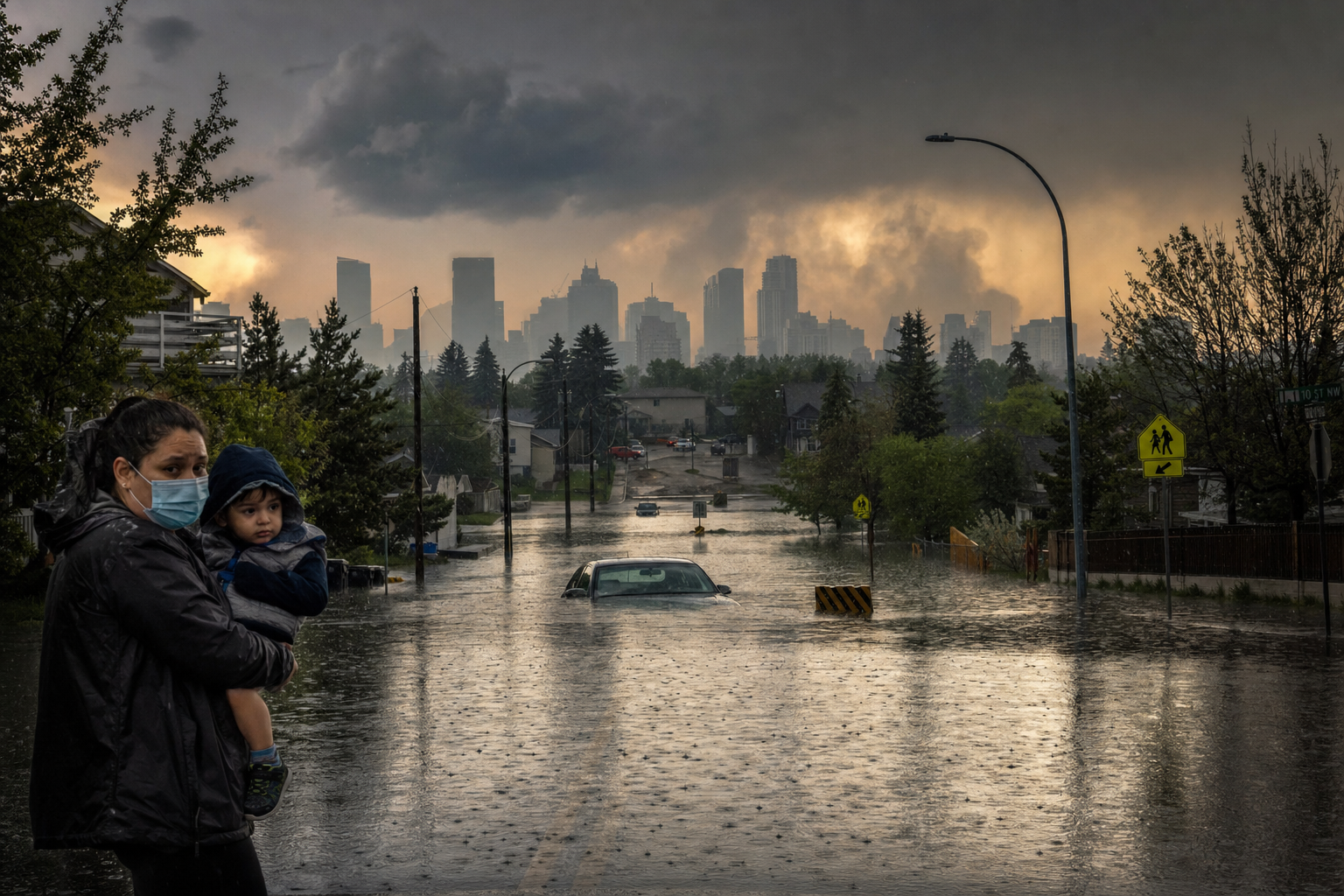
More than 50 million people across the Northeast and Mid-Atlantic are under a severe weather threat as storms bring the risk of damaging winds, large hail, isolated tornadoes, and flash flooding. The National Weather Service warned that cities including New York, Philadelphia, Washington, Pittsburgh, Cleveland, and Boston could experience dangerous conditions, with flash flooding especially likely in urban areas as multiple rounds of storms move ahead of a cold front. Tornado watches were issued for parts of Philadelphia and Washington, D.C., with the possibility of EF-2 tornadoes in some areas.
At the same time, Canadian wildfire smoke continues to degrade air quality across much of the Midwest and Northeast, affecting at least 19 states. Conditions are expected to improve in the East as the cold front passes, and smoke may be less disruptive for the World Cup final in New Jersey on Sunday, though experts noted poor air quality could still affect the game. The article also notes health impacts from the smoke, including emergency visits in New Jersey for asthma-like symptoms.
The story briefly shifts to Texas, where recovery from catastrophic flooding continues even as water levels remain high in some rivers. Roads remain impassable in places, prompting National Guard air rescues and medical transports. The article ties together several weather-driven emergencies across the country, emphasizing the wide-ranging disruption caused by storms, flooding, wildfire smoke, and ongoing recovery efforts.
Entities: Northeast, Mid-Atlantic, Ohio Valley, New York City, Washington, D.C. • Tone: urgent • Sentiment: negative • Intent: inform
19-07-2026
The provided Washington Post page appears to be a staff or author listing for Stella Canino-Quiñones rather than a single standalone news article. The content is a chronological feed of recent Washington Post stories associated with the page, spanning June to July 2026. The items cover a wide range of national and breaking-news topics, including wildfire smoke drifting across the United States, deadly flooding in Texas, Supreme Court developments, Hispanic identity in America, U.S. Postal Service price increases, concerns over Senate Republican leader Mitch McConnell’s health, a structural emergency at a New York City high-rise, an incident at the Empire State Building, protests and reactions outside the Supreme Court, immigration-related Supreme Court rulings, an indictment involving a former aide to Eric Adams, and risks from the remnants of Tropical Storm Arthur in the South. Because the page is essentially a list of linked headlines and teasers, there is no single narrative arc, argument, or article body to summarize. Instead, it functions as an index of reporting on major civic, political, environmental, and public-safety events. The overall content reflects Washington Post coverage priorities: urgent breaking news, national politics, courts, disasters, and public-impact stories.
Entities: Stella Canino-Quiñones, The Washington Post, wildfire smoke, Detroit, Chicago • Tone: analytical • Sentiment: neutral • Intent: inform