19-07-2026
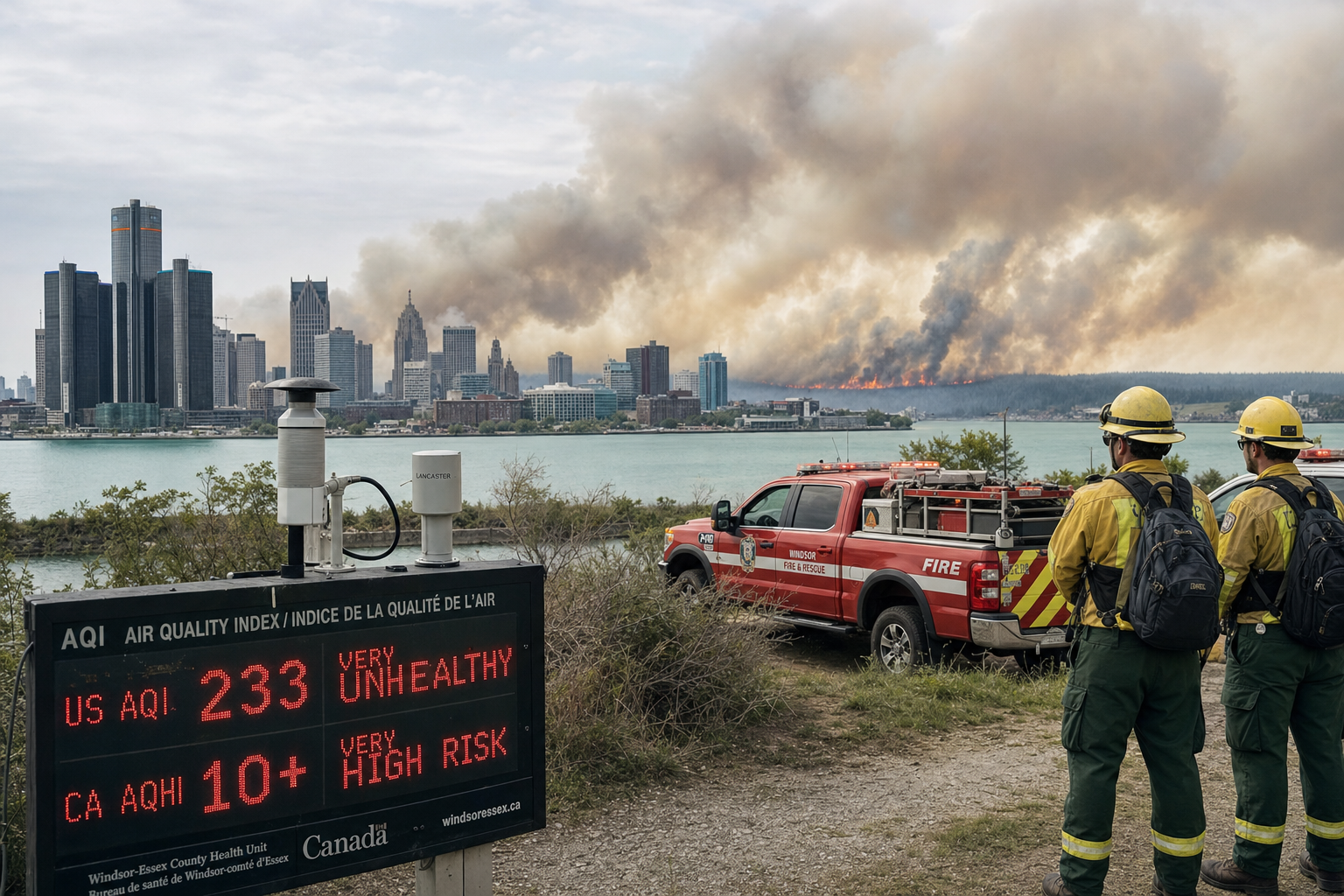
US President Donald Trump has threatened new tariffs on Canada, blaming Canadian wildfires for sending smoke and unhealthy air into American cities. The threat came after smoke from hundreds of active fires in Canada spread across much of the northern United States, triggering air quality alerts and disruptions from Minnesota to New York. Trump accused Canada of “willful negligence” and said he would speak with Prime Minister Mark Carney to demand an explanation, while some Republican allies echoed his criticism and revived calls for Canada to become the 51st US state.
Canadian officials pushed back, arguing that wildfire smoke is a cross-border problem shaped by weather, climate change, and the scale of Canada’s remote forests. Ontario Premier Doug Ford urged US politicians to stop complaining and instead send assistance, stressing that Canada has helped the United States during past disasters and is now deploying major firefighting resources. Federal and provincial officials said Canada is investing heavily in forest sustainability and fire prevention and remains in close contact with US counterparts under longstanding mutual aid agreements.
The article also notes that scientists say the situation is more complex than political blame suggests. Hot, dry conditions, low rainfall, lightning, and climate change are all contributing to an especially severe wildfire season. Meanwhile, thousands of hectares have burned, communities have been evacuated, and air quality in major US cities has deteriorated sharply. The story frames the dispute as both an environmental emergency and another flashpoint in already tense US-Canada relations, especially amid ongoing trade friction.
Entities: Donald Trump, Mark Carney, Doug Ford, Canada, United States • Tone: urgent • Sentiment: negative • Intent: inform
19-07-2026
President Donald Trump threatened to impose additional tariffs on Canada, blaming the country for wildfire smoke that has drifted into major U.S. population centers and degraded air quality across the Midwest and East Coast. In a Truth Social post, Trump accused Canada of failing to properly maintain its forests and brush, calling the situation a costly form of pollution and “willful negligence.” He said the expense caused by the smoke should be added to the tariffs Canada is already paying and said he would discuss the issue with Canadian Prime Minister Mark Carney.
Canadian officials pushed back by emphasizing cross-border cooperation and Canada’s spending on wildfire prevention. Emergency Management Minister Eleanor Olszewski said Canada is working urgently with provincial and territorial partners and noted the long history of U.S.-Canada collaboration on wildfire response. U.S. Ambassador Pete Hoekstra also recently praised that cooperation, though he later shared Trump’s criticism. The article notes that Trump’s remarks come amid strained U.S.-Canada relations over trade, NATO, infrastructure disputes, and his repeated threats to make Canada the 51st U.S. state.
The story also places the comments in the context of ongoing Canadian wildfires, which have sent smoke into cities including New York, Chicago, Detroit, and Washington, D.C., causing serious air-quality problems. Some Republican lawmakers from Michigan and elsewhere echoed criticism of Canada and suggested consequences, including sanctions. Canadian leaders, including Carney and Ontario Premier Doug Ford, defended their country’s efforts, pointed to climate change and aid efforts, and urged more cooperation instead of blame.
Entities: Donald Trump, Mark Carney, Canada, United States, Truth Social • Tone: analytical • Sentiment: negative • Intent: inform
19-07-2026
The article reports on a cross-border dispute sparked by smoke from Canadian wildfires drifting into the United States. President Donald Trump criticized Canada for what he called inadequate forest management, accusing it of allowing American air to be polluted by wildfire smoke and threatening to consider the economic impact of the smoke when setting tariffs on Canadian imports. Trump said Canada was failing to do basic forest maintenance, including debris removal, and framed the issue as “willful negligence.”
The piece adds context from wildfire and forestry experts who argue that Canada could reduce wildfire severity through more aggressive forest management, such as thinning forests, creating firebreaks, and using prescribed burns. A Canadian fellow at Advancing American Freedom criticized environmental groups for influencing policy away from science-based stewardship. The article also notes that four Republican members of Michigan’s congressional delegation wrote to Canadian Prime Minister Mark Carney, saying their constituents were again breathing unhealthy air and demanding measurable wildfire prevention plans.
The story further references a Canadian Senate committee report titled "Canada on Fire," which concluded that climate change is making wildfire seasons longer and more severe, but that prevention efforts are not keeping pace with the threat. The report emphasized the importance of fuel management and prescribed fire. The article ultimately frames the issue as both a climate-driven crisis and a policy debate over prevention, forest management, and cross-border accountability.
Entities: Donald Trump, Mark Carney, Canada, United States, Michigan • Tone: analytical • Sentiment: negative • Intent: inform