18-07-2026
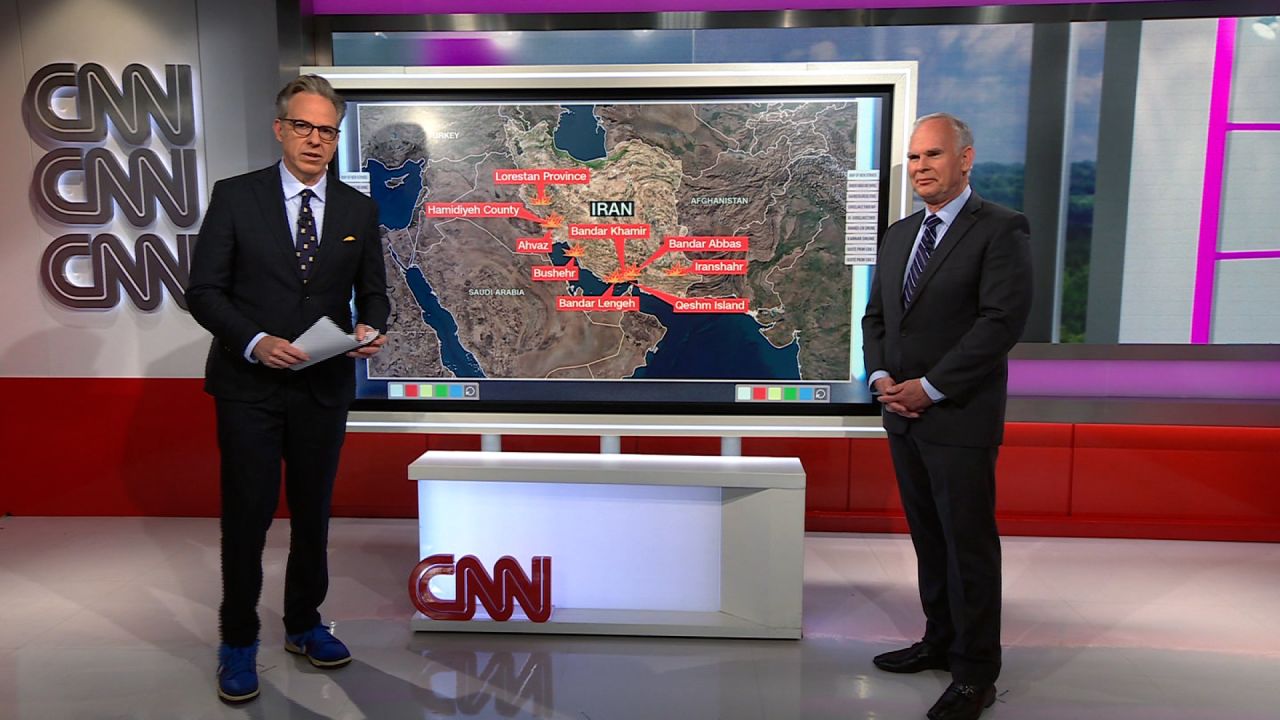
The article reports on the seventh consecutive night of US strikes on Iran after President Donald Trump said a temporary ceasefire agreement was “over.” According to US Central Command, the attacks targeted surveillance sites, military logistics infrastructure, underground weapons storage, and maritime capabilities. Iran responded with claims that it had struck US allies and military facilities across the region, including Kuwait, Jordan, Bahrain, and Syria, though some of those claims were denied by the US and in some cases by the allied states themselves. The report highlights the escalating tit-for-tat nature of the conflict, including missile and drone interceptions, alleged damage to infrastructure, and reports of injuries among soldiers and service members in Jordan and Kuwait.
The piece also emphasizes the strategic importance of the Strait of Hormuz, where shipping has largely halted amid the violence. The article notes that the strait normally carries about one-fifth of global oil and liquefied natural gas supplies, underscoring the broader economic risk. BBC Verify and BBC Persian confirmed damage to Gariveh Bridge in Hormozgan province, with provincial authorities reporting seven deaths there. The White House insisted the US was striking only military targets, while Iranian state media described attacks on civilian infrastructure and tankers. Overall, the article portrays a rapidly intensifying regional confrontation with military, economic, and diplomatic consequences, and with peace talks having collapsed after tensions over the ceasefire and the strait made a permanent agreement harder to reach.
Entities: Donald Trump, US military, US Central Command (Centcom), Iran, Kuwait • Tone: urgent • Sentiment: negative • Intent: inform
18-07-2026
The article reports on the seventh consecutive night of U.S. airstrikes against Iran, as the Trump administration intensifies a bombing campaign targeting Iranian military and logistical infrastructure near the Persian Gulf and Strait of Hormuz. U.S. Central Command said the latest strikes hit surveillance sites, military logistics hubs, underground weapons storage, and maritime capabilities, while Iranian state media reported damage to bridges, highways, tunnels, and other transport routes connecting coastal cities to inland areas. The article presents this as part of a widening conflict: Iran has responded by launching attacks on U.S. allies across the region, prompting alarms and defensive actions in Kuwait, Bahrain, Jordan, Saudi Arabia, Qatar, Oman, and Iraq.
The piece emphasizes the growing regional spillover and diplomatic fallout. Several Arab governments condemned Iran’s strikes as violations of sovereignty and international law, while also urging a return to dialogue and negotiations. Iran, meanwhile, escalated its rhetoric through senior military adviser Mohsen Rezaei, who warned of a “full-scale offensive” if the U.S. continues its attacks and suggested no political border would be secure from Iranian retaliation. The article also notes the human and economic consequences of the conflict, including flight disruptions in Kuwait, a child injured by shrapnel in Qatar, fatalities in Iraq, and concerns for maritime workers in the Strait of Hormuz. Overall, the article depicts a rapidly escalating confrontation between the United States and Iran with mounting regional instability and no clear diplomatic off-ramp.
Entities: United States, Iran, U.S. Central Command (CENTCOM), Donald Trump, Mohsen Rezaei • Tone: urgent • Sentiment: negative • Intent: inform
18-07-2026
Fox News reports that Iran has allegedly instructed Yemen’s Houthi rebels to prepare to disrupt or close the Bab el-Mandeb Strait if the United States attacks Iranian power infrastructure. The report, citing Reuters and regional experts, frames the move as part of a broader regional escalation in which Tehran could use the Houthis to threaten one of the world’s most important maritime chokepoints. Although experts say the Houthis may not be able to physically seal the strait, they could still substantially disrupt commercial shipping through missile, drone, and mine attacks, forcing vessels to reroute around Africa and increasing insurance, fuel, and freight costs.
The article explains that the Bab el-Mandeb links the Gulf of Aden to the Red Sea and the Suez Canal and carries a significant share of global energy traffic. It notes that the waterway is already vulnerable because Iran has disrupted shipping in the Strait of Hormuz, and that renewed Houthi attacks could worsen global trade and energy instability. Analysts quoted in the piece say the threat should be taken seriously because recent U.S. strikes on Iran have likely raised the risk of retaliation. The article also emphasizes the possibility that any such Houthi action would be coordinated through Iran’s Islamic Revolutionary Guard Corps and the broader ‘Axis of Resistance,’ highlighting questions about the degree of control Tehran exerts over Houthi military decisions.
Entities: Iran, Houthis, Yemen, Bab el-Mandeb Strait, Red Sea • Tone: analytical • Sentiment: negative • Intent: inform
18-07-2026
France 24’s liveblog reports a sharp escalation in the conflict between the United States and Iran, with Washington carrying out a seventh consecutive night of airstrikes on Iranian military and strategic infrastructure. The strikes reportedly targeted surveillance sites, military logistics hubs, underground weapons storage, and maritime capabilities. Iranian state media said the attacks killed three people and wounded eight in Hormozgan province, while additional explosions were reported in Yazd and other southern areas.
In response, Iranian officials threatened to broaden their retaliation. Major General Mohsen Rezaei warned that if US strikes continue, Iran would move beyond proportional reprisals to “full-scale offensive operations,” declaring that “no political border will be safe.” Iran also claimed it struck US-linked targets in Kuwait, Jordan, and Bahrain, including military bases and support facilities. Kuwait temporarily suspended operations at its airport amid missile and drone threats, and Kuwait Airways rescheduled most flights. Jordan said it intercepted 10 Iranian missiles without casualties, while Bahrain and Qatar also reported missile interceptions and air raid sirens.
The liveblog additionally notes disputes over incidents in the Strait of Hormuz, where Iran’s Revolutionary Guards claimed two tankers hit mines and said they stopped four ships; the US military denied the tanker-mine allegation. The article frames a wider regional confrontation in which airstrikes, missile launches, and maritime tensions are spreading across the Gulf, affecting military bases, civilian infrastructure, and commercial air and sea traffic.
Entities: Iran, Tehran, United States, US Central Command (CENTCOM), Islamic Revolutionary Guard Corps (IRGC) • Tone: urgent • Sentiment: negative • Intent: inform
18-07-2026
The article reports a major escalation in the U.S.-Iran conflict, with both sides trading strikes across the Middle East as fighting centers on control of the Strait of Hormuz. U.S. Central Command says it carried out a seventh straight night of attacks on Iranian surveillance sites, military logistics infrastructure, underground weapons storage, maritime capabilities, and key transport links, including bridges and a tower at Chabahar port. Iran, in turn, launched missiles and drones at U.S.-aligned regional states and bases, with air defenses activated in Qatar, Kuwait, Jordan, Bahrain, and Iraq. The fighting has caused deaths and injuries on both sides, including Iranian claims of dozens killed and hundreds wounded, and U.S. acknowledgment of additional service members injured. The article emphasizes the strategic stakes of the strait, noting reduced shipping traffic, rising oil prices, and growing disruption to global energy markets. It also highlights political pressure on President Trump, who says the war is going well while facing calls to end the conflict and avoid a prolonged Middle East war. Overall, the piece frames the conflict as widening, destabilizing, and increasingly focused on maritime leverage and regional infrastructure.
Entities: United States, Iran, Strait of Hormuz, U.S. Central Command, Donald Trump • Tone: urgent • Sentiment: negative • Intent: inform
18-07-2026
The article reports that US Central Command carried out its seventh consecutive night of airstrikes against Iran, targeting what it described as military logistics infrastructure, surveillance sites, underground weapons storage, and maritime capabilities. According to CENTCOM, the strikes involved fighter aircraft, drones, and warships, and concluded late Friday evening. Video released by CENTCOM showed missile launches from a Navy ship, fighter jets taking off at night, and precision strikes hitting targets such as a communications tower and a highway bridge. Iranian state media said explosions were heard in several parts of the country, including Ahvaz, Lar, Yazd, and Sirik.
The article also says Iran retaliated by launching missiles and drones at regional countries, prompting interceptions by Kuwait and Jordan and air raid sirens in Bahrain. The strikes were part of a broader US effort to pressure Tehran, including attempts to disrupt Iranian access to the Strait of Hormuz and Bandar Abbas. The piece notes that President Trump has warned of escalating attacks on Iranian infrastructure, including power plants and bridges, unless Iran agrees to negotiate. It also says Trump has reimposed a naval blockade on Iranian ships in the Strait of Hormuz as part of the pressure campaign. Overall, the article describes a rapidly escalating military confrontation between the US and Iran with regional spillover.
Entities: US Central Command (CENTCOM), Iran, President Trump, Strait of Hormuz, Bandar Abbas • Tone: urgent • Sentiment: negative • Intent: inform
18-07-2026
Iran’s Revolutionary Guards said two oil tankers exploded after hitting mines in the Strait of Hormuz, intensifying an already dangerous confrontation with the United States that has featured a week of nightly drone and missile strikes. The Guards claimed the tankers entered a minefield near the strategic waterway under deceptive American intelligence, though they did not identify the vessels. They also said they stopped four other ships from transiting the strait. In parallel, US Central Command said American forces struck Iran for a seventh consecutive night in an effort to degrade Iranian military capabilities. Iran accused the US of hitting civilian infrastructure, including an airport, railway station and bridges, and said it had struck US assets across the region in retaliation. Senior Iranian officials warned that if the attacks continue for a few more days, Tehran may move to full-scale offensive operations and remove any remaining limits on its response. The conflict has spread beyond Iran’s borders, with reported attacks or interceptions in Kuwait, Qatar, Oman, Bahrain, Syria, Jordan and Iraq’s Kurdistan region, and with civilian and military casualties reported. Iranian authorities also urged citizens to conserve electricity as energy facilities and the power grid came under pressure. Diplomatically, China and Pakistan called for renewed talks, but both sides appear locked into escalation, with analysts warning that strategic infrastructure across the region is becoming part of the conflict and that neither side currently sees compromise as acceptable.
Entities: Iranian Revolutionary Guards, Strait of Hormuz, United States, US Central Command, Donald Trump • Tone: urgent • Sentiment: negative • Intent: inform