18-07-2026
US President Donald Trump threatened to impose new tariffs on Canada after wildfire smoke from hundreds of Canadian fires drifted into American cities, worsening air quality across the northern US. In a social media post, Trump accused Canada of “willful negligence” and said he would speak with Prime Minister Mark Carney. The remarks came amid heightened cross-border tensions and renewed Republican criticism of Canada, including talk of making Canada the 51st US state.
Canadian officials responded by emphasizing cooperation rather than confrontation. Ontario Premier Doug Ford urged the US to send help instead of complaints, noting that Canada has assisted Americans during past disasters and is deploying substantial firefighting resources. Carney and his ministers stressed that wildfire response and climate change are shared responsibilities and pointed to longstanding bilateral emergency agreements.
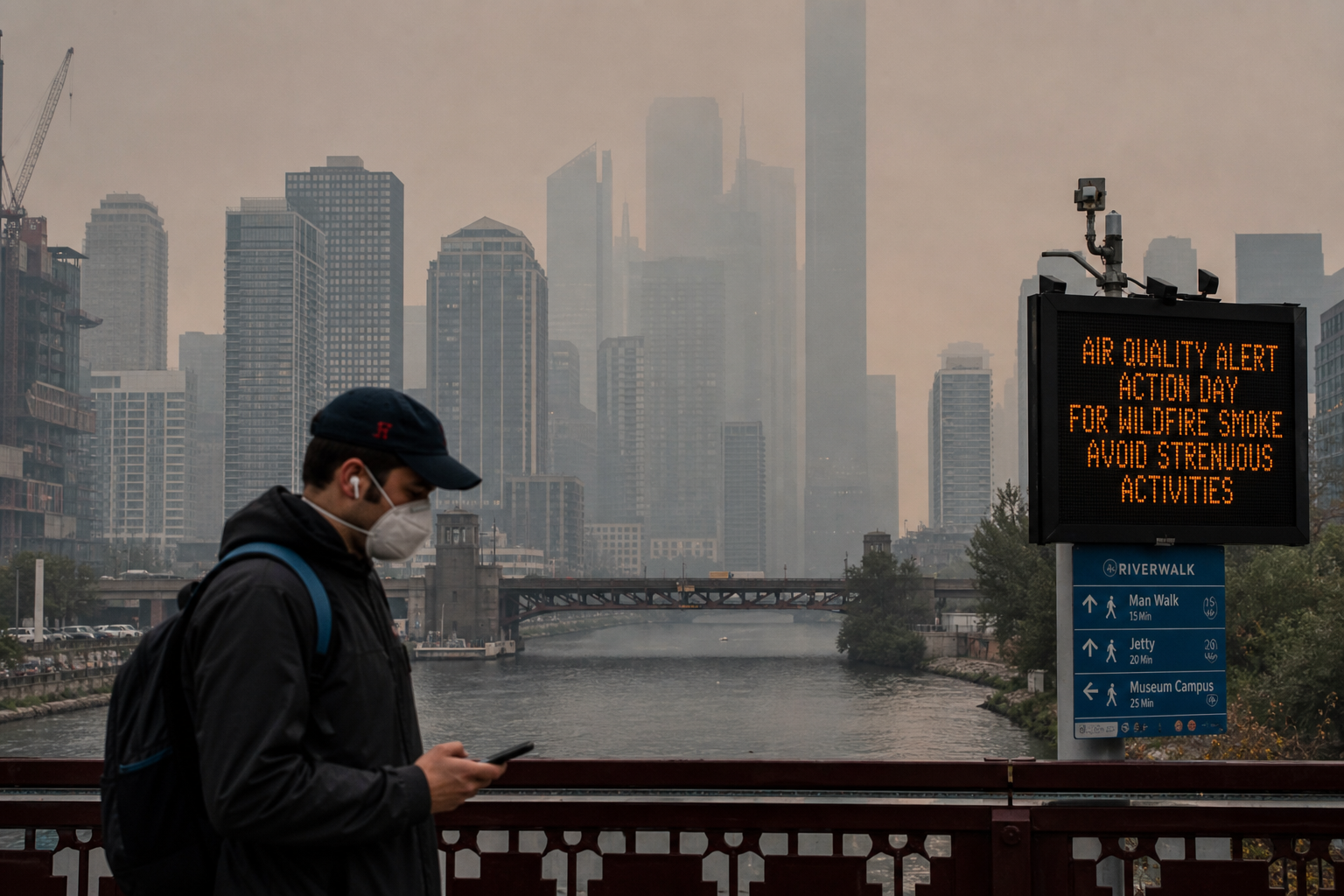
The article explains that the smoke is the result of a severe wildfire season, with roughly 888 active fires in Canada, more than 190 in Ontario alone, and nearly 3 million hectares burned. Poor air quality alerts have spread across several US states and major cities such as Detroit, Chicago, Washington DC, and New York. Experts quoted in the piece say the situation is more complex than political blame suggests: smoke travels across borders with the wind, many fires are in remote areas difficult to control, and climate change is intensifying wildfire conditions through hotter, drier weather. The article also notes that some blazes were sparked by lightning and that both US and Canadian leaders are facing pressure over prevention and response.
Entities: Donald Trump, Mark Carney, Doug Ford, Ontario, Canada • Tone: analytical • Sentiment: negative • Intent: inform
18-07-2026
Experts say climate extremes have helped set the stage for an unusually severe wildfire season in both Canada and the United States, with drought, record heat, low snowpack, and earlier snowmelt creating highly flammable conditions across large parts of North America. In Canada, more than 100 wildfires burned at once on Thursday, and smoke from roughly 3,500 fires had already enveloped about 2.3 million acres this year, affecting air quality across the border and into the Upper Midwest and Northeast U.S. In the United States, nearly 40,000 fires have burned more than 3.6 million acres so far in 2026, far above the 10-year average for mid-July, with the western states especially hard hit. Colorado and Utah have been among the most affected, and recent large fires have already caused fatalities among firefighters.
The article explains that climate change is not the sole cause of any one fire season, but it is increasingly seen as a major factor intensifying wildfire risk by reducing snowpack, drying out soils and vegetation, and lengthening fire seasons. Researchers and climatologists quoted by CBS News say higher temperatures are contributing to “hotter droughts,” earlier runoff, and conditions that make fires harder to contain. Looking ahead, forecasters expect above-normal wildfire danger to persist across much of the West into the fall, with northern areas likely becoming more at risk later in the summer. Even if some weather patterns such as a possible monsoon bring limited relief, experts warn that the region remains early in its most dangerous fire-risk period.
Entities: Climate change, wildfires, Canada, United States, Upper Midwest • Tone: analytical • Sentiment: negative • Intent: inform
18-07-2026
President Donald Trump threatened to impose additional tariffs on Canada after wildfire smoke from Canadian blazes blanketed large parts of the U.S. Midwest and East Coast, worsening air quality in major cities including New York, Chicago, Detroit, and Washington, D.C. In a Truth Social post, Trump blamed Canada for failing to properly manage its forests and brush, accused it of “willful negligence,” and said the pollution was costing the United States billions of dollars. He said he would discuss the issue with Canadian Prime Minister Mark Carney.
Canada responded by emphasizing cross-border cooperation on wildfire response. Canadian Emergency Management Minister Eleanor Olszewski said Canada was working urgently with provincial and territorial partners and has spent billions on forest fire prevention in recent years. She also pointed to the long history of U.S.-Canada collaboration on wildfire fighting, including Canadian assistance during last year’s Los Angeles fires. U.S. Ambassador Pete Hoekstra also previously praised bilateral cooperation, though he later shared Trump’s criticism.
The article places the dispute in the context of Trump’s broader tensions with Canada over trade, NATO, a bridge dispute, and his repeated threats to make Canada the 51st state. It also notes that Trump’s tariff powers have been limited by a recent Supreme Court ruling, while some Republican lawmakers from Michigan, Ohio, and New York echoed criticism of Canada and suggested sanctions or other consequences. Canadian and provincial leaders, including Ontario Premier Doug Ford, countered that climate change is intensifying extreme weather and argued the U.S. should offer support rather than complaints.
Entities: Donald Trump, Mark Carney, Canada, United States, Truth Social • Tone: urgent • Sentiment: negative • Intent: inform
18-07-2026
The article explains how people can protect their health during periods of heavy wildfire smoke, drawing on expert advice from pulmonologists and air-quality specialists. It says smoke from Canadian wildfires and fires in northern Minnesota is affecting millions of people across the U.S. and Canada, with PM2.5 particles posing the greatest health risk because they can penetrate deep into the lungs and even enter the bloodstream. The article urges readers to check real-time air quality using AirNow.gov or weather apps and to stay indoors when conditions are rated unhealthy or very unhealthy.
The piece provides practical guidance for reducing exposure at home: keep windows and doors closed, run central air conditioning, seal window and door units properly, and use HEPA filters or HVAC filters with higher MERV ratings. For those without commercial purifiers, it suggests lower-cost solutions such as a Corsi Rosenthal box. It also recommends minimizing outdoor activity, limiting dust-generating cleaning, avoiding grilling, and keeping water, shelf-stable food, medications, and pet supplies on hand.
A major focus is on respiratory protection and preparedness. Doctors advise well-fitted N95, KN95, or P100 masks for those who must go outside, while noting that cloth and surgical masks do not adequately protect against wildfire smoke particles. The article also highlights the importance of keeping asthma and COPD medications, rescue inhalers, spacers, and nebulizers available. It closes by warning readers to seek medical care for symptoms such as shortness of breath, chest pain, or dizziness, emphasizing that wildfire smoke can trigger breathing problems even in otherwise healthy people.
Entities: Canadian wildfires, northern Minnesota wildfires, New York City, PM2.5, AirNow.gov • Tone: analytical • Sentiment: neutral • Intent: inform